
- Release Year: 1999
- Platforms: Windows
- Publisher: Oxford Softworks
- Developer: Oxford Softworks
- Genre: Strategy, Tactics
- Perspective: Top-down
- Game Mode: LAN, Single-player
- Gameplay: Board game, Pattern formation, Tile placement, Turn-based
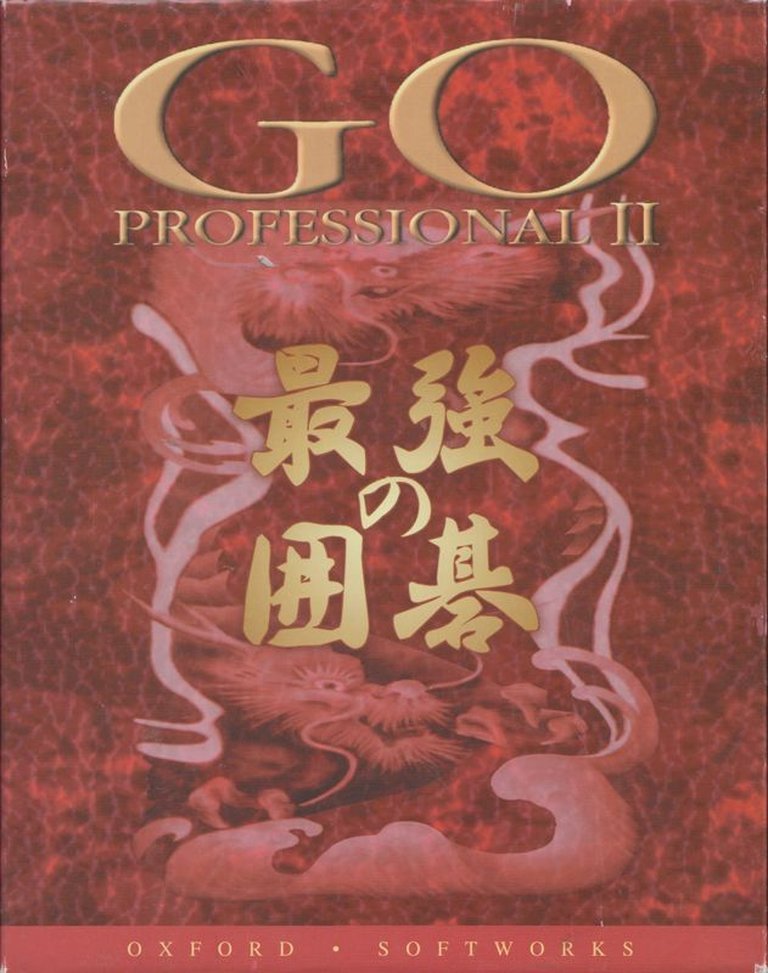
Description
Go Professional II is a 1999 Windows game that digitally implements the ancient board game Go, allowing players to place colored tiles on grids of varying sizes (9×9, 13×13, and traditional 16×16) with the objective of forming an unbroken line of five. It includes a computer opponent for solo play, move recording similar to chess, and supports both quick games and in-depth strategy training, making it accessible for beginners and experienced players alike.
Go Professional II Reviews & Reception
britgo.org : The standard is about as good as you can get at present.
mobygames.com : Excellent game, I specially like the guidance for beginners like me.
retro-replay.com : Go Professional II delivers a refreshingly straightforward yet deeply strategic experience.
Go Professional II: The Digital Dojo’s Modest Masterpiece – A Historical Analysis
Introduction: A Stone Placed in the River of Time
In the vast and venerable canon of video game history, certain titles serve not as thunderous revolutions but as quiet, essential bridges. They are the digital artifacts that faithfully transport ancient pastimes into the nascent landscape of personal computing, preserving tradition while cautiously embracing modernity. Go Professional II, released in 1999 for Windows by the seemingly unassuming Oxford Softworks, is precisely such a title. It is not a landmark of graphical prowess nor a narrative tour de force; its arena is the 19×19 (or flexible 9×9, 13×13) grid, its characters are black and white stones, and its plot is written in the boundless permutations of go, the “encircling game” with over 2,500 years of history. This review argues that Go Professional II is a fascinating case study in pragmatic game design—a competent, sometimes frustrating, but ultimately sincere digital translation of a profound strategic art. It captures a pivotal moment where the commercial PC gaming market began to court niche, intellectually demanding audiences, offering a functional if flawed dojo for solitary training and nascent online play, all while standing in the shadow of its own more powerful successor.
Development History & Context: The Oxford Engine and the Niche Market
The Studio and The Visionary: The game emerged from Oxford Softworks, a British developer with a pedigree in strategy and simulation titles (notably the Microsoft Classic Board Games compilation, which also credits key team members). The project was the brainchild and primary technical achievement of Michael Reiss, the credited “Engine Programmer.” Reiss was not merely a coder but a dedicated Go programmer-engineer; his work on Go Professional II was a commercial iteration of his ongoing research project, the Go4++ engine (later evolved into the commercially sold Go++). This lineage is crucial: the game was less a bespoke creation from whole cloth and more a polished, packaged release of a cutting-edge (for its time) AI engine, aimed at a specific, educated consumer base.
Technological Constraints & The 1999 Landscape: The year 1999 placed the game in a unique technological sweet spot. The Windows 95/98 era had matured, offering stable APIs for GUI development and rudimentary TCP/IP networking. The “CD-ROM” media type hints at a time when digital distribution was non-existent; physical retail was the only path, making a niche title like this a risky proposition. Computationally, creating a strong Go AI was—and remains—an immensely difficult problem due to the game’s vast decision tree. Go Professional II’s AI, while competent for amateur play, was a product of its era, relying on pattern matching and knowledge-based systems long before the deep neural network breakthroughs of AlphaGo. Its existence speaks to a small but passionate community of computer Go researchers and players who saw the PC as a worthy tool for study and remote competition.
The Gaming Ecosystem: The late ’90s saw a boom in “brain games” and digital board game adaptations, from Chessmaster to Microsoft’s *Reversi. Go Professional II entered this space not as a mass-market title but as a serious tool. Its primary competition was other dedicated Go software like Many Faces of Go (from the late ’80s/90s) and Handtalk. The source material from the British Go Association (BGA) explicitly compares it to these contemporaries, placing it in a tightknit ecosystem where reputation among club players was everything. Its pricing strategy—”a little over half that for Many Faces”—reveals a deliberate attempt to undercut established competitors by leveraging a smaller development overhead (a lean team of six, with core tech already in-house).
Narrative & Thematic Deep Dive: The Unspoken Story of Stones and Strategy
Go Professional II possesses no narrative in the conventional video game sense. There are no cutscenes, no characters with arcs, no overarching plot. Yet, its design and presentation are deeply narrative in a thematic and cultural sense, framing the player’s experience within the millennia-old story of Go itself.
The Digital Ancestor: The game’s very existence is a narrative about the migration of a deeply physical, social, and spiritual tradition into the digital realm. The traditional goban (board) and kifu (move record) are replaced by a computer screen and a digital notation log. The BGA review humorously notes the program’s request to “recognise the song of a Chinese bush warbler”—a bizarre, charming feature that attempts to inject a slice of the aesthetic and auditory ambiance of East Asian tea houses and go salons into a sterile Windows application. This is the game’s first and most persistent thematic layer: a sincere, if awkward, attempt at cultural translation.
Pedagogy as Plot: For a beginner, the “plot” is one of progression and revelation. The option for 9×9 and 13×13 boards (highlighted in the user review from MobyGames) is not merely a gameplay convenience; it is a narrative scaffolding. It allows a new player to experience the core tactical loops of go—capturing, life and death, territory—without being overwhelmed by the strategic vastness of the full 19×19 board. The move recorder, described as “a record of moves similar to those used in chess games,” serves as the player’s personal chronicle. Each saved .sgf file (a standard Go file format) becomes a chapter in their own learning story, a record to be revisited, analyzed, and learned from. The game’s true narrative is the player’s own journey from novice to, perhaps, a more enlightened strategist.
The Absence as Theme: The thematic void is perhaps its most telling feature. The lack of a story mode, campaign, or tutorial with “hints with explanations” (as criticized on Sensei’s Library) means the game offers no false narrative of heroism. It presents Go as it is—a pure, abstract, and merciless system. The “story” is the universal struggle for influence, territory, and survival on the grid. The game’s minimalism is thus a thematic statement: it trusts the player to find their own meaning within the rules, just as generations of players have done with physical stones on wood. The only “characters” are the self and the opponent, be it human or the “Computer level 1-9” AI.
Gameplay Mechanics & Systems: The Engine of Go4++
Core Loops & Board Flexibility: At its heart, Go Professional II is a flawless implementation of the core go loop: players alternate placing stones on an intersection, stones are captured when surrounded (liberties reduced to zero), and the game ends by agreement or resignation. Its primary mechanical innovation is the flexible board size. The official description notes the traditional 16×16 board (a size more common in historical Chinese play than the now-standard 19×19), but the implementation’s key feature is smaller boards—9×9 and 13×13. These dramatically alter the game’s character, shifting it from a marathon strategic war to a rapid tactical duel. This was a significant accessibility feature for the PC era, allowing for quick sessions that fit into a coffee break—a direct response to the user review’s praise for “quick plays.”
The AI Adversary: Strength and Character: The AI, derived from the Go4++ engine, is the game’s most analyzed and contentious component.
* Strength Gradient: The BGA review states it plays “at a similar level to Many Faces of Go or Handtalk” and that “anyone below 10 kyu can expect a decent challenge.” The reviewer could give a 9-stone handicap and win by over 100 points, but “killing every stone on the board is very difficult.” This paints a picture of a strong, solid, but not superhuman amateur. It understands fundamentals, life-and-death, and basic territory shaping.
* The Level 1 vs. Level 9 Anomaly: The critique from Sensei’s Library is damning: “‘Computer level 1’ plays only slightly worse than ‘Computer level 9’ and a lot quicker to boot.” This suggests a fundamental flaw in the AI’s difficulty scaling. The difference between levels may not be in strategic depth but merely in calculation speed or minor tactical tinkering, meaning the player doesn’t get a graduated learning curve. A “level 9” AI might not be significantly smarter, just slower and slightly more stubborn. This undermines the training value.
* Playing Style: The BGA notes it “does not try to swindle you as much as Handtalk,” implying a more straightforward, less opportunistic (or “lively”) AI. The Sensei’s Library user calls it “easy-going,” suggesting a lack of aggressive, testing play. For a player seeking a brutal, instructive sparring partner, this could be disappointing.
User Interface & Flawed Systems:
* Move Recording: The “record of moves similar to those used in chess games” is a SGF (Smart Game Format) writer/reader. This is a critical feature for serious study, allowing games to be saved, loaded, and shared. However, the BGA review points out a major flaw: it is “relatively fussy about their format” and digests “spurious characters (especially carriage returns)” poorly. In an era where game records were often clipped from Usenet newsgroups like rec.games.go, this was a significant usability headache.
* Missing Pedagogical Tools: The Sensei’s Library review’s lament—”no joseki, no problems, no hints with explanations, no nothing”—highlights a critical absence. Unlike contemporary or later software, Go Professional II provided no teaching infrastructure. It was a pure opponent and board. No pattern library, no tsumego (life-and-death problems), no move suggestions with reasoning. This limited its value as a “training” tool for a beginner seeking structured guidance, despite the user review’s claim that it “helps me to study different patterns.”
* Network Play: The BGA mentions “facilities for setting up network games, so as to be able to relay games from one computer to another,” but crucially notes it “will not work alone as an internet client.” This describes a peer-to-peer, direct-IP or LAN system, not an online server matchmaking. It was a tool for club members to play each other remotely, as the user reviewer desired, but not for finding random opponents online—a limitation of the pre-broadband, pre-integrated-online-gaming-services era.
World-Building, Art & Sound: The Minimalist Dojo
Visual Direction & Atmosphere: The game’s world is the board itself. The visual design is an exercise in extreme minimalism and functional clarity. Screenshots show a clean, top-down view on a stylized wooden surface. The stones are simple black and white circles with subtle shading to suggest dimension. The UI elements—menus, buttons, the move list—are basic Windows 95/98-style gray boxes. There is no attempt at 3D, no fantastical themes, no animated stone-placing effects. This austerity is its strength: it eliminates all distraction, focusing the mind solely on the abstract patterns of black and white. The “cartoon graphics” mentioned in the PSX data center entry for the Japanese Go II Professional Taikyoku Igo (likely a related but distinct product) are absent here; this is a sober, academic interface.
Sound Design & Aural Landscape: The soundscape is where the game makes its most distinctive, if quirky, attempt at world-building. The BGA review’s opening anecdote about the “Chinese bush warbler” is legendary. It confirms the presence of a short, looping sample of birdsong as an ambient option. This is a fascinating, almost surreal choice—a snippet of “nature” in a digital strategy game. The alternative is “some Japanese classical music,” though the reviewer couldn’t identify it (likely a public domain piece like a koto or shakuhachi melody). These elements do not create a “game world” but instead attempt to evoke the cultural and meditative ambiance associated with the real-world go experience. It’s a layer of atmospheric padding that feels slightly out of place yet deeply earnest in its attempt to honor the game’s heritage. The sound design budget was clearly spent on these licensed or sample-based tracks rather than dynamic sound effects for gameplay (of which there are virtually none).
Contribution to Experience: Together, the art and sound forge a specific mood: quiet, contemplative, and focused. The visuals are hygienic and clear; the sounds are tranquil and exotic (to a Western ear). This creates a “digital dojo”—a sterile yet reverent space for mental exercise. It avoids the danger of over-aestheticizing the game (like some later, more stylized digital board games might) but also fails to deeply immerse the player in a new, engaging virtual identity. The player remains a cursor (which can be an “umbrella or a carrot,” as the BGA wryly notes) hovering over a board. The atmosphere is one of study, not play in the recreational sense.
Reception & Legacy: A Stepping Stone, Not a Monument
Critical and Commercial Reception: Go Professional II existed in a critical void. Major mainstream outlets ignored it. Its reception was confined to specialist communities: the British Go Association’s measured review and user forums like Sensei’s Library. The BGA review was cautiously positive on AI strength but highlighted significant shortcomings (SGF issues, lack of teaching tools). The user review on MobyGames (from 2004) was more personally enthusiastic, praising its ease of use and pattern-study help for beginners, but noted the desire for a PalmOS version—a telling indicator of its utility as a portable training tool. The Moby player score average of 2.9/5 from just 3 ratings speaks to its obscurity and niche appeal. Commercially, it was a modest product from a small studio, unlikely to have been a major profit center. Its presence on Windows, and the related Japanese PS1 title Go II Professional Taikyoku Igo (published by Mycom), suggests a strategy of covering multiple platforms within the limited enthusiast market.
Evolution of Reputation & Influence: In the years since, Go Professional II’s reputation has become a footnote in the history of computer Go. Its primary legacy is as the commercial fork of Michael Reiss’s Go4++ engine, which itself was a respected entry in late-90s computer Go tournaments (as noted on Sensei’s Library). The engine’s lineage continued directly into Go++, a more robust and widely known commercial package sold directly by Reiss. In this sense, Go Professional II is a transitional product—a stopgap commercial release that proved the market viability of a strong, affordable Go engine before the developer consolidated his efforts.
Its direct influence on the broader video game industry is negligible. It did not spawn clones or genre trends. Its influence is entirely contained within the computer Go ecosystem, representing a specific approach (pattern-based, non-neural, Windows-native) that would soon be eclipsed. The real revolution—AI that could beat top professionals—was a decade away and would come from entirely different research paradigms (deep learning). What Go Professional II represents is the end of the pre-AI era of commercial Go software: competent, rule-based programs designed for human training and play, with strengths and weaknesses clearly discernible to a knowledgeable player. It stands as a marker of the last generation of Go programs that were essentially “very fast, very deep human-style thinkers” rather than “alien super-intelligences.”
Conclusion: A Respectable, Flawed Artifact of its Time
Go Professional II is not a forgotten classic. It is not a hidden gem. It is, instead, a highly competent, deeply niche, and historically informative artifact. It succeeded in its primary goal: to provide a functional, affordable, and reasonably strong digital go board for Windows users in 1999. It offered the essential tools—variable board sizes, a scalable AI, move recording, and network play—that a dedicated club player or solitary student would need.
However, its flaws are not minor. The inconsistent AI scaling, the fussy SGF handling, the complete absence of teaching features, and the bare-bones presentation limited its appeal beyond the already-converted. The BGA reviewer’s joke about the cursor choice (umbrella vs. carrot) and the unidentifiable music encapsulates a project that had the core technical engine right but often misfired on the polish and user experience.
Its place in history is secure not as a masterpiece, but as a capable ambassador. It demonstrated that a serious, complex strategy game could have a viable, if modest, commercial digital incarnation on a general-purpose OS. It was a bridge from the DOS-era Go programs to the more sophisticated Windows applications that followed, and a direct predecessor to the more refined Go++. For the historian, it is a perfect snapshot of the state of the art in pre-deep-learning computer Go: strong enough to challenge amateurs, limited enough to be comprehensible, and packaged with a sincere, if quirky, reverence for the ancient game it sought to emulate. To play Go Professional II today is to engage with a quiet moment in the long journey of Go’s digital evolution—a moment where the stones were digital, the board was a window, and the opponent was a clever, predictable, but ultimately human-crafted mind.