
- Release Year: 2015
- Platforms: PlayStation 4, PS Vita, Windows
- Publisher: Bandai Namco Entertainment America Inc., Bandai Namco Entertainment Inc.
- Developer: Shift Inc.
- Genre: Action, Role-playing (RPG)
- Perspective: Third-person
- Game Mode: Online Co-op, Single-player
- Gameplay: Action, RPG
- Setting: Futuristic, Sci-fi
- Average Score: 70/100
Description
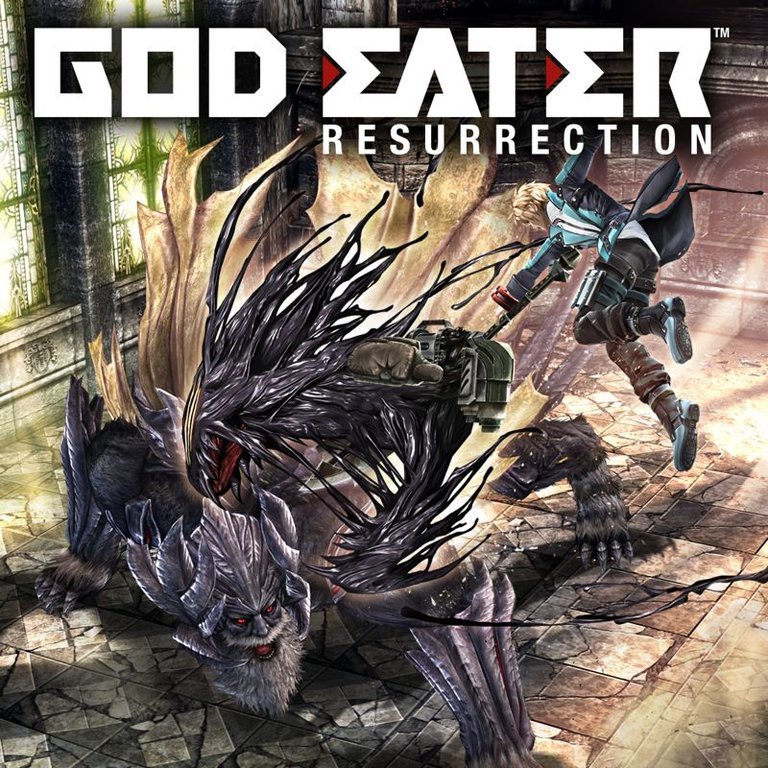
Set in a futuristic post-apocalyptic world overrun by monstrous Aragami, God Eater: Resurrection is a remastered action RPG where players join the Fenrir Organization as ‘God Eaters’—soldiers wielding transforming weapons called God Arcs. Combining third-person melee and ranged combat with an anime-inspired art style, players engage in intense battles to eradicate these creatures and protect humanity, featuring enhanced visuals and additional story content from the original God Eater: Burst.
Gameplay Videos
Where to Buy God Eater: Resurrection
PC
God Eater: Resurrection Free Download
God Eater: Resurrection Cracks & Fixes
God Eater: Resurrection Patches & Updates
God Eater: Resurrection Mods
God Eater: Resurrection Guides & Walkthroughs
God Eater: Resurrection Reviews & Reception
metacritic.com (70/100): Released in Japan last October, God Eater Resurrection has given back to the original game the popularity it deserved. To this day is undoubtedly the best alternative to Monster Hunter.
opencritic.com (72/100): Perhaps it took a move to the home consoles and a years-delayed retouch, but God Eater Resurrection shines as a less demanding, flashier alternative to the likes of Monster Hunter. It’ll never ask for the same depth of dedication, but it doesn’t try to, and in (not) doing so, manages to prove that being the ‘diet’ version of something isn’t always a bad thing.
monstercritic.com (72/100): God Eater Resurrection is a tense and action-packed game that provides a fun and emotionally-driven experience, despite some overly complicated gameplay mechanics.
God Eater: Resurrection Cheats & Codes
PS Vita
| Code | Effect |
|---|---|
| $0200 8890A400 3B9AC9FF | Infinite Money |
| $0100 88A344D8 00000E10 | Infinite Mission Time [Note 1] |
| $0000 88A3703A 00000005 | Infinite Post-Mission Time |
| $4201 889048E0 461C3C00 $0002 0000000C 00000000 |
Infinite HP [Note 2] |
| $4201 889048E8 461C3C00 $0002 0000000C 00000000 |
Infinite ST [Note 2] |
| $4201 889048E4 461C3C00 $0002 0000000C 00000000 |
Infinite OP [Note 2] |
| $4201 889048E0 461C3C00 $0006 00000004 00000000 |
Infinite HP/ST/OP [Note 2] |
| $D008 88A34DF9 00000002 $3003 88820988 00000710 $3000 00000000 00000088 $3000 00000000 0000005C $3300 00000000 00000003 $3203 88820988 00000710 $3200 00000000 00000088 $3200 00000000 00000064 $3300 00000000 447A0000 |
Infinite Level 3 Burst [Note 3] |
| $4001 88905C54 00000063 $000F 00000478 00000000 |
Infinite Enemy Bullets |
| $D009 88A34DF9 00000002 $7201 88904864 00000070 $7701 00000000 461C3C00 $0002 0000000C 00000000 $7201 88904868 00000070 $7701 00000000 461C3C00 $0002 0000000C 00000000 $7201 8890486C 00000070 $7701 00000000 461C3C00 $0002 0000000C 00000000 |
Allies Have Infinite HP [Note 3] |
| $4101 889059BE 0000270F $0003 00000002 00000000 |
Max Melee (Slash/Crushing/Piercing) |
| $4101 88905A38 00007EF4 $0002 00000002 00000000 |
Max Gun (Crushing/Piercing) |
| $4101 88905AAE 0000270F $0003 00000002 00000000 |
Max Shield |
| $4001 889059C4 00000002 $0004 00000002 00000000 |
Max Equipment Elements (MELEE) |
| $4001 88905A3C 00000005 $0004 00000002 00000000 |
Max Equipment Elements (GUN) |
| $4001 88905AB4 00000004 $0004 00000002 00000000 |
Max Equipment Elements (SHIELD) |
| $4101 8890491A 00000063 $0020 00000078 00000000 |
Infinite Inventory Items |
| $4101 8895F7D4 000003E7 $0708 00000078 00000000 |
Infinite Storage Items |
| $0200 88993EE0 000A1ABD $0200 88993F58 000A1ABE $0200 88993FD0 000A1ABF $0200 88994048 000A276D $0200 889940C0 000A276E $0200 88994138 000A1AC0 $0200 889941B0 000A1AC1 $0200 88994228 000A1AC2 $0200 889942A0 000A1AC3 $0200 88994318 000A2769 $4001 88993EE6 00000019 $000A 00000078 00000000 $4101 88993EE4 000003E7 $000A 00000078 00000000 |
Have Tickets |
| $0200 88993AA8 000A3533 $0200 88993B20 000A357E $0200 88993B98 000A357F $0200 88993C10 000A3580 $0200 88993C88 000A3581 $0200 88993D00 000A3582 $0200 88993D78 000A3583 $0200 88993DF0 000A3584 $0200 88993E68 000A3585 $0100 88993AAE 00002118 $4101 88993B26 00000018 $0008 00000078 00000000 $4101 88993AAC 00000063 $0009 00000078 00000000 |
Have Compound Core/Crystals [Note 4] |
| $0100 8891B41E 000003E7 | Max GAP |
| $7201 88A6F278 00000178 $7701 00000000 0001869F $0032 00000178 00000000 |
Max Team AP |
| $0000 00000000 00000000 | Have High-End God Arc Skills [Note 5] |
| $0100 88A0F49E 00000E1D | Master Skills [1/3] |
PC
Download and run a trainer app (e.g., WeMod, PLITCH, Cheat Happens) to activate cheats. No traditional console commands are available.
| Code | Effect |
|---|---|
| Player HP (Toggle) | Player HP remains full |
| Player OP (Toggle) | Player OP remains full |
| Player ST (Toggle) | Player ST remains full |
| Party HP (Toggle) | Party members HP remains full |
| Add Money (Press) | Adds money in the Terminal |
| Add Gap (Press) | Adds Gap in the Terminal |
| 1000 AP (Toggle) | Characters will have more AP in the Terminal |
| Unlimited Ammo (Toggle) | Weapons which have ammo that decrease will remain full |
| Unlimited Battle Items (Toggle) | When you use items you will have more |
| Freeze Burst Gauge (Toggle) | The burst gauge will remain frozen in place |
God Eater: Resurrection: Review
Introduction
In the sprawling landscape of action RPGs, few franchises have carved out as distinct a niche as God Eater. Emerging from the shadow of Capcom’s Monster Hunter series, God Eater offered a faster, more anime-infused take on the “hunting” genre, blending visceral combat with narrative depth. God Eater: Resurrection, a 2015 remaster of the 2010 PSP original (Gods Eater Burst), stands as both a tribute to the series’ roots and a masterful reimagining for modern audiences. It revitalizes a post-apocalyptic saga where humanity battles god-like monsters called Aragami, using bio-mechanical weapons called God Arcs. This review posits that Resurrection is not merely a nostalgic re-release but a deft evolution—stripping away archaic design quirks while amplifying the series’ strengths, making it an essential entry for both veterans and newcomers.
Development History & Context
Developed by Shift Inc.—later known for Code Vein—the original God Eater (2010) arrived on the PlayStation Portable, a console synonymous with portable Japanese RPGs. Its release coincided with the PSP’s twilight, yet it sold over 610,000 copies in Japan alone, thanks to its accessible combat and engrossing narrative. The enhanced Gods Eater Burst (2010/2011) expanded the story and mechanics, cementing the series’ identity. By 2015, the genre landscape had shifted: Monster Hunter thrived, while rivals like Toukiden emerged. Resurrection aimed to bridge eras, rebuilding the game in the engine of God Eater 2: Rage Burst for PlayStation 4, Vita, and PC. Technologically, it overcame PSP-era limitations—crisper visuals, streamlined UI, and cross-play/save functionality. This transformation was strategic: Bandai Namco sought to reintroduce a now-niche franchise to a wider audience, leveraging the rising popularity of dark fantasy anime (e.g., Attack on Titan) to bolster its appeal. Director Hiroshi Yoshimura and producer Yosuke Tomizawa’s vision remained consistent: prioritize fluid combat and character-driven storytelling within a bleak, high-stakes world.
Narrative & Thematic Deep Dive
Resurrection weaves a tale of survival across three arcs, each escalating in scope and moral complexity. Set in 2071, humanity clings to existence within Fenrir Corporation’s arcologies, besieged by Aragami—monsters composed of “Oracle Cells” that consume anything. The protagonist, a New-Type God Eater, joins the Far East Branch’s First Unit, led by the charismatic Lindow Amamiya. The narrative’s core strength lies in its exploration of sacrifice: characters grapple with the cost of protecting humanity, often blurring ethical lines. Key themes include:
– Humanity vs. Humanity: Director Johannes von Schicksal’s “Ark Project” seeks to save Fenrir’s elite by abandoning Earth, forcing players to confront whether survival justifies elitism.
– Identity and Transformation: Alisa Ilynichna Omela’s trauma—her parents devoured by Aragami—and Lindow’s mutation into a hybrid entity question what defines “human” in a world where boundaries erode.
– Hope in Despair: The enigmatic Shio, a human-Aragami hybrid, embodies the franchise’s tragic optimism. Her sacrifice to take Nova (a world-ending Aragami) to the moon underscores the narrative’s bittersweet tone.
The dialogue, while occasionally stilted in English, carries emotional weight through character interactions. Voice performances, especially Maaya Sakamoto’s nuanced delivery as Alisa, breathe life into the script. Yet the story’s pacing falters in the Burst arc, with filler missions diluting tension. Still, the Resurrection arc’s climax—defeating Arius Nova by exploiting its weaknesses with Dreadnought cores—delivers cathartic, thematically resonant action.
Gameplay Mechanics & Systems
Resurrection’s combat is a symphony of violence and strategy, centered on the God Arc’s modular forms. New-Type God Eaters seamlessly switch between:
– Blade Form: High-damage melee attacks consuming stamina.
– Gun Form: Ranged assaults depleting Oracle Points (OP), replenished by successful Blade strikes.
– Shield Form: A defensive stance that staggers enemies.
– Predator Form: Devouring Aragami to enter “Burst Mode,” granting enhanced stats and access to Aragami bullets—devourable projectiles that can be shot back or shared for “Link Bursts.”
The new Predator Style adds aerial and combo devour moves, replacing the Burst era’s Control Units. This innovation deepens customization, with buffs ranked by potency against trade-offs like devour duration. Weapon diversity expands to 14 types, including the Charge Spear (thrusting attacks) and Boost Hammer (rocket-powered slams), each with unique mechanics. Mission structure, however, leans heavily on repetition: hunts for specific Aragami in time-limited zones become formulaic. The 14-difficulty system (ranks 1–6: original; 7–10: Burst; 11–14: Resurrection arc) mitigates this by escalating enemy AI and introducing new variants (e.g., Dyaus Pita’s divine-element attacks). Crafting and bullet editing offer creative outlets, though resource farming late-game can feel tedious. Online co-op (up to three players) alleviates monotony, emphasizing teamwork through Link Aids and coordinated Bursts.
World-Building, Art & Sound
Resurrection excels in its world-building, painting a future where ruins dominate. Fenrir’s arcologies—like the Far East Branch’s Den—serve as bastions of order against the encroaching wilderness. The art direction, led by Koichi Itakura and Sokabe Shuji, blends anime aesthetics with gritty realism: character designs (e.g., Lindow’s scarred determination, Alisa’s icy resolve) evoke Ufotable’s Fate/Zero aesthetic, while Aragami like the Ouroboros—a mountain-sized serpent—loom with terrifying grandeur. Environments, though recycled, are distinct: the Infernal Subway’s lava tunnels contrast with overgrown cityscapes, all rendered with improved textures and lighting. Sound design is equally potent. Go Shiina’s soundtrack fuses orchestral intensity with electronic motifs, tracks like “Over the Clouds” and “My Life” swelling during climactic battles. Sound effects—the visceral crunch of Blade strikes, the guttural roars of Aragami—immerse players in the brutality of combat. Voice acting is a highlight, with the Japanese cast (e.g., Hiroaki Hirata as Lindow) outshifting the English dub’s occasional flatness. Yet the audio occasionally struggles with mission chatter, mixing Operator alerts and dialogue into incoherent noise.
Reception & Legacy
Upon release, Resurrection garnered a mixed but generally positive reception. Metacritic scored it 70/100, reflecting its highs and lows. Critics praised its combat and accessibility: RPGamer hailed it as “the best pretender to Monster Hunter’s throne,” while PlayStation Universe lauded its “strong statement on how the hunter genre should be.” However, GameSpot criticized its “outdated” mission design, and GamingTrend found the story “unconvincing.” Sales were robust in Japan (167,857 copies in its debut week, Vita leading), but Western performance was modest. Legacy-wise, Resurrection succeeded in modernizing the series. It introduced new players to the God Eater universe, evidenced by its tie-in anime (2015) and expanded media (manga, novels). Its Predator Style and mechanics influenced successors like God Eater 3, while cross-platform play set a precedent for genre titles. Though it didn’t dethrone Monster Hunter, it carved a loyal niche, proving that a blend of accessibility and narrative could thrive alongside giants.
Conclusion
God Eater: Resurrection is a testament to thoughtful remastering. It strips away the PSP-era’s rough edges—awkward controls, repetitive missions—and injects new life with Predator Style, expanded weaponry, and a poignant narrative arc. While its story stumbles in filler segments and its late-game grind can test patience, its combat remains a visceral, strategic joy. For series veterans, it’s the definitive way to experience God Eater’s origins; for newcomers, it’s an accessible entry point into a rich, tragic universe. In the pantheon of action RPGs, Resurrection stands not as a revolution, but as a vital evolution—proving that even “old” gods can be resurrected with grace and purpose. Verdict: Essential for franchise fans; a compelling starting point for genre newcomers.