
- Release Year: 2017
- Platforms: Nintendo Switch, Windows, Xbox One, Xbox Series
- Publisher: Playmous Inc., Plug In Digital SAS, SayGames Ltd
- Developer: Eon Games, Playmous Inc.
- Genre: Puzzle
- Perspective: Side view
- Game Mode: Single-player
- Average Score: 70/100
Description
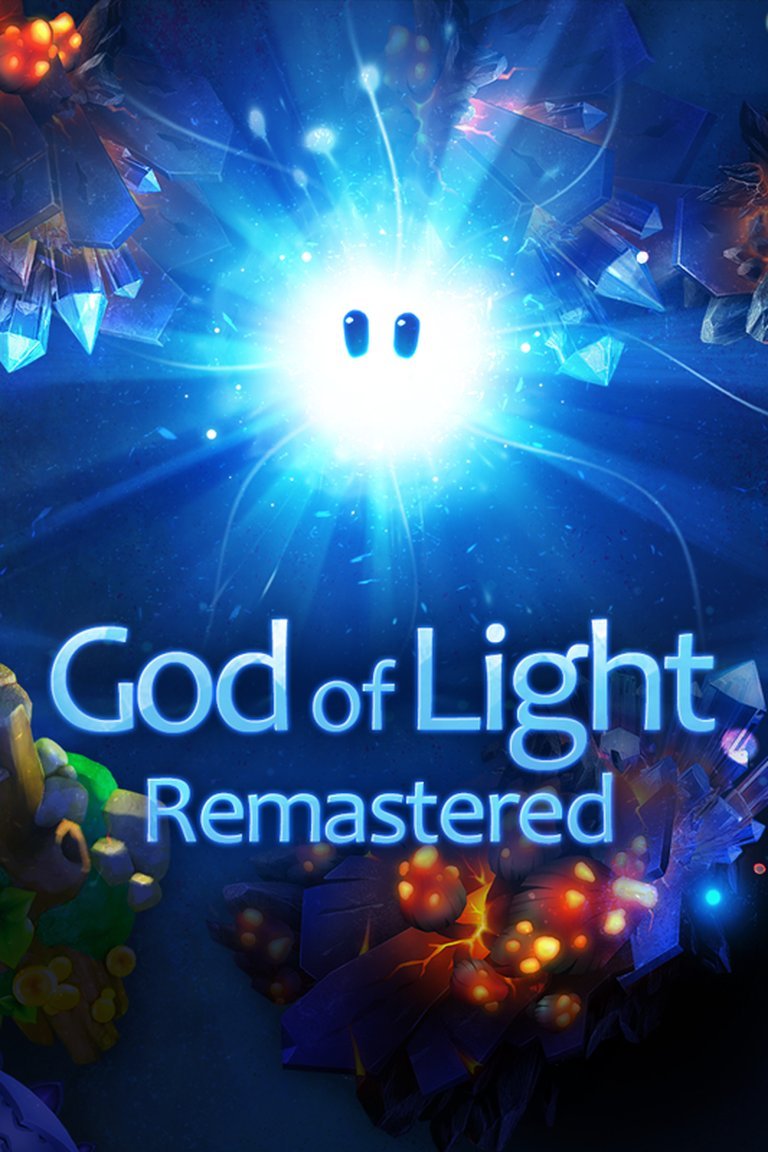
God of Light: Remastered is a puzzle game where players guide a beam of light, controlled by the character Shiny, through intricate levels filled with mirrors, prisms, and other mechanisms to restore light to the universe. Originally a mobile hit, this remastered edition features enhanced HD visuals and a new soundtrack by UNKLE, offering a fresh yet familiar experience. The game challenges players to activate Sources of Life by manipulating light beams, unlocking new levels and mechanics as they progress through 25 stages, all while collecting crystals and fireflies to fully illuminate the Celestial Tree.
Where to Buy God of Light: Remastered
PC
God of Light: Remastered Patches & Updates
God of Light: Remastered Guides & Walkthroughs
God of Light: Remastered Reviews & Reception
metacritic.com (70/100): Mobile games on console ain’t all bad you know, and if you want a puzzler, God of Light Remastered will suffice.
opencritic.com : God of Light: Remastered offers an enjoyable puzzle adventure for players seeking an illuminating experience on the Nintendo Switch.
a-to-jconnections.com : God of Light is a puzzle game that originally saw success on mobile devices before receiving a full remaster a few years back for PC and XBox.
ladiesgamers.com : God of Light: Remastered is a puzzle game that focuses on light and the movement of it.
God of Light: Remastered: A Comprehensive Retrospective
Introduction
In the vast cosmos of puzzle games, few titles have managed to carve out a niche as distinctive and enduring as God of Light: Remastered. Originally a mobile phenomenon played by over 15 million users, this remastered edition transcends its humble origins, offering a polished, immersive experience that redefines the physics puzzle genre. With its unique blend of light manipulation mechanics, atmospheric visuals, and a hauntingly beautiful soundtrack by UNKLE, God of Light: Remastered stands as a testament to the power of simplicity and innovation in game design. This review delves deep into the game’s development history, narrative depth, gameplay mechanics, artistic achievements, and its lasting impact on the puzzle genre.
Development History & Context
Origins and Evolution
God of Light first emerged in 2014 as a mobile title developed by Playmous Inc., a studio known for its creative approach to casual gaming. The original game quickly garnered acclaim for its intuitive yet challenging puzzle design, which revolved around manipulating light beams to restore illumination to a darkened universe. The game’s success on mobile platforms—amassing over 15 million players—prompted the developers to revisit the title with a remastered edition, aiming to bring its unique gameplay to a broader audience.
The remastered version, released in 2017 for Xbox One and Windows, was not merely a graphical upgrade but a reimagining of the original experience. Playmous Inc., in collaboration with Eon Games, sought to enhance the game’s visual fidelity, refine its physics-based controls, and integrate a remastered soundtrack by the renowned electronic music artist UNKLE. This collaboration underscored the studio’s ambition to elevate God of Light from a mobile curiosity to a console-worthy experience.
Technological Constraints and Innovations
The transition from mobile to console presented both challenges and opportunities. The original mobile version relied heavily on touchscreen controls, which were intuitive for manipulating light beams and interactive objects. However, adapting these mechanics to console controllers required innovative solutions to maintain the game’s accessibility and precision. The remastered edition introduced tailored light-physics controls, allowing players to use analog sticks to rotate mirrors, prisms, and other light-manipulating tools with a degree of finesse that rivaled the touchscreen experience.
Technologically, the remastered edition leveraged modern hardware to deliver high-definition visuals and enhanced lighting effects. The game’s engine was optimized to support dynamic shadows, refractive light beams, and vibrant color palettes, all of which contributed to a more immersive and visually striking experience. The inclusion of UNKLE’s soundtrack further enriched the game’s atmosphere, blending ambient electronic beats with soothing melodies to create a soundscape that complemented the game’s meditative puzzle-solving.
The Gaming Landscape at Release
At the time of its release in 2017, the puzzle genre was experiencing a renaissance, with titles like The Witness, Portal 2, and Monument Valley setting high standards for innovation and design. God of Light: Remastered entered this competitive landscape with a unique proposition: a physics-based puzzle game that emphasized exploration and experimentation over traditional problem-solving. Its focus on light manipulation and environmental interaction offered a fresh perspective, distinguishing it from more conventional puzzle games.
The game’s release on Xbox One and Windows also coincided with a growing interest in indie titles that blended casual accessibility with deeper mechanical complexity. God of Light: Remastered struck a balance between these elements, appealing to both casual players seeking a relaxing experience and hardcore puzzle enthusiasts looking for a challenge. Its subsequent release on Nintendo Switch in 2024 further expanded its reach, introducing the game to a new generation of players who appreciated its portable, pick-up-and-play nature.
Narrative & Thematic Deep Dive
Plot and Characters
God of Light: Remastered presents a deceptively simple narrative that serves as a backdrop for its intricate puzzle design. The game opens with a cataclysmic event: the universe is plunged into darkness, and all light vanishes except for a single spark embodied by Shiny, a cute, sentient ball of light. Players assume the role of Shiny’s guide, tasked with restoring light to the universe by activating the Sources of Life scattered across six distinct worlds. Each world represents a different celestial body, and as players progress, they uncover the story of the universe’s decline and Shiny’s quest to reverse it.
While the narrative is minimalistic, it is effectively conveyed through environmental storytelling and subtle visual cues. The gradual illumination of each level, the revival of the Celestial Tree, and the unlocking of new worlds all contribute to a sense of progression and purpose. Shiny, as the game’s mascot, serves as a charming and relatable protagonist, embodying the game’s themes of hope, perseverance, and the power of light to overcome darkness.
Themes and Symbolism
At its core, God of Light: Remastered explores themes of restoration, discovery, and the interplay between light and darkness. The game’s mechanics—manipulating light beams to activate dormant objects—mirror its narrative themes, reinforcing the idea that light is both a tool and a symbol of renewal. The Sources of Life, which players must illuminate to progress, represent the fundamental building blocks of the universe, and their activation signifies the restoration of balance and harmony.
The game also touches on themes of exploration and curiosity. Each level begins in darkness, and players must use their wits and the tools at their disposal to reveal hidden paths, activate mechanisms, and uncover the secrets of the universe. This emphasis on discovery aligns with the game’s puzzle design, which encourages experimentation and rewards players for thinking outside the box.
Dialogue and Atmosphere
God of Light: Remastered eschews traditional dialogue in favor of an atmospheric, wordless narrative. The absence of spoken or written dialogue allows the game’s visuals and soundtrack to take center stage, creating an immersive experience that relies on player interpretation. The ambient sounds of the universe—soft hums, distant echoes, and the gentle flicker of light—combine with UNKLE’s soundtrack to evoke a sense of wonder and tranquility.
The game’s atmosphere is further enhanced by its dynamic lighting system, which casts shadows and highlights in real-time as players manipulate light beams. This interplay between light and darkness not only serves a mechanical purpose but also contributes to the game’s emotional resonance, reinforcing the themes of hope and renewal.
Gameplay Mechanics & Systems
Core Gameplay Loop
The core gameplay of God of Light: Remastered revolves around manipulating a beam of light emitted by Shiny to activate the Sources of Life in each level. Players must navigate a series of obstacles, including mirrors, prisms, black holes, and other light-altering tools, to direct the light beam to its destination. The game’s physics-based mechanics ensure that light behaves realistically, reflecting off surfaces, refracting through prisms, and bending around black holes.
Each level is designed as a self-contained puzzle, with players starting in darkness and gradually illuminating the environment as they solve the puzzle. The game introduces new mechanics and tools incrementally, ensuring that players are constantly challenged without feeling overwhelmed. Early levels focus on basic mirror manipulation, while later levels incorporate more complex elements such as teleporting mirrors, timed gates, and light splitters.
Tools and Mechanics
God of Light: Remastered features a diverse array of tools and mechanics that players can use to manipulate light:
- Mirrors: The most basic tool, mirrors can be rotated or moved to redirect light beams. Some mirrors are stationary, while others can be adjusted to fine-tune the light’s path.
- Prisms: These tools split a single light beam into multiple beams, allowing players to activate multiple objects simultaneously.
- Black Holes: These gravitational anomalies bend light beams, creating curved paths that can be used to navigate around obstacles.
- Collectors: These objects absorb light and can be used to power other mechanisms, such as timed gates or teleporters.
- Fireflies: Scattered throughout the levels, fireflies serve as both collectibles and hints. Players can use fireflies to temporarily illuminate dark areas, revealing hidden paths or solutions.
The game’s mechanics are designed to encourage experimentation, with players often needing to combine multiple tools to solve a single puzzle. For example, a level might require players to use a prism to split a light beam, then redirect one of the beams using a mirror to activate a collector, which in turn powers a teleporter to move the light to its final destination.
Character Progression and UI
God of Light: Remastered does not feature traditional character progression in the form of leveling up or unlocking new abilities. Instead, progression is tied to the completion of levels and the unlocking of new worlds. As players solve puzzles and collect crystals, they unlock access to new areas, each with its own unique set of challenges and mechanics.
The game’s user interface is minimalistic and intuitive, designed to keep the focus on the puzzle-solving experience. The main screen displays the current level, the number of collected crystals and fireflies, and the player’s score. The score is based on the time taken to complete the level and the number of crystals collected, though it does not affect progression and serves primarily as a measure of mastery.
Innovative and Flawed Systems
One of the most innovative aspects of God of Light: Remastered is its dynamic lighting system, which not only serves a mechanical purpose but also enhances the game’s atmosphere. The way light interacts with the environment—casting shadows, revealing hidden objects, and illuminating dark corners—creates a sense of immersion that is rare in puzzle games.
However, the game is not without its flaws. The most notable issue is the control scheme, particularly on console platforms. While the remastered edition introduced tailored light-physics controls, the transition from touchscreen to analog sticks can feel clunky and imprecise. Players often struggle to fine-tune the angle of mirrors or the direction of light beams, leading to frustration in later levels where precision is paramount. This issue is compounded by the lack of touchscreen support on the Nintendo Switch, a missed opportunity given the platform’s hybrid nature.
Another potential drawback is the game’s linear progression. While the incremental introduction of new mechanics keeps the gameplay fresh, some players may find the lack of non-linear exploration or alternative solutions limiting. The game’s puzzles are designed to have a single, optimal solution, which may not appeal to players who prefer open-ended problem-solving.
World-Building, Art & Sound
Setting and Atmosphere
God of Light: Remastered takes place in a vast, abstract universe composed of six distinct worlds, each with its own unique aesthetic and thematic elements. The worlds are designed to evoke a sense of wonder and mystery, with environments ranging from lush, organic landscapes to stark, geometric structures. The game’s art style is a blend of minimalism and vibrancy, with bold colors and clean lines that emphasize the interplay between light and darkness.
The atmosphere of each world is further enhanced by the game’s dynamic lighting system, which casts shadows and highlights in real-time. As players manipulate light beams, the environment responds dynamically, with dark areas gradually illuminating to reveal hidden details. This creates a sense of discovery and progression, as players uncover the secrets of each world one beam of light at a time.
Visual Direction
The visual direction of God of Light: Remastered is a testament to the power of simplicity. The game’s art style is characterized by its use of bold, primary colors and geometric shapes, which serve to highlight the mechanical interactions between light and the environment. The remastered edition’s high-definition visuals and enhanced lighting effects elevate the original mobile game’s aesthetics, creating a more immersive and visually striking experience.
One of the most impressive aspects of the game’s visual design is its use of light as both a mechanical tool and an artistic element. The way light beams refract through prisms, reflect off mirrors, and bend around black holes is not only functionally important but also visually captivating. The game’s environments are designed to take full advantage of these effects, with levels that encourage players to experiment with different lighting configurations to uncover hidden paths and solutions.
Sound Design and Music
The sound design of God of Light: Remastered is understated yet effective, with ambient sounds that complement the game’s atmospheric visuals. The gentle hum of machinery, the soft echo of light beams, and the distant chime of activated mechanisms all contribute to a sense of immersion, reinforcing the game’s themes of exploration and discovery.
The standout feature of the game’s audio design is its soundtrack, composed by the electronic music artist UNKLE. Known for their work in the electronic and hip-hop genres, UNKLE’s contribution to God of Light: Remastered is a masterclass in atmospheric composition. The soundtrack blends ambient electronic beats with soothing melodies, creating a soundscape that is both relaxing and engaging. Tracks like “Lullaby” and “Celestial” evoke a sense of tranquility, while others, such as “Darkness Falls,” introduce a hint of tension and urgency.
The music is dynamically integrated into the gameplay, with tracks shifting in response to the player’s actions. As players illuminate a level, the music swells, reinforcing the sense of progression and accomplishment. Conversely, moments of darkness are accompanied by more subdued, introspective tracks, creating a contrast that enhances the game’s emotional resonance.
Reception & Legacy
Critical and Commercial Reception
God of Light: Remastered received a generally positive reception upon its release, with critics praising its innovative puzzle design, atmospheric visuals, and haunting soundtrack. The game’s transition from mobile to console was noted as a successful adaptation, with the remastered edition’s enhanced graphics and refined controls earning particular acclaim. However, some critics highlighted the control scheme’s occasional imprecision, especially on console platforms, as a minor drawback.
Commercially, the game performed well, particularly on the Nintendo Switch, where its portable, pick-up-and-play nature resonated with a broad audience. The game’s affordability—priced at $4.99 on the Nintendo eShop—also contributed to its commercial success, making it an accessible entry point for players new to the puzzle genre.
Evolution of Reputation
Over time, God of Light: Remastered has developed a reputation as a hidden gem within the puzzle genre. While it may not have achieved the same level of mainstream recognition as titles like Portal or The Witness, it has cultivated a dedicated fanbase that appreciates its unique blend of light manipulation mechanics and atmospheric storytelling. The game’s inclusion in various indie game bundles and its availability on multiple platforms have further cemented its status as a cult classic.
Influence on Subsequent Games
God of Light: Remastered has had a subtle but noticeable influence on the puzzle genre, particularly in the realm of physics-based and light manipulation puzzles. Games like The Lightbringer and Lumino City have drawn inspiration from its mechanics, incorporating similar elements of light reflection and environmental interaction. The game’s success has also demonstrated the viability of remastering mobile titles for console audiences, paving the way for other developers to explore similar adaptations.
Conclusion
God of Light: Remastered is a shining example of how a simple yet innovative concept can transcend its origins to become a memorable and engaging experience. Its unique blend of light manipulation mechanics, atmospheric visuals, and a hauntingly beautiful soundtrack creates a puzzle game that is both challenging and meditative. While its control scheme may occasionally frustrate, the game’s strengths far outweigh its weaknesses, making it a must-play for fans of the genre.
In the pantheon of puzzle games, God of Light: Remastered occupies a distinctive niche, offering a experience that is as visually captivating as it is mechanically satisfying. Its legacy as a remastered mobile title that successfully transitioned to consoles serves as a testament to the power of innovation and the enduring appeal of well-crafted gameplay. For those seeking a puzzle game that is both relaxing and intellectually stimulating, God of Light: Remastered is a beacon of light in a crowded genre.
Final Verdict: A brilliant remaster that illuminates the puzzle genre with its innovative mechanics and atmospheric design.