
- Release Year: 2018
- Platforms: Windows
- Publisher: Longbow Digital Arts Inc.
- Developer: Longbow Digital Arts Inc.
- Genre: Adventure
- Perspective: Side view
- Game Mode: Single-player
- Gameplay: Platform, Puzzle elements
- Setting: Fantasy
- Average Score: 76/100
Description
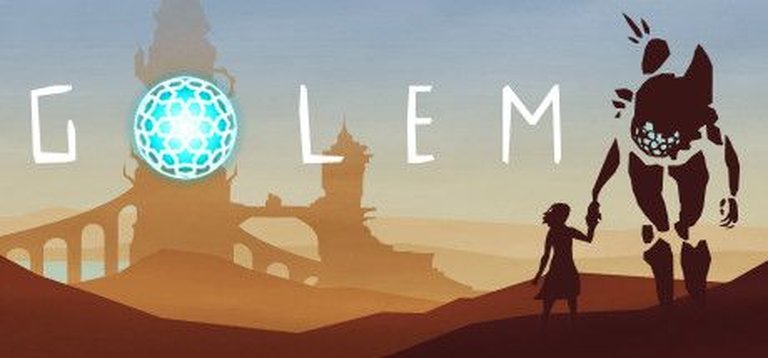
Golem is a single-player adventure game developed by Longbow Games, released on May 29, 2018. The game follows a young girl and a shape-shifting golem as they navigate the ruins of an ancient tower. Players must solve increasingly challenging puzzles and reactivate long-dormant machines within the tower’s 10 levels. The golem can transform into five different forms, each granting unique abilities to overcome obstacles and puzzles. Golem is praised for its top-notch presentation, unique art style, and stellar soundtrack, offering a delightful and engaging puzzle-platformer experience.
Gameplay Videos
Where to Buy Golem
Golem Free Download
Golem Patches & Updates
Golem Guides & Walkthroughs
Golem Reviews & Reception
metacritic.com (80/100): It has some real navigation issues, but once you get past those, this is a title that anyone with a PSVR helmet should be checking out.
en.wikipedia.org (75/100): Golem is fun little puzzle-platformer with a top-notch presentation both in sound and art direction.
opencritic.com (85/100): Golem is a magic adventure which excels by reminding us that games can be art.
gamespot.com (50/100): Golem often feels at odds with itself. This gorgeous puzzle-filled adventure successfully wraps you in a mystical world, where bright hues and cheerful melodies set the mood.
adventuregamers.com (90/100): Golem is fun little puzzle-platformer with a top-notch presentation both in sound and art direction.
Golem: Review
A Timeless Puzzle-Platformer That Transcends Its Limitations
Introduction
In the vast tapestry of indie puzzle-platformers, Golem (2018) emerges as a quiet yet luminous gem. Developed by Longbow Games, this side-scrolling adventure weaves a poignant tale of companionship within the ruins of a forgotten civilization, marrying ethereal artistry with cerebral challenges. Though overshadowed by flashier contemporaries, Golem carves its niche through understated elegance—a thesis underscored by its exquisite audiovisual presentation and emotionally resonant, if occasionally uneven, mechanics. This review explores how Golem transcends its indie constraints to deliver an experience both meditative and memorable, while grappling with the inherent friction between ambition and execution.
Development History & Context
The Studio’s Ascent
Longbow Games, founded in 2002, initially carved its reputation with historical strategy titles like the Hegemony series. Golem marked a seismic shift—the studio’s first foray into narrative-driven puzzle-platforming. Helmed by lead designer/programmer Rob McConnell and lead artist Blake Withers, the project emerged from a desire to blend environmental storytelling with tactile puzzle design, inspired by classics like Limbo and Machinarium.
Technological Constraints
Built in 2018 amid a resurgence of indie side-scrollers, Golem faced stiff competition from genre giants like Celeste and Hollow Knight. Yet Longbow leveraged its modest resources artfully. Using a proprietary engine optimized for 2D hand-drawn animation, the team prioritized atmospheric depth over technical bravura. The decision to forgo voice-acting—relying instead on visual storytelling—reflected both budgetary pragmatism and a commitment to universal accessibility.
The Era’s Gaming Landscape
Released during a golden age of indie innovation, Golem arrived at a time when players craved emotional weight and artistic distinctiveness. Its focus on quiet introspection—eschewing combat for contemplative puzzles—aligned with a broader industry shift toward “cozy games” (Stardew Valley, Journey). Yet its muted launch amidst AAA behemoths (God of War, Red Dead Redemption 2) relegated it to niche status, a fate its craftsmanship arguably deserved to transcend.
Narrative & Thematic Deep Dive
Plot: Silence Speaks Louder
Golem unfolds through the eyes of a nameless young girl who discovers a dormant “orb” in the caverns beneath her drought-stricken village. Awakening a shape-shifting golem companion, she navigates a decaying tower—once a marvel of ancient engineering—to resurrect its water-bearing machinery. Dialogue is absent; narrative weight rests on subtle environmental cues and the duo’s evolving bond.
Characters: An Unlikely Symphony
The relationship between girl and golem forms the emotional core. The golem transitions from a voiceless tool to a sentient partner through attentive animation: a hesitant head tilt, protective stance, or playful gesture. Their dynamic echoes themes of mutual dependency—the girl’s ingenuity guides the golem, while its strength safeguards her.
Themes: Decay and Renewal
Thematically, Golem explores lost legacies and ecological stewardship. Cryptic pictographs reveal the tower’s builders as technologically advanced yet hubristic—their collapse foreshadowing the village’s plight. The girl’s quest becomes an act of preservation, reconciling past failures with present survival. This allegory mirrors real-world anxieties about resource scarcity and forgotten wisdom.
Symbolism in the Void
The golem itself—a silent, servile construct—subverts mythic tropes. Its “evolution” (into canine, carrier, and climber forms) symbolizes adaptability in adversity, while its final ascension to sentience critiques humanity’s exploitative instincts. The tower, a labyrinth of rusted cogs and arid reservoirs, embodies time’s erosion, its reactivation a triumph of hope over entropy.
Gameplay Mechanics & Systems
Core Loop: Puzzling Harmony
Golem’s gameplay orbits two pillars: environmental manipulation and companion synergy. Each of the 10 levels tasks the player with reactivating machinery by:
1. Directing the golem to pressure plates, bridges, or levers.
2. Switching control to the girl to navigate tighter spaces, unlock paths, or decipher pictographic clues.
The golem’s five forms—ball, walker, carrier, climber, and aquatic—introduce staggered complexity, ensuring mechanics evolve alongside narrative stakes.
Innovation and Friction
The point-and-click traversal system—requiring precise cursor placement—polarizes. Proponents laud its deliberate pace, evoking the contemplative rhythm of Myst. Critics deride it as clunky, especially when misjudging walkable paths (e.g., mistaking foreground art for interactivity).
Puzzle Design: Highs and Lows
Standout puzzles demand spatial awareness and inter-character coordination. One late-game challenge requires using the golem’s carrier form to transport water barrels while the girl redirects flow valves—a symphony of timing and foresight. Yet infrequent obtuse solutions mar the flow. One section obscures a critical lever behind foliage, prompting trial-and-error tedium.
Progression and UI
A minimalist UI avoids intrusive HUD elements, relying instead on diegetic cues (e.g., the golem’s glow indicating charge). While elegant, this approach occasionally confuses; energy thresholds for certain abilities remain opaque. The lack of mid-level checkpoints exacerbates frustration during extended backtracking—a flaw amplified in the final tower ascent.
World-Building, Art & Sound
Visual Poetry
Longbow’s artistry radiates in every frame. Hand-painted backdrops merge Art Nouveau filigree with steampunk decay, rendered in a sun-bleached palette that shifts from ochre caverns to cerulean engine rooms. The golem’s design—a mosaic of fractured stone and golden light—suggests reverence and fragility, its movements animated with palpable weight.
Atmospheric Acoustics
The soundtrack—a fusion of medieval woodwinds, ambient drones, and clockwork percussion—immerses players in the tower’s melancholy grandeur. Themes mirror narrative beats: sparse plucked strings accompany desolate ruins, swelling to orchestral hope as machinery revives. Silence itself becomes a tool, underscoring isolation before the golem’s arrival.
Environmental Storytelling
Pictographs etched into walls serve as the game’s primary lore device. These cryptic murals depict the tower’s construction, its creators’ downfall, and the golem’s origins—revealed via the girl’s decryption mini-games. This mechanic rewards observation while reinforcing themes of historical amnesia.
Reception & Legacy
Critical Response
Golem garnered 84% aggregate praise (MobyGames), lauded for its “top-notch presentation” (Adventure Gamers) and “unique, heartwarming friendship” (Hooked Gamers). Detractors cited “repetitive backtracking” (Gameplay Benelux) and “finicky controls” (Rock Paper Shotgun). Metacritic settled at 75/100—a testament to its divisive mechanics.
Commercial Impact
Despite acclaim, Golem struggled commercially, drowned in 2018’s indie deluge. Its 2019 console port saw muted traction, though a dedicated cult following emerged, particularly among art-game enthusiasts.
Industry Influence
Golem’s legacy lies in environmental narrative minimalism. Its wordless storytelling and companion AI presaged later titles like Arise: A Simple Story (2019) and The Last Guardian’s creature-bonding ethos. While seldom namechecked, its DNA echoes in games prioritizing atmosphere over exposition.
Conclusion
Golem stands as a paradox—a game whose flaws are inseparable from its charm. Its occasional mechanical stumbles (awkward controls, opaque puzzles) pale against achievements in artistry and emotional resonance. Longbow Games’ gamble—transitioning from strategy epics to intimate platforming—yielded a work of rare sincerity: a meditation on loss, renewal, and the quiet power of partnership.
For genre aficionados, Golem is essential—a masterclass in visual storytelling and sonic immersion. Casual players may balk at its pacing, but those who linger uncover a luminous, melancholic fable. In the annals of indie history, it deserves remembrance not as a forgotten curio, but as a poignant reminder of games’ capacity to whisper truths louder than bombast.
Final Verdict: Golem is flawed, unforgettable, and unequivocally worth experiencing—a testament to indie artistry’s enduring spark.