
- Release Year: 2018
- Platforms: Windows
- Developer: Nicholas Rizzo
- Genre: Action, Simulation
- Perspective: 1st-person
- Game Mode: Single-player
- Gameplay: Open World, RPG elements, Sandbox, Shooter
Description
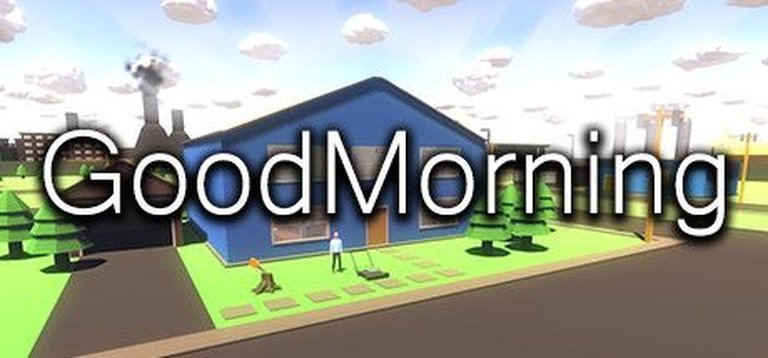
Good Morning is an action-simulation game developed by Nicholas Rizzo, released in 2018 for Windows. Played from a first-person perspective, it blends RPG elements, sandbox/open-world exploration, and shooter gameplay within a Unity-powered environment, offering players freedom to navigate and interact in a dynamic setting.
Where to Buy Good Morning
PC
Good Morning: Review
Introduction
In an era defined by meticulously crafted narratives and cinematic spectacles, Good Morning (2018) emerges as a defiantly anarchic outlier. Released solo developer Nicholas Rizzo on March 12, 2018, this Unity-powered sandbox game invites players to embody “Dave,” a man rejecting mundane life in favor of unbridled chaos. Whether committing mass murder, robbing banks, or simply sipping coffee, the game promises near-total freedom—a promise that encapsulates both its radical potential and its profound limitations. As a microcosm of the open-world genre’s evolution, Good Morning stands as a fascinating, flawed artifact. Its legacy lies not in critical acclaim or industry influence, but in its raw, uncompromising exploration of player agency, revealing both the exhilarating highs and the chaotic pitfalls of narrative-less sandbox design.
Development History & Context
Good Morning was crafted by Nicholas Rizzo, a solo developer leveraging the Unity engine—an accessible, asset-driven platform that democratized game creation. Released via Steam Early Access for $0.99, it arrived during a pivotal moment: 2018 saw indie darlings like Celeste and Hollow Knight dominate critical praise, while AAA giants (Red Dead Redemption 2, God of War) set new standards for cinematic storytelling. Yet, Good Morning rejected these trends entirely. Its development was marked by rapid iteration, with three post-launch patches in March 2018 alone. These updates added features like an “Alien Rifle,” drug effects, and performance fixes, underscoring Rizzo’s commitment to expanding the world despite minimal resources. Technologically constrained by Unity’s limitations and a solo workflow, the game prioritized breadth over polish—a trade-off defining countless indie sandboxes. The result was a product of its time: a snapshot of the Early Access ethos, where experimentation often superseded refinement.
Narrative & Thematic Deep Dive
Good Morning’s narrative is intentionally minimal, serving as a satirical framework for player-driven chaos. The protagonist, Dave, is a blank slate—a vessel for rebellion against societal monotony. He exists without backstory or dialogue, his motivations distilled into the game’s blunt premise: “Commit Mass Murder. Grab a cup of coffee.” This absence of traditional narrative (no cutscenes, quests, or character arcs) forces players to invent their own stories. The world’s factions—Nazis, gangsters, rednecks—function as cardboard antagonists, existing solely to be destroyed or exploited. Their one-dimensional design mirrors the game’s dark humor: exaggerated, cartoonish villains justify indiscriminate violence. Thematically, Good Morning explores freedom as double-edged sword. The disclaimer’s insistence that “everything in this game is satirical” attempts to distance the game from its content, positioning it as absurdist critique of modern life’s disaffection. Yet, without deeper commentary, this satire feels superficial. The game’s “narrative” emerges not from story, but from juxtaposition: the banality of coffee runs against the catharsis of arson, creating a disjointed tone that oscillates between bleak and farcical.
Gameplay Mechanics & Systems
Good Morning’s core loop is a masterclass in emergent gameplay, albeit one with significant flaws. Built on a first-person/shooter foundation, it offers three primary activities: exploration, combat, and crime. The sandbox design eschews quests, letting players choose their goals—whether hunting secrets, amassing wealth through robbery/drug trafficking, or unleashing hellfire. This freedom is exhilarating: players can switch from a peaceful park stroll to a bank heist in seconds. However, the RPG elements are rudimentary. Weapon buffs (e.g., shotgun/rifle improvements) suggest progression, but no skill trees or leveling systems exist. Combat relies on AI-driven factions, which were “majorly improved” post-launch but remain predictable: enemies swarm without tactics, offering little challenge. The “Alien Rifle” and drug effects add novelty, with hallucinogenic visuals and gameplay modifiers (e.g., altered speed or health), but these feel tacked-on. The UI is bare-bones, with no HUD beyond basic health/wanted-level indicators—a choice that aids immersion but hinders clarity. Ultimately, Good Morning’s systems shine in their chaos but falter in execution: performance issues (e.g., crashing pre-patches) and inconsistent AI betray its solo-developed roots.
World-Building, Art & Sound
The game’s world is a sprawling, yet artistically generic, playground. Its “large world” is procedurally generated, with patchwork environments ranging from urban streets to rural expanses. A “new location” added post-launch suggests iterative expansion, but the setting lacks distinct identity. Landmarks are absent; instead, the world is a canvas for destruction. Visually, Good Morning reflects Unity’s asset-driven limitations. Textures are functional, with a “new blood texture” update highlighting gore as a visual centerpiece. Character models are rudimentary, and environmental storytelling is minimal—save for scattered items hinting at Dave’s “mundane life” (e.g., coffee cups). Sound design is equally sparse. No soundtrack is mentioned, leaving ambient noises (gunfire, footsteps) to carry atmosphere. The absence of voice acting or dynamic dialogue reinforces the game’s commitment to player-driven silence. Yet, in its emptiness, Good Morning achieves a unique tone: the silence amplifies the player’s choices, turning a coffee break’s mundane clatter into a moment of stark contrast against the cacophony of violence.
Reception & Legacy
Good Morning launched with near-total obscurity. MobyGames records no critic reviews, and Steam’s player reviews section remains empty—indicating a commercial footprint too small to register in industry metrics. Its $0.99 price point and lack of marketing likely contributed to its invisibility. Culturally, it left no discernible impact; no sequels or spiritual successors emerged, and it was swiftly overshadowed by 2018’s heavy hitters. Yet, its legacy persists in its design philosophy. As a sandbox, it embodies the “amusement park” narrative model, where exploration unlocks emergent stories—a concept seen in titles like Minecraft or Grand Theft Auto V. Its failure, however, underscores the genre’s challenges: without narrative cohesion or technical polish, freedom feels hollow. For solo developers, Good Morning stands as a cautionary tale, highlighting the risks of prioritizing scope over depth. In historical terms, it is a footnote—proof that radical player agency alone cannot sustain a memorable experience.
Conclusion
Good Morning is a paradox: a game celebrated for its freedom yet crippled by its emptiness. As a solo-developed sandbox, it excels in offering players a blank slate, where creativity and chaos reign supreme. Its dark humor and emergent gameplay provide moments of genuine catharsis, turning mundane acts like coffee runs into surreal juxtapositions against violence. Yet, its lack of narrative depth, technical flaws, and minimal polish prevent it from transcending its status as a niche experiment. In the pantheon of open-world games, it ranks as a fascinating misfire—a reminder that true immersion requires balance between player agency and cohesive design. For historians, Good Morning is invaluable not as a landmark, but as a document of the indie scene’s ambition. It captures the essence of 2018’s Early Access ethos, where developers traded polish for potential. Ultimately, it is a game of fragments: brilliant in its intention, yet fractured in execution. Its place in history is secure not for what it achieved, but for what it dared to attempt—a world where even “Good Morning” could mean annihilation.