
- Release Year: 2003
- Platforms: Windows
- Publisher: Auran Games Pty Ltd., JoWooD Entertainment AG, Russobit-M
- Developer: Metropolis Software House
- Genre: Action
- Perspective: Diagonal-down
- Game Mode: Single-player
- Gameplay: Explosives, Gadget usage, Stealth
- Setting: espionage, Modern, Ukraine
- Average Score: 50/100
Description
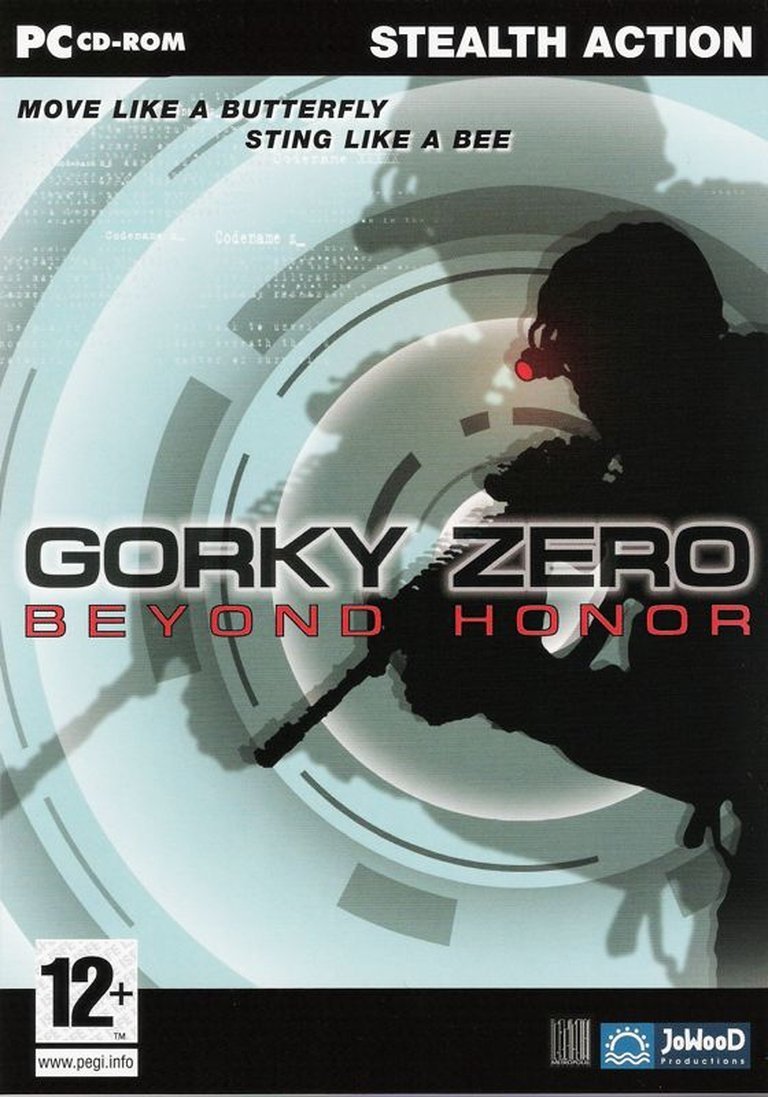
In Gorky Zero: Beyond Honor, players assume the role of Lieutenant Cole Sullivan, a NATO agent sent to infiltrate a secret laboratory in Ukraine to destroy a dangerous sect that brainwashes its members into obedient zombies. As a stealth-based action game with a narrative of espionage and conspiracy, it offers both isometric and third-person perspectives, equipping players with gadgets like weaponry, traps, explosives, and a portable computer to navigate the mission and uncover truths conflicting with his superiors’ orders.
Gameplay Videos
Gorky Zero: Beyond Honor Free Download
Gorky Zero: Beyond Honor Cracks & Fixes
Gorky Zero: Beyond Honor Patches & Updates
Gorky Zero: Beyond Honor Reviews & Reception
metacritic.com (43/100): For the first time ever for me, I can say that there is nothing good about this game.
retro-replay.com : Gorky Zero delivers tense, strategic gameplay inspired by classics like Splinter Cell and Metal Gear Solid.
Gorky Zero: Beyond Honor Cheats & Codes
PC
Press ‘Tab’ during gameplay and select the computer. Type ‘g0’ (where ‘0’ is the number zero) and enter one of the following codes.
| Code | Effect |
|---|---|
| 5332 | God mode |
| 9123 | Quick computer scanning |
| 2354 | More damage to opponents |
| 8216 | More health |
| 2352 | All weapons |
| 4616 | 100% accuracy |
| 6235 | First-aid kits double effect |
| 2695 | Unlimited ammunition |
| 4982 | Cannot be heard |
| 8892 | Cannot be seen |
| 4003 | Full health |
| 0038 | Always silent |
| 4828 | All other things |
Gorky Zero: Beyond Honor: Review
Introduction
In the shadowed corridors of post-Soviet Ukraine, where the cold war never truly ended but merely metastasized into clandestine horrors, Gorky Zero: Beyond Honor emerges as a flawed yet fascinating artifact of early 2000s stealth gaming. Released in 2003 by Polish developer Metropolis Software as a prequel to their cult tactical RPG Gorky 17 (Odium), this title dared to compete with giants like Splinter Cell and Metal Gear Solid on their own turf. It promised a tense, gadget-driven infiltration experience set against a backdrop of brainwashing, conspiracy, and moral ambiguity. Yet, Gorky Zero arrived not as a usurper, but as an earnest, if stumbling, contender—a game burdened by the technological and design constraints of its era, yet imbued with a unique spirit that warrants reappraisal. This review will dissect its legacy, dissect its ambitions, and ultimately argue that despite its numerous shortcomings, Gorky Zero remains a compelling, if deeply flawed, entry in the stealth genre’s history—a testament to the ambition of a developer punching above their weight.
Development History & Context
Crafted by Metropolis Software, a studio known for their blend of Eastern European aesthetics and tactical depth, Gorky Zero emerged from the crucible of a rapidly evolving industry. Released in September 2003, it arrived hot on the heels of Tom Clancy’s Splinter Cell (2002), a title that had redefined stealth with its light-and-shadow mechanics and cinematic polish. Metropolis, however, operated with vastly different resources. The game utilized the RenderWare engine, a capable but aging middleware solution that constrained its visual ambitions. Designed to run on modest hardware—a Pentium III 400 MHz CPU with 128MB RAM was sufficient—it was a product of compromise.
The core vision, as articulated by project leads Bartosz Brzostek and Grzegorz Miechowski, was to bridge the gap between the turn-based tactical combat of Gorky 17 and the real-time action demanded by the market. They aimed to create a “sneak’em-up” experience that emphasized gadgetry and environmental interaction over brute force. Key innovations included the seamless switching between isometric and third-person perspectives—a radical idea for its time—and a robust inventory system featuring non-lethal tools like gas traps and signaling devices. However, the development was undoubtedly rushed. The 115-person credits list reveals a large team for a mid-budget title, yet the final product shipped with glaring technical flaws, including inconsistent AI, clunky animations, and a UI that felt like a relic of an earlier design era. In a market saturated with AAA Western productions, Gorky Zero was a David attempting to slay Goliaths with a slingshot made of hope and RenderWare.
Narrative & Thematic Deep Dive
At its core, Gorky Zero spins a tale of espionage and existential dread that, while derivative, harbors unexpected thematic depth. The player assumes the role of Lieutenant Cole Sullivan, a NATO operative deployed to Ukraine to infiltrate a secret laboratory run by the enigmatic “Brotherhood of Salvation,” a sect believed to be brainwashing its followers into mindless, obedient “zombies” for nefarious purposes. The premise—a blend of Cold War paranoia and body-horror sci-fi—recalls the best of Metal Gear Solid, but the execution leans heavily into Eastern European fatalism.
The narrative unfolds through a mix of pre-rendered cutscenes and environmental storytelling via Sullivan’s portable computer. Players discover audio logs, classified documents, and intercepted communications that gradually peel back the layers of the conspiracy. The writing, credited to Polish author Rafał Ziemkiewicz, is functional but often hampered by translation quirks and clichéd dialogue (“The truth differs from what he has been told by his superiors” is a recurring refrain). What elevates the story is its gradual descent into moral ambiguity. As Sullivan uncovers evidence suggesting the Brotherhood’s research might have been co-opted or even initiated by Western powers for their own ends, the game transforms from a simple “destroy the evil lab” mission into a chilling exploration of institutional betrayal and the ethics of warfare. The “zombies” become less monstrous symbols and more tragic victims, forcing players to question the righteousness of their orders. This thematic pivot—shifting focus from external villains to internal rot—gives Gorky Zero a narrative weight that belies its budget origins, even if the delivery is often stilted.
Gameplay Mechanics & Systems
Gorky Zero’s gameplay is defined by its dual-perspective system and emphasis on stealth over combat, a choice both its greatest strength and most significant weakness. The ability to seamlessly switch between isometric and third-person views on the fly is a genuinely innovative mechanic. The isometric perspective excels at tactical planning, offering a clear overview of patrol routes, environmental hazards, and potential gadget placements. It’s ideal for laying traps or studying enemy patterns from a distance. Conversely, the third-person view immerses the player in Sullivan’s immediate surroundings, crucial for precise movements, silent takedowns, and evasive maneuvers in tight corridors. This duality creates a unique rhythm to infiltration, allowing players to constantly reassess their approach.
However, the core stealth loop is undermined by fundamental flaws. The enemy AI is notoriously erratic; guards exhibit wildly inconsistent detection, sometimes failing to notice Sullivan crawling mere feet away while detecting him through walls or in pitch darkness. The difficulty curve is punishingly steep, exacerbated by the limited combat options. Sullivan’s arsenal—comprising a Beretta 92FS, a pump-action shotgun, an IMI Uzi, and an Accuracy International AWM sniper rifle—is deliberately underpowered and poorly animated. Firing the pistol sideways in third-person view (a baffling design choice) highlights the game’s jarring disconnect between realism and playability. Combat is rarely viable, encouraging reliance on stealth takedowns and environmental gadgets.
The gadget system, however, is a highlight. Sullivan’s inventory includes gas traps for incapacitating groups, remote explosives for strategic destruction, flashlights to blind or misdirect guards, and signaling devices to create diversions. The portable computer acts as a narrative device, storing logs and files that unlock story details. Level design, while linear, offers occasional alternate routes and hidden data drives, rewarding exploration. Yet, the experience is frequently marred by technical issues: sticky movement, finicky camera angles in third-person mode, and a UI that feels cluttered and unresponsive. These systems, ambitious in concept, are executed with a roughness that frustrates more than it satisfies.
World-Building, Art & Sound
Gorky Zero succeeds admirably in crafting a pervasive atmosphere of dread and paranoia, even as its visual fidelity falters. The game’s world—a decaying secret laboratory complex in the Ukrainian wilderness—is rendered in a palette of cold blues, muted grays, and sickly industrial greens. Snow-swept exteriors, flickering fluorescent lights in dilapidated corridors, and the oppressive silence of empty chambers all contribute to a sense of isolation and decay. The RenderWare engine struggles with texture pop-in and aliasing, but the level design compensates through deliberate environmental storytelling: discarded syringes, flickering monitors, and cryptic graffiti on walls hint at the horror that transpired within.
Character models are detailed for their time, with Sullivan’s NATO gear contrasting sharply with the drab, uniformed guards and the unsettlingly blank-faced “slaves.” Animation, however, is a constant weakness—stilted movements during stealth kills and awkward transitions between perspectives break immersion. Sound design, overseen by composer Adam Skorupa, is the game’s most consistent strength. The soundtrack oscillates between tense, synth-driven ambience for stealth sections and heavier, percussive themes for combat encounters, effectively underscoring the mood. Sound effects—from the crunch of snow underfoot to the distant whir of machinery—are crisp and purposeful. Voice acting, while occasionally flat, conveys the grim professionalism demanded of the setting. Together, the art and sound create a cohesive, oppressive world that feels lived-in and threatening, even when the graphics fail to fully realize its potential.
Reception & Legacy
Upon release, Gorky Zero: Beyond Honor received a lukewarm reception that reflected its inherent contradictions. Critics praised its ambitious dual-perspective system and the gadget-heavy stealth approach, but lamented its execution. MobyGames aggregates a critic score of 53-54%, with reviews highlighting significant flaws. PC Zone noted it was “not terrible… but if you’re after anything near a top-class game, you’re sneaking up the wrong tree,” while GameStar dismissed it as having “no highlights” and criticized its “predictable, illogical, and simply ridiculous” story. Positive reviews, like Gry OnLine‘s 80% score, acknowledged its potential but lamented technical issues and linearity. The price point (around $20) was frequently cited as its only redeeming feature, positioning it as a “budget Splinter Cell” for less discerning players.
Commercially, it made little impact, overshadowed by its AAA contemporaries. Its legacy, however, has undergone a subtle reevaluation in the years since. Within niche circles of stealth enthusiasts and fans of Eastern European game development, it’s remembered as a flawed but ambitious experiment. The dual-perspective system, while imperfect, was ahead of its time and anticipated features seen in later titles like Commandos: Beyond the Call of Duty. Its focus on environmental gadgets over combat also resonates with modern stealth design philosophies. Critically, it serves as a cautionary tale about the challenges of competing with industry titans on limited resources. While it never achieved the cult status of its predecessor Gorky 17, it remains a fascinating historical artifact—a testament to Metropolis Software’s ambition, even if their technical prowess couldn’t match their vision.
Conclusion
Gorky Zero: Beyond Honor is a game of paradoxes: ambitious yet unpolished, innovative yet frustrating, atmospheric yet technically crude. It embodies the struggles of a mid-budget developer in an era dominated by AAA blockbusters, attempting to carve out a space in a genre defined by meticulous design and technological prowess. Its dual-perspective system remains a bold, if imperfect, experiment, while its gadget-focused stealth gameplay offers a unique tactical depth. The narrative, despite its clichés, stumbles into intriguing thematic territory, exploring moral ambiguity with surprising maturity.
Yet, these strengths are consistently undermined by technical shortcomings: erratic AI, clunky controls, and visuals that feel a generation behind its competitors. It’s a game that demands patience and a tolerance for jank, rewarding players not with polished thrills, but with moments of genuine ingenuity and atmospheric tension. Its place in gaming history is assured, not as a lost classic, but as a valiant footnote—an earnest attempt to innovate that remains a compelling, if deeply flawed, experience. For players willing to navigate its rough edges, Gorky Zero offers a unique glimpse into a different era of stealth design, proving that even in the shadows of giants, interesting ideas can flicker to life.