
- Release Year: 2017
- Platforms: Android, iPad, iPhone, Linux, Macintosh, Nintendo Switch, PlayStation 4, Windows, Xbox One
- Publisher: Hangzhou Yunkun Network Technology Co. Ltd., Kamina Dimension Ltd, Sometimes You
- Developer: Kamina Dimension Ltd
- Genre: Puzzle
- Game Mode: Single-player
- Gameplay: Arcade, Mini-games
- Average Score: 50/100
Description
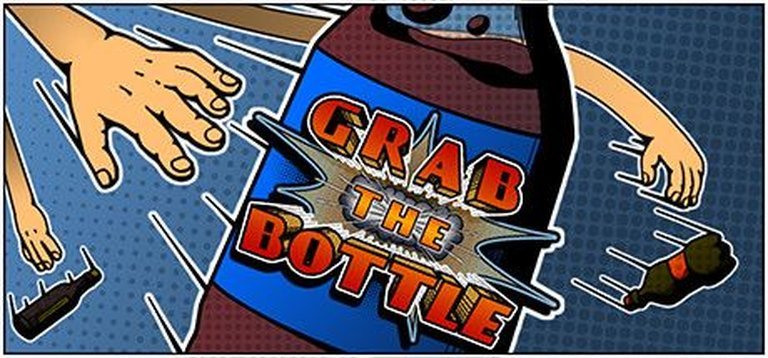
Grab the Bottle is a real-time puzzle game where players control a stretching hand navigating through obstacle courses to collect items and ultimately grab a bottle. Set in a comic book-inspired world with arcade-style gameplay, it challenges players with intricate level design and a unique control scheme across various platforms.
Gameplay Videos
Where to Buy Grab the Bottle
PC
Grab the Bottle Reviews & Reception
opencritic.com (75/100): a nice little excursion from your typical gaming experience
opencritic.com (40/100): The puzzles boil down to retry after retry, until finally succeeding and being rewarded with another level of repetitiveness.
opencritic.com (35/100): The idea is sound in theory but not in practice.
opencritic.com : Goofy and far-stretched idea.
gamesfreezer.co.uk : Grab the bottle is by no means a deep experience.
Grab the Bottle: Review – A Quirky, Flawed, and Endlessly Stretching Curiosity
Introduction: The Infinite Arm of Obscurity
In the vast, overcrowded landscape of indie puzzle games, few titles possess a concept as simultaneously simple and bizarrely specific as Grab the Bottle. Released in 2017 by the small Finnish studio Kamina Dimension, the game presents a singular, unshakeable premise: you control a man with an infinitely stretchy arm, tasked from cradle to grave with snatching bottles while navigating treacherous obstacle courses. It is a game that wears its absurdity on its sleeve, promising a unique physical puzzle-solving experience wrapped in a vintage comic book aesthetic. However, beneath this charming exterior lies a divisive core—a gameplay mechanic so central and unyielding that it becomes both the game’s greatest strength and its most notorious weakness. This review will argue that Grab the Bottle is a fascinating case study in design audacity, a game whose innovative central idea is perpetually at war with its own execution, resulting in an experience that is occasionally brilliant, frequently frustrating, and ultimately remembered more for its curious identity than its lasting impact. It is a cult footnote—a game you play to say you have, not one you return to for endless enjoyment.
Development History & Context: From Game Jams to a Stretchy Arm
The Studio and the Vision
Grab the Bottle is the debut commercial release of Kamina Dimension Ltd., a small studio formed by a group of friends who met through university Game Jams in Finland. The core team, led by CTO and main programmer Teemu Nikkarinen, had a philosophy of creating “simple concepts, old-school video games without too many bells and whistles,” aiming for designs that could have existed in the 16-bit era but with a modern twist (Retrogamesmaster interview). The game’s iconic premise—a stretchy arm solving puzzles—was born from this desire for a singular, clean mechanic. As Nikkarinen noted, the biggest development hurdle was scope management; the initial simple ideas snowballed, and the team had to confront the reality that their original schedule was impossible (Retrogamesmaster interview). The project also endured mundane real-world crises, such as their office flooding, forcing an evacuation (Retrogamesmaster interview).
Technological Context and Release
Built in Unity, the game leveraged the engine’s capabilities for 2D physics and cross-platform deployment. This allowed for a simultaneous release on Windows, Linux, and macOS in May 2017, followed by ports to iOS and Android later that year. Console versions for PlayStation 4, Xbox One, and Nintendo Switch arrived in 2018, often published by Sometimes You. The game entered Steam Early Access in December 2016, a common path for indies seeking feedback and funding. The developers explicitly used this period to iterate on level design and address the game’s most significant initial hurdle: communicating its unique control scheme to players, many of whom “didn’t immediately figure out how it plays” (Retrogamesmaster interview). The final release touted a story mode with “dozens of levels” (later specified as over 50 from IndieDB), vintage comic-style graphics, and a soundtrack reflecting the protagonist’s life phases.
The 2017 Gaming Landscape
Grab the Bottle emerged in a post-World of Goo, post-Portal 2 indie puzzle landscape. The market was saturated with physics-based puzzlers (Human: Fall Flat released the same year) and minimalist art-driven titles. Its competition was fierce. The game’s aesthetic, described as “colorful vintage comic-style” (Steam Store), stood out against the prevalent minimalist trends, aligning more with the hand-drawn charm of titles like Don’t Starve but in a 2D puzzle context. Its pricing strategy—a budget title, eventually selling for as little as $0.59—positioned it firmly in the impulse-buy category, a necessary move for an unknown studio with a niche concept.
Narrative & Thematic Deep Dive: A Life Lived in Bottles
The narrative of Grab the Bottle is not delivered through cutscenes or dialogue but through environmental storytelling and level theming, forming a minimalist yet oddly coherent life story. The Steam store description explicitly frames it: “The story of the game begins in the 50s, somewhere in rural America, where one particularly strong minded baby is taking his first steps… Grab the Bottle follows the life of this boy, from cradle to grave.”
The Protagonist and His Obsession
The unnamed protagonist is defined by a single, bizarre physical trait—the infinitely stretchy arm—and an equally singular compulsion: the “specific craving for bottles” (Steam Store). This is not a narrative about character development or plot twists. It is a thematic through-line. Each era of life is represented by a different bottle: a baby’s milk bottle, a child’s soda, a worker’s beer, an old man’s perhaps medicinal bottle. The bottle is a stand-in for need, desire, and simple, repetitive satisfaction. The arm’s stretchy nature symbolizes an unusual, persistent capability applied to mundane goals. The narrative is a series of vignettes, from “finding precious antique bottle from an attic or just grabbing a bottle of cold beer after a hard workday” (Steam Store), creating a bizarrely relatable yet absurd life cycle.
Setting as Metaphor
The level settings—attics, kitchens, amusement parks, schools—are not merely backdrops but physical manifestations of life’s stages and their associated hazards. An attic is cluttered with fragile memories and dust; a kitchen has boiling pots and sharp objects; an amusement park introduces chaotic, mobile obstacles. The hazards—spikes, electricity, scissors, animals—are the mundane dangers of existence, amplified to video game peril. The central puzzle mechanic—stretching the arm through obstacles to grab collectibles (dummies, openers) before the bottle—becomes a metaphor for life’s incremental challenges. You must clear smaller, necessary tasks (collectibles) to achieve your primary desire (the bottle). The arm’s rule—it cannot cross itself—forces careful planning and forethought, a literal representation of how life’s paths cannot be easily retraced or overlapped without consequence.
Minimalist Heft
Critic Wes Tacos from Destructoid noted the story wound up having “minimalist heft to it” (OpenCritic). There is no dialogue, no character arc, only the silent, repetitive act of reaching. This minimalism is the narrative’s strength and weakness. It allows players to project their own meaning onto the protagonist’s strange life, but it also means the story lacks emotional depth or surprise. It is a conceptual joke stretched to its limit, much like the arm itself.
Gameplay Mechanics & Systems: The Snake-Like Core
At its heart, Grab the Bottle is a real-time, physics-based puzzle game with a single, dominant mechanic.
The Core Loop and the Arm’s Physics
The player uses a mouse, touch, or controller to “stretch” the protagonist’s arm from his body in any direction. The arm extends continuously as long as the input is held, but it cannot retract unless it grabs an object (a collectible, a movable crate, the bottle) or the player manually triggers a retract. The arm is a single, unbroken line that cannot intersect itself. This creates a snake-like spatial puzzle. The primary challenge is plotting a path from the starting point, through the level’s obstacles, to collect all required items, and finally to the bottle, without the arm touching any hazard (which costs a life) or crossing its own line. The physics come into play when grabbing objects: you can pull boxes to create bridges, drop weights on switches, or use items to shield your arm tip from danger.
Level Progression and Hazards
The 50+ levels are methodically paced tutorials in disguise. New elements are introduced gradually:
* Early Levels: Basic obstacles (spikes, pits), simple pickups.
* Mid Game: Movable objects, switches, moving platforms, enemies with predictable patterns (like a patrolling guard or a flying magpie).
* Later Levels: Complex multi-stage puzzles, timed elements (“chase levels” where a hazard actively pursues your arm tip), and environmental twists like darkness or limited visibility.
The “chase levels” are specifically called out by critic The Game Hoard as problematic, putting “too much emphasis on learning through failure” and feeling “unfair” when combined with the arm’s unwieldy controls.
Control Scheme: The Point of Contention
This is the game’s most polarizing element. The control is intentionally “awkward” and “unwieldy” (The Game Hoard, eShopper Reviews). You are not directly moving a character but manipulating a physics-based tether. This leads to a high skill ceiling but a steep, frustrating learning curve. Precision is required, but the arm’s momentum and the self-collision rule make fine control difficult. A slight miscalculation can send your arm tip into a spike, forcing a restart. Critics overwhelmingly note this as the game’s fatal flaw. eShopper Reviews states the gameplay is “frustrating, tedious [and] just not fun to play” due to this, while The Game Hoard laments that the “challenging puzzle solving [is] less enjoyable because of issues with controlling the unwieldy limb.”
Progression Systems
Progression is purely level-based. Completing a level unlocks the next. There is no character progression, skill tree, or ability unlocks for the protagonist. The only “progression” is the player’s mastery of the mechanics. The game includes Steam Achievements and Trading Cards, often tied to perfect completions (no deaths, all collectibles) or specific feats (e.g., “Crocodile Dundee” for grabbing the bottle from a crocodile’s back without a boxing glove). These encourage replayability for completionists, a point noted by Garage Band Gamers: “doesn’t offer much in replay value outside of replaying the levels in an attempt for perfect completions.”
World-Building, Art & Sound: A Cohesive, Quirky Package
Where Grab the Bottle achieves near-universal praise is in its presentation and atmosphere, which successfully sells the absurd premise.
Visual Direction: Vintage Comic Book
The game fully commits to its “vintage comic-style” (Steam Store) or “comig” [sic] aesthetic. The visuals are flat, brightly colored, and heavily inked, with bold outlines and a limited palette that evokes 1950s/60s Americana. This style perfectly complements the game’s thematic setting—a nostalgic, almost romanticized view of mid-century rural and suburban life. The character designs are simple and expressive, and the environments are packed with charming, thematic details (a poster on a wall, a specific type of tree). This art style is not just decorative; it softens the frustration of failure. Failing a level visually is rarely punishing; the bright, cartoonish aesthetic makes repeated attempts feel lighter. The Game Hoard concedes the game “looks good with its comic book art style.”
Sound Design and Music
The soundtrack is a strong, highlighted feature. It features “various styles of music, reflecting different life-phases of the main character” (Steam Store). You might hear cheerful 50s rock ‘n’ roll during childhood levels, synth-heavy tracks for teenage/young adult phases, and perhaps more subdued or jazzy tunes for later life. This diegetic musical storytelling reinforces the narrative without a single line of dialogue. The sound effects are crisp and satisfying—the pluck of the arm, the clink of a bottle, the thud of a dropped box—providing crucial audio feedback for the precise puzzle-solving required.
Atmosphere and Tone
The combined effect is one of quirky, offbeat charm. The game never takes itself seriously, yet its world is internally consistent. You are a silent, strange man with a magical arm, going about bizarrely specific tasks in a world that accepts this as normal. This tone is the game’s saving grace; it makes the frustrating controls feel like part of the joke. You aren’t a gritty hero; you’re a peculiar Everyman, and the game celebrates that peculiarity.
Reception & Legacy: A Cult Curio with a Split Personality
Critical Reception
The game received mixed-to-negative reviews from professional critics, reflected in the MobyGames aggregate score of 52% from three critics.
* Positive (70% – Garage Band Gamers): Praised the campaign’s content for its budget price and the “rewarding” feeling of small victories that come from overcoming the awkward controls. They saw a worthwhile, if challenging, puzzle experience.
* Negative (42-43% – eShopper Reviews, The Game Hoard): Focused entirely on the control scheme as a deal-breaker. eShopper Reviews called the gameplay “not fun,” while The Game Hoard felt the “awkward control scheme” ruined an otherwise solid puzzle foundation with “strong level design.”
* OpenCritic/Metacritic: Scores range from 3.5/10 to 7.5/10, with a Metacritic user score listed as “tbd” but Steam showing “Very Positive” (82% of 98 reviews). This disconnect between critic and user scores is telling. Critics judged it as a failed puzzle game; a subset of players embraced its quirky, challenging nature.
Commercial Performance and Player Reception
On Steam, the game maintains a “Very Positive” rating (82% positive) from nearly 100 reviews (Steambase shows 84/100 from 138 reviews). This suggests a small but dedicated fanbase that appreciates the unique premise and accepts the difficulty. The extremely low sale price ($0.59) has likely contributed to its positive user rating by lowering the barrier to entry and expectations. Common praises in user reviews (visible via Steam) likely highlight the charm, humor, and satisfaction of solving a tough puzzle. Common complaints would mirror the critics’: frustrating controls, repetitive gameplay.
Legacy and Influence
Grab the Bottle has had no measurable influence on the broader industry. Its central mechanic—a snake-like, extending appendage with self-collision—is too niche and, frankly, too difficult to be widely adopted. While games like World of Goo (listed as a related game on Metacritic) popularized physics-based puzzles, Grab the Bottle‘s specific implementation is seen as too punishing. It has no direct descendants. Its legacy is that of a curio, a “what if” scenario. It serves as a cautionary tale about the risks of building an entire game around a single, high-difficulty mechanic without sufficient polish or accessibility options. It is frequently cited in discussions of obscure indie games with cool ideas but flawed execution.
Conclusion: The Bottle Half-Full or Half-Empty?
Grab the Bottle is not a great game by conventional metrics. Its control scheme is contentious, its replay value minimal, and its narrative threadbare. Yet, to dismiss it entirely is to ignore a certain bold,实验性 (experimental) spirit. It is a game that fully commits to a single, absurd idea and builds an entire world around it. For players with the patience to conquer its steep learning curve, there is a perverse satisfaction in mastering the stretchy arm—a feeling akin to finally perfecting a trick in a difficult skateboarding game. The charming aesthetic and cohesive life-span theme provide enough flavor to make the struggle feel meaningful, at least for the 7-10 hours it takes to see the protagonist’s journey to its grave.
Its place in video game history is secure, but it is a minor, niche place. It is a cult artifact of the mid-2010s indie boom—a game born from Game Jams, built in Unity, sold for pennies, and remembered因为它纯粹的、不妥协的怪异 (for its pure, un-compromising weirdness). It is a game better played as a short, curious diversion than a deep engagement. In the pantheon of puzzle games, it is not a king like Portal or a beloved classic like Baba Is You. It is the strange, lanky cousin at the family reunion: awkward to interact with, oddly memorable, and ultimately harmless. You might not grab it more than once, but you’ll remember the attempt. For that, Grab the Bottle earns a curious, fond footnote in the vast encyclopedia of play.