
- Release Year: 2015
- Platforms: Browser, Linux, Macintosh, Windows
- Developer: Terry Cavanagh
- Genre: Simulation
- Perspective: 3rd-person (Other)
- Game Mode: Single-player
- Gameplay: Business simulation, Managerial
- Setting: Contemporary, North America
- Average Score: 82/100
Description
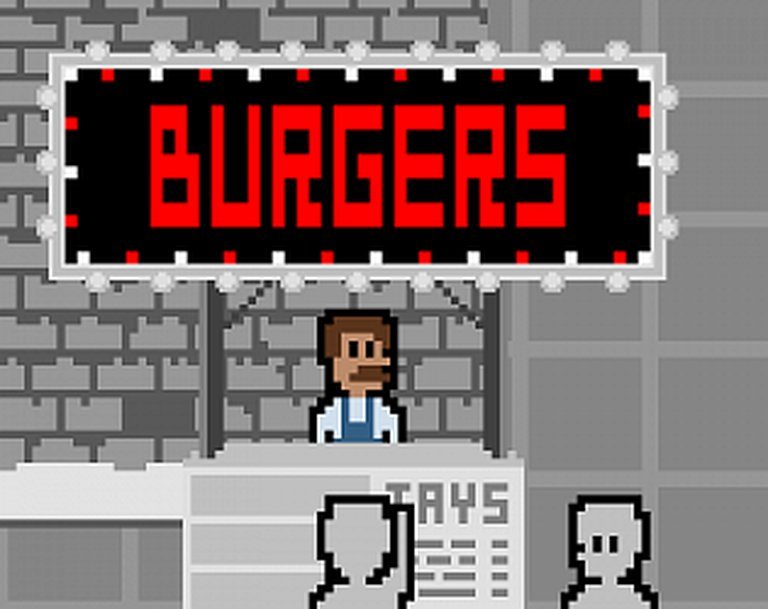
In ‘Grab Them by the Eyes’, players run a food stand in contemporary North America, competing against neighboring vendors by creating increasingly elaborate signage to attract more customers. This managerial simulation game challenges players to balance creative marketing with strategic decision-making to dominate the local food stand rivalry.
Gameplay Videos
Grab Them by the Eyes Guides & Walkthroughs
Grab Them by the Eyes Reviews & Reception
jayisgames.com (82/100): “Grab Them By The Eyes is a fantastic example of combining the silly and the smart into something that’s more than meets the eye.”
gamebias.wordpress.com : “Grab Them By The Eyes is a minor morality tale that leaves you with a sense of the absurdity of advertising.”
game.lhg100.com : “Honestly, a unique concept. Clean, attractive aesthetic. Brutal card‑based combat about food stands. Nice game!”
Grab Them by the Eyes Cheats & Codes
Hacked Version (Gamekb.com)
Use the hackbar menu to select options.
| Code | Effect |
|---|---|
| 1 | daily score |
| 2 | money |
| 3 | increase customers visit |
Hacked Version (ArcadePreHacks.com)
Press the corresponding number in the hackbar menu.
| Code | Effect |
|---|---|
| 1 | Money |
| 2 | Points of the day |
| 3 | Add points to cards |
Grab Them by the Eyes: Review
Introduction
In a landscape dominated by sprawling RPGs and high-octane shooters, Terry Cavanagh’s Grab Them by the Eyes (2015) stands out as a deceptively simple yet biting critique of capitalism and cutthroat competition. This browser-based managerial sim casts players as a humble hamburger stand owner locked in a neon-lit war of signage against hipster rivals, blending absurdist humor with strategic depth. While its premise seems whimsical—a fast-food duel fought with LED panels and snarky slogans—the game’s real legacy lies in its razor-sharp commentary on the futility of consumerist one-upmanship. This review argues that Grab Them by the Eyes is a masterclass in minimalist design, using its constraints to deliver a satirical punch that lingers long after the final sale.
Development History & Context
Studio & Vision
Developed by Terry Cavanagh (renowned for Super Hexagon and VVVVVV), Grab Them by the Eyes emerged from a post-Cart Life indie scene hungry for games with thematic heft. Cavanagh’s inspiration struck during a trip to New York City, where he observed food vendors competing for attention through increasingly garish signage. The result was a game that distilled urban capitalism into a five-day showdown, rejecting complex systems in favor of taut, turn-based strategy.
Technological Constraints
Built in Haxe (with source code later shared publicly), the game targeted browser accessibility, leveraging Flash’s ubiquity in 2015. Its minimalist aesthetic—blocky text, limited animations, and a retro pixel font by Yuji Oshimoto—reflected Cavanagh’s signature style while ensuring smooth performance on low-end devices. Sound effects, sourced from Soundsnap.com, added punch without overwhelming the experience.
Gaming Landscape
Released in an era of burgeoning “idle games” and Cookie Clicker-style clickers, Grab Them by the Eyes stood apart by embedding strategy within its satire. It joined a wave of indie titles like Papers, Please and Cart Life that used mundane settings to explore systemic oppression, though its tone leaned more toward dark humor than dystopia.
Narrative & Thematic Deep Dive
Plot & Characters
The narrative is threadbare but potent: you operate a burger stand, only to be usurped by “Filthy Burgers,” a rival cart helmed by deux ex machina hipsters. Dialogue is sparse—mostly taunts from your adversaries—but the true story unfolds through mechanics. Each day, you visit a sign shop run by a mysterious vendor who profits from your rivalry, selling upgrades that range from flashy animations to outright insults aimed at your competitors.
Themes
Beneath its carnivalesque surface, the game interrogates:
– The Illusion of Choice: No matter how creative your slogans, victory is fleeting.
– The Exploitation Cycle: The sign vendor, a stand-in for corporate middlemen, ultimately bankrupts both stands, highlighting how competition funnels wealth upward.
– Advertising’s Emptiness: Customers flock to aesthetics, not quality, parodying consumer culture’s obsession with branding over substance.
The ending—a pyrrhic victory where the sign seller evicts both stands—drives home the game’s nihilistic thesis: in capitalism, even winners lose.
Gameplay Mechanics & Systems
Core Loop
Players allocate a daily budget ($50, carrying over unspent cash) to purchase “punch cards” that enhance their signage. Cards depreciate in value with repeated use, creating a push-pull between short-term gains and long-term strategy. Key mechanics include:
– Auction-Style Purchasing: Cards drop in price each turn, forcing players to decide between snapping up high-value items early or waiting for discounts.
– Card Combos: Combining messages (“FREE Wi-Fi”), borders (neon, flashing), and effects (spinning text) maximizes customer draw, but overused elements lose potency.
– Sabotage: Custom insult cards let players attack rivals, though these yield fewer customers, testing the player’s ethics.
AI Quirks
The AI prioritizes “extra frames” (additional sign slots) at inflated prices, a deliberate flaw that savvy players exploit. Critics like Jed Pressgrove noted the game’s reliance on luck early on, but mastery reveals a deterministic core—once its math is decoded, victory becomes inevitable, mirroring the hollow predictability of real-world advertising.
UI & Feedback
The interface is ruthlessly efficient: a top-down view of the street, stark menus, and daily customer tallies that amplify tension. The lack of post-game content (no endless mode or multiplayer) reinforces the narrative’s futility.
World-Building, Art & Sound
Setting & Atmosphere
The game’s world is a microcosm of urban Americana—a sidewalk flanked by grimy storefronts, where the only measure of worth is foot traffic. The perpetually gray sky and static background evoke a dystopian monotony, contrasting with the garish signs that players erect.
Visual Direction
Cavanagh’s embrace of minimalism shines:
– Sign Design: Blocky, fluorescent текстовые эффекты emulate cheap LED displays, satirizing real-world visual pollution.
– Character Design: Rivals are abstracted into pixelated caricatures, their smug expressions telegraphing the game’s sardonic tone.
Sound Design
Sparse but effective: the chatter of customers, the blip of purchased cards, and the ominous chime of the sign vendor’s final verdict. These elements heighten the game’s tension without distracting from its strategic core.
Reception & Legacy
Critical Reception
Upon release, the game garnered praise for its inventiveness:
– JayIsGames (4.1/5) lauded its “silly and smart” fusion of strategy and satire.
– Game Bias’ Jed Pressgrove critiqued its “privileged” stance compared to Cart Life but admired its ironic conclusion.
– Players debated its balance, with some calling the AI “cheap,” while others championed emergent strategies like hoarding cheap cards early.
Commercial Impact
Though free on itch.io, the game found a cult following, later featured on Coolmath Games. Its inclusion in Terry’s Other Games (2025) anthology cemented its status as a hidden gem.
Influence
Grab Them by the Eyes presaged trends in “anti-capitalist indie games” like Hypnospace Outlaw and Not For Broadcast, proving that even browser games could tackle systemic critique. Its card-based depreciation system influenced later titles, including Inscryption’s resource management.
Conclusion
Grab Them by the Eyes is a masterstroke of economical design, wielding its limited scope to deliver a scathing indictment of consumerism. While its gameplay can feel repetitive once mastered, that very repetition echoes its themes—a brilliant meta-commentary on the grind of capitalist competition. A decade later, it remains a benchmark for how indie games can marry mechanics and message, proving that sometimes, the sharpest critiques come in the smallest packages. Final verdict: A flawed but essential work, deserving of its place in the pantheon of satirical strategy games.