
- Release Year: 2022
- Platforms: Nintendo Switch, Windows
- Publisher: Entalto Games SL
- Developer: Entalto Games SL
- Genre: Action
- Perspective: Diagonal-down
- Gameplay: Party game
- Average Score: 100/100
Description
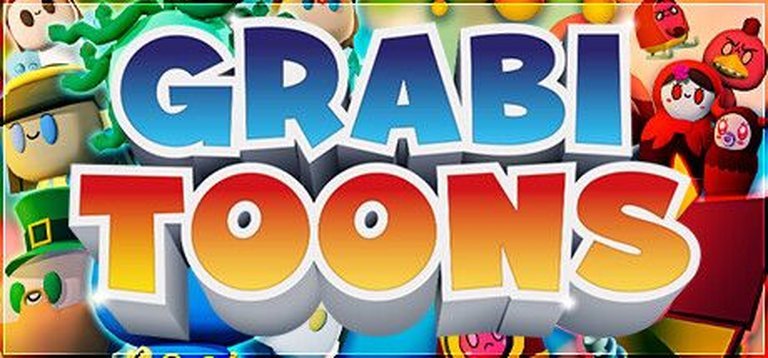
Grabitoons! is a physics-based party game where players can customize their own Grabitoons and compete in over 15 action-packed mini-games. The game supports up to four players and features easy-to-learn controls with unlockable character pieces, making it a fun experience for all ages from kids to adults.
Where to Buy Grabitoons
PC
Grabitoons Mods
Grabitoons Guides & Walkthroughs
Grabitoons: A Chaotic, Colorful, and Ultimately Shallow Galactic Carnival
1. Introduction
In the ever-expanding galaxy of local multiplayer party games, where giants like Super Smash Bros. and Mario Kart reign supreme, smaller titles strive to carve out their niche with unique hooks. Released on December 26, 2022, by Spanish developer Entalto Games SL, Grabitoons! presents itself as a physics-based brawler promising accessible fun for “kids to grandpas.” Its core appeal lies in the customization of bizarre, malleable creatures called Grabitoons and the chaotic, slapstick combat across numerous mini-games. Yet, beneath its vibrant, cartoonish exterior and ambitious accessibility goals lies a product that, while charming in its simplicity, ultimately succumbs to a lack of depth and polish. This review will dissect Grabitoons!, exploring its development context, mechanics, presentation, and legacy to determine whether this galactic carnival delivers genuine fun or feels like a missed opportunity.
2. Development History & Context
Grabitoons! hails from Entalto Games SL, a Spanish developer whose portfolio, prior to this title, included collaborations like SpongeBob: Krusty Cook-Off and Vampire: The Masquerade – Heartless Lullaby. This background suggests a focus on accessible, often mobile-adjacent titles. Released on Windows and Nintendo Switch simultaneously, the game arrived late in 2022, a period saturated with indie multiplayer offerings. Technically built on the ubiquitous Unity engine, Grabitoons! leverages this framework to deliver its physics-based interactions across platforms. Entalto’s vision, clearly articulated in their marketing and Steam description, was to create an “Experience for Everyone.” This meant prioritizing streamlined controls (“Direct control”), a low barrier to entry (“Easy to pick up”), and broad accessibility (“From kids to grandpas”). They aimed to capitalize on the enduring appeal of local multiplayer gatherings, particularly around the holiday season. The context of release – post-pandemic, with renewed focus on social connections – made the game’s core concept timely. However, entering this crowded market with a relatively unknown IP and a price point ($7.99/$3.99 on sale) demanded exceptional execution to stand out, a challenge Grabitoons! ultimately struggled to meet beyond its initial niche audience.
3. Narrative & Thematic Deep Dive
If one seeks a deep narrative in Grabitoons!, they will find only the thinnest of excuses to justify the gameplay. The official Steam blurb vaguely frames it as a “galactic test of skill,” suggesting a spacefaring backdrop where customizable creatures compete. However, the game itself offers no cohesive story, no characters beyond the player-controlled Grabitoons, and no dialogue beyond grunts, crashes, and celebratory fanfare. The “plot” is purely procedural: players select a mini-game, compete, rinse, repeat. The narrative vacuum is intentional, serving the party game’s primary function: facilitating immediate, contextless fun. Thematically, the game leans heavily into chaos, absurdity, and friendly rivalry. The Grabitoons themselves are the stars – customizable, malleable avatars whose very nature implies playfulness and transformation. Unlocking new pieces to “build your own Grabitoon” reinforces themes of personal expression and creative ownership within the competitive framework. While the lack of narrative depth is expected for the genre, it leaves Grabitoons! feeling somewhat soulless. Without even a simple framing device or recurring characters, the game relies entirely on the emergent chaos of its physics-based gameplay to generate engagement, proving insufficient for sustained play sessions.
4. Gameplay Mechanics & Systems
The core loop of Grabitoons! revolves around physics-based combat and competitive mini-games.
- Core Gameplay Loop: Players grab, throw, smack, and wack their Grabitoons through over 15 different mini-games. The “physics-based” element is central, dictating how Grabitoons move, collide, and react to impacts, creating unpredictable and often hilarious outcomes. Controls are deliberately streamlined, typically involving simple movements (joystick/D-pad) and a primary action button (grab/throw) per Grabitoon, adhering to the “easy to pick up” ethos.
- Mini-Games Variety: While boasting “more than 15” mini-games, the provided sources lack specifics. Common party game archetypes can be inferred: combat arenas (last Grabitoon standing), target practice, races, object collection (“Collectathon”), and dexterity challenges. The variants mentioned likely involve different rulesets or environmental twists on these core ideas.
- Character Progression & Customization: The primary hook beyond the mini-games is the customization system. Players “unlock new pieces” to build their own Grabitoon. This suggests a progression system tied to gameplay performance (winning mini-games, conquering variants). The pieces likely include different body parts (heads, arms, legs, accessories) with unique properties – perhaps altering weight (affecting physics), speed, grab range, or special abilities. This adds a meta-layer of strategy and personalization, giving players a reason to keep playing beyond the novelty of a single session. Steam achievements (16 listed) further reinforce this progression.
- UI & UX: The sources indicate a “Direct control” interface. While streamlined for accessibility, the lack of detailed user reviews makes assessing the actual polish difficult. Potential issues common in Unity-based indie games could include clunky menus, ambiguous visual feedback during grabs/throws, or inconsistent camera angles in split-screen play, especially with four players. The simplicity is a strength for accessibility but risks feeling rudimentary or unrefined.
The core mechanics are functional and the physics can generate fun moments of slapstick chaos. However, the reliance on such a limited control scheme and the sheer unpredictability of physics can also lead to frustrating moments of luck overshadowing skill, a common pitfall in the genre. The longevity hinges entirely on the novelty of the mini-games and the appeal of deep Grabitoon customization.
5. World-Building, Art & Sound
- World-Building & Setting: The “galactic” aspect is purely aesthetic. The game lacks a cohesive world or setting beyond abstract arenas and backgrounds. The focus is entirely on the Grabitoons and the competitive playground they inhabit. This isn’t a detriment per se for a party game, but it contributes to the feeling of a shell game without deeper immersion.
- Visual Direction & Art Style: Grabitoons! adopts a bright, “Colorful,” “Cartoony,” and “Cute” art style, clearly aiming for broad family appeal. The Grabitoons themselves are the visual highlight – customizable, pliable creatures designed for maximum expressiveness in their deformations during throws and impacts. The visual design prioritizes readability in the chaos of four-player combat, likely employing distinct colors and simple shapes. While charming and effective for its purpose, the art style doesn’t push boundaries, relying heavily on proven, accessible aesthetics.
- Sound Design & Atmosphere: The sources mention music provided by Epidemic Sound. This suggests a generic but fitting upbeat, energetic soundtrack typical of party games. Sound effects are crucial for the physics-based slapstick – satisfying thuds, bonks, grabs, and celebratory jingles. The overall soundscape aims for a lighthearted, constantly energetic atmosphere that encourages chaotic fun without attempting subtlety or narrative depth.
The art style successfully creates a vibrant, non-threatening, and visually engaging space for multiplayer chaos. The sound design complements this, providing essential auditory feedback for the physics and actions. While not groundbreaking, the presentation is competent and serviceable to the game’s core purpose.
6. Reception & Legacy
- Launch Reception: Grabitoons! launched with minimal fanfare. Critically, it appears to have flown almost entirely under the radar. Metacritic shows zero critic reviews, and MobyGames lists a placeholder for contributions. User reviews on Steam are extremely limited, with only three reviews listed as of the latest data, all positive. Steambase reports a perfect 100/100 Player Score based on these three reviews. This suggests a very small but enthusiastic launch audience, likely friends and family of the developers or early adopters seeking accessible local multiplayer options. Sales figures, while not fully public, indicate modest performance – GameSensor notes total gross revenue exceeding $5K and over 1K owners by September 2025, with a notably high wishlist-to-conversion rate (900%) shortly after release, indicating initial interest that didn’t translate into massive sales. The NSG Reviews overview (Switch version) gives a placeholder 5.0 rating across Gameplay, Graphics, and Performance, but notes reviews are from PC and “not indicative of performance on Switch,” highlighting potential platform-specific concerns.
- Legacy & Evolution: Its legacy is still forming, but Grabitoons! occupies a specific niche. It represents the ongoing trend of accessible, physics-based indie party games aiming to fill the gap left by AAA giants. Its primary legacy might be as a “hidden gem” for families and groups seeking simple, customizable multiplayer fun without complex controls or deep strategy. The customization system is a potentially lasting feature within its sub-genre. However, the lack of critical acclaim, limited sales, and small player base suggest it won’t be remembered as a landmark title. Its influence is likely minimal beyond potentially inspiring other small studios to pursue similarly accessible concepts. Entalto Games SL continues to develop other projects like Retropolis 2: Never Say Goodbye, indicating Grabitoons! was part of a broader, evolving strategy rather than a flagship franchise.
7. Conclusion
Grabitoons! is a study in contrasts. It successfully delivers on its core promise: a physics-based, customizable party game accessible to players of all ages and skill levels. The Grabitoon customization is a genuinely appealing feature, offering personalization and a meta-goal beyond individual mini-game wins. The chaotic slapstick humor generated by the physics engine can be genuinely funny and engaging in short bursts, perfect for quick sessions with friends or family.
However, its ambitions are ultimately hampered by execution. The lack of narrative or world depth is expected for the genre but leaves the feeling of a hollow experience. The reliance on a single, simplistic control scheme and unpredictable physics can lead to frustration as much as laughter. The mini-game variety, while numerous, lacks the depth, polish, and innovation seen in genre leaders. Its visual style is charming but unoriginal, and the sound design is purely functional. Most critically, its launch with minimal critical attention and modest sales relegated it to a footnote in the crowded multiplayer landscape.
Verdict: Grabitoons! is not a bad game, but it is a deeply mediocre one within a highly competitive genre. It offers a perfectly serviceable, if shallow, experience for specific groups – families with young children, casual groups seeking mindless fun, or players deeply invested in creature customization. Its place in video game history will likely be that of a niche curiosity, a small-scale entry representing the accessibility-focused indie party game scene. While it fulfills its basic function of providing chaotic multiplayer fun, it fails to distinguish itself enough to leave a lasting mark or achieve the widespread acclaim its accessibility goals arguably deserved. For those seeking a deep, strategic, or visually stunning multiplayer experience, look elsewhere. For a quick, customizable, physics-based brawl with loved ones, Grabitoons! offers a passable, if forgettable, galactic carnival ride.