
- Release Year: 2021
- Platforms: Windows
- Publisher: Aerosoft GmbH
- Developer: stillalive studios GmbH
- Genre: Gambling, Strategy, Tactics
- Perspective: Diagonal-down
- Game Mode: Single-player
Description
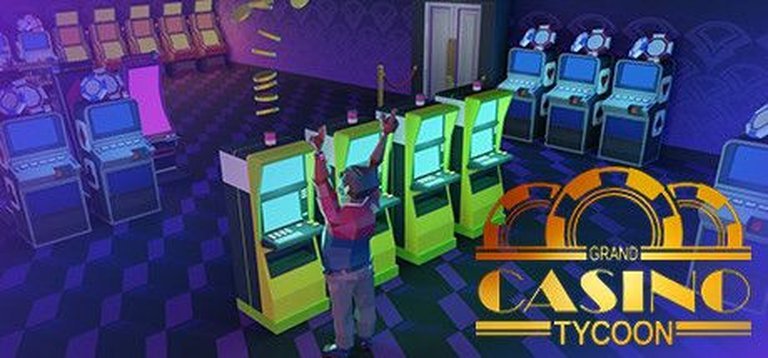
Grand Casino Tycoon challenges players to build and manage a thriving casino empire by catering to diverse gambler types, each with unique preferences and behaviors. Set in a 2D scrolling world with a diagonal-down perspective, players must strategically design layouts, fulfill specific demands of patrons like the Posh Gambler or Slot Zombie, and manipulate guest experiences to maximize profits while navigating guided goals that emphasize puzzle-solving over traditional tycoon autonomy.
Gameplay Videos
Where to Buy Grand Casino Tycoon
PC
Grand Casino Tycoon Cracks & Fixes
Grand Casino Tycoon Guides & Walkthroughs
Grand Casino Tycoon Reviews & Reception
screenrant.com : Grand Casino Tycoon feels more like a puzzle game than a true tycoon experience.
thirdcoastreview.com : I just really didn’t like Grand Casino Tycoon.
entertainium.co : While the mechanics of the game are rather simplistic, the formula of trying to appease your gamblers and make them more likely to hand over their cash is enjoyably addictive.
Grand Casino Tycoon Cheats & Codes
PC
Activate trainer in-game, then press the corresponding NumPad key.
| Code | Effect |
|---|---|
| NumPad1 | Mega Popularity |
| NumPad2 | Mega Money |
| NumPad3 | Unlock Buildable Objects |
| NumPad4 | Unlock Buildable Floors |
| NumPad5 | Unlock Buildable Dividers |
| NumPad6 | Game Speed |
Grand Casino Tycoon: Review
Introduction
The siren song of the tycoon genre has long captivated players, offering a seductive fantasy of absolute control over intricate systems and the intoxicating pursuit of virtual wealth. In this pantheon of management simulations, Grand Casino Tycoon arrives as a neon-drenched wildcard, promising a deep dive into the seductive, manipulative world of high-stakes gambling. Developed by stillalive studios (fresh off Rescue HQ: The Tycoon) and published by Aerosoft, this 2021 release invites players to architect temples of temptation, meticulously designing casinos to cater to a menagerie of gamblers whose behaviors must be predicted, directed, and exploited. Yet, beneath its vibrant veneer lies a profound identity crisis. Is it a management simulation celebrating entrepreneurial ambition, or a rigid puzzle game demanding algorithmic precision? This review dissects Grand Casino Tycoon‘s ambitious premise, revealing a title that brilliantly simulates the mechanics of casino psychology while faltering in delivering the expansive, autonomous dream of tycoon mastery. Its legacy is one of fascinating potential, ultimately constrained by a design philosophy that prioritizes rigid solutions over player freedom.
Development History & Context
Emerging in May 2021, Grand Casino Tycoon was crafted by stillalive studios, a German developer with a track record in tactical management games (Rescue HQ series), while publisher Aerosoft brought expertise in flight and simulation titles. The choice of Unity as the game engine and FMOD for sound design positioned it as a modern, accessible indie title, not a sprawling AAA production. The developers explicitly framed their vision as a “colorful tycoon with unique puzzle elements,” emphasizing behavioral manipulation over traditional economic micromanagement. This context is crucial: Grand Casino Tycoon was conceived not as a sequel to classics like RollerCoaster Tycoon or Theme Park, but as a hybrid experiment. It arrived during a resurgence of management sims (e.g., Two Point Hospital, Planet Zoo) but distinguished itself by narrowing its focus to the specific psychology of casino patrons. The post-lockdown landscape of 2021, with players seeking engaging yet accessible home entertainment, provided a receptive audience. However, the studio’s prior experience in structured, mission-based design (Rescue HQ) likely contributed to the game’s campaign-driven, goal-oriented structure, a choice that would become central to its critical reception.
Narrative & Thematic Deep Dive
While not a narrative-driven game, Grand Casino Tycoon weaves a loose thematic tapestry through its campaign structure and character archetypes. The overarching narrative is one of capitalist ascension: players start modestly and expand their casino empire, with a perpetually enthusiastic Casino Director (voiced) guiding them through tutorials and milestones. This narrative serves purely as a structural scaffold, but the real story emerges in the interactions with gambler profiles. The game cleverly anthropomorphizes gambling archetypes into distinct personality groups, each embodying a facet of casino psychology:
- The Posh Gambler: Represents high-roller elitism, demanding quiet elegance, fine dining, and exclusive games like Video Poker. Their disdain for “common” elements like loud music or slot machines creates immediate conflict.
- The Compulsive Gambler: Driven by addiction, they prioritize constant, low-stakes action (e.g., slot machines) with minimal regard for comfort, mirroring the tragic compulsiveness of problem gambling.
- The Slot Zombie: A passive, machine-addicted entity, mindlessly feeding coins into slots, reflecting the hypnotic, trance-like state slot machines can induce.
- The Tourists: Loud, party-oriented figures seeking loud music, cheap drinks, and social chaos, embodying the “fun” but disruptive Vegas stereotype.
These archetypes are not mere stereotypes; they function as behavioral puzzles. Their routines are pre-programmed flowcharts (e.g., Tourists: Bar -> Dance Floor -> Slots; Posh: Restaurant -> Poker Room), and their likes/dislikes (e.g., Posh hates club music, Tourists loathe silence) create friction zones. The thematic core is thus a dark, satirical exploration of manipulation and commodification. Players must “understand their guests, influence their desires and manipulate their decisions,” as the Steam description boasts. The game forces players into the role of the house, designing environments to exploit psychological quirks—placing bars near entrances to lure patrons away from quiet zones, using soundproof walls to contain noise, or even charging for toilets as a cynical revenue tactic. This creates a compelling, if uncomfortable, thematic layer: the “house always wins” not through luck, but through calculated environmental engineering.
Gameplay Mechanics & Systems
Grand Casino Tycoon‘s gameplay is a masterclass in systems design that simultaneously fascinates and frustrates. Its core loop revolves around three interconnected pillars: Guest Profiling, Spatial Design, and Resource Management.
-
Guest Profiling & The Routine System: The game’s standout innovation. Each gambler type has a rigid routine and a sophisticated need system (hunger, thirst, boredom, alcohol tolerance). For example:
- Compulsive Gamblers must immediately access slots; placing them far from the entrance causes frustration and lost revenue.
- Posh Gamblers require specific ambiance and will leave if surrounded by “undesirable” elements like Slot Zombies.
- VIPs (special guests per type) offer snarky, voiced commentary, providing real-time feedback on satisfaction.
This system transforms the casino into a behavioral maze. Success hinges on predicting these routines and designing paths that guide guests through desired sequences (e.g., Bar -> Buffet -> Poker Table) while minimizing exposure to dislikes.
-
Spatial Design & Zoning: Players build casinos tile-by-tile, placing gambling machines (slots, poker, roulette, craps), service stations (bars, buffets, toilets), decorations, and “manipulation objects” (cameras for research, ads to trigger desires). The core challenge is spatial conflict resolution. Posh Gamblers and Tourists are mortal enemies; their opposing demands require physical separation. This is achieved through:
- Routine Manipulation: Placing a bar near the entrance lures Tourists away from Posh zones.
- Zoning: Using walls and strategic placement to create “quiet corners” and “party zones.”
- Object Placement: Upgrading speaker systems to drown out unwanted noise, or using cameras to monitor popularity hotspots.
However, a critical flaw emerges: AI pathfinding limitations. Guests are “dumb automatons” (Entertainium). They ignore intended zones, rushing to the nearest available matching item, even if it’s in a rival’s territory. A Tourist might invade Posh space because a slot machine is closer than the intended bar, causing mutual unhappiness. This undermines autonomy, turning design into a battle against the AI’s predictability.
-
Resource Management & Tech Tree: Players earn revenue from gambling and services. This funds research into new machines, decor themes, and “manipulation” tech. Yet, the economic simulation is strikingly shallow. Financial constraints are minimal; players can typically purchase any unlocked item without significant saving or trade-offs. The tech tree is extensive but feels like a checklist rather than a strategic choice. This underutilizes the “tycoon” aspect, making progression feel more like unlocking puzzle pieces than building a financial empire. The campaign structure reinforces this: players complete objectives in one casino to unlock the next, often with identical goals (e.g., “Achieve 80% Posh Satisfaction,” “Build 10 Slots”). The lack of a true sandbox mode at launch (added later) was a major complaint, as players desired continuous expansion within a single casino.
-
Staff Management: A minor system involving placing coffee waiters and bouncers, but it feels underdeveloped and secondary to guest profiling. Its impact is minimal compared to the core design puzzle.
Ultimately, the gameplay loop becomes repetitive (Screen Rant). After solving the initial zoning puzzle for each casino type, the solution often involves the same configurations. The rigid goals and lack of economic depth prevent the emergent complexity that defines great tycoon games.
World-Building, Art & Sound
Grand Casino Tycoon excels in creating a stylized, vibrant world that evokes the fantasy of casino glamour, even if its execution is limited.
-
Visual Design: The art direction is cartoonish and colorful, reminiscent of Theme Hospital or Two Point Hospital. Low-polygon, lanky guest models intentionally convey absurdity and detachment (“Slot Zombies” literally shuffle). Casino props are richly detailed: opulent slot machines with curved screens, lavish poker tables, and diverse decor (Egyptian rooms, marble high-stakes areas, playful corners). This allows for creative expression—building a “marble high stakes area” feels satisfying. However, the environmental presentation is stark. Casinos float in a void with a static casino-themed backdrop (Third Coast Review), lacking the bustling exterior, city integration, or dynamic lighting that would elevate immersion. The absence of windows and clocks is a nod to real casino psychology but feels purely functional, not atmospheric.
-
Sound Design: FMOD delivers functional audio. Music is location-based (e.g., club beats for Tourist zones, ambient strings for Posh areas), but tracks loop quickly and feel limited. Sound effects are clear (chaotic slot machine jingles, clinking glasses). The standout is the VIP voice acting. These special guests deliver sarcastic, location-specific quips (“This music is giving me a headache,” “Where’s the REAL money table?”), providing personality and real-time feedback. Their snark adds humor and reinforces the game’s satirical tone, making the otherwise routine guest movements feel more dynamic.
-
Atmosphere: Despite the void setting, the interior design fosters a satisfying “flow” when systems work. Observing a perfectly routed guest path (e.g., Tourist grabs a drink, hits the dance floor, then a slot machine without conflict) creates a genuine sense of accomplishment. The manipulation of light, sound, and space through decor and objects creates pockets of distinct atmosphere, even if the overall world feels constrained.
Reception & Legacy
Grand Casino Tycoon received a mixed reception upon release, reflecting its polarizing design choices.
-
Critical Reception: Reviews were decidedly split:
- Positive: GameSpace awarded it 75/10, praising its “great atmosphere,” “lots of options,” and “in-depth ability to manipulate people,” calling it an “absolute blast” and a “no-brainer” for its price. Entertainium found the core “enjoyably addictive” and appreciated the “feeling of satisfaction” in perfecting layouts, though noting AI flaws.
- Negative: Screen Rant gave it a harsh 5/10, criticizing its “extremely repetitive” nature, “lack of autonomy,” and underutilized economy, concluding it “will have a difficult time competing” with other tycoon games. Third Coast Review was equally scathing, calling it a “puzzle game more than a true tycoon” due to “overbearing” goals and the “heartbreaking” lack of sandbox freedom at launch. OpenCritic aggregated these, placing it in the -1st percentile due to the critical divide.
-
Commercial Reception & Player Response: On Steam, it holds a “Mixed” rating (65% positive, 47 reviews). While some players enjoyed the “fun and cheap” puzzle-solving (GameSpace), others lamented the “glitches” (e.g., guests getting stuck), “dumb AI,” and repetitive goals. The lack of sandbox mode was a major pain point initially, though later updates addressed this.
-
Legacy: Grand Casino Tycoon is unlikely to be remembered as a genre-defining classic. Its legacy lies in its niche innovation: the deep, puzzle-like focus on guest profiling and behavioral manipulation. It offered a unique lens on the psychology of casino design, influencing subsequent management games that experiment with similar AI-driven systems (e.g., Goldfather: Casino Tycoon). However, its critical flaws—repetition, weak economy, and constrained freedom—prevent it from joining the pantheon of great tycoons. It stands as a cautionary tale: a conceptually brilliant game whose rigid execution clashed with the open-ended aspirations of its genre. Its name endures in discussions of tycoon games that prioritize system mastery over player freedom.
Conclusion
Grand Casino Tycoon is a game of compelling contradictions. It brilliantly simulates the intricate, manipulative art of casino design, offering a unique and satisfying puzzle loop centered on predicting and directing guest behavior. Its colorful art style, satirical archetypes, and VIP quips create a vibrant, if limited, world. Yet, these strengths are overshadowed by fundamental design choices that betray the “tycoon” promise. The gameplay becomes repetitive, the economic simulation is an afterthought, and the rigid campaign structure, exacerbated by flawed AI that undermines spatial design, creates a frustrating lack of autonomy. Players seeking the expansive freedom to build and manage a true empire will be disappointed, while those who enjoy algorithmic puzzle-solving may find its core challenge addictive.
Ultimately, Grand Casino Tycoon is a fascinating experiment that succeeds as a behavioral puzzle game but fails as a satisfying tycoon simulation. It delivers the mechanics of casino management with surprising depth but omits the freedom that defines the genre. Its place in video game history is that of a flawed innovator—a testament to the potential of niche systems design and a reminder that true tycoon greatness requires both intricate simulation and player agency. It’s a Royal Flush in concept, but a busted hand in execution.