
- Release Year: 2021
- Platforms: Nintendo Switch, PlayStation 4, PlayStation 5, Windows, Xbox One, Xbox Series
- Publisher: Rockstar Games, Inc.
- Developer: Grove Street Games
- Genre: Action, Compilation, Driving, Free-roaming, Open World, Racing, Sandbox
- Perspective: Behind view
- Game Mode: Single-player
- Gameplay: Open World, Shooter
- Setting: Crime, North America
- Average Score: 49/100
- Adult Content: Yes
Description
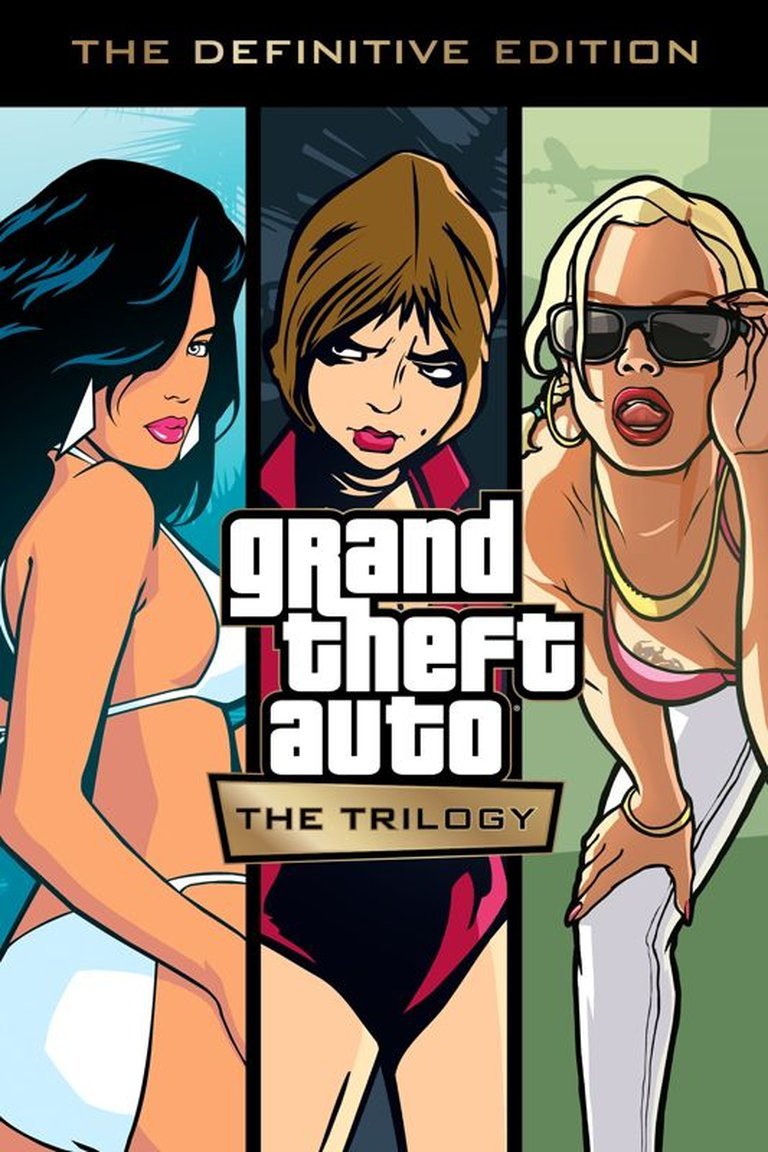
Grand Theft Auto: The Trilogy – The Definitive Edition is a remastered compilation of three iconic games from the Grand Theft Auto series: Grand Theft Auto III, Vice City, and San Andreas. Running on the Unreal Engine, this edition features enhanced visuals, updated controls similar to Grand Theft Auto V, and quality-of-life improvements like instant mission restarts and waypoint navigation. The collection captures the essence of the original games while modernizing them for contemporary gaming.
Gameplay Videos
Grand Theft Auto: The Trilogy – The Definitive Edition Free Download
Mods
Reviews & Reception
metacritic.com (54/100): The nostalgic value of this collection is beyond any doubt, they are three masterpieces that today are still very funny (and with a sensational script), but this remastering has fallen short in many respects, and has technical flaws.
imdb.com (45/100): The old game look Better, this game is overpriced and full of bugs, gameplay is The same of ps2, moderrs can make work very better than this and for free.
wired.com : Bugs, bugs, and more bugs. Art direction is lacking. Quality is inconsistent at best.
Grand Theft Auto: The Trilogy – The Definitive Edition: A Comprehensive Review
Introduction
Grand Theft Auto: The Trilogy – The Definitive Edition is a compilation of three iconic games from the Grand Theft Auto series: Grand Theft Auto III, Grand Theft Auto: Vice City, and Grand Theft Auto: San Andreas. Released in November 2021, this remastered collection aimed to bring these classic titles into the modern era with enhanced visuals, updated controls, and various quality-of-life improvements. However, the reception was mixed, with critics and players alike highlighting both the strengths and the significant shortcomings of the remaster. This review will delve into the development history, narrative depth, gameplay mechanics, world-building, reception, and legacy of this controversial yet ambitious project.
Development History & Context
Studio and Vision
The remaster was developed by Grove Street Games, a studio known for its work on mobile versions of the original GTA games. The project was overseen by Rockstar Games, the publisher behind the original titles. The vision was to modernize the trilogy while preserving the essence of the original games. The development team faced the daunting task of updating three games that were over two decades old, each with its unique challenges.
Technological Constraints and Era
The original games were developed using the RenderWare engine, which was state-of-the-art at the time but showed its age in the modern gaming landscape. The remaster utilized Unreal Engine 4, a significant leap in technology that allowed for improved graphics, lighting, and overall performance. However, the transition was not seamless. The team had to recreate assets from scratch, upscale textures using AI, and ensure that the games ran smoothly on modern hardware.
Gaming Landscape at the Time
In 2021, the gaming industry was dominated by open-world titles with photorealistic graphics and complex gameplay systems. The GTA trilogy, while groundbreaking in its time, was seen as dated by modern standards. The challenge was to bridge the gap between the nostalgic appeal of the originals and the expectations of contemporary gamers.
Narrative & Thematic Deep Dive
Plot and Characters
Each game in the trilogy tells a distinct story set in a unique location within the GTA universe:
- Grand Theft Auto III: Follows Claude, a silent protagonist seeking revenge in Liberty City, a fictionalized version of New York.
- Grand Theft Auto: Vice City: Set in 1986, it follows Tommy Vercetti, a mobster building an empire in Vice City, inspired by Miami.
- Grand Theft Auto: San Andreas: Takes place in 1992, following Carl “CJ” Johnson as he returns to San Andreas, a state inspired by California and Nevada.
The narratives are interconnected through shared characters and events, creating a cohesive universe.
Dialogue and Themes
The dialogue in each game is characterized by its distinctive tone and humor. GTA III has a gritty, realistic tone, Vice City embraces the excess of the 1980s, and San Andreas blends gang culture with personal drama. Themes of crime, corruption, and personal redemption are central to all three games, reflecting the societal issues of their respective eras.
Gameplay Mechanics & Systems
Core Gameplay Loops
The core gameplay involves completing missions, exploring open worlds, and engaging in various activities. The remaster introduced several quality-of-life improvements, such as modernized controls, a weapon wheel, and waypoint navigation. However, some critics noted that the combat and driving mechanics felt outdated compared to modern standards.
Combat and Progression
Combat in the trilogy is a mix of shooting, melee, and vehicular action. The remaster aimed to streamline these mechanics, but the results were mixed. Some players appreciated the updated controls, while others found the combat clunky and unresponsive.
UI and Innovative Systems
The user interface was updated to include a mini-map with waypoints, a significant improvement over the original games. However, the UI was not without its issues, with some players reporting glitches and inconsistencies.
World-Building, Art & Sound
Setting and Atmosphere
Each game’s setting is meticulously crafted to reflect its real-world inspiration. Liberty City’s gritty urban environment, Vice City’s neon-lit beaches, and San Andreas’ diverse landscapes are all brought to life with enhanced visuals. The remaster improved draw distances, lighting, and textures, but some critics felt that the art direction was inconsistent.
Visual Direction
The visual overhaul was one of the most significant changes in the remaster. The team used AI to upscale textures and added new assets from Grand Theft Auto V. However, the character models received mixed reviews, with some players finding them unappealing.
Sound Design
The soundtracks of the original games were a major selling point, featuring licensed tracks from various genres. The remaster retained most of the original music but removed some tracks due to licensing issues. The sound design was otherwise well-received, with improved voice acting and ambient sounds.
Reception & Legacy
Critical and Commercial Reception
The reception to Grand Theft Auto: The Trilogy – The Definitive Edition was largely negative. Critics praised the enhanced visuals and quality-of-life improvements but criticized the technical issues, inconsistent art direction, and removal of content. The game’s Metacritic scores ranged from 46 to 56, indicating mixed or average reviews.
Influence on Subsequent Games and Industry
Despite its flaws, the remaster had a significant impact on the industry. It highlighted the challenges of updating classic games for modern audiences and the importance of preserving the original vision while making necessary improvements. The backlash also influenced Rockstar’s approach to future remasters and re-releases.
Conclusion
Grand Theft Auto: The Trilogy – The Definitive Edition is a flawed but ambitious attempt to bring three classic games into the modern era. While it succeeded in some areas, such as visual enhancements and quality-of-life improvements, it fell short in others, particularly in terms of technical stability and art direction. The remaster’s legacy is complex, serving as both a testament to the enduring appeal of the original games and a cautionary tale about the challenges of updating classic titles. Despite its shortcomings, the remaster remains a significant milestone in the history of the Grand Theft Auto series and the gaming industry as a whole.