
- Release Year: 2015
- Platforms: Windows
- Publisher: GungHo Online Entertainment America, Inc., GungHo Online Entertainment, Inc.
- Developer: Game Arts Co., Ltd.
- Genre: Role-playing (RPG)
- Perspective: 3rd-person (Other)
- Game Mode: Single-player
- Gameplay: Turn-based combat
- Setting: Fantasy
- Average Score: 87/100
Description
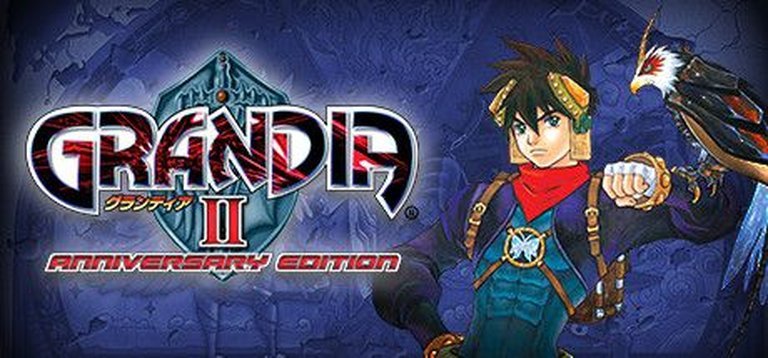
Grandia II: Anniversary Edition is a remastered version of the classic Dreamcast RPG, Grandia II. Set in a rich fantasy world, the game follows a group of heroes on a quest to uncover ancient secrets and save their world from impending doom. The updated edition features enhanced visuals, widescreen support, and additional difficulty modes, along with both English and Japanese voice acting. The turn-based combat system offers strategic depth with customizable skills and magic, making it a compelling experience for fans of the genre.
Gameplay Videos
Grandia II: Anniversary Edition Free Download
Grandia II: Anniversary Edition Cracks & Fixes
Grandia II: Anniversary Edition Patches & Updates
Grandia II: Anniversary Edition Mods
Grandia II: Anniversary Edition Guides & Walkthroughs
Grandia II: Anniversary Edition Reviews & Reception
metacritic.com (90/100): All in all I’d say if you are a fan of JRPGs you should give this one a try. The journey was fun and the characters were likable enough with some character development along the way.
rpgamer.com : Despite being around for fifteen years, Grandia II is not a game I’d played before. However, GungHo Online Entertainment America’s decision to put out the Grandia II Anniversary Edition during a low-key August and September provided a good opportunity to finally try it out.
gamingnexus.com (85/100): While not as flashy as Final Fantasy or as original as Skies of Arcadia, this updated re-release is a testament to how much fun a well-crafted turn-based role-playing game can be.
cynicalgamingblog.wordpress.com : Grandia 2 is worth another playthrough without a doubt.
operationrainfall.com : Grandia II is famous for having one of the best and most unique battle systems in a role-playing game.
Grandia II: Anniversary Edition: A Timeless JRPG Masterpiece Reforged
Introduction
In the twilight of the Sega Dreamcast’s lifespan, Grandia II (2000) emerged as a beacon of RPG excellence, showcasing Game Arts’ mastery of storytelling and combat innovation. Fifteen years later, Grandia II: Anniversary Edition (2015) resurrects this cult classic with enhanced visuals and modern conveniences, inviting both nostalgic fans and newcomers to experience a tale that deftly balances theological intrigue, character-driven drama, and a battle system that remains among the genre’s finest. Beneath its remastered veneer lies a game that questions blind faith, explores the duality of light and darkness, and champions human agency over divine puppetry. This review argues that while its narrative beats may feel familiar today, Grandia II’s refined mechanics, emotional depth, and atmospheric world-building cement its place as a JRPG touchstone.
Development History & Context
Studio Vision & Technological Constraints
Developed by Game Arts—creators of the beloved Lunar series—Grandia II aimed to evolve the foundation of 1997’s Grandia with a darker, more mature tone. Director Katsunori Saito sought to explore “human virtues and sins” against a backdrop of divine conflict, leveraging the Dreamcast’s fledgling hardware to deliver fully 3D environments and a fluid combat system. The Dreamcast’s 200 MHz NEC PowerVR2 GPU allowed for vibrant, anime-inspired character models and dynamic battle animations, though technical limitations necessitated compressed cutscenes and modest draw distances.
The Gaming Landscape
Launched in a market dominated by Final Fantasy IX and The Legend of Zelda: Majora’s Mask, Grandia II faced commercial headwinds. Despite a warm critical reception, Dreamcast’s declining install base relegated it to niche status in Japan (184,863 copies sold) and modest success in the West. The 2002 PlayStation 2 port, handled by Rocket Studio, exacerbated flaws with inferior textures, framerate drops, and elongated load times, diluting its reputation. The 2015 Anniversary Edition, co-developed by SkyBox Labs, rectified this by rebuilding the Dreamcast version with widescreen support, upscaled textures, and Steam integration—a redemption arc for a title once overshadowed by platform transitions.
Narrative & Thematic Deep Dive
Plot & Characters: A Subversion of Divine Dichotomy
The game follows Ryudo, a jaded mercenary (voiced with snarky charm by Cam Clarke), tasked with escorting Elena, a devout Songstress of Granas, to a ritual meant to seal Valmar—the fragmented god of darkness. When the ceremony backfires, Elena becomes host to Millenia (Jodi Benson), the seductive “Wings of Valmar,” igniting a quest that unravels the Church of Granas’s manipulative dogma. The party expands to include Roan, a princely idealist; Mareg, a vengeance-driven beastman; and Tio, an automaton discovering humanity—all serving as foils to Ryudo’s cynicism.
Themes: Faith, Freedom, and the Fallibility of Gods
Grandia II deconstructs organized religion through the Church of Granas, which weaponizes doctrine to control masses while concealing Granas’s defeat in the ancient war. Pope Zera’s fanaticism and Elena’s crisis of faith underscore the game’s thesis: humanity must emancipate itself from divine dependency. Millenia’s duality—as both villain and ally—blurs moral binaries, arguing that “light” and “darkness” are tools, not truths. Ryudo’s arc, confronting his brother Melfice’s corruption by Valmar’s Horns, embodies the struggle for self-determination against inherited sins.
Writing & Dialogue
While occasionally tropey (e.g., Ryudo’s tsundere softness toward Elena), Kei Shigema’s script excels in banter and introspection. Millenia’s flirtations and Mareg’s paternal bond with Tio add levity, while apocalyptic stakes lend weight to quieter moments—such as Elena’s hymn averting catastrophe. The English localization, though dated by 2024 standards, benefits from voice acting that imbues icons like Zera (Richard Doyle) with Shakespearean gravitas.
Gameplay Mechanics & Systems
The IP Gauge: A Symphony of Strategy
At its core lies the Initiative Point (IP) battle system, a hybrid of turn-based planning and real-time execution. Characters and enemies move along an action bar (Wait → Command → Act), allowing players to strategically “cancel” enemy moves via well-timed Critical Strikes or combos. For example:
– Combos: Ryudo’s 4-hit sword flurries stagger foes.
– Magic & Skills: Equippable Mana Eggs (e.g., Fire, Healing) and Skill Books (e.g., Combo Plus) enable deep customization. Leveling a Fire Egg unlocks Meteor Strike (50 MP), dealing AoE damage while reducing cast time.
– AI Tactics: Set allies to “Aggressive” or “Defensive” stances, though manual control rewards precision.
Progression & Exploration
– Character Growth: SP/MP pools expand via combat, while Skill/Magic Coins unlock abilities like Tio’s “Lotus Flower” (28 SP, wind-based AoE).
– World Design: Linear dungeons (e.g., Garmia Tower) prioritize pacing over puzzles, though late-game areas like Valmar’s Moon test resource management.
– Hard Mode: The Anniversary Edition’s new difficulty spikes enemy aggression, demanding mastery of cancellation tactics.
UI & QoL Enhancements
The remaster adds remappable controls, 100 save slots, and Dreamcast VMU import support. However, the camera—often obstructed in tight corridors—remains a relic of its era.
World-Building, Art & Sound
Setting & Atmosphere
The post-war world juxtaposes Granas’s serene temples with Valmar’s biomechanical grotesquery. Cyrum Kingdom, a mechanical dystopia cloaked in royal pretense, contrasts Nanan Village’s pastoral forests, reflecting the narrative’s “nature vs. corruption” motif. While textures show their age, the HD Remaster’s lighting upgrades enrich atmospheric depth—e.g., St. Heim Cathedral’s stained-glass hues.
Visual Direction
Character designer Yuji Kanoe’s anime aesthetic endures, with Elena’s flowing robes and Millenia’s gothic wings retaining their iconic flair. The Anniversary Edition’s upscaled sprites and environments mitigate Dreamcast-era blurring, though some backgrounds lack polish.
Sound Design & Music
Noriyuki Iwadare’s score blends orchestral grandeur (“Battle Theme 1”) with melancholic leitmotifs (“Elena’s Theme”). The Japanese VO option honors purists, but Jennifer Hale’s Elena and Jodi Benson’s Millenia elevate the English dub with emotional range.
Reception & Legacy
Launch Reception
The Dreamcast original scored 90/100 on Metacritic, praised for its combat and narrative (IGN: 9.2/10). The PS2 port (71/100) suffered from technical woes, while the 2015 remaster earned an 80% average (MobyGames)—lauded for fidelity but critiqued for lackluster QoL context. Player reviews note dated UI but applaud the timeless battle system.
Cultural Impact & Influence
Grandia II’s IP gauge inspired later JRPGs like Child of Light’s timeline mechanics and Octopath Traveler’s Break system. Its deconstruction of religious hypocrisy predates Final Fantasy X’s critiques, while Ryudo’s archetype echoes in Tales series antiheroes. The 2019 HD Collection (Switch/PS4/Xbox) reintroduced it to new audiences, cementing its legacy as a genre benchmark.
Conclusion
Grandia II: Anniversary Edition is both a museum piece and a living testament to JRPG craftsmanship. Its narrative, while occasionally formulaic, resonates through nuanced character arcs and thematic boldness. The combat—fluid, strategic, and endlessly rewarding—remains peerless, elevated by the remaster’s sensible upgrades. Though modern players may chafe at linear progression and simplistic puzzles, this is a journey worth taking for its humanity, humor, and heart. In an industry chasing graphical spectacle, Grandia II reminds us that great RPGs are forged in the interplay of mechanics and meaning. A near-flawless resurrection of a Dreamcast gem, it earns its place among the pantheon of legendary role-playing adventures.
Final Verdict: 4.5/5 – A masterclass in JRPG design, revitalized for a new generation.