
- Release Year: 2005
- Platforms: Windows
- Publisher: Alawar Entertainment, Inc., Sandlot Games
- Developer: Orchid Games, Sandlot Games
- Genre: Action, Puzzle
- Perspective: Side view
- Game Mode: Single-player
- Gameplay: Arcade, Platform
- Average Score: 78/100
Description
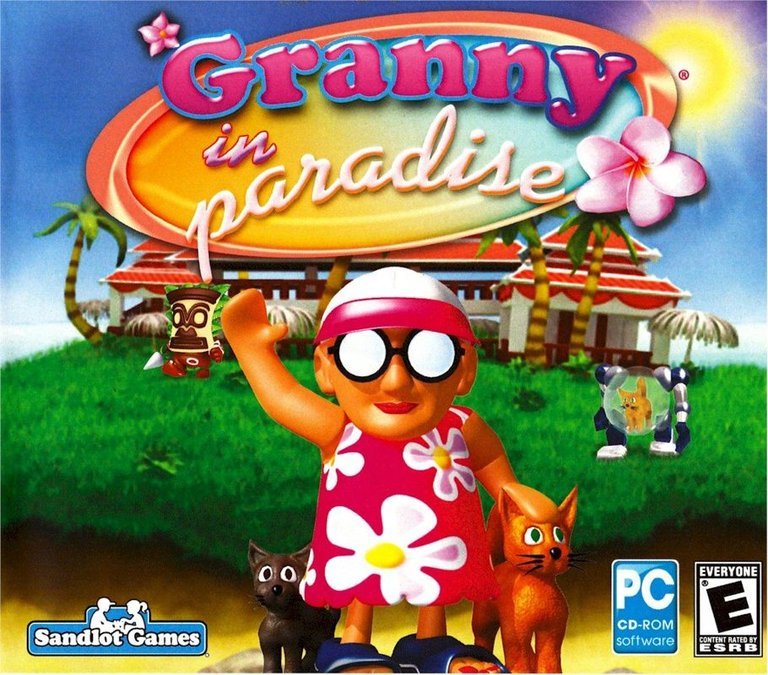
Granny in Paradise is a charming puzzle-platformer where players control an elderly woman on a mission to rescue her kidnapped kittens across 170 levels. Navigate through themed areas, avoid enemies, and use special items like bombs and air jets to outsmart foes. The game also features a level editor for creating custom puzzles, adding replayability and creativity to the experience.
Gameplay Videos
Where to Buy Granny in Paradise
PC
Granny in Paradise Free Download
Granny in Paradise Serial Keys
Granny in Paradise Guides & Walkthroughs
Granny in Paradise Reviews & Reception
gamesreviews2010.com (80/100): Super Granny 2: Granny in Paradise is a delightful and heartwarming adventure for the whole family.
gamezebo.com : A charming but rough‑pitched puzzle adventure that can become repetitive over time.
Granny in Paradise: Review
Introduction
In the pantheon of casual gaming relics, few titles capture the whimsical spirit of the mid-2000s indie scene quite like Granny in Paradise. Released on October 9, 2005, this action-puzzle platformer by Sandlot Games is a sequel to the cult hit Super Granny, positioning itself as a vibrant, Caribbean-flavored romp through 170+ levels of feline-rescuing chaos. While its premise may seem deceptively simple—guide an elderly matriarch to save her kidnapped cats—the game weaves together Lode Runner-style strategic digging, emergent environmental puzzles, and a surprisingly endearing narrative. This review delves into every facet of Granny in Paradise, examining its development, narrative depth, intricate mechanics, and enduring legacy. At its core, this is a testament to how charming characters and accessible yet challenging gameplay can create a timeless diversion for players of all ages, proving that paradise isn’t just a destination—it’s a state of mind.
Development History & Context
Granny in Paradise emerged from the fertile ground of Sandlot Games, a studio celebrated for blending arcade nostalgia with accessible modern design. As the second mainline entry in the Super Granny series (following the 2004 original), it was developed collaboratively by Sandlot and Orchid Games, reflecting a period of expansion for the small indie team. Key figures like Game Designer Andrew Lum, Producer Darek Rusin, and Art Director Israel Evans spearheaded a vision to evolve the series beyond its Lode Runner roots. Technologically, the game operated within the constraints of 2005 Windows shareware culture, leveraging fixed/flip-screen 2D rendering to ensure broad compatibility. Its release on both CD-ROM and digital download channels aligned with the era’s burgeoning casual gaming market, where titles like Diner Dash and Bejeweled dominated family-friendly PCs. The developers prioritized accessibility, crafting an hour-long trial mode (unlike the original’s limited demo) and an intuitive level editor—features that directly responded to player feedback and cemented Sandlot’s reputation for community-focused design. This context positions Granny in Paradise not merely as a game, but as a product of its time: a shareware-era gem bridging classic arcade mechanics with the emerging casual revolution.
Narrative & Thematic Deep Dive
Beneath its cartoonish exterior lies a surprisingly layered narrative centered on familial bonds and adventure. The story unfolds through charming cutscenes and postcards: Granny and her kitties arrive at a tropical resort, only for her furry companions to be abducted by the nefarious Dr. Meow and his eclectic minions (Tiki Men, Robots, Gorillas). As Granny traverses five distinct worlds—from jungle villages to factory assembly lines—she enacts a rescue mission framed by her dry humor and unwavering resolve. “Dear Pumpkins,” she writes in one postcard, “I found some poor kitties that were stuck inside fish bowls! I really must talk to the tour supervisor about that!” This juxtaposition of peril and humor underscores the game’s core theme: the resilience of family. Dr. Meow, voiced with theatrical malice by Andy Megowan, evolves from a villain into a tragic figure, ultimately being adopted by Granny and renamed “Twinkletoes”—a twist that subverts expectations and celebrates the power of compassion. The narrative is episodic, with each themed world introducing new challenges and characters, yet it consistently reinforces Granny’s character as a sarcastic yet loving matriarch. Her quips (“I should have worn my bikini!”) and the game’s focus on herding cats into safety create a thematic resonance: even in chaos, love guides us home.
Gameplay Mechanics & Systems
Granny in Paradise’s brilliance lies in its deceptively simple mechanics, which expand strategically across its 170 levels. At its heart is a resource-puzzling loop: Granny must navigate side-scrolling environments, dig holes (via Spacebar) to trap enemies, and collect scattered cats before guiding them to an exit flower. New to this sequel are environmental hazards and tools: indestructible tiles block paths, moving platforms require timing, and items like bombs (for destroying rocks), watering cans (to grow vines or killer tomatoes), and umbrellas (for gliding) introduce layered problem-solving. The “Killer Tomato” mechanic exemplifies this: Granny waters a sprout, transforming it into a carnivorous plant that devours enemies, adding a strategic layer to level design. The game’s pacing is meticulous, introducing elements gradually—early levels focus on basic digging, while later levels demand mastery of multi-step item chains. The level editor, accessible from the main menu, empowers players to create and share custom puzzles, extending the game’s replayability exponentially. Controls are direct (arrow keys for movement), with responsive physics that make platforming feel fluid. Yet the game isn’t without flaws: enemy AI can be unpredictable, and the herding mechanic occasionally frustrates as cats become stuck or wander off-course. Still, these minor issues are overshadowed by the sheer satisfaction of outwitting a puzzle through clever use of Granny’s toolkit.
World-Building, Art & Sound
The game’s five themed worlds—tropical jungle, souvenir factory, submarine, aquarium, and volcano park—are microcosms of vibrant, imaginative design. Each is rendered with a fixed/flip-screen aesthetic that evokes classic arcade titles, but with a modern, hand-drawn charm. Art Director Israel Evans’ team, using 3D Studio Max for backgrounds and Photoshop for tiles, crafted environments rich with personality: lush jungles with tiki torches, factory conveyor belts, and bubbling aquariums that double as obstacle courses. The style is colorful and cartoonish, with exaggerated animations for Granny’s tumbles and enemy movements. Sound design, helmed by Daniel Bernstein, complements the visuals perfectly. Calypso-infused music sets a playful, tropical tempo, while sound effects—like the plink of coins or the sproing of a killer tomato—provide tactile feedback. Granny’s voice, delivered by Bhama Roget, is the game’s auditory centerpiece, with a barrage of one-liners (“Granny power!”) that grow endearing despite repetition. The flower-harvesting chime, reminiscent of Bernstein’s “Funky Stuff” track, adds a layer of auditory reward. Together, these elements create a cohesive atmosphere: a sun-drenched, slightly absurd paradise where every level feels like a postcard come to life.
Reception & Legacy
Upon release, Granny in Paradise garnered a respectable 77% critical average, with outlets praising its accessibility and charm. GameZebo lauded its “delightful diversion for the entire family,” awarding 80%, while VictoryGames.pl noted the “spokojna, hawska muzyczka” (calm Hawaiian music) as a standout. Softonic, however, critiqued its repetitive audio, scoring it 70%. Commercially, it thrived in the shareware market, bundled in the “150 GameHouse Games Pack,” and even received a Russian localization (Babulya na ostrovakh), expanding its audience. Its legacy, though, lies in influence. The level editor became a blueprint for community-driven content in casual games, while the Super Granny series continued through sequels like Winter Wonderland (2006). The game’s core mechanics—strategic digging, environmental puzzles, and character-driven humor—foreshadowed modern indie hits like Unrailed! and Donut County. Culturally, it remains a nostalgia touchstone for early PC gamers, its quirky charm preserved in abandonware archives. As the first Super Granny title with cutscenes and a level editor, it cemented Granny as an iconic figure in casual gaming—a testament to Sandlot’s ability to innovate within constraints.
Conclusion
Granny in Paradise endures not as a technical marvel, but as a masterclass in accessible design and timeless charm. Its blend of Lode Runner-style strategy, emergent puzzles, and a heartwarming narrative about family rescue transcends its era. While its graphics and audio show their age, the game’s mechanics remain satisfyingly sharp, and its level editor ensures endless replayability. The critical reception of 77% accurately reflects its status: a solid, polished entry in the puzzle-platformer genre, though not without minor flaws. Its legacy, however, is undeniable. It expanded the Super Granny series, introduced innovative tools for player creativity, and offered a blueprint for family-friendly gaming that prioritizes joy over complexity. For historians, it’s a snapshot of mid-2000s indie ingenuity; for modern players, it’s a delightful reminder that paradise isn’t just a place—it’s the feeling of saving a kitten while wearing a floral shirt. Verdict: A cult classic deserving of rediscovery, Granny in Paradise proves that the best games don’t need cutting-edge technology—they just need a lot of heart, a few holes to dig, and a very determined grandmother.