
- Release Year: 2021
- Platforms: Nintendo Switch, PlayStation 4, PlayStation 5, Windows, Xbox One, Xbox Series
- Publisher: Eastasiasoft Limited, Insular Games
- Developer: Insular Games
- Genre: Action
- Perspective: Side view
- Game Mode: Single-player
- Gameplay: Exploration, Fuel management, Gravitational mechanics, Power-up collection, Ship Customization, Ship management, Strategy, Twin-stick shooting
- Setting: Futuristic, Sci-fi
- Average Score: 70/100
Description
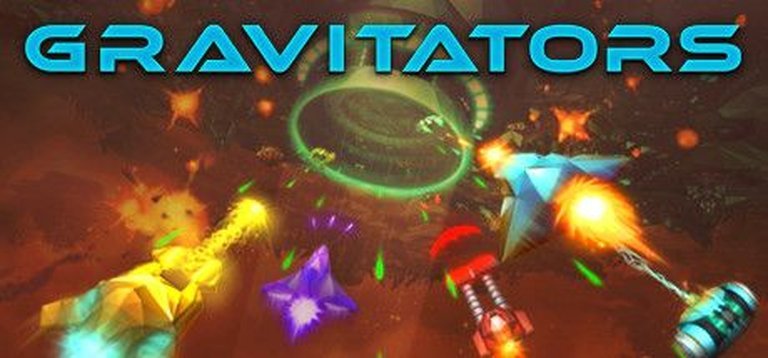
Gravitators is a challenging twin-stick shooter that blends classic arcade aesthetics with modern mission design, placing players in control of four unique spaceships to combat an alien invasion across diverse galactic locations including Earth, the Moon, asteroids, planets, and even black holes. The game emphasizes precise maneuvering through tight spaces while managing fuel and payloads, with each ship offering distinct mechanics such as thrust and combat styles. Players must navigate gravitational forces and environmental hazards, unlock hidden objectives, and customize their approach with 30 power-ups and perks in a low-poly visual style.
Gameplay Videos
Where to Buy Gravitators
PC
Gravitators Free Download
Gravitators Guides & Walkthroughs
Gravitators Reviews & Reception
metacritic.com (70/100): Gravitators brings something a little bit different to the table of an overcrowded market, and as such is worthy of a look. While it isn’t massively original, bringing things together as it has, does deliver a spark of originality.
thexboxhub.com (70/100): Eastasiasoft are, quite simply, purveyors of quality software at reasonable prices (and if that isn’t their motto, talk to me, I have loads of ideas!). And it is here where they come to market with a new game that reminds massively of the good old fashioned games from the arcade era, without ever actually copying any of them.
Gravitators: Review
Introduction
In the crowded cosmos of twin-stick shooters, Gravitators emerges not as a revolutionary supernova but as a meticulously crafted comet—a deliberate homage to a bygone era of arcade challenges, refracted through a modern lens. Released in 2021 by Indonesian developer Insular Games, this title dares to excavate the niche gravity-shooter subgenre, epitomized by classics like Thrust and Gravitar, and infuses it with contemporary mission design, visual flair, and mechanical depth. Its premise is deceptively simple: pilot four unique ships across a besieged galaxy, battling aliens while mastering physics-based traversal. Yet, Gravitators transcends its “retro” label by layering profound complexity onto its core, creating an experience that is as punishing as it is rewarding. This review will dissect Gravitators through the annals of its development, thematic undertones, gameplay architecture, sensory presentation, and enduring legacy, arguing that while it may not redefine the genre, it stands as a masterful revival of its most demanding principles—a testament to the timeless appeal of skill-based gameplay.
Development History & Context
Gravitators is the brainchild of Insular Games, a Jakarta-based studio founded in 2015 by a seven-person team with extensive experience in mobile and casual development. Their vision for Gravitators was explicit: to “unshelf” the gravity-shooter genre, long relegated to the margins of gaming, and “overhaul it into modern times” while preserving its brutal, physics-driven essence. As detailed in their pitch deck, the team sought to fill a conspicuous void on Steam, targeting players nostalgic for the unforgiving precision of 1980s arcade titans like Asteroids and Solar Jetman. This ambition was realized using Unity, a choice that allowed for robust physics simulation while enabling a distinctive low-poly art style—a deliberate aesthetic pivot from the pixelated austerity of their inspirations. The game’s development unfolded against the backdrop of a 2021 indie scene saturated with twin-stick shooters, yet Gravitators carved a niche by emphasizing environmental interaction and gravitational complexity over pure reflexive combat. Its initial Windows release (November 12, 2021) was followed by a staggered console rollout (2024–2025), underscoring a commitment to accessibility without diluting its core design. The studio’s Indonesian roots are subtly reflected in the game’s credits—featuring names like Apin Prastya and Rizal Adrianto—and its eventual global distribution, highlighting the burgeoning role of Southeast Asian developers in shaping indie gaming’s future.
Narrative & Thematic Deep Dive
Gravitators adopts a minimalist narrative approach, prioritizing gameplay exposition over cinematic storytelling. The plot is distilled to its essence: Earth faces an alien invasion, and players commandeer four prototype “Gravitator” ships to repel the threat across the Solar System and beyond. Missions range from escorting nuclear payloads through asteroid fields to rescuing civilians from crumbling cities, framed via text-box briefings that echo the sparse storytelling of arcade ancestors. This austerity is not a flaw but a thematic choice, reinforcing the game’s focus on player agency over pre-scripted drama. Characters are archetypal—the stoic pilot, the faceless alien horde—serving as vessels for gameplay mechanics rather than emotional anchors. Dialogue is nonexistent beyond mission objectives, leaving players to infer stakes through environmental cues: crumbling structures, panicked transmissions, and the sheer scale of celestial bodies.
The underlying themes, however, are rich and multifaceted. Gravity itself becomes a metaphor for struggle, constantly pulling the player toward failure while demanding mastery of momentum and inertia. This mirrors the game’s broader themes of resilience and adaptation; fuel management, payload carriage, and environmental hazards all force players to confront their limitations. The alien invasion’s lack of explicit backstory—a common trait in retro shooters—invites interpretation: are they a literal threat, or a manifestation of the universe’s indifferent physics? Ultimately, Gravitators’ narrative is an exercise in environmental storytelling, where the true narrative unfolds in the tactile struggle of navigating a black hole’s event horizon or the weight of a captured alien artifact.
Gameplay Mechanics & Systems
At its core, Gravitators is a physics-driven twin-stick shooter, but its genius lies in how it weaponizes gravity as both obstacle and ally. The foundational loop demands players pilot ships with twin-stick precision—left stick for thrust, right for rotation—while contending with gravitational forces that can pull, push, or destabilize movement. This transforms traversal into a high-stakes ballet; a slight miscalculation in thrust near a planet’s surface can send the player spinning into an enemy or a wall. Each of the four ships (e.g., the agile “Red Flying Ship” or the tank-like “Heavy Hauler”) offers distinct handling dynamics—varying thrust power, rotation speed, and weapon types—radically altering strategy. Mastering all four is a standalone challenge, rewarding players with adaptability across mission types.
Combat is deceptively simple yet strategically deep. Weapons range from rapid-fire lasers to homing missiles, but effectiveness hinges on momentum. A stationary ship is an easy target, while strafing and thrusting create complex firing angles. Mission variety elevates the design: escort missions require balancing speed with protection, while rescue operations demand careful navigation through tight spaces. Environmental hazards—clouds obscuring vision, water slowing movement, and pitch-black zones hiding ambushes—add layers of unpredictability. Fuel management further heightens tension, forcing players to optimize routes or risk stranding.
Progression is award-based, with 12 unlockable awards per mission granting access to 30 power-ups (e.g., damage boosts, shield enhancements) and 30 perks (permanent stat upgrades). This system encourages experimentation, as power-ups must be chosen to suit specific challenges. Difficulty is adjustable on-the-fly, but even “Easy” mode remains punishing—a deliberate nod to retro design philosophy. Flaws include occasional UI clutter and a learning curve so steep that novices may feel overwhelmed, though the ability to switch difficulty mitigates this. Ultimately, Gravitators’ gameplay is a masterclass in systems synergy, where gravity, combat, and environmental design coalesce into a cohesive, cerebral challenge.
World-Building, Art & Sound
Gravitators’ world-building is a triumph of suggestion over exposition. The game spans the Milky Way—from Earth’s orbit and lunar bases to exoplanets, asteroid fields, and even black holes—each environment meticulously designed to test specific skills. Earth missions emphasize gravitational precision, while black hole stages distort space-time, warping perspectives and movement. These settings are not merely backdrops but active participants; gravitational fields shift dynamically, and celestial bodies like gas giants cast ever-changing shadows. Exploration is rewarded, with hidden objectives and power-ups tucked away in nebulae or behind destructible terrain, encouraging players to engage deeply with each locale.
The art direction blends retro futurism with modern sensibilities. The low-poly aesthetic—a deliberate choice to evoke 1980s arcade visuals while leveraging contemporary rendering—creates a striking visual identity. Ships are geometric but expressive, with vibrant color palettes that pop against the cosmic backdrop. Environments are vast yet detailed: asteroid fields shimmer with crystalline facets, while alien bases pulse with bioluminescent hues. Special effects, like weapon trails and explosions, are crisp and impactful, adding weight to every shot. The art’s strength lies in its functional beauty; visual clarity aids navigation, even in chaotic firefights.
Sound design complements the art with atmospheric subtlety. Cristian D’Agustini’s original soundtrack oscillates between ambient synth pads (for deep space) and driving percussion (for combat), never overwhelming the gameplay. Sound effects—engine hums, weapon discharges, and enemy shrieks—are crisp and spatially aware, enhancing immersion. However, the lack of voice acting or dynamic music shifts means the audio occasionally fades into the background. Still, the synergy of art and sound creates a cohesive, immersive experience that feels both nostalgic and fresh.
Reception & Legacy
At launch, Gravitators received a mixed-to-positive critical reception, with scores reflecting its niche appeal. MobyGames reported an 80% critic average based on a single review, praising its “free roaming and objective based” approach as a “fun, casual experience” that surprised for its rarity. Metacritic’s lone review (TheXboxHub, 70%) lauded its “spark of originality” in blending gravity mechanics with twin-stick shooting but noted it as a “one trick pony.” Steam’s player reviews were uniformly glowing (100% positive from 23 reviews), with users highlighting its “unforgiving” challenge and “masterful” ship designs. Commercial performance remains modest, with GameRebellion estimating ~575 units sold, likely attributed to its demanding difficulty and niche genre appeal.
Legacy-wise, Gravitators has found a cult following among retro shooter enthusiasts, cited for reviving the gravity-shooter subgenre. Its influence is most evident in games emphasizing physics-based traversal, though few have directly aped its specific mechanics. The studio’s post-release support—porting to consoles (2024–2025) and hinting at a sequel in Steam discussions—suggests a sustained commitment to the IP. Critically, Gravitators is now regarded as a benchmark for challenging indie shooters, proving that “old-school” design can thrive when infused with modern polish. While it may not have reshaped the industry, it stands as a vital artifact in the lineage of skill-based arcade games, ensuring their spirit endures.
Conclusion
Gravitators is a paradox: simultaneously a love letter to the past and a forward-thinking evolution of a forgotten genre. Its strength lies in the seamless fusion of classic arcade DNA—gravity physics, tight traversal, and brutal challenge—with contemporary design sensibilities like mission variety and progression systems. While its narrative is skeletal and its accessibility limited, these are not flaws but deliberate choices that anchor its identity as a game for the dedicated. The low-poly visuals, atmospheric audio, and meticulously crafted physics create an experience that is as aesthetically pleasing as it is demanding.
For players, Gravitators offers a rare gift: the chance to prove mastery over a universe that actively resists them. Its place in gaming history is secure not as a mainstream hit, but as a niche masterpiece—a testament to the enduring allure of games that demand skill, patience, and intellectual engagement. In an era of hand-holding and cinematic spectacle, Gravitators dares players to earn their victories, one gravitational pull at a time. For that alone, it is not just worth playing, but worth preserving—a vital star in the indie cosmos.