
- Release Year: 2010
- Platforms: Android, iPad, iPhone, Macintosh, PlayStation 3, Windows, Xbox 360
- Publisher: dtp entertainment AG, Easy Tiger Media, Invictus Games, Ltd., Valcon Games LLC, Vanguard Games
- Developer: W!Games
- Genre: Strategy, Tactics
- Perspective: Top-down
- Game Mode: Hotseat, Online PVP, Single-player
- Gameplay: Base building, Hexagonal map, Resource Management, Turn-based combat
- Setting: Steampunk
- Average Score: 84/100
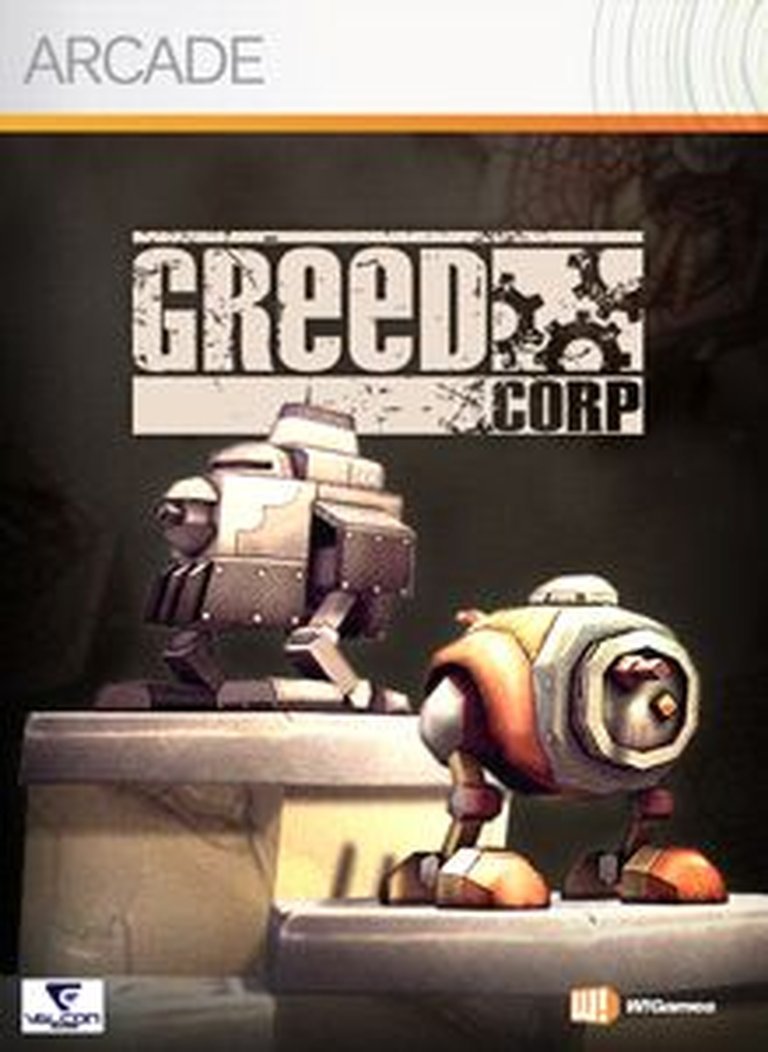
Description
Greed Corp is a turn-based strategy game set in a steampunk world where players compete to harvest resources from a hexagonal map while destroying their opponents’ units and territory. The game features a unique mechanic where every tile can be destroyed through harvesting or combat, adding a layer of tactical depth as players must balance resource collection with territorial control. With a single-player campaign, multiplayer modes, and a variety of units like Harvesters, Walkers, and Cannons, the game challenges players to outmaneuver their rivals in a collapsing landscape.
Gameplay Videos
Where to Buy Greed Corp
PC
Greed Corp Free Download
Greed Corp Cracks & Fixes
Greed Corp Patches & Updates
Greed Corp Guides & Walkthroughs
Greed Corp Reviews & Reception
ign.com (88/100): Greed is good.
steambase.io (86/100): Greed Corp has earned a Player Score of 86 / 100.
metacritic.com (79/100): Win or lose, though, you’re guaranteed to have a good time with the experience. Who knew that an XBLA game would ultimate prove ol’ Gordon Gekko right? Greed, at least in this case, is definitely good.
Greed Corp Cheats & Codes
PC (Cheat Engine Table)
Hover over a tile and use the specified hotkeys. Ensure NUMLOCK is off or set custom hotkeys with CTRL+H.
| Code | Effect |
|---|---|
| NUMPAD1 | Adds 100 to your money |
| NUMPAD2 | Reset Movement On Tile Under Cursor – makes all units able to move |
| NUMPAD3 | Add Unit to Tile Under Cursor – adds 1 unit to the tile |
| NUMPAD4 | 3 Useable Carriers |
| NUMPAD+ | Raise Tile Under Cursor |
| NUMPAD- | Lower Tile Under Cursor |
PC (Trainer)
Use the trainer’s hotkeys as specified in the included readme file.
| Code | Effect |
|---|---|
| Increased Funds | Increases available funds |
| 3 Carriers | Grants 3 carriers |
| Increase Troops | Increases troop count |
| Reset Movement | Resets unit movement |
| Weak Troops | Makes troops weaker |
| Add Cannon Ammo | Adds cannon ammo |
| Armory Units | Adds armory units |
| Reset Terrain | Resets terrain |
| Fragile Terrain | Makes terrain fragile |
Greed Corp: A Masterclass in Minimalist Strategy and Environmental Allegory
Introduction
In the crowded landscape of turn-based strategy games, Greed Corp (2010) stands as a rare gem—a title that distills the essence of tactical depth into a minimalist, yet profoundly engaging experience. Developed by the Dutch studio W!Games and published by Valcon Games, Greed Corp is a digital board game that forces players to confront the consequences of unchecked resource exploitation, all while battling opponents in a crumbling, hexagonal world. Its brilliance lies in its simplicity: a handful of units, a collapsing terrain mechanic, and a relentless tension between expansion and survival. Over a decade since its release, Greed Corp remains a cult classic, celebrated for its innovative design, steampunk aesthetic, and biting environmental commentary. This review will dissect the game’s development, mechanics, narrative themes, and legacy, arguing that it is not just a great strategy game, but a timeless allegory for the perils of greed.
Development History & Context
The Studio and Vision
W!Games, a relatively unknown Dutch developer at the time, emerged with Greed Corp as its debut title. The studio’s ambition was to create a turn-based strategy game that stripped away the bloated complexity of contemporaries like Civilization or Advance Wars, focusing instead on core strategic dilemmas. The game’s lead designer, Harry van Mierloo, envisioned a world where the very act of harvesting resources would destroy the land, forcing players to make morally ambiguous choices. This mechanic was not just a gameplay gimmick but a thematic anchor, reflecting the studio’s concern with environmental degradation—a bold stance for a strategy game in 2010.
Technological Constraints and Multiplatform Release
Greed Corp was developed during the rise of digital distribution, debuting on Xbox Live Arcade (February 24, 2010) before expanding to PlayStation Network, Windows, Mac, iOS, and Android. The game’s 2D hexagonal grid and top-down perspective were optimized for both consoles and touchscreens, a rarity for strategy games at the time. The use of middleware like Scaleform GFx SDK ensured smooth UI transitions, while the Bink Video engine handled cinematics. Despite its modest budget, the game’s art direction—spearheaded by Art Lead Edwin van Gessel—delivered a cohesive steampunk aesthetic that distinguished it from the pixelated or hyper-realistic styles dominating the genre.
The Gaming Landscape of 2010
At the time of its release, the strategy genre was dominated by real-time epics (StarCraft II, Company of Heroes) and grand-scale 4X titles (Civilization V). Greed Corp arrived as a breath of fresh air, offering bite-sized matches (around 20 minutes) that appealed to both hardcore strategists and casual players. Its turn-based, asynchronous multiplayer was a perfect fit for the burgeoning digital marketplace, where games like Carcassonne and Ticket to Ride were proving that board game adaptations could thrive. Critics and players alike were starved for innovation, and Greed Corp delivered with its collapsing terrain mechanic—a feature that would later inspire games like Into the Breach (2018).
Narrative & Thematic Deep Dive
The Mistbound Universe and Factions
Greed Corp is set in the “Mistbound” universe, a steampunk-inspired world ravaged by industrialization. The game’s lore is sparse but evocative, delivered through campaign missions and environmental storytelling. Four factions vie for dominance:
- The Freemen: A tribal society that reveres nature, using windmill-like harvesters and wooden structures. Their tiles resemble fertile farmland, symbolizing harmony with the environment.
- The Pirates: Scavengers who thrive in arid deserts, their units cobbled together from scrap metal. They embody opportunism, trading with both the Cartel and the Empire.
- The Cartel: Ruthless corporations obsessed with mining, their oil derricks and copper-plated buildings reflecting unchecked capitalism.
- The Empire: A militarized industrial power, their steel-clad units and infrastructure representing authoritarian control.
While the factions are mechanically identical, their visual and thematic distinctions reinforce the game’s central conflict: exploitation versus preservation.
Environmental Allegory
The game’s collapsing terrain mechanic is its most potent narrative device. Every tile harvested weakens the land, eventually causing it to crumble into the abyss. This isn’t just a gameplay constraint—it’s a metaphor for ecological collapse. Players must decide whether to:
– Harvest aggressively, risking the destruction of their own territory.
– Play conservatively, potentially ceding resources to opponents.
– Sabotage opponents by collapsing tiles beneath their units.
The tension between short-term gain and long-term survival mirrors real-world dilemmas like deforestation, overfishing, and fossil fuel dependence. Greed Corp doesn’t preach; it forces players to feel the consequences of their choices.
Campaign and Dialogue
The single-player campaign consists of 24 maps across three difficulty levels, each framed by minimalist dialogue that reinforces the factions’ ideologies. The Freemen’s missions, for instance, often involve defending sacred land, while the Cartel’s focus on maximizing extraction at any cost. The writing is sparse but effective, avoiding the overwrought exposition of many strategy games. Instead, the narrative emerges organically from the gameplay—a testament to W!Games’ confidence in their design.
Gameplay Mechanics & Systems
Core Gameplay Loop
Greed Corp’s genius lies in its elegance. Each turn, players:
1. Gain credits based on controlled tiles.
2. Harvest tiles with Harvesters, which slowly destroy the land.
3. Build units (Walkers, Cannons, Carriers) from Armories.
4. Attack or defend, using Cannons to bombard tiles or enemies.
The catch? Every action accelerates the terrain’s collapse. Harvest too much, and your own units may plummet into the void. The game’s pacing is relentless, with a 60-second turn timer (adjustable in single-player) ensuring no downtime.
Unit Breakdown
- Harvesters: The backbone of the economy. They generate credits but also erode tiles. Placing them near enemy territory can destabilize opponents.
- Walkers: Basic combat units. They capture tiles and engage in melee combat.
- Cannons: Long-range artillery. Can target tiles (causing collapse) or units.
- Carriers: Air transports that allow for rapid redeployment, essential for late-game maneuvers.
The lack of unit variety is a deliberate design choice. Instead of overwhelming players with tech trees, Greed Corp forces mastery of a few tools, emphasizing positional play and resource management.
Combat and Terrain Collapse
Combat is resolved via simple rock-paper-scissors mechanics (e.g., Walkers beat Harvesters, Cannons beat Walkers), but the real depth comes from terrain manipulation. Players can:
– Collapse tiles beneath enemies, eliminating units without direct combat.
– Create chokepoints by strategically harvesting, funneling opponents into traps.
– Sacrifice territory to deny resources to adversaries.
The dynamic terrain ensures no two matches play alike. A well-timed Cannon shot can send an entire enemy army tumbling into the abyss—a moment of schadenfreude that never grows old.
Multiplayer and AI
Greed Corp supports up to four players locally or online, with AI opponents available in three difficulty settings. The AI is competent but predictable, making multiplayer the true test of skill. The game’s asynchronous turn-based design makes it ideal for play-by-email or quick online skirmishes. However, the lack of a robust matchmaking system (a common issue in 2010 XBLA titles) limited its long-term multiplayer viability.
UI and Accessibility
The game’s UI is a masterclass in clarity. The hexagonal grid is color-coded by faction, with tile health indicated by shading (darker tiles are closer to collapse). The point-and-select interface is intuitive, though the tutorial—often criticized for its brevity—fails to convey advanced strategies. Players must experiment to grasp nuances like:
– Tile prioritization: Harvesting edge tiles first to minimize collapse risk.
– Unit positioning: Placing Armories on stable tiles to avoid losing production.
– Economic timing: Balancing credit income with the inevitability of terrain loss.
World-Building, Art & Sound
Visual Design: Steampunk Meets Apocalypse
Greed Corp’s art direction is a standout achievement. The game’s steampunk aesthetic is realized through:
– Faction-specific architecture: The Freemen’s wooden windmills contrast with the Empire’s hulking steel fortresses.
– Dynamic terrain: Tiles transition from lush to barren as they’re harvested, with crumbling animations that sell the apocalyptic tone.
– Unit designs: Harvesters resemble industrial drills or windmills, while Walkers evoke clunky, steam-powered mechs.
The top-down perspective and 2D scrolling visuals belie the game’s depth. The collapsing terrain is particularly impressive, with tiles breaking apart in satisfying cascades.
Atmosphere and Sound Design
The game’s soundtrack—a mix of jazzy, melancholic tunes—complements its themes of decay and desperation. The music swells during critical moments (e.g., a tile collapse) but never overpowers the gameplay. Sound effects are minimal but effective:
– The clank of Harvesters drilling into the earth.
– The boom of Cannon fire.
– The crunch of tiles crumbling.
The audio design reinforces the game’s environmental message, with the soundtrack’s somber tones evoking a world on the brink.
Reception & Legacy
Critical Acclaim
Greed Corp was met with widespread critical praise, earning a Metacritic score of 79 (Xbox 360), 78 (PS3), and 76 (PC). Critics lauded its:
– Innovative mechanics: IGN called the collapsing terrain “one of the most fascinating choices in strategy gaming.”
– Accessibility: Eurogamer praised its “easy to learn, hard to master” design.
– Multiplayer depth: TeamXbox highlighted its potential for “schadenfreude-filled battles.”
However, some reviewers noted its steep learning curve and lack of unit variety. GameSpot’s Tom McShea wrote, “The pro-environmental message is easy to grasp, but the inner workings are not so easily understood.”
Awards and Recognition
The game won several accolades, including:
– Dutch Game Awards 2010: Best PC/Console Game.
– 4Players: #3 Best PSN Game of the Year.
– NAVGTR Award Nominee: Best Strategy Game of the Year.
Despite its niche appeal, Greed Corp cultivated a dedicated fanbase, particularly among strategy enthusiasts who appreciated its minimalist depth.
Influence on Subsequent Games
Greed Corp’s legacy is evident in later titles that embraced environmental mechanics:
– Into the Breach (2018): Features collapsing terrain and turn-based tactics.
– Terra Nil (2023): A reverse Greed Corp, focusing on ecological restoration.
– Wargroove (2019): Borrows the game’s hexagonal grid and faction asymmetry.
The game also paved the way for W!Games’ follow-up, Gatling Gears (2011), though that title abandoned the turn-based format for real-time action.
Commercial Performance and Longevity
While Greed Corp was not a blockbuster, its multiplatform release ensured steady sales. The Steam version, priced at $9.99, remains a cult favorite, with a “Very Positive” rating (86/100 on Steambase). Its inclusion in the Humble Bundle with Android 7 (2013) introduced it to a wider audience. However, the lack of post-launch content (no DLC or expansions) limited its longevity. The online multiplayer community dwindled over time, though local multiplayer remains a highlight.
Conclusion: A Timeless Strategy Masterpiece
Greed Corp is a rare example of a game that achieves perfection through restraint. Its minimalist design, environmental allegory, and relentless strategic depth make it a standout in the turn-based genre. While its steep learning curve and sparse narrative may deter casual players, those who persevere will find a game that rewards patience, foresight, and ruthless efficiency.
Final Verdict: 9/10 – A must-play for strategy fans and a timeless allegory for the perils of unchecked greed. Greed Corp is not just a game; it’s a cautionary tale wrapped in steampunk brilliance.
Legacy Rating: 8.5/10 – Its influence on later titles and enduring appeal among hardcore strategists cement its place in gaming history. A cult classic that deserves rediscovery.
For players seeking a strategy game that challenges both the mind and the conscience, Greed Corp remains an unparalleled experience. As the Freemen’s windmills crumble and the Cartel’s derricks sink into the abyss, one truth becomes clear: in this world, greed is the ultimate undoing.