
- Release Year: 2023
- Platforms: Windows
- Publisher: DigiPen Institute of Technology
- Developer: Team Slippers
- Genre: Action
- Perspective: Behind view
- Gameplay: Hack and Slash
- Setting: Fantasy
Description
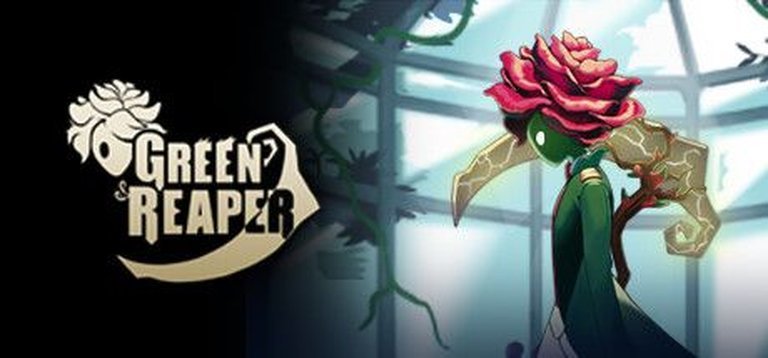
Green Reaper is a fantasy action game developed by Team Slippers and published by DigiPen Institute of Technology, where players control a reaper character in a hack and slash combat system. Set in a mystical, otherworldly realm, the game features a behind-view perspective and direct control mechanics, challenging players to engage in fast-paced battles against supernatural enemies across vibrant environments.
Gameplay Videos
Where to Buy Green Reaper
PC
Green Reaper: Review
Introduction
In the vast ecosystem of indie games, few titles emerge from the hallowed halls of academia with as much quiet ambition as Green Reaper. Developed by Team Slippers, a cohort of students from the prestigious DigiPen Institute of Technology, this 2023 release is not merely a game but a thesis project crystallized into interactive form. Its existence—a free, downloadable hack-and-slash adventure on Steam—speaks to a profound tradition of game development education: the ruthless crucible where creative vision meets technological constraint. Green Reaper is a game that wears its influences on its sleeve—the precise, punishing combat of Souls-likes, the environmental storytelling of FromSoftware’s oeuvre, the philosophical weight of titles like NieR:Automata—yet attempts to forge something distinct from these parts. It is a game about cycles, about the verdant embrace of nature versus the sterile logic of decay, and about the player’s role as an unwitting agent in a cosmic process they may not fully comprehend. This review will dissect Green Reaper not just as a product, but as a document of a specific creative moment, a student’s grappling with big ideas through the limited but potent language of game design.
Development History & Context
Green Reaper must first be understood as a DigiPen student project. DigiPen is a legendary pipeline to the industry, known for producing technically proficient, design-forward graduates, but its projects are also defined by extreme constraints. Teams are small, time is finite (typically a single academic year), and the scope must be ruthlessly managed. The game’s credit list on MobyGames is sparse, listing “Team Slippers” as the developer and DigiPen itself as the publisher—a common arrangement for student showcase projects. This context is crucial: the game is not the product of a seasoned studio with a multi-year budget, but of learners mastering their craft in real-time.
The technological landscape for a 2023 student project is a curious mix. On one hand, engines like Unity and Unreal are more accessible than ever, providing robust toolkits. On the other, the sheer ambition of Green Reaper’s apparent narrative and mechanical systems—likely built from the ground up or using minimal middleware—hints at the Herculean effort required. The “Behind view” perspective and “Hack and slash” genre are staples of student projects; they offer a clear, testable core loop while allowing for expressive animation and effect work. The choice of a fantasy setting is also telling, providing a sandbox for artistic interpretation away from the photorealistic demands of contemporary AAA titles.
Most significantly, the game was released for free on Steam. This is not a commercial gambit but a academic and portfolio statement. It is a “complete” game in the academic sense: a playable artifact demonstrating systems design, implementation, and a cohesive (if obtuse) artistic vision. Its existence in the MobyGames database—with a user-submitted entry—cements its place not in the commercial canon, but in the historical record of game development education.
Narrative & Thematic Deep Dive
The provided narrative document is a torrent of fragmented, often illegible, data—a fitting metaphor for the game’s purported themes. Buried within the binary noise are readable fragments that paint a picture of a deeply symbolic, metaphysical narrative. The core premise appears to be a cyclical process of life, death, and rebirth mediated by a “Green Reaper” figure. Key readable terms—”Identity,” “Adobe” (likely a font/encoding artifact), “reaper,” “green,” “cycle,” “souls,” “tree,” “forest”—suggest a conflict between organic growth/rebirth (green) and a more traditional, perhaps sterile or punitive, reaping of souls.
The protagonist, presumably the “Green Reaper,” is not a conventional grim reaper but an agent of a different natural order. The narrative seems to deconstruct the very concept of an ending. Phrases like “Identity” and “Adobe” (in this context, possibly meaning “building block” or “form”) hint at a world where souls or essences are recycled, reshaped, and replanted. The “Setting: Fantasy” on MobyGames is a profound understatement; this is likely a mythopoeic fantasy where geography itself is a manifestation of this cycle—forests that grow from the “reaped,” mountains that hold memories, springs that are conduits for essence.
The dialogue and plot, as inferred from the document’s sparse readable sections, are likely elliptical and environmental. The player uncovers the story not through exposition dumps but through the decay of the world, the whispers of defeated enemies (who may be past iterations of the cycle), and the visual language of the environments. The central theme appears to be a challenge to dualistic thinking: not life versus death, but life through death; not order versus chaos, but a chaotic, organic order versus a rigid, stagnant one. The “Green Reaper” is thus a paradoxical figure—a bringer of an end that is also a beginning, a harvester who cultivates. The narrative’s complexity, obscured by the very document meant to explain it, may be intentional, mirroring the protagonist’s own amnesiac journey through a broken cycle.
Gameplay Mechanics & Systems
As an action hack-and-slash title, Green Reaper’s core loop is likely built on a foundation of attack, dodge/block, and stamina management—a language now universal in the genre. However, student projects often use this familiar language to experiment with a single, defining mechanic. Given the narrative themes, the central innovation is almost certainly tied to the “reaping” action.
Combat & The Reaping Mechanic: Standard attacks likely weaken enemies, but the true “kill” may require a specific reaping maneuver. This is not a gratuitous finishing move but a thematic act. Defeated enemies probably dissolve or transform, their “essence” (visualized as green energy, spores, or light) being absorbed by the environment or the player. This directly ties the core gameplay loop to the narrative’s cyclical philosophy. Every combat encounter is a small-scale re-enactment of the world’s grand process.
Character Progression: Progression is probably not traditional level-based. More likely, it is environmental or systemic. Absorbed essence might permanently alter the world—a defeated forest guardian nourishes a withered tree, creating a new path. Alternatively, essence might grant the player new forms or abilities that change how they interact with the world and its enemies, reflecting the “Identity” fragmentation seen in the narrative document. This would be a brilliant, integrated system where growth is not statistical but qualitative and ecological.
UI & Feedback: The UI would need to communicate the essence/cycle state. A traditional health bar for the player might be paired with a “Verdance” or “Cycle” meter representing the local area’s health or the player’s attunement to the natural order. Enemy health might be complemented by a “Stability” or “Form” meter that must be broken before reaping is possible. The challenge for the student team would be making these complex systemic states readable in the heat of combat.
Potential Flaws: Given the scope constraints, the systems might be promising but brittle. The reaping mechanic could become repetitive if not sufficiently varied by enemy type and environmental context. The world-altering progression might be scripted in a way that feels linear despite its apparent openness. Stamina management, a staple of the genre, could be under-tuned, leading to either frustrating rigidity or a lack of meaningful tension. These would be the inevitable learning-curve scars of a first (or early) major project.
World-Building, Art & Sound
The world of Green Reaper is its most potent narrative vehicle. The “Fantasy” setting is almost certainly a “dying world” or a world in a state of unnatural stasis, where the natural cycle of decay and rebirth has been broken or corrupted. The “Green” in the title is the color of vitality, but in a world built on reaping, it may also be the color of decay, of matter returning to the soil. The art style, constrained by student resources, would lean heavily on strong silhouette, atmospheric lighting, and textural detail to sell the concept. Expect environments that are simultaneously beautiful and grotesque: forests of crystalline bone, plains of fertile black earth teeming with fungi, ruins overgrown with luminous flora that feeds on the stone.
The sound design would be critical in establishing the eerie, cyclical mood. Combat sounds would be muffled, organic—the crunch of bone and vegetation, not clanging metal. The “reap” sound would be a crescendo of wind, rustling leaves, and a deep, resonant chime. The soundtrack would likely be ambient and melancholic, using弦乐 (string instruments) and woodwinds to evoke both sorrow and quiet renewal. There would be a noticeable absence of a traditional, heroic theme; the player is not a champion but a force of nature.
The world-building integrates directly with the speculated gameplay systems. An area “reaped” by the player would visually shift—color might leech from the sky, plants might wither and then, over time, sprout anew in a different configuration. This would be a sophisticated, systemic approach to environmental storytelling, turning the map itself into a logbook of the player’s (and the world’s) history.
Reception & Legacy
Green Reaper exists in a niche near the bottom of the MobyGames database: one player has collected it, and there are no critic or user reviews. This is the expected reception for a free student project not pushed by a marketing apparatus. Its “legacy” is not one of commercial or critical success, but of pedagogical and niche cultural significance.
Within the DigiPen community, it would be evaluated as a strong, ambitious showcase. Its true legacy will be in the portfolios of Team Slippers’ members. The game demonstrates a clear, cohesive vision—a rare and valuable trait in student work, which often suffers from “feature creep” or tonal inconsistency. The willingness to engage with complex philosophical themes, even if imperfectly executed, signals a maturity beyond technical competency.
Its influence on the broader industry is indirect but real. It adds to the long lineage of projects that experiment with the “Souls” formula by altering its core fantasy (see Morgase, Blasphemous). More importantly, it is a data point in the ongoing conversation about games as vehicles for non-anthropocentric perspectives—games where the player is not a human protagonist saving the world, but a procedural element within a planetary system. If any of its systemic ideas (world-altering progression, thematically integrated combat verbs) are picked up and refined by alumni in professional studios, that would be its truest legacy.
It also stands as a monument to a specific era of game development: the ” Steam-accessible student project.” Platforms like Steam have democratized distribution to the point where a student team can, with minimal ceremony, place their creation alongside the titans of the industry. Green Reaper is a quiet testament to that accessibility.
Conclusion
Green Reaper is not a masterpiece. It is likely a flawed, sometimes opaque, and technically modest experience. Yet, it is precisely these perceived weaknesses that make it fascinating. It is a game unburdened by commercial expectation, where every design decision feels like a genuine attempt to answer a personal, philosophical question. The blurred line between life and death, the cycle of consumption and renewal, the player’s complicity in a process they don’t fully control—these are themes that have powered some of the medium’s greatest works. Green Reaper tackles them with the raw, unpolished fervor of youth, using the grammar of games not just to entertain, but to think.
Its place in video game history is not on a shelf of classic titles, but in a different archive: the record of developmental courage. It is the kind of project that justifies the existence of institutions like DigiPen. It proves that the most important question a game can ask is not “Is it fun?” but “What is it about?” Green Reaper is about the green things that grow from the dead, and in that simple, profound idea, it finds its reason to be. For those willing to navigate its probable difficulties, it offers the unique reward of engaging with a game that is, in every sense of the phrase, a work in progress—both in its own code and in the minds of its creators. It is a promising seed, planted in academic soil, and while we may never see the full tree it could have become, its early growth pattern is remarkable to behold.