
- Release Year: 2020
- Platforms: Windows
- Publisher: Therion Games
- Developer: Therion Games
- Genre: Role-playing (RPG)
- Perspective: Diagonal-down
- Game Mode: Single-player
- Gameplay: Action RPG
- Setting: Fantasy
- Average Score: 90/100
Description
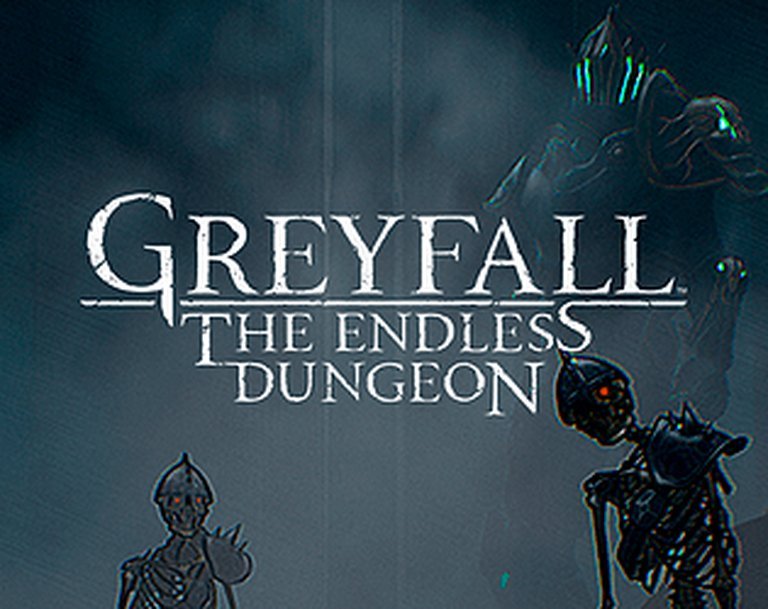
Greyfall: The Endless Dungeon is a fantasy-themed rogue-lite action RPG where players assume the role of Aghon, a warrior navigating a dynamically constructed labyrinth. The core mechanic involves customizing dungeon layouts during each playthrough, ensuring unique experiences through player-driven map creation, strategic loot selection, and scalable difficulty tiers, all set within a procedurally generated endless dungeon environment.
Greyfall: The Endless Dungeon Reviews & Reception
theriongames.itch.io (90/100): Been playing this game for more than two hours now and I’m not disappointed and quite amazed that this is a freeware release!
Greyfall: The Endless Dungeon: Review
Introduction
In the ever-evolving landscape of indie role-playing games, few titles have dared to marry the procedural chaos of Dungeon of the Endless with the visceral combat of Diablo and the tactical depth of Dark Souls. Greyfall: The Endless Dungeon, a rogue-lite ARPG developed by Madrid-based studio Therion Games, emerges as one such ambitious experiment. Born from a university project at U-Tad, this game carved a niche for itself by placing dungeon architecture directly into the player’s hands, promising a “unique experience” with every descent into its cursed world. Yet, beneath its award-winning veneer—celebrated at SXSW and hailed as Spain’s “Best indie game 2018″—lies a fragile edifice of unfulfilled potential. This review deconstructs Greyfall not merely as a product, but as a cultural artifact—a snapshot of indie innovation tempered by the brutal realities of development constraints and player expectations. Its legacy, though marred by technical flaws and abandonment, endures as a testament to the audacious spirit of student-turned-developers redefining genre boundaries.
Development History & Context
Therion Games emerged from the crucible of U-Tad’s Master’s programs in Game Design, Development, and Art, embodying the “passion and commitment” of a team of recent graduates. Their vision, articulated as early as 2017, was to fuse the spatial strategy of “dungeon-crawlers” with the customization of ARPGs, creating a game where “the player customizes their own adventure.” This ambition was nurtured within the fertile ground of Spain’s burgeoning indie scene, which gained prominence through festivals like Madrid’s Gamelab and international showcases like SXSW, where Greyfall placed 2nd in 2018. Technologically, the team leveraged Unreal Engine’s Blueprint system—a critical choice that allowed rapid iteration on complex mechanics like the dungeon-building algorithm and footsteps system. However, this came with constraints: the small team (comprising designers, programmers, and artists led by figures like Mikel Aretxabala and Javier Hernando Bollain) struggled with scope, leading to a release on Windows (May 2020) that felt more like an alpha than a polished product. The 2020 release landscape, dominated by AAA titles and the burgeoning roguelite renaissance (e.g., Hades), further marginalized Greyfall’s niche appeal. Its journey from “Best university project 2017” to freeware on itch.io reflects the precarious line between indie accolade and sustainable commercial viability.
Narrative & Thematic Deep Dive
Greyfall’s narrative is a parable of sacrifice and corruption, stripped to its Gothic core. Players embody Aghon, a warrior ascending the eponymous mountain to annihilate the source of “Emer,” a magic that grants power but corrods the soul. This dual-edged power is the game’s central metaphor: Emer fuels Aghon’s abilities yet drives his kingdom’s decay. The plot, delivered through sparse lore snippets and environmental storytelling, avoids epic grandeur in favor of intimate tragedy. Aghon’s quest—to destroy the source of his own power—echoes classical myths of hubris and redemption, but the narrative’s brevity robs it of emotional resonance. Dialogue, though functional, is largely utilitarian, serving as delivery for quest hooks rather than character development. The world-building, however, excels in implication. Greyfall’s mountain is a character in itself: its corridors twist with “magical corruption,” manifesting as mutated flora, crumbling architecture, and spectral echoes of past victims. Themes of cyclical evil and moral ambiguity permeate the design—Emer’s allure mirrors real-world vices, and Aghon’s journey questions whether destruction can truly absolve corruption. Yet, the narrative remains underdeveloped, a framework for gameplay rather than a driving force, a consequence of the team’s focus on systems over storytelling.
Gameplay Mechanics & Systems
Greyfall’s genius lies in its dual-loop design, blending procedural generation with real-time combat. The Dungeon-Building Mechanic is the game’s cornerstone. Between runs, players select room pieces from a pool, each influencing enemy density, resource scarcity, and reward tiers. This strategic layer—designed by Javier Hernando Bollain—allows players to “choose their strategy,” whether prioritizing combat challenges or loot. However, the system’s rigidity emerges: predetermined rooms often break immersion, and the lack of dynamic pathing limits true creativity.
Combat, the other pillar, borrows heavily from Dark Souls. The Roll Mechanic—executed with a joystick strike—demands precision, rewarding evasion over tank-and-spank. Skills are modular, divided into actives (e.g., fireballs), passives (e.g., health regeneration), and perks, with no rigid classes. This freedom is Greyfall’s triumph: players can hybridize builds, creating glass-cannon mages or tanky bruisers. Yet, execution falters. Enemy AI, designed via behavior trees, lacks sophistication, often resorting to predictable swarm tactics. Difficulty scaling relies on brute-force enemy number increases, not clever design.
Progression via the Loot System evolves through iterations. Early versions tied rewards to difficulty or room types, but the final system lets players choose upgrades during dungeon assembly, adding strategic depth. Technical flaws, however, cripple this potential: clunky WASD movement (with no directional interpolation), chest-animation exploits, and a settings menu that overwrites custom configurations plague the UI. While the Footsteps System—a technical marvel with terrain-specific VFX and sound—adds immersion, it’s a fleeting highlight in an otherwise undercooked experience.
World-Building, Art & Sound
Greyfall’s visual identity is its strongest asset. The isometric perspective, framed in a “diagonal-down” view, maximizes clarity for dungeon navigation while framing combat with painterly composition. The art direction channels a “gloomy atmosphere,” drawing from Gothic horror and dark fantasy. Greyfall’s mountain is a masterpiece of environmental storytelling: its halls are choked with petrified trees, its floors slick with iridescent corruption, and its architecture a mosaic of decaying grandeur. Character designs, though less detailed, reflect the world’s decay—Aghon’s armor is scarred, enemies mutated by Emer’s influence. The footsteps system amplifies this immersion: the crunch of gravel, the splash of viscera, and the echo in marble halls ground the player in the environment.
Sound design, overseen by Hernando Bollain, is equally vital. Ambient music shifts from mournful strings in safe rooms to dissonant percussion during combat, dynamically heightening tension. Voice acting is absent, replaced by atmospheric effects—the whisper of wind, the drip of ooze—that reinforce isolation. Yet, the audio loop lacks variety, and the combat soundtrack, initially effective, becomes grating during extended sessions. Despite these flaws, Greyfall’s sensory cohesion creates a world that feels both ancient and alive, a testament to the team’s artistry.
Reception & Legacy
Greyfall’s reception mirrors its fragmented development. Upon its 2020 itch.io release, it garnered a 4.5/5 rating from two players, with one praising its “freeware ambition” while noting technical “points for improvement.” Critically, it received scant attention; major outlets like OpenCritic list no reviews, and MobyGames notes a “Wanted” description, indicating obscurity. Commercially, its free release rendered sales metrics irrelevant, yet its abandonment—confirmed by a player comment (“they quitted the development”)—underscored its fragile status.
Legacies, however, are not measured by polish alone. Greyfall’s influence is subtle but profound. Its dungeon-building mechanic anticipated the procedural room-crafting of Endless Dungeon (2023), while its classless skill system foreshadowed ARPGs like Path of Exile: Ultimatum. As a U-Tad project, it exemplifies academia’s role in fostering experimental design, winning awards that validated student-led innovation. Yet, its story also serves as a cautionary tale: a game celebrated for “outstanding detail” in art yet undone by UI and control issues, a symbol of the gap between vision and execution. Today, Greyfall endures as a cult curiosity—its abandoned state immortalizing it as a “what could have been” artifact in indie history.
Conclusion
Greyfall: The Endless Dungeon is a paradox—a game of bold ideas shackled by technical frailty. Its dungeon-building mechanic and classless progression systems represent a forward-thinking fusion of roguelite and ARPG design, while its art and sound design elevate its dark fantasy world to memorable heights. Yet, clunky controls, repetitive combat, and a truncated narrative prevent it from transcending its origins as a passion project. As a historical artifact, Greyfall stands as a testament to the audacity of Therion Games, whose student team dared to reimagine genre conventions. Though abandoned and flawed, its legacy endures in the DNA of games that followed, proving that innovation often resides not in perfection, but in the courage to build something new. For the patient indie enthusiast, Greyfall offers a glimpse into the chaotic beauty of creation itself—a flawed, fleeting, but unforgettable descent into the endless dungeon.