
- Release Year: 1996
- Platforms: PlayStation, SEGA Saturn, Windows
- Publisher: Virgin Interactive Entertainment (Europe) Ltd., Virgin Interactive Entertainment, Inc., Virgin Interactive Entertainment (Japan), Inc.
- Developer: Radical Entertainment Inc.
- Genre: Action
- Perspective: Diagonal-down
- Game Mode: Co-op, Single-player
- Gameplay: Capture the Flag, Racing, Tag, Weapon-based Combat
- Setting: Futuristic, Sci-fi
- Average Score: 60/100
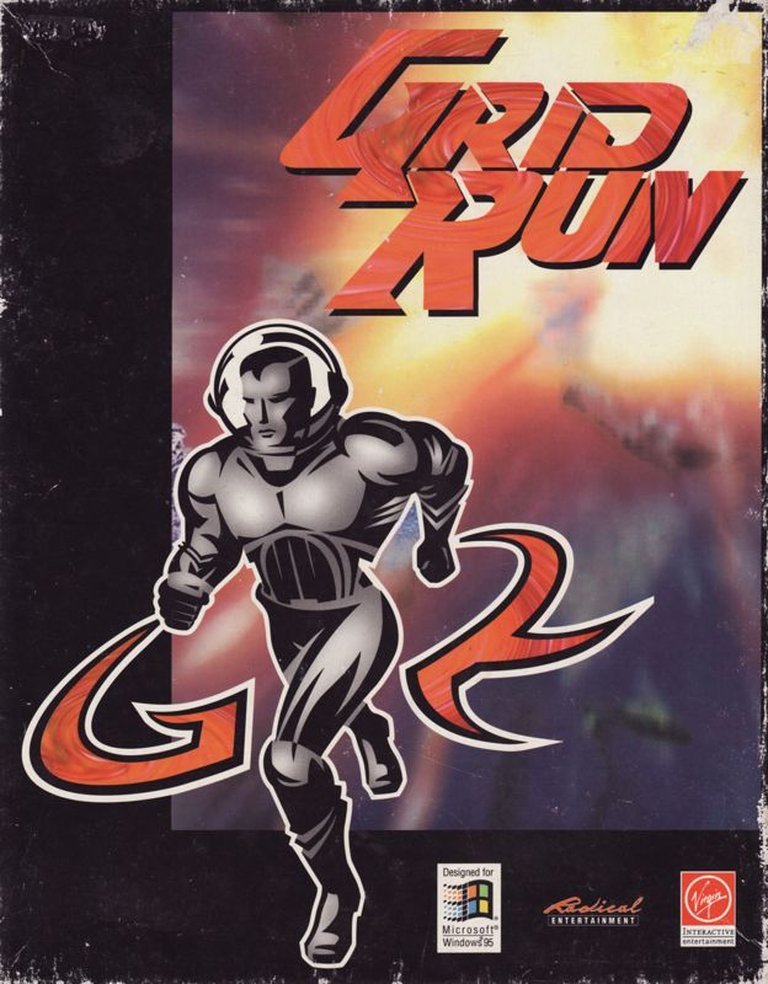
Description
In Grid Runner, aliens have captured you and forced you into a deadly game combining capture the flag and tag. Navigate the grid to collect flags while avoiding your opponent; if tagged, you must reciprocate before your opponent reaches their goal. The game features a story mode with progressively challenging enemies and a two-player versus mode, all set in a futuristic sci-fi environment.
Gameplay Videos
Where to Buy Grid Runner
PC
Grid Runner Free Download
Grid Runner Guides & Walkthroughs
Grid Runner Reviews & Reception
ign.com (60/100): Radical Entertainment has done a good job of making an old favorite a new sci-fi mission
Grid Runner Cheats & Codes
PC
Enter codes at the Password Screen
| Code | Effect |
|---|---|
| 2278231788 | Nimbus Level |
| 4073571036 | Circe Level |
| 3738142412 | Aquar IV Level |
| 2579585725 | Glacia Level |
| 3049463469 | Ash Level |
| 3234189981 | Hexol Level |
| 3972503181 | Aquar II Level |
| 3470355070 | Virion Level |
| 3806015086 | Ferrinar Level |
| 2547901022 | Forge Level |
| 3151996494 | Trepidaria Level |
| 4241586751 | Iris Level |
| 3503504943 | Lair Level |
| 2782261791 | Fortress Level |
Sega Saturn
Enter codes at the restore game option
| Code | Effect |
|---|---|
| A, Y, Right, X, Right, Up, Down, Y, Right, Down | Grid Racing Mode |
| Down, Y, Right, A, Right, Up, Right, B, A, Down | All Flags Mode |
| Up, Y, A, Right, Up, Y, B, Down, Right, Down | Both players active game |
| A, Y, A, Right, Down, Y, Up, Right, Right, A | View ending sequence |
Sega Saturn (GameShark Codes)
Use with Pro Action Replay/GameShark device
| Code | Effect |
|---|---|
| F6000914 C305 + B6002800 0000 | Master Code (must be on) |
| 160642D8 00FF | P1 Infinite Magic |
| 160642D8 0000 | P1 No Magic |
| 16064310 00FF | P2 Infinite Magic |
| 16064310 0000 | P2 No Magic |
| 360642E7 0000 | P1 Never Wins |
| 3606431F 0000 | P2 Never Wins |
PlayStation
Enter codes at the Enter Password screen
| Code | Effect |
|---|---|
| Down, Triangle, Right, X, Right, Up, Right, Circle, X, Down | All Flags Mode |
| Up, Triangle, X, Right, Up, Triangle, Circle, Down, Right, Down | Free For All Mode |
| X, Triangle, Right, Square, Right, Up, Down, Triangle, Right, Down | Grid Racer Mode |
| X, Triangle, X, Right, Down, Triangle, Up, Right, Right, X | View ending sequence |
| Down, Up, Triangle, Circle, Circle, Down, Square, Left, R1, Right | Level 2 |
| Right, Left, R2, Left, R2, Left, Left, Square, Square, X | Level 3 |
| Right, Triangle, R2, Left, Circle, Circle, Square, Square, Square, X | Level 4 |
| Down, R1, Down, Up, R2, X, Right, Square, Down, Square | Level 5 |
| Down, Square, Right, Circle, Circle, R2, Down, Right, X, Triangle | Level 6 |
| Right, Right, R2, Right, Right, X, Up, R1, Down, Square | Level 7 |
| Right, Circle, R2, X, Down, Triangle, Square, Left, R2, R1 | Level 8 |
| Down, X, R1, Triangle, X, X, Up, Left, Triangle, Circle | Level 9 |
Grid Runner: Review
Introduction
In the bustling, polygon-pushing era of 1996, when the PlayStation and Sega Saturn battled for supremacy and first-person shooters dominated the zeitgeist, Grid Runner emerged as a defiant anomaly. Developed by Vancouver-based Radical Entertainment and published by Virgin Interactive, this top-down action title promised a fusion of childhood games—tag and capture the flag—wrapped in a sci-fi veneer. Its legacy, however, remains a footnote in gaming history, celebrated by cultists but overlooked by mainstream canon. Yet, to dismiss Grid Runner is to overlook a masterclass in distilled multiplayer design and a fascinating artifact of 90s experimentalism. This review argues that despite its niche appeal and technological constraints, Grid Runner stands as a brilliantly crafted, adrenaline-fueled experience whose brilliance shines brightest in the chaos of human competition. Its true genius lies not in narrative or spectacle, but in its ruthless economy of mechanics—a testament to how a single, potent idea can transcend limitations.
Development History & Context
Radical Entertainment’s conception of Grid Runner predates its 1996 release by nearly a decade, with the studio envisioning it as a “fun, original alternative two-player game” that would sidestep the saturated genres of fighters and racers. This early ambition, articulated by Virgin producer Stacy Hendrickson, reflects the developer’s desire to carve out a unique identity in an industry obsessed with licensed properties and cinematic spectacle. Technologically, the project was a product of its constraints. Character design followed a meticulous, labor-intensive pipeline: sketches were sculpted into physical models before being digitized into 3D renders—a deliberate choice to circumvent the “work-intensive, expensive rendering workstations” of the time. This approach gave the game its chunky, stylized aesthetic, but also positioned it as a title where gameplay, not graphical fidelity, would be the hero.
The gaming landscape of 1996 was a crucible of transition. The PlayStation and Saturn were locked in a brutal war, while Windows 95 users grappled with DirectX’s infancy. Amidst this, Grid Runner was announced under the provisional title Eurit, a name hinting at its Eurocentric development philosophy. The game’s release across Saturn, PlayStation, and PC was a strategic bet on the burgeoning home market, but its multiplatform spread exposed it to divergent expectations: console players sought accessible party thrills, while PC critics demanded technical polish it couldn’t consistently deliver. Radical’s commitment to single-player AI was notable, with Hendrickson emphasizing “a lot of work on the AI” to ensure varied challenge against AI opponents like the ice-skating lizard or bridge-building crab. Yet, the game’s soul resided in its two-player mode—a realization that mirrored the era’s shift toward social gaming, long before Xbox Live or PlayStation Network.
Narrative & Thematic Deep Dive
Grid Runner’s narrative is a gloriously pulpy sci-fi romp, stripped to its essentials to serve the gameplay. Players assume the role of Axxel, a freelance space adventurer partnered with the enigmatic Tara. Their mission to the Gridonion Asteroid Field—a nebulous “path between Earth and the Nether-Planets”—unveils a classic trope: ships are vanishing, and the culprit is Empress Vorga, a cyber-witch who captures Axxel and forces him into a deadly gladiatorial game. The plot unfolds via rudimentary cutscenes and manual lore, painting Vorga as a domineering puppeteer who transforms her alien ship into a multidimensional arena. If Axxel defeats her 14 demonic minions, he escapes moments before the vessel explodes—a climax that prioritizes catharsis over complexity.
Thematically, the narrative serves as a metaphor for adversarial capitalism. Vorga’s “deadly game” is a metaphor for life’s zero-sum struggles, where survival demands outmaneuvering rivals in a rigged system. The absence of traditional health systems (laser fire merely slows opponents) underscores this: success isn’t about destruction, but about control and resource management. Dialogue is minimal, with characters reduced to archetypes—Axxel as the stoic hero, Vorga as the tyrannical villain—but this abstraction focuses attention on the game’s core conflict: the hunt for flags and the evasion of capture. Thematically, Grid Runner explores fragility and adaptability. The grid-based arenas symbolize life’s structured chaos, where every tile—speed boosts, teleporters, or gaps—is both an opportunity and a trap. It’s a world where the line between hunter and hunted blurs, mirroring the childhood game of tag that inspired it.
Gameplay Mechanics & Systems
At its heart, Grid Runner is a distillation of pure, unadulterated competition. The core loop is deceptively simple: capture flags by touching them, but only if you’re not “it.” The first player to seize a flag claims it (changing its color to their hue), while the opponent becomes “it” and must hunt their rival to reclaim flag-capturing rights. Flags can be recaptured, turning every level into a high-stakes chess match of feints and reversals. This mechanic, lifted from playground tag, is elevated by the game’s grid-based arenas, which introduce strategic depth through environmental hazards and power-ups.
The grid is a dynamic battlefield, featuring tiles that manipulate movement: speed boosters for rapid dashes, teleporters for surprise exits, and gaps that require players to build bridges using collected “magic” resources. Combat is non-lethal but tense. Players wield laser guns that temporarily slow opponents, creating windows for flag grabs or escapes. Magic orbs—red for magic, green for speed, blue for agility—grant abilities like explosive traps, shields, or teleportation. These tools transform every encounter into a risk-reward calculus: should you hoard magic for a decisive bridge-building, or spend it on a slow-trap to corner your foe?
Single-player mode structures this chaos into a gauntlet of three-round matches against 14 uniquely gifted AI opponents. Each adversary has a gimmick: the ice-dwelling lizard moves faster on frozen tiles, while the crab builds two bridges simultaneously. Defeating them unlocks bonus stages for magic farming, adding a meta-layer of progression. Yet, it’s the two-player split-screen mode where Grid Runner transcends its design. Here, the AI’s predictability vanishes, replaced by human unpredictability. Matches devolve into glorious, shouting matches as players use tiles and magic to outsmart, outmaneuver, and psychologically torment each other. The UI, clean and unobtrusive, prioritizes clarity—flag counters, “it” indicators, and power-up menus ensure players focus on the fight, not fumbling menus. Its only flaw is the PC port’s reliance on mouse controls, which feel imprecise compared to the Saturn’s fluid d-pad input.
World-Building, Art & Sound
Grid Runner’s world is built on contrast: the sterile, high-concept sci-fi setting clashes with the cartoonish, almost silly tone of its execution. The arenas are alien environments—crystalline caverns, icy wastelands, and neon-lit grids—each themed with a distinct visual language. Backdrops, rendered in vivid colors, evoke planetary vistas, while the grid itself is a maze of interchangeable tiles. This modular design allows for varied level layouts, though it occasionally leads to visual monotony. Character models, sculpted from 3D scans, possess a chunky charm. Axxel and his foes—lizard men, minotaurs, and crabs—are rendered with exaggerated proportions, their animations jerky but expressive. The “cartoony-sprite” approach, as IGN noted, tempers the game’s violence with whimsy, aligning with its non-lethal combat.
Sound design is where Grid Runner excels. Paul Ruskay’s soundtrack is a relentless techno bop, pulsating with thumping beats and synth arpeggios that escalate during flag captures or “it” transitions. The music’s tempo mirrors gameplay intensity, turning stalemates into operatic standoffs. Sound effects are crisp and purposeful: laser zaps, bridge-build clicks, and flag captures each have a distinct audio signature. The absence of voice acting (save for grunts and yelps) focuses the atmosphere on mechanical tension. Yet, the PC version suffers here, with audio glitches and MIDI translations losing the Saturn’s punch. Overall, the art and sound create a cohesive, if low-budget, identity—a world where the grid’s logic reigns supreme, and every beep or laser blast amplifies the stakes.
Reception & Legacy
Upon release, Grid Runner polarized critics, with its multiplayer mode universally lauded as its saving grace. MobyGames aggregates a 61% average from 29 critic reviews, masking significant platform disparities. The Saturn version led the pack with a 74% average, praised for its tight controls and vibrant stages. GameSpot’s Tim Soete hailed it as “a hectic, 3-D tag-capture-the-flag game that takes players on a relentless, nail-biting ride,” while Total Saturn lauded its “quirky but excellent” mechanics. The PlayStation version followed at 67%, with Electric Playground calling it “a welcome breath of fresh air” amid genre stalwarts. PC reviews were harsher, with GameSpot lamenting its “hokey plot” and CNET dismissing it as a “generic cartridge game dressed up for the PC screen.” Players, however, were kinder, awarding it a 4.0/5 average on MobyGames.
Commercially, Grid Runner was a modest success, buoyed by Virgin’s marketing and its inclusion in budget lines. Its legacy endures in niche circles as a multiplayer cult classic. Influentially, it prefigured modern arena shooters and party games by emphasizing asymmetric objectives over kill counts. Reviewers at the time noted its similarity to Bomberman and Tetris, but Grid Runner’s focus on dynamic roles (hunter/hunted) felt fresher. Radical Entertainment’s later work (The Simpsons: Hit & Run, Prototype) never revisited its elegant design, leaving Grid Runner as an isolated gem. Today, it’s remembered as a relic of 90s experimentation—a game that proved depth could flourish within simplicity, even if its technological limitations kept it from widespread acclaim.
Conclusion
Grid Runner is a paradox: a game of profound simplicity built from complex ambitions. It succeeds not through narrative grandeur or graphical prowess, but through its ruthless distillation of competitive chaos. Its grid-based arenas and tag-capture mechanics create a timeless playground, while the two-player mode elevates it to a rare form of interactive poetry. The Saturn version stands as the definitive experience, where controls are fluid and the techno soundtrack thrives. Yet, its legacy is bittersweet. Overshadowed by 90s titans and hampered by a flawed PC port, it remains a “gamer’s game”—a title cherished by those who value mechanical purity over spectacle. In the pantheon of multiplayer classics, Grid Runner may not rank alongside GoldenEye or Mario Kart, but its influence is undeniable: it proved that the best games often arise not from bloated ambition, but from perfecting a single, brilliant idea. As a historical artifact, it’s a vital snapshot of 90s innovation; as an experience, it’s a reminder that sometimes, the deadliest games are the ones we played as children.