
- Release Year: 2011
- Platforms: Macintosh, Windows
- Publisher: Big Fish Games, Inc
- Developer: ERS G-Studio
- Genre: Adventure
- Perspective: 1st-person
- Game Mode: Single-player
- Gameplay: Hidden object, Puzzle elements
- Setting: Venice
Description
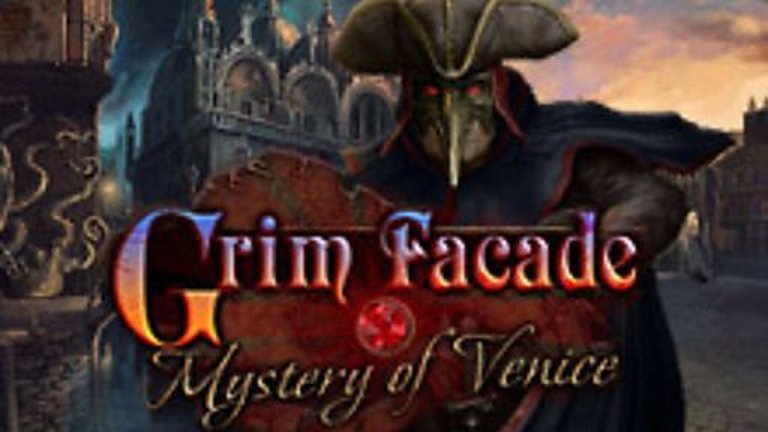
Grim Facade: Mystery of Venice (Collector’s Edition) is a first-person hidden object adventure game with detective mystery elements, set in the atmospheric and enigmatic city of Venice. Players assume the role of an investigator tasked with solving the mysterious disappearance of two young ladies by exploring intricately designed locations, finding hidden objects, and tackling puzzle challenges to uncover the truth behind the grim facade.
Gameplay Videos
Where to Buy Grim Facade: Mystery of Venice (Collector’s Edition)
PC
Grim Facade: Mystery of Venice (Collector’s Edition) Guides & Walkthroughs
Grim Facade: Mystery of Venice (Collector’s Edition): Review
Introduction: The Masked Allure of a Casual Classic
In the vast landscape of video game history, certain titles occupy a peculiar and influential niche: the hidden object puzzle adventure (HOPA). Dominating the casual gaming boom of the late 2000s and early 2010s, this genre perfected a loop of atmospheric exploration, list-based scavenging, and inventory-based puzzles. Within this realm, ERS Game Studios (later AMAX Interactive) and publisher Big Fish Games emerged as titans, crafting franchises that defined an era. Grim Facade: Mystery of Venice (Collector’s Edition), released in 2011 for Mac and ported to Windows in 2016, is not merely an entry in the long-running Grim Facade series—it is its foundational cornerstone and a remarkably potent distillation of the genre’s core appeals and its inherent pitfalls. This review will argue that while Mystery of Venice is a product of its time, marred by the technical limitations and repetitive design common to early HOPAs, its sophisticated narrative integration of the Seven Deadly Sins motif, its evocative Venetian setting, and its role in cementing the profitable “Collector’s Edition” model grant it a lasting, if conflicted, significance in the canon of casual gaming.
Development History & Context: Forging the Facade
Grim Facade: Mystery of Venice was developed by ERS G-Studio, a Romanian developer that would become one of the most prolific studios in the casual space under the AMAX Interactive banner. The year 2011 was peak casual game distribution for platforms like Big Fish Games, where a subscription model or a-la-carte purchases of $6.99-$19.99 dominated. The technological constraints were significant: games were built for low-end PCs (the Steam minimum is a 1.4 GHz processor and 1280 MB RAM), with 2D pre-rendered backgrounds and limited animation to ensure accessibility. The vision was clear: create an immersive, mystery-driven experience that could be played in short bursts with a mouse, requiring no complex motor skills.
The “Collector’s Edition” format, which this title exemplifies, was a key business innovation. These versions, typically $9.99-$13.99, bundled the base game with a strategy guide, bonus chapters, screensavers, and wallpapers. They catered to dedicated fans and created a higher-margin product. Mystery of Venice was the first game in the Grim Facade series, establishing its template: a private investigator protagonist (unnamed, a “Legacy Character” per TV Tropes), a sinister masked antagonist, a plot tied to historical European sin and corruption, and a progression through a series of exquisitely detailed, static scenes. Its success directly spawned at least eleven sequels, making Grim Facade one of the longest-running HOPA franchises.
Narrative & Thematic Deep Dive: The Plague of Sin
The plot of Mystery of Venice is deceptively simple on the surface—a PI is hired by a man named Silvio to find his wife, Karla, and her daughter, Lisa, who vanished from a gondola after a masquerade ball, their driver a man in a Medico Della Peste (Plague Doctor) mask. However, the narrative is a clever, layered tapestry weaving historical fiction with moral allegory.
The central antagonist is Chief Amadeo of the Venetian police, a classic Dirty Cop who leads a modern cult called “Redemption.” The cult’s backstory, revealed through diary entries and environmental storytelling, traces back to a 12th-century plague. The Doge, blaming the wealthy’s sins for the plague, formed the original Redemption to kidnap and sacrifice those who personified the Seven Deadly Sins. The current iteration, led by Amadeo, is a perversion of this ideal. Amadeo’s true motive is not purifying Venice but enacting a twisted revenge: Karla was his former lover who left him, and he targets her and her new family as a representation of his own sin, Envy.
The gameplay mechanics are directly tied to this theme. The detective must collect seven masks, each representing a sin and retrieved from the domain of its personifier:
* Mask of Vanity (Pride): From the vain nobleman Bartolomeo.
* Mask of Envy: From Amadeo himself, the final mask.
* Mask of Gluttony: From the corpulent Gaspar.
* Mask of Lust: From Gaspar’s similarly decadent wife.
* Mask of Greed: Found in the pirate ship, implying a member of the merchant class.
* Mask of Laziness (Sloth): Found in the theater, suggesting an artist or performer.
* Mask of Anger (Wrath): Taken from the Masked Man (the game’s Heavy) after defeating him via a clever pit trap.
This is a rare instance in HOPAs where the collectibles have direct, literal narrative meaning. The masks are not just MacGuffins; they are the thematic core. The final puzzle requires placing these masks in alcoves to unlock the truth, a clever integration of gameplay and story. The twist—that the seemingly helpful police chief is the mastermind, and that he sacrificed his own cult members (each embodying a sin) in a Hoist by His Own Petard scenario—elevates the game from a simple search to a dark fable about hypocrisy and vengeance. The bonus chapter (a staple of Collector’s Editions) further explores the historical plague and the curse of the Doge’s tossed wedding ring, adding lore density uncommon for the genre.
Gameplay Mechanics & Systems: The HOPA Blueprint Perfected
Grim Facade: Mystery of Venice operates on a rigid, well-established HOPA loop, executed with remarkable consistency.
* Core Loop: The player navigates a interconnected node-based map (Venice’s streets, Bartolomeo’s mansion, Gaspar’s residence, a ship, a theater). Each scene contains Hidden Object Scenes (HOS)—sparkling areas that trigger a list-based search. Success yields inventory items, Golden Ducats (currency), and Fans (which increase the hint meter). Between HOS, players solve adventure game puzzles: using inventory items on environmental hotspots (e.g., using clippers on wires, a magnet on a chain), mechanical contraptions (clock mechanisms, gear puzzles), and logic puzzles (sliding tiles, symbol matching).
* Inventory & Progression: The inventory tray at the bottom of the screen holds all collected items. The Diary in the lower left is crucial, not just for plot but often for puzzle solutions (e.g., noting codes, backstory). Progression is linear but requires careful backtracking as new items unlock previous areas. Giovanni’s Shop is a brilliant metagame: Ducats are earned primarily via HOS and used to buy essential tools (paddle, fishing hook, knife), creating a satisfying economic loop and encouraging thorough exploration.
* Puzzle Design: The puzzles are a mix of intuitive and Guide Dang It! moments. Some are cleverly context-sensitive (painting puppets based on curtain positions). Others, like the library door “EXLIBRIS” tile puzzle or the final skull-sliding puzzle, rely on codes noted only in the diary, risking player blockage. The skip button (which fills after time) mitigates frustration, a common and welcome feature in later HOPAs.
* Innovations & Flaws: The game innovates by making the masks a central, themed collectible set and by integrating the shop system deeply. However, it suffers from genre-standard issues: pixel-hunting in crowded HOS scenes, arbitrary item combinations (e.g., using a mouse to chew a rope), and a lack of meaningful interaction with the few NPCs beyond dialogue trees. The first-person perspective enhances immersion but can make navigation confusing due to the static, painted backgrounds.
World-Building, Art & Sound: A Gilded Cage
The game’s greatest strength is its atmosphere. Utilizing detailed, hand-painted 2D backgrounds, ERS Studio captures a Gothic, decaying Venice—a city of shadowy canals, opulent but ominous mansions, and fog-drenched docks. The City of Canals motif is pervasive, with gondolas serving as key transport nodes. The art direction leans into the masquerade and plague doctor iconography, creating a cohesive aesthetic of hidden faces and historical morbidity. Character portraits, when they appear, are stylized and expressive.
Sound design is functional but effective. The soundtrack is a loop of moody, orchestral pieces with a strong Italianate flavor (accordions, strings) that underscores the mystery without being intrusive. Sound effects—the clink of ducats, the splash of water, the creak of doors—are clear and satisfying. The voice acting, however, reveals the budget. Lines are delivered with a mix of exaggerated Italian accents (Giovanni, Silvio) and flat American tones (Chief Amadeo, Lisa), creating a slight dissonance. The Masked Man’s growling, distorted voice is effectively menacing.
Together, these elements build a world that feels lived-in and historically grounded, even within its fantasy of a secret cult. The Venetian setting isn’t just a backdrop; it’s a character, with the canals, masks, and architectural decay reflecting the game’s themes of hidden sin and societal rot.
Reception & Legacy: A Divisive Foundation
Critical reception for Mystery of Venice is virtually non-existent in traditional press, a common fate for casual titles. However, user reception is starkly polarized, particularly on Steam, where the game holds a dismal Player Score of 5/100 from 19 reviews (as of Steambase data). Reviews cite frequent crashes (noted in the MacGameStore review), poor optimization, and frustrating, illogical puzzles. These issues are likely artifacts of the 2016 Windows port from the older 2011 Mac codebase, a common problem with late conversions.
Commercially, it was undoubtedly a success for Big Fish Games, launching a franchise with over a dozen entries. Its legacy is threefold:
1. The Grim Facade Franchise: It established the series’ formula: a new PI each game (though sharing the “Grim Facade” agency name), a European historical setting, a cult or villain tied to a thematic concept (sins, jealousy, betrayal), and the recurring mask motif. TV Tropes notes Continuity Nod elements that began here, like the recurring shopkeeper’s picture gallery.
2. Genre Standards: It cemented the Collector’s Edition as the premium casual product, including the integrated strategy guide and bonus chapter. It also popularized the use of thematic collectibles (here, the seven masks) that directly tie into the narrative, a step beyond mere trinkets.
3. Cultural Niche: It represents the height of the “casual mystery” genre—story-driven, low-stress, with a focus on puzzle-solving over action. Its dark, sin-based plot was surprisingly mature for a genre often dismissed as fluffy, prefiguring the slightly darker turns in later series like Hidden Sins (which features graphic death and a corrupt town).
Compared to contemporaries like Mystery Case Files or Dark Tales, Mystery of Venice is less whimsical and more grimly historical, carving a specific niche. Its influence is seen in how every subsequent Grim Facade game uses a similar structural and thematic blueprint.
Conclusion: A Flawed Cornerstone
Grim Facade: Mystery of Venice (Collector’s Edition) is a game of profound contradictions. It is a visually atmospheric and themically rich narrative that deftly uses the Seven Deadly Sins as a structural and moral framework, set against one of the world’s most evocative cities. Yet, it is also a frustratingly archaic piece of software, burdened by the technical debt of its era, with puzzles that can veer into obscurity and a port notorious for instability.
Its place in video game history is not as a masterpiece, but as a foundational text. It is a perfect case study of the early 2010s casual game—its business model, its design philosophies, its strengths (atmosphere, thematic cohesion, satisfying economic loops), and its weaknesses (fragile code, occasional arbitrary design). For historians, it is essential viewing to understand the evolution of the hidden object genre and the marketing might of Big Fish Games. For players, it remains a nostalgic, if potentially frustrating, journey into a Venice of secrets and sins, where the greatest mystery might be why a game this conceptually elegant can feel so technically cursed. It is, in the end, a Grim Facade indeed: a beautiful, intricate mask hiding the simpler, sometimes flawed, machinery of casual game design beneath.