
- Release Year: 2015
- Platforms: Android, iPad, iPhone, Linux, Macintosh, Nintendo Switch, PlayStation 4, PS Vita, Windows Apps, Windows, Xbox One
- Publisher: Double Fine Productions, Inc., Microsoft Corporation
- Developer: Double Fine Productions, Inc., Shiny Shoe LLC
- Genre: Adventure
- Perspective: 3rd-person (Other)
- Game Mode: Single-player
- Gameplay: Graphic adventure, Puzzle elements
- Setting: Fantasy
- Average Score: 88/100
Description
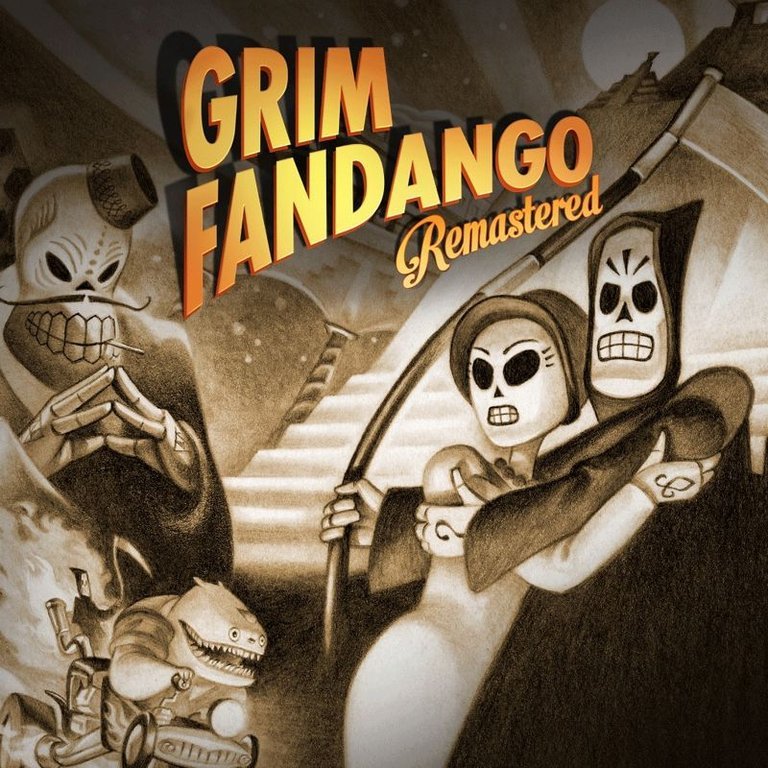
Grim Fandango: Remastered is a remastered version of the classic 1998 graphic adventure game set in the Mexican-inspired Land of the Dead, where players control Manny Calavera, a skeleton travel agent embroiled in a noir-style mystery involving conspiracy and redemption. The game blends Aztec mythology with film noir aesthetics, featuring puzzle-solving, dialogue-driven gameplay, and an immersive narrative that unfolds across four years in the afterlife.
Gameplay Videos
Where to Buy Grim Fandango: Remastered
Grim Fandango: Remastered Free Download
Grim Fandango: Remastered Cracks & Fixes
Grim Fandango: Remastered Patches & Updates
Grim Fandango: Remastered Mods
Grim Fandango: Remastered Guides & Walkthroughs
Grim Fandango: Remastered Reviews & Reception
metacritic.com (100/100): Every single piece of Grim Fandango Remastered fits with each other in order to form this perfect gaming puzzle. Amazing art direction, top-notch writing, superb adventure gameplay, and a wonderful sense of atmosphere often lost in modern games.
opencritic.com (82/100): Long beloved as one of LucasArts’ best adventure games, ‘Grim Fandango’ receives a brand new remaster keeping the original spirit – and difficulty – intact.
ign.com (93/100): Time has done little to diminish Grim Fandango’s beauty or relevance. It is an adventure game not to be missed.
vg247.com : Grim Fandango Remastered is a classic game brought into the new generation, so it’s time for everyone to know how great it is.
monstercritic.com (79/100): A masterclass in genre-blending storytelling, Grim Fandango Remastered dazzles with its rich Mexican folklore, noir grit, and dark humor, crafting an unforgettable journey through the Land of the Dead.
Grim Fandango: Remastered Cheats & Codes
PC
Type the code during gameplay.
| Code | Effect |
|---|---|
| blam | Causes Manny Calavera to explode and reform. |
Grim Fandango: Remastered: Review
Introduction
In the pantheon of video game masterpieces, Grim Fandango stands as a singular achievement—a film-noir odyssey through a skeletal afterlife that blended Aztec mythology with Art Deco aesthetics and cynical wit. Its 1998 release was a critical triumph but a commercial disappointment, becoming a cult classic as the adventure genre faded into obscurity. Seventeen years later, Tim Schafer’s Double Fine Productions excavated this relic, delivering Grim Fandango: Remastered—a loving resurrection that modernizes a masterpiece without sacrificing its soul. This review dissects the remaster’s significance, examining how it preserves the original’s genius while addressing the technological and experiential gaps of its era. As we journey Manny Calavera’s four-year trek from purgatory to paradise, we must ask: Does this resurrection honor the dead or merely polish the bones?
Development History & Context
The Original Vision (1995–1998)
Grim Fandango emerged from LucasArts’ golden age of adventure games, but it was a gamble. Director Tim Schafer, fresh off Full Throttle, pitched a Day of the Dead-themed noir adventure to revitalize the genre. Drawing from anthropologist Alan Dundes’ lectures and Mexican folklore, Schafer envisioned a bureaucratic afterlife where souls travel on a four-year journey to eternal rest. The game’s unique synthesis of Aztec cosmology and Raymond Chandler-esque cynicism was unprecedented. Using LucasArts’ new GrimE engine—built on the scripting language Lua—Grim Fandango pioneered 3D characters overlaid on pre-rendered backgrounds, allowing dynamic camera angles and fluid animation. Yet, the $3 million budget and rigid development cycle forced compromises: puzzles were cut, and the climactic confrontation with villain Hector LeMans was simplified.
The Long Road to Resurrection (2013–2015)
After Disney shuttered LucasArts in 2013, Schafer’s Double Fine Productions secured the rights with Sony’s financial backing. The remaster’s development was a digital archaeological dig: Digital Linear Tape (DLT) drives were salvaged to recover lost assets, while former employees combed their files for missing design documents. Schafer approached the project like a film restorer, aiming for “high-fidelity preservation” rather than radical reinvention. Key improvements included:
– Point-and-click controls: Replacing the original’s tank controls (inspired by Resident Evil) with intuitive mouse-based movement, developed in collaboration with modder Tobias Pfaff.
– Visual upgrades: Textures were repainted at higher resolution, and dynamic lighting was added to enhance the film-noir ambiance.
– Audio overhaul: Peter McConnell’s score was re-recorded by the Melbourne Symphony Orchestra, replacing MIDI samples with rich orchestration.
– Developer commentary: Over two hours of insights from Schafer and the team, though criticized for disjointed delivery.
Notably, the remaster retains the original’s 4:3 aspect ratio, offering a stretched 16:9 option but no true widescreen support—a concession to purists.
Narrative & Thematic Deep Dive
Plot Structure: A Noir Odyssey
Grim Fandango is divided into four acts, each set on Día de los Muertos across four consecutive years. Players assume Manuel “Manny” Calavera, a skeletal travel agent trapped in a corrupt afterlife bureaucracy. The story begins when Manny steals a client, Mercedes “Meche” Colomar, from his rival Domino, only to discover she’s been wrongly denied a ticket on the luxurious “Number Nine” express train. This incites a journey across the Land of the Dead—from the Art Deco metropolis of El Marrow to the coastal Rubacava and the Edge of the World—to expose a conspiracy orchestrated by crime lord Hector LeMans, who hoards Double N tickets to escape damnation.
The narrative excels in its three-act structure:
1. Year 1: Introduction to the afterlife’s rules and Manny’s moral awakening.
2. Year 2: Noir intrigue in Rubacava, with Manny running a nightclub and pursuing Meche.
3. Year 3–4: Escalating stakes, culminating in Manny’s infiltration of LeMans’ greenhouse and a bittersweet farewell.
Characters: Skeletons with Soul
The cast is defined by tragicomic duality:
– Manny Calavera: A jaded reaper with a conscience, voiced with weary charm by Tony Plana. His arc from cynic to idealist mirrors the noir hero’s redemption.
– Glottis: A lovable demon mechanic whose childlike enthusiasm contrasts with Manny’s world-weariness. His obsession with speed (“Speed is the food of the great Glottis!”) provides levity.
– Hector LeMans: A Sydney Greenstreet-inspired villain, whose chuckle and greed embody systemic corruption.
– Supporting cast: Meche’s purity, Domino’s ruthlessness, and Sal Limones’ revolutionary zeal flesh out a world where bureaucracy is hell.
Themes: Death as Metaphor
Grim Fandango uses its afterlife setting to explore universal themes:
– Corruption vs. Redemption: The Department of Death mirrors real-world institutions, where power is hoarded and justice is transactional. Manny’s fight for Meche becomes a rebellion against a rigged system.
– Identity and Mortality: Skeletons represent the “bare bones” of humanity, stripped of superficiality. Manny’s journey is a search for meaning beyond debt and duty.
– The American Dream in Purgatory: Rubacava’s neon-lit casinos and jazz clubs echo Casablanca, framing the afterlife as a place where second chances are both promised and perverted.
Gameplay Mechanics & Systems
Puzzle Design: “Moon Logic” in a Noir World
As a graphic adventure, Grim Fandango revolves around environmental puzzles and dialogue trees. The remaster’s point-and-click controls alleviate the original’s clunky movement, but the puzzles retain their notorious difficulty. Solutions often rely on obtuse logic:
– Trial-and-error moments: The Year 1 key puzzle for Rubacava requires Manny to wait for a specific elevator timing—a sequence missed by many players.
– Contextual gaps: Year 2’s strip-search puzzle demands players disarm a trap without explicit hints, leading to frequent walkthrough reliance.
– Inventory limitations: The lack of a proper inventory system forces players to remember item combinations, though the remaster’s dialogue transcript partially mitigates this.
Controls and UI: A Double-Edged Sword
The remaster’s controls are a study in compromise:
– Point-and-click: Essential for modern accessibility, though some objects still require manual movement.
– Original tank controls: Retained for authenticity but often frustrating.
– UI quirks: No hotspots highlighting, and the commentary system suffers from overlapping dialogue and missed triggers.
Minor bugs persist—e.g., the Year 3 crane puzzle freezing the game—but they’re forgivable given the remaster’s scope.
World-Building, Art & Sound
Visuals: A Skeleton’s Symphony
Grim Fandango’s art remains its crowning achievement. Remastered textures enhance Peter Chan’s calaca designs, blending Mexican calaveras with 1930s noir. Environments like the Petrouchka-styled Petrified Forest and the Aztec-inspired Golden God casino evoke a world where death is both grotesque and glamorous. The 4:3 framing, though outdated, emphasizes the original’s cinematic composition. As Schafer noted, the game’s “chunky” polygons suit its grimly comic tone—a style few other titles have replicated.
Sound and Music: Jazz in the Afterlife
Peter McConnell’s score is a character unto itself. The remaster’s orchestral breathes new life into tracks like “Casino Calavera,” which marries mariachi brass with bebop swing. Voice acting—especially Tony Plana’s Manny—ensures every line drips with weary sarcasm or earnest hope. Sound design, from Glottis’ engine roars to the clatter of typewriters, immerses players in a land where even the dead have noise complaints.
Reception & Legacy
Original Release (1998): Critical Acclaim, Commercial Failure
Grim Fandango was hailed as a masterpiece, earning a 94/100 Metacritic score. Critics praised its art, writing, and ambition—GameSpot called it “the best adventure game ever made.” Yet, sales stalled at ~500,000 units, half of Full Throttle’s tally. LucasArts blamed adventure games’ declining relevance, canceling sequels and shifting focus to Star Wars titles. Grim Fandango became a footnote, its cult fueled by modding communities and emulators.
Remaster (2015): A Second Life
The remaster’s reception was warmer commercially, with Metacritic scores of 84% (PC) and 80% (PS4). Critics lauded the accessibility improvements but noted limitations:
– Eurogamer: Praised the story but criticized “puzzles that are still borderline impenetrable.”
– PC Gamer: Commended the orchestral score but lamented the lack of a hint system.
– Player reviews: Highlighted the remaster’s role in making the game “playable” for new audiences, though puzzle obtuseness remained divisive.
Cultural Impact: Beyond the Grave
Grim Fandango’s influence endures:
– Genre Revival: Its success helped spark a 2010s adventure renaissance, with titles like Broken Age and Firewatch citing it as inspiration.
– Artistic Recognition: The game was featured in the Smithsonian’s “The Art of Video Games” exhibit and MoMA’s permanent collection.
– Legacy: Schafer’s open-world sequel concept remains unrealized, but Manny’s journey remains a benchmark for narrative-driven games.
Conclusion
Grim Fandango: Remastered is more than a reissue—it’s a testament to how vision outlasts technology. The remaster’s point-and-click controls and polished visuals bridge the gap between 1998 and 2023, making Manny’s odyssey accessible without sanitizing its noir grit. Yet, the game’s puzzles retain their “moon logic,” a relic of an era where frustration was part of the journey. In balancing preservation with modernization, Double Fine has crafted a monument to Schafer’s genius—a game where death is not an end, but a beginning. For newcomers, it’s a masterclass in storytelling; for veterans, it’s a reunion with old friends. Ultimately, Grim Fandango remains what it always was: unforgettable. As Manny himself might say: “The journey’s the thing. Not the destination.” In this case, the journey is sublime.