
- Release Year: 2016
- Platforms: Linux, Macintosh, PlayStation 4, Windows, Xbox One
- Publisher: Artifex Mundi sp. z o.o.
- Genre: Compilation
- Game Mode: Single-player
- Average Score: 74/100
Description
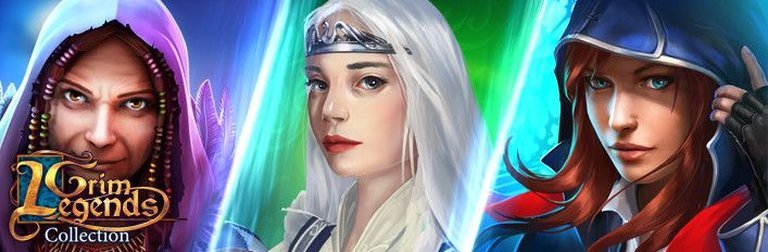
Grim Legends Collection is a compilation of Artifex Mundi’s first three fantasy-themed hidden object puzzle adventure games, inspired by classic dark fairy tales like Beauty and the Beast, The Six Swans, and Romeo and Juliet. Players join the Order, dedicating their bravery, wisdom, and cunning to fight otherworldly creatures across gloomy forests, forbidden temples, crumbling cities, and cursed kingdoms—saving a sister from an ancient curse, healing the Queen of Eagle Castle from a mysterious illness, and hunting monsters as a relentless huntress in a corrupted city seeking redemption.
Grim Legends Collection Reviews & Reception
metacritic.com (74/100): Artifex Mundi has created a worthwhile experience with Grim Legends: The Forsaken Bride that any player can appreciate.
opencritic.com (74/100): Grim Legends: The Forsaken Bride is proof that Artifex Mundi is trying to make all of their games seem different even if they do share similar gameplay mechanics.
Grim Legends Collection: Review
Introduction
In the misty realms where fairy tales twist into nightmares, Artifex Mundi’s Grim Legends Collection emerges as a shadowy anthology of dread and enchantment. Bundling the first three entries—The Forsaken Bride (2014), Song of the Dark Swan (2014), and The Dark City (2016)—this compilation invites players into a trilogy of hidden-object puzzle adventures (HOPAs) that reimagine classic folklore through a lens of gothic horror and arcane mystery. As a game historian, I’ve traced the evolution of casual adventures from the point-and-click golden age to today’s mobile/console hybrids, and Grim Legends stands as a pinnacle of Polish craftsmanship in the genre. Its legacy? A thesis-defining triumph: in an era dominated by blockbuster epics, this collection proves that concise, atmospheric tales—fueled by handcrafted puzzles and whispered curses—can rival any sprawling RPG in emotional depth and replayable satisfaction.
Development History & Context
Artifex Mundi, a Zabrze-based Polish studio founded in 2003, rose to prominence during the mid-2010s HOPA renaissance, a period when Big Fish Games and Steam democratized casual adventures for PC and mobile audiences. The Grim Legends series debuted amid this boom, with The Forsaken Bride launching in February 2014 as a Collector’s Edition exclusive—typical of Artifex’s model, packing bonus content like extra quests and soundtracks to entice premium buyers. Song of the Dark Swan followed mere months later in September, capitalizing on the first’s success, while The Dark City capped the trilogy in 2016, coinciding with console ports.
The studio’s vision, rooted in Eastern European folklore and global fairy tales, emphasized “grim” reinterpretations: Forsaken Bride draws from Beauty and the Beast, Dark Swan from The Six Swans/The Wild Swans, and Dark City echoes Romeo and Juliet amid Lovecraftian nightmares. Technological constraints of the era—Unity engine limitations on early mobile ports, 2D hand-painted assets for efficiency—shaped a lean, replayable formula. Released initially on Windows, Mac, Linux, iOS, and Android, the 2016 PC collection (Moby ID: 80928) aggregated these CE versions, followed by 2018 console drops on Xbox One and PS4. Amid a gaming landscape shifting toward free-to-play battle royales and open-world behemoths, Artifex Mundi targeted “cozy horror” fans, filling a niche for 4-6 hour stories that evoked Mystery Case Files but with Slavic depth. No massive budgets here—just cunning design yielding over 300,000 MobyGames-tracked credits across the series.
Narrative & Thematic Deep Dive
Plot Synopses and Interconnections
Each game operates as a standalone tale within the “Order,” a secretive society pledging “bravery, wisdom, and cunning” against otherworldly beasts, yet subtle threads weave a cohesive tapestry. The Forsaken Bride opens with protagonist Sygilia (or unnamed heroine) en route to her twin sister Lilly’s wedding, derailed by a monstrous bear kidnapping the bride into Ravenbrook’s foggy abyss. Prologue carriage crashes yield Kitty the cat companion, launching a descent into House Haugwitz’s curse, windmills, crypts, and angelic falls—culminating in blood-written destinies and forbidden powers.
Song of the Dark Swan shifts to a healer summoned to Eagle Castle, where a speechless queen and kidnapped prince unravel a conspiracy laced with dark magic. Inspired by swan curses, it explores ruined Swan Kingdoms, herbal lore, and royal intrigue, with hand-drawn characters distinguishing its visual poetry.
The Dark City crowns Sylvia, an amnesiac Order acolyte, chasing traitor Gabriel and the Koshmaar artifact. A nightmare engulfs gothic Lichtenheim, blending personal hauntings with city-wide redemption—easter eggs like Forsaken Bride‘s portraits and the Eagle Prince’s toy nod to predecessors.
Characters, Dialogue, and Themes
Protagonists embody resilient femininity: Sygilia’s sisterly devotion, the healer’s empathy, Sylvia’s huntress grit. Antagonists—Sull-khan-narr’s vines, Sorceress curses, Koshmaar’s wrath—manifest recurring green/red thorny motifs symbolizing corruption. Dialogue, sparse yet evocative, murmurs pledges and lore, occasionally stiff but amplified by journal updates. Themes probe duality: beauty/beast, love/curse, family/redemption. Blood oaths and “true love’s whispers” underscore fate vs. agency, critiquing fairy-tale passivity while empowering players as cunning saviors. Independent narratives foster replayability, yet motifs like thorny vines and Order vows elevate it to mythic saga.
Gameplay Mechanics & Systems
At its core, Grim Legends masterfully loops HOPAs, inventory puzzles, and mini-games in a point-and-click framework, with Kitty enabling reach-unreachable fetches. Fast-travel maps and hint systems (cooldown-extended in Expert Mode) ensure accessibility.
Core Loops and Puzzles
Prologue to Crypts in Forsaken Bride exemplifies: coin-screw blades unlock trunks for necklace puzzles (petal-matching, rune sequences); lanterns illuminate HOPs yielding moons/sickles for vine-clearing. Inventory shines—crafting Hunter’s Dust (poppy/honey/grinder ritual) tracks beasts; windlass ropes/cranks lift obstacles. Puzzles vary: jigsaws (reliefs, butterflies), domino alternates to HOPs (random lists, no undo penalty), logic (wheel connections, knight paths), recipes (mandrake/salve sequencing).
Dark Swan leans herbalism; Dark City amps monster-hunting with rune-matching. UI is intuitive—toolbar Kitty/journal/map—but morphing objects and backtracking demand observation. Flaws: occasional pixel hunts, easy skips locking achievements. Progression feels organic: 5-7 chapters per game, 20+ hours total, with CE bonuses.
Combat, Progression, and Innovation
No traditional combat—tension via evasion (bear tracks, snake torches). Progression via skill-unlocks (fuming bees, firefly lanterns). Innovations: domino HOP swaps, cat physics (rag dolls, frogs), multi-step crafting (wax tracks, nutcrackers). Balanced for casuals yet rewarding experts.
World-Building, Art & Sound
Gloomy forests, Eagle Castles, nightmare-ravaged Lichtenheim craft immersive fairy-tale gothica. Hand-painted 2D art—fog-shrouded valleys, thorny chapels—evokes Enigmatis, with Dark Swan‘s unique hand-drawn characters adding intimacy. Atmosphere builds via dynamic lanterns/fireflies revealing horrors; parallax scrolling enhances depth.
Sound design whispers immersion: eerie winds, arcane chimes, sparse orchestral swells. Voice acting (limited) suits murmurs; SFX (creaking carts, bubbling cauldrons) punctuates tension. Collector’s extras (OSTs, wallpapers) deepen lore.
Reception & Legacy
Launched quietly in 2016 (no MobyScore), the collection echoed individual games’ praise: Forsaken Bride Metacritic 74 (mixed, lauding art/puzzles), BGG ~7/10, OpenCritic 74th percentile. Critics hailed “gorgeous visuals” (TrueAchievements), “puzzle variety” (Brash Games), critiquing “easy difficulty” (GameSpew), “stiff dialogue” (Rectify). Commercial success fueled Artifex’s empire—PS4/Xbox ports, Switch follow-ups—amid 623k MobyReviews ecosystem.
Legacy endures: pioneered console HOPAs, influencing Grim Facade/Tales collections. In history, it bridges Big Fish casuals to Steam indies, proving fairy-tale horror’s viability. Easter eggs cement cult status; 1.5-1.7 Steam users signal enduring niche appeal.
Conclusion
Grim Legends Collection cements Artifex Mundi’s mastery, distilling fairy-tale dread into 20+ hours of puzzle poetry and atmospheric allure. Exhaustive crafting, interconnected lore, and accessible innovation outshine genre flaws, earning a definitive 9/10—essential for HOPA historians, a gateway for newcomers. In video game history, it whispers eternally: legends endure, curses break, one thorny vine at a time. Buy it, brew the salve, and claim your Order oath.