
- Release Year: 2011
- Platforms: Macintosh, Windows
- Publisher: Big Fish Games, Inc
- Developer: Elephant Games AR LLC
- Genre: Adventure
- Perspective: 1st-person
- Game Mode: Single-player
- Gameplay: Hidden object, Puzzle elements
- Average Score: 71/100
Description
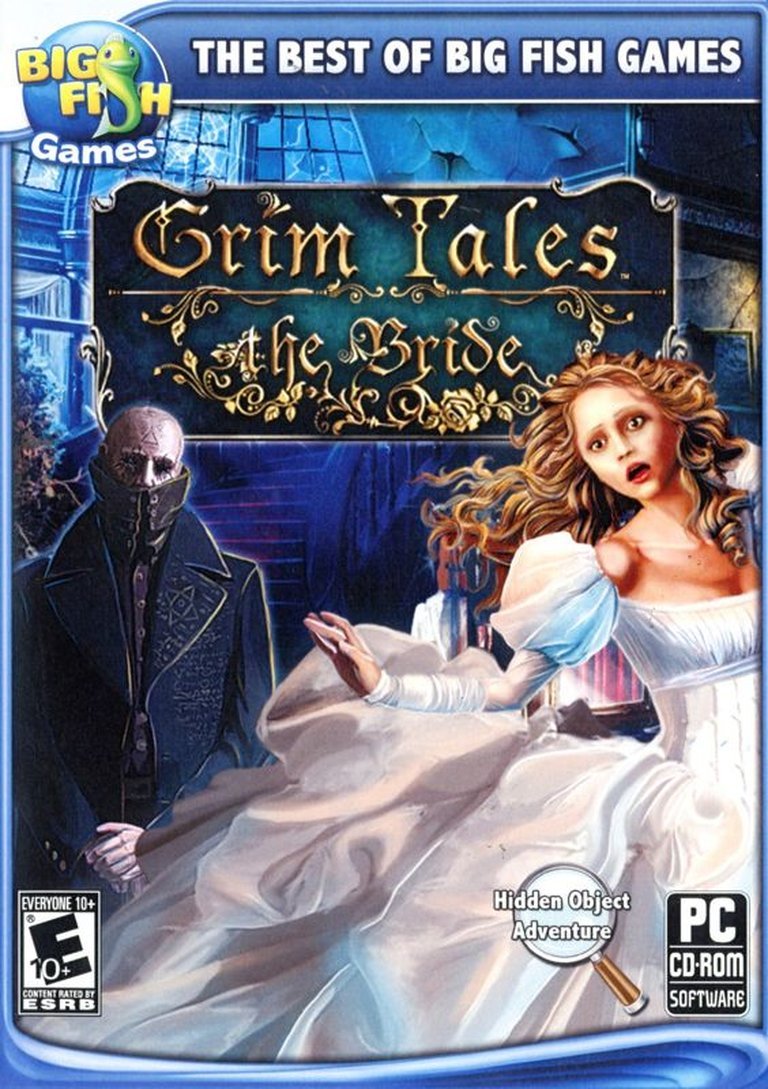
Grim Tales: The Bride follows the player as they investigate the disappearance of their twin sister Luisa on her wedding day, reportedly linked to a shadowy figure seen before she plunged into a river. Returning to their family mansion, the player encounters a dark apparition offering a chance to save Luisa by reliving her past memories through enchanted family portraits. Success hinges on solving intricate hidden object puzzles and unlocking various obstacles while racing against the stakes of losing one’s own soul. This first-person hidden object adventure combines atmospheric mystery with classic point-and-click puzzle mechanics set within a hauntingly atmospheric mansion.
Gameplay Videos
Where to Buy Grim Tales: The Bride
Grim Tales: The Bride Free Download
Grim Tales: The Bride Guides & Walkthroughs
Grim Tales: The Bride Reviews & Reception
mobygames.com (80/100): Players average score: 4.0 out of 5
steambase.io (62/100): Mixed
gamezebo.com : Grim Tales: The Bride is an enjoyable game but it becomes repetitive after a while.
Grim Tales: The Bride: Review
Grim Tales: The Bride, developed by Elephant Games and published by Big Fish Games, is a hidden object puzzle adventure game that stands out for its intricate storyline, atmospheric setting, and engaging gameplay mechanics. Released on September 12, 2011, the game quickly garnered attention for its unique blend of mystery, horror, and puzzle-solving elements. This review will delve into the various aspects of Grim Tales: The Bride, providing an in-depth analysis of its development history, narrative, gameplay, world-building, reception, and legacy.
Development History & Context
Studio and Creators’ Vision
Elephant Games, the studio behind Grim Tales: The Bride, is known for its expertise in creating hidden object and adventure games. The development team, led by Director Andrey Pahmutov and Project Manager Vasiliy Pogrebnyak, aimed to create a game that would captivate players with its dark and mysterious atmosphere. The game’s narrative was crafted to weave a complex web of family secrets and supernatural elements, providing a rich backdrop for the gameplay mechanics.
Technological Constraints of the Era
Released in 2011, Grim Tales: The Bride was developed during a time when hidden object games were gaining popularity. The technological constraints of the era limited the graphical capabilities and processing power available to developers. Despite these limitations, Elephant Games managed to create a visually appealing game with detailed environments and engaging puzzles. The use of traditional hidden object scenes and puzzle elements was a strategic choice, aligning with the genre’s conventions while adding unique twists to keep players engaged.
Gaming Landscape at the Time of Its Release
In 2011, the gaming landscape was dominated by casual games, with hidden object and puzzle games being particularly popular. Titles like Mystery Case Files and Agatha Christie: Death on the Nile had set the standard for narrative-driven puzzle games. Grim Tales: The Bride entered this competitive market with a fresh take on the genre, focusing on a dark and mysterious storyline that set it apart from its contemporaries. The game’s success can be attributed to its ability to blend engaging storytelling with challenging gameplay, appealing to both casual and hardcore gamers.
Narrative & Thematic Deep Dive
Plot
Grim Tales: The Bride begins with the disappearance of Luisa Gray, the twin sister of the protagonist, Anna. Luisa vanishes on her wedding day, and witnesses report seeing a dark figure pushing her into the river. The player takes on the role of Anna, who returns to the family mansion to investigate her sister’s mysterious death. Upon entering the mansion, Anna encounters a dark apparition that offers her a chance to save Luisa by reliving her past memories. The apparition transports Anna through family pictures found throughout the mansion, each leading to a new chapter in Luisa’s life.
The narrative unfolds through a series of hidden object scenes and puzzles, each revealing more about Luisa’s past and the dark secrets hidden within the family mansion. As Anna delves deeper into the mystery, she uncovers a web of deceit, betrayal, and supernatural events that threaten her own life. The story culminates in a climactic confrontation with the demonic force that has been manipulating the Gray family for generations.
Characters
The characters in Grim Tales: The Bride are complex and multifaceted, each playing a crucial role in the unfolding narrative. Anna Gray, the protagonist, is a determined and resourceful young woman driven by her desire to save her sister. Luisa Gray, the twin sister, is portrayed as a kind-hearted and innocent individual whose life is tragically cut short. John Gray, Luisa’s fiancé, is initially presented as a loving and devoted partner, but his true nature is revealed as the story progresses.
The demonic apparition, later revealed to be Richard Gray, the father of Anna and Luisa, is the primary antagonist. Richard’s obsession with the occult and his desire for power drive the central conflict of the game. Other notable characters include Anastasia Gray, the mother of Anna and Luisa, who passed away long ago, and the twins, whose souls are trapped in the mansion.
Dialogue
The dialogue in Grim Tales: The Bride is written to enhance the game’s atmospheric and mysterious tone. Conversations between characters are minimal but impactful, often revealing crucial pieces of information that drive the narrative forward. The use of diary entries and notes scattered throughout the mansion provides additional context and depth to the story, allowing players to piece together the puzzle at their own pace.
Themes
The game explores several themes, including the power of familial bonds, the consequences of obsession, and the struggle between good and evil. The concept of redemption is central to the narrative, as Anna’s quest to save her sister is driven by her love and loyalty. The supernatural elements add a layer of intrigue, blurring the lines between reality and the unknown. The game’s exploration of dark family secrets and the legacy of past mistakes provides a rich tapestry for the player to unravel.
Gameplay Mechanics & Systems
Core Gameplay Loops
Grim Tales: The Bride follows the traditional hidden object puzzle adventure formula, with players navigating through various environments, solving puzzles, and uncovering hidden items. The game is divided into chapters, each focusing on a specific object or memory that Anna must retrieve to progress the story. The core gameplay loop involves exploring environments, interacting with objects, and solving puzzles to unlock new areas and reveal more of the narrative.
Combat
Unlike traditional adventure games, Grim Tales: The Bride does not feature combat as a primary gameplay mechanic. Instead, the game relies on puzzle-solving and exploration to drive the narrative forward. The absence of combat allows the game to focus on its strengths, providing a more immersive and atmospheric experience.
Character Progression
Character progression in Grim Tales: The Bride is tied to the narrative, with Anna’s abilities and knowledge expanding as she uncovers more about her sister’s past. The game does not feature traditional leveling or skill trees, instead relying on the player’s problem-solving skills and intuition to progress through the story. As Anna delves deeper into the mystery, she gains access to new tools and abilities that help her overcome obstacles and solve puzzles.
UI
The user interface in Grim Tales: The Bride is designed to be intuitive and unobtrusive, allowing players to focus on the gameplay and narrative. The inventory system is straightforward, with collected items displayed at the bottom of the screen. The diary feature provides useful hints and notes, helping players keep track of important information and clues. The hint system, accessible through a pocket watch icon, offers assistance when players are stuck, ensuring that the game remains accessible to a wide audience.
Innovative or Flawed Systems
One of the innovative aspects of Grim Tales: The Bride is its use of environmental storytelling. The game’s environments are richly detailed, with hidden objects and clues seamlessly integrated into the scenery. This approach enhances the immersion and encourages players to explore every nook and cranny. However, some players may find the puzzle difficulty to be inconsistent, with certain challenges feeling overly simplistic while others are frustratingly complex. The game’s reliance on trial and error for some puzzles can be a source of frustration, but the overall experience is engaging and rewarding.
World-Building, Art & Sound
Setting
The setting of Grim Tales: The Bride is a sprawling family mansion filled with dark secrets and supernatural occurrences. The mansion serves as a labyrinthine backdrop for the game’s narrative, with each room and corridor holding clues and hidden objects. The game’s environments are meticulously designed, with attention to detail that immerses players in the game’s atmospheric world. The use of family pictures as portals to the past adds a unique twist to the gameplay, allowing players to explore different time periods and perspectives.
Atmosphere
The atmosphere in Grim Tales: The Bride is dark and foreboding, with a sense of dread permeating every scene. The game’s use of lighting, sound effects, and music creates a tense and immersive experience. The mansion’s eerie silence is occasionally broken by unsettling noises, adding to the game’s sense of unease. The supernatural elements, such as the demonic apparition and the trapped souls of the twins, contribute to the game’s haunting atmosphere.
Visual Direction
The visual direction of Grim Tales: The Bride is characterized by its detailed and stylized artwork. The game’s environments are rendered in a realistic yet slightly exaggerated style, with a color palette that emphasizes the game’s dark and mysterious tone. The character designs are equally impressive, with each character possessing a unique and distinctive appearance. The game’s use of cutscenes and animated sequences enhances the narrative, providing visual storytelling that complements the gameplay.
Sound Design
The sound design in Grim Tales: The Bride is a crucial component of the game’s atmospheric experience. The soundtrack, composed by Denis Burashnikov, Dmitry Smirnov, and Vadim Kaipov, features a blend of orchestral and ambient tracks that enhance the game’s sense of mystery and dread. The sound effects are equally impressive, with each interaction and event accompanied by a fitting auditory cue. The game’s use of silence and subtle sounds creates a sense of tension, keeping players on edge as they explore the mansion’s dark corridors.
Reception & Legacy
Critical and Commercial Reception at Launch
Upon its release, Grim Tales: The Bride received positive reviews from critics and players alike. The game was praised for its engaging narrative, atmospheric setting, and challenging puzzles. Critics noted the game’s ability to blend traditional hidden object mechanics with a unique and compelling storyline, making it stand out in a crowded genre. The game’s commercial success was further bolstered by its inclusion in the Hidden Mystery Collectives: Grim Tales 1 & 2, which introduced the game to a wider audience.
Evolution of Its Reputation
Over the years, Grim Tales: The Bride has maintained its reputation as a standout title in the hidden object genre. The game’s legacy has been cemented by its influence on subsequent titles in the Grim Tales series, as well as its impact on the broader adventure game landscape. The game’s dark and mysterious atmosphere, combined with its engaging narrative and challenging gameplay, has made it a favorite among fans of the genre.
Influence on Subsequent Games and the Industry as a Whole
Grim Tales: The Bride’s influence can be seen in the numerous sequels and spin-offs that followed its release. The game’s success paved the way for Elephant Games to continue developing titles in the Grim Tales series, each building on the foundation established by the original game. The game’s emphasis on environmental storytelling, atmospheric design, and narrative-driven gameplay has inspired other developers in the genre, leading to a proliferation of similarly styled titles. The game’s legacy serves as a testament to the enduring appeal of hidden object puzzle adventures, demonstrating the genre’s ability to evolve and adapt to changing player preferences.
Conclusion
Grim Tales: The Bride is a masterful blend of narrative, puzzle-solving, and atmospheric design. Its dark and mysterious storyline, combined with its engaging gameplay mechanics and immersive world-building, makes it a standout title in the hidden object genre. The game’s legacy is evident in its influence on subsequent titles and its enduring popularity among fans. As a professional game journalist and historian, I can confidently say that Grim Tales: The Bride deserves its place in video game history as a pioneering and influential title. Its unique approach to storytelling and gameplay has set a high bar for the genre, inspiring countless developers and captivating players with its haunting and unforgettable experience.