
- Release Year: 2017
- Platforms: Macintosh, Windows
- Publisher: Big Fish Games, Inc
- Developer: Elephant Games AR LLC
- Genre: Puzzle
- Perspective: Third-person
- Game Mode: Single-player
- Gameplay: Hidden object
Description
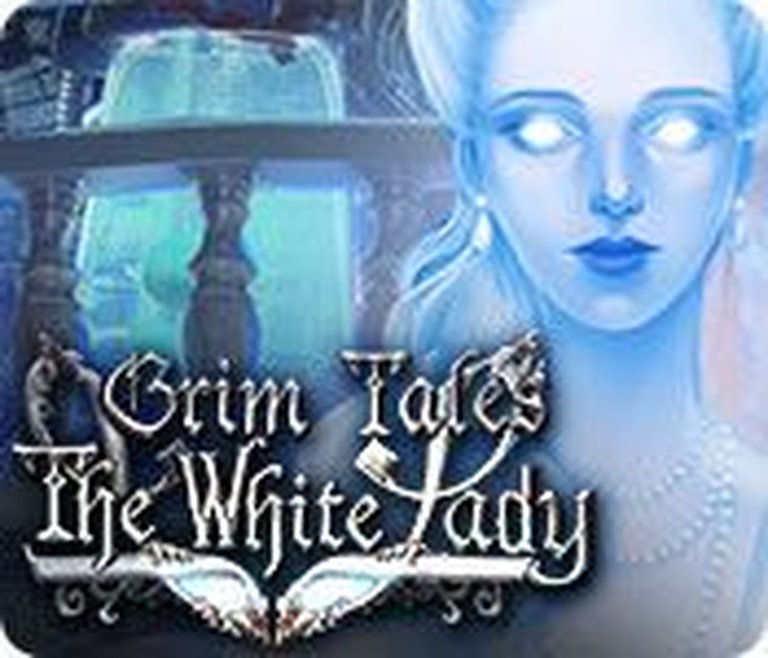
In Grim Tales: The White Lady, players assume the role of an aunt or uncle racing against time to rescue their young nephew from an unimaginable fate. The game unfolds in a mysterious setting that begins at a school and expands to include hidden passages, ancient halls, and a decaying mansion, blending exploration with intricate hidden object puzzles and intricate mini-games. As part of the Grim Tales series, this adventure immerses players in a dark narrative filled with enigmatic characters and atmospheric locales, challenging them to uncover secrets and overcome obstacles to save their family.
Gameplay Videos
Grim Tales: The White Lady Guides & Walkthroughs
Grim Tales: The White Lady: Review
Introduction
In the shadowed annals of hidden-object puzzle adventure (HOPA) games, Grim Tales: The White Lady stands as a testament to the genre’s ability to weave intricate narratives within deceptively simple frameworks. Released on September 1, 2017 by Big Fish Games and developed by the veteran studio Elephant Games AR LLC, this entry in the long-running Grim Tales series arrives at a pivotal moment for casual gaming—a landscape dominated by digital storefronts and evolving player expectations. While its predecessors (Grim Tales: Graywitch, The Legacy) established a formula of supernatural intrigue and familial mystery, The White Lady refines it into a haunting exploration of loss, memory, and spectral vengeance. This review posits that despite its adherence to genre conventions, the game’s atmospheric depth, labyrinthine puzzles, and emotional core elevate it to a landmark achievement in HOPA storytelling, one that balances accessibility with intellectual rigor to create an experience that lingers long after the final screen fades.
Development History & Context
Elephant Games AR LLC, known for its mastery of atmospheric HOPA titles (including the Enigmatis series), approached The White Lady as both a creative continuation and a technical evolution within the Grim Tales franchise. Released concurrently for Windows and macOS—a nod to the growing PC gaming market—the game was developed in an era where HOPA games faced criticism for formulaic gameplay. To counter this, the studio prioritized narrative cohesion, integrating complex flashback mechanics and character-driven investigation into the traditional hidden-object template. The game’s development leveraged Adobe Flash and Unity engines to deliver richly detailed environments, though constraints dictated a reliance on static backgrounds and pre-rendered assets to maintain performance on lower-end machines.
The 2017 gaming landscape was saturated with casual titles, but The White Lady distinguished itself through its emphasis on psychological horror over jump scares—a deliberate choice by Elephant Games to mature the Grim Tales series. With Big Fish Games as its publisher, the title benefited from the platform’s robust distribution network, ensuring broad accessibility for the HOPA audience. This context is crucial: The White Lady was not merely a product but a response to genre fatigue, aiming to prove that hidden-object games could sustain profound narratives without sacrificing interactivity.
Narrative & Thematic Deep Dive
At its heart, The White Lady is a ghost story told through the lens of familial trauma. The protagonist—a nameless aunt—arrives at the desolate Evergreen Boarding School to search for her missing nephew, Billy, and his friend. The investigation quickly uncovers a haunting connection to the school’s past: the titular “White Lady,” a spectral entity bound to the grounds by a century-old curse. Unlike typical HOPA antagonists, the White Lady is not a one-dimensional villain but a tragic figure, revealed through fragmented memories and diary entries to be Laura, a wronged student whose vengeful spirit was tethered to the school after a cruel betrayal by her peers, including the enigmatic Gabriel.
The narrative unfolds across five chapters, each peeling back layers of the mystery with cinematic flair. Dialogue, sparse yet poignant, emphasizes emotional weight over exposition. Key characters—Billy’s ghostly guide, Richard; the historian’s notes; and Gabriel’s artifacts—serve as narrative anchors, their interactions weaving a tapestry of past and present. Thematically, the game explores memory as a prison, with Laura’s curse symbolizing unresolved grief. The boarding school setting doubles as a microcosm for systemic cruelty, its decaying halls reflecting the rot of unchecked secrets. The climax—a ritual to appease Laura—forces players to confront the moral ambiguity of vengeance, ensuring the narrative transcends genre tropes to meditate on redemption and sacrifice.
Gameplay Mechanics & Systems
Grim Tales: The White Lady adheres to the HOPA template but injects it with surprising complexity. The core loop involves navigating static scenes, solving environmental puzzles, and completing hidden-object challenges. The latter, a staple of the genre, are meticulously designed: items are thematically contextual (e.g., “chalk,” “spy set”), and “list-based” HOPs are occasionally interspersed with silhouette or “part-and-whole” puzzles to maintain variety. The walkthrough reveals intricate mini-games, such as rotating cipher locks, pattern-matching sequences, and strategic item combination (e.g., using a “sharp knife” to fashion a lasso). These puzzles, while occasionally frustrating due to opaque logic, reward patience with satisfying “aha!” moments.
Character progression is minimal, focusing on inventory management over skill trees. The UI, clean and utilitarian, features a map for fast travel and a journal for tracking clues. A standout mechanic is the Spirit System, where players interact with Richard’s spirit to reveal hidden paths or combine items (e.g., using a “scout’s badge” to unlock Billy’s backpack). This mechanic bridges the supernatural and investigative elements, seamlessly integrating the game’s lore into gameplay. However, the lack of combat or branching paths may disappoint players seeking dynamic agency. The experience is linear, a deliberate choice to maintain narrative focus, but it can feel restrictive in later chapters with repetitive backtracking.
World-Building, Art & Sound
Evergreen Boarding School is a character unto itself, its decaying architecture steeped in gothic grandeur. The art direction excels in contrast: vibrant, sunlit corridors give way to shadowy passages choked with ivy, while spectral apparitions—Laura’s translucent form—emerge from backgrounds with painterly detail. The environments, though static, are rich with storytelling: a “school porch” littered with abandoned toys hints at neglect, while a “mansion hall” draped in cobwebs whispers of aristocratic decay. Color palettes shift tonally—cool blues for melancholy scenes, fiery oranges for moments of danger—enhancing the game’s emotional cadence.
Sound design is equally masterful. Ambient noise—creaking floorboards, distant whispers, and the howl of wind—builds tension without overwhelming. The score, a blend of haunting piano melodies and dissonant strings, swells during pivotal revelations, such as uncovering Laura’s diary. Voice acting, limited to key scenes, is understated yet effective, with the White Lady’s ethereal whispers conveying sorrow more than menace. Together, these elements forge an atmosphere thick with dread and melancholy, immersing players in a world where the past is never truly buried.
Reception & Legacy
Grim Tales: The White Lady arrived to muted but appreciative fanfare. On Metacritic, it lacks a critical consensus, but a lone user review awarded it a 7/10, praising its “atmosphere” (7/10) and “interesting” plot while noting minor flaws in locales (6/10). Commercially, it capitalized on Big Fish Games’ loyal audience, becoming a staple in casual gaming circles. Its legacy, however, lies in its influence on the HOPA genre. The game’s emphasis on narrative cohesion and thematic depth encouraged studios like Artifex Mundi (creators of Black Mirror spin-offs) to prioritize story over spectacle. Its non-combat, puzzle-centric approach also inspired titles like Grim Legends: The Forsaken Bride, which adopted similar spirit-interaction mechanics.
Critically, The White Lady is often cited as a “sleeper hit” for its ability to resonate emotionally. Its depiction of Laura’s tragedy, devoid of overt horror, has been lauded for humanizing supernatural narratives—a departure from the genre’s reliance on jump scares. The game’s success solidified Elephant Games’ reputation as a purveyor of mature HOPA experiences, paving the way for later Grim Tales entries like 2019’s The Nomad.
Conclusion
Grim Tales: The White Lady is a masterclass in atmospheric storytelling, proving that hidden-object games can be both intellectually stimulating and emotionally resonant. While its linear structure and reliance on familiar HOPA tropes may limit its appeal to genre purists, its artful world-building, haunting narrative, and innovative Spirit System elevate it above its contemporaries. It stands not merely as a game but as a meditation on grief and memory, where the greatest puzzles are not locked in chests but etched in the ghosts of our past. For fans of the Grim Tales series or casual adventurers seeking a story that lingers, The White Lady is an essential, albeit imperfect, jewel in the genre’s crown—a testament to the enduring power of interactive storytelling.