
- Release Year: 2019
- Platforms: Nintendo Switch, Windows
- Publisher: Asterion Games
- Developer: Talerock Studio
- Genre: Role-playing (RPG), Strategy, Tactics
- Perspective: 3rd-person
- Game Mode: Single-player
- Gameplay: characters control, Multiple units, Tactical RPG, Turn-based combat
- Setting: Fantasy
- Average Score: 51/100
Description
Grimshade is a turn-based tactical RPG set in a dark fantasy world, blending strategic combat with a cinematic camera perspective. Players control multiple characters, navigating a richly detailed setting filled with intricate dialogue and challenging battles. Developed by Talerock Studio and published by Asterion Games, the game offers a mix of engaging storytelling and tactical depth, though reviews highlight some technical and balancing issues.
Gameplay Videos
Where to Buy Grimshade
Grimshade Free Download
Grimshade Cracks & Fixes
Grimshade Guides & Walkthroughs
Grimshade Reviews & Reception
metacritic.com (53/100): The world building, the lore and the overall style of Grimshade are excellent and though there is actual tactical depth beneath the simplistic first glance, the game’s pace, excruciating difficulty, unneeded number of battles and unbalanced heroes hinder this tactical turn-based homage to 90s JRPGs from being a truly magnificent effort.
frostilyte.ca : Grimshade largely fails to execute on them.
opencritic.com (51/100): Grimshade is a love letter to the JRPGs of the ’90s. Trouble is it’s one that wasn’t as eloquently written as it should.
indiegamewebsite.com : Too much shade, not enough chance to shine.
rpgamer.com (50/100): I admire a fair amount of what developer Talerock and publisher Asterion Games put into Grimshade. It’s a title very much in the style of something using the Infinity Engine, a design choice that’s come back into fashion in recent years. Where it unfortunately needs some improvement is in a few technical details, plus its localization.
Grimshade Cheats & Codes
PC (PLITCH)
Download and install PLITCH, then activate cheats in-game.
| Code | Effect |
|---|---|
| +100 Gold | Adds 100 gold |
| +1,000 Gold | Adds 1,000 gold |
| +10,000 Gold | Adds 10,000 gold |
| Infinite Ether | Unlimited Ether |
| Infinite Avoidance | Unlimited Avoidance |
| No Tension | Removes Tension |
| Godmode | Invincibility |
| +1 Medical supply | Adds 1 Medical supply |
| Item mulitplier: x99 | Multiplies items by 99 |
| Movement speed: default | Sets movement speed to default |
| Movement speed: fast | Increases movement speed |
| Movement speed: very fast | Greatly increases movement speed |
| Reset deaths to 0 | Resets death count |
| Reset medicine uses to 0 | Resets medicine usage |
| Easy kills | Makes enemies easier to kill |
| Hardcore | Increases difficulty |
| Decrease Money | Reduces money |
Grimshade: A Flawed but Fascinating Homage to Classic RPGs
Introduction
Grimshade is a game that wears its influences on its sleeve—a love letter to the tactical RPGs of the 1990s, particularly those inspired by the Infinity Engine and classic JRPGs. Developed by Russian studio Talerock and published by Asterion Games, it emerged in 2019 as a Kickstarter-funded passion project, promising a blend of turn-based combat, political intrigue, and a steampunk-infused fantasy world. Yet, despite its ambitions, Grimshade is a game that stumbles as much as it soars, a testament to the challenges of balancing homage with innovation.
At its core, Grimshade is a game of contradictions. It boasts a visually striking world, a unique equipment-based progression system, and a combat system that rewards strategic thinking. However, it is also plagued by technical issues, a convoluted narrative, and a localization that often obscures rather than clarifies. This review will delve deep into the game’s development, narrative, gameplay, and legacy, exploring how Grimshade fits into the broader landscape of modern RPGs and why it remains a fascinating, if flawed, experiment.
Development History & Context
The Studio and Vision
Talerock Studio, the developer behind Grimshade, is a relatively unknown entity in the gaming industry, with Grimshade marking its debut title. The studio’s vision was clear from the outset: to create a tactical RPG that harkened back to the golden age of the genre while incorporating modern sensibilities. The game’s Kickstarter campaign, launched in 2018, emphasized its inspirations—titles like Final Fantasy Tactics, Baldur’s Gate, and XCOM—and promised a world rich in political intrigue and steampunk aesthetics.
The game’s setting, Ree’Fah, is a fantasy world where humans (referred to as “Liv”) coexist with anthropomorphic animals known as “Eleores.” This dynamic is central to the game’s narrative, which explores themes of discrimination, war, and the ethical implications of technological advancement. The developers sought to create a world that felt lived-in and complex, with a history that players could uncover through exploration and dialogue.
Technological Constraints and Challenges
Grimshade was built using the Unity engine, a choice that allowed the small team to leverage existing tools and assets to bring their vision to life. However, the game’s development was not without its challenges. The studio’s inexperience with large-scale game development led to a host of technical issues, including performance hiccups, pathfinding problems, and bugs that persisted even at launch.
One of the most notable constraints was the game’s localization. As a Russian-developed title, Grimshade faced significant hurdles in translating its dense, exposition-heavy script into English. The result was a localization that, while functional, often felt stilted and unnatural, detracting from the game’s narrative impact. This issue was compounded by the game’s reliance on dialogue to convey its world-building, making the translation errors all the more glaring.
The Gaming Landscape at Launch
Grimshade released on March 26, 2019, into a gaming landscape that was already crowded with tactical RPGs and indie titles vying for attention. The game’s launch coincided with the resurgence of interest in classic RPG mechanics, thanks in part to titles like Divinity: Original Sin 2 and Wasteland 3. However, Grimshade struggled to stand out, in part due to its technical shortcomings and the mixed reception it received from critics.
The game’s release on Nintendo Switch in 2020 offered a second chance to reach a broader audience, but by then, the initial momentum had faded. Despite its flaws, Grimshade remains a testament to the passion of its developers and their desire to create something unique in a genre that often relies on familiar tropes.
Narrative & Thematic Deep Dive
Plot Overview
Grimshade begins with a bang—a literal one, as the kingdom of Brann comes under attack from its neighbor, Bespierre. The game’s protagonist, Alister Garuda, a Champion of Brann, is thrust into the chaos when he encounters Kiba, a mysterious boy with amnesia and the ability to manipulate ether, the game’s magical energy. Together, they navigate the war-torn city of Brann, uncovering a conspiracy that involves the king’s disappearance, a mad scientist’s experiments, and the dark forces lurking in the Forest of Shadows.
The narrative is structured around a series of coincidences and twists, with Alister and Kiba gradually assembling a party of misfits, each with their own motivations and backstories. The story is dense, with a heavy emphasis on political intrigue and moral ambiguity. However, the game’s pacing is uneven, with long stretches of exposition interrupted by sudden bursts of action.
Characters and Dialogue
Grimshade’s cast is one of its strongest assets, featuring a diverse group of characters that include:
- Alister Garuda: The game’s protagonist, a naive but determined Champion of Brann.
- Kiba: The amnesiac boy with ether-manipulating abilities, whose past is shrouded in mystery.
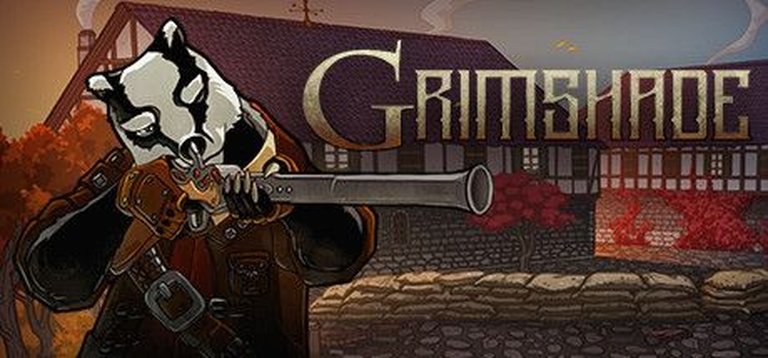
- Charlie: A grizzled, gun-wielding badger and former mentor to Alister’s father.
- Ruby: A thief with a sharp tongue and a penchant for backstabbing (both literal and metaphorical).
- Sillie: A Valkyrie from Bespierre who initially opposes Alister but later joins the party.
Each character is well-designed in terms of their role in combat and their personal arcs, but the game’s dialogue often fails to do them justice. The writing is verbose and overly reliant on exposition, with characters frequently delivering monologues that feel more like textbook entries than natural conversation. The localization issues exacerbate this problem, with awkward phrasing and grammatical errors detracting from the game’s immersive potential.
Themes and Symbolism
Grimshade explores several themes that are central to its narrative:
-
Discrimination and Oppression: The conflict between Liv and Eleores serves as a metaphor for real-world issues of racism and discrimination. Bespierre’s enslavement of Eleores is a clear parallel to historical and contemporary forms of oppression, and the game does not shy away from depicting the brutality of this system.
-
The Ethics of Technology: The game’s steampunk setting allows it to explore the consequences of unchecked technological advancement. The mad scientist’s experiments on Kiba, for example, raise questions about the limits of scientific inquiry and the moral responsibility of those who wield power.
-
War and Political Intrigue: The war between Brann and Bespierre is not a simple conflict of good versus evil. Both sides are flawed, and the game’s narrative is filled with betrayals, alliances, and shifting loyalties. This complexity is one of the game’s strengths, but it is often obscured by the convoluted storytelling.
-
Identity and Memory: Kiba’s amnesia is a central plot device, and the game uses it to explore themes of identity and self-discovery. As Kiba uncovers fragments of his past, he is forced to confront the ethical implications of his abilities and the role he plays in the larger conflict.
Storytelling and Pacing
The game’s storytelling is one of its most polarizing aspects. On one hand, Grimshade is ambitious in its scope, attempting to weave together multiple narrative threads into a cohesive whole. On the other hand, the execution is often clumsy, with the game’s opening scenes being particularly confusing due to the sheer volume of jargon and unexplained concepts.
The pacing is another issue. The game’s first act is slow, with players spending a significant amount of time navigating the sewers of Brann and listening to lengthy dialogues. While this allows for world-building, it also makes the game feel sluggish, especially for players who are eager to dive into the combat.
Gameplay Mechanics & Systems
Core Gameplay Loop
Grimshade’s gameplay is divided into two main components: exploration and combat. The exploration segments are conducted from an isometric perspective, with players guiding their party through the game’s various environments, interacting with NPCs, and solving puzzles. The combat, meanwhile, is turn-based and tactical, with a strong emphasis on positioning and team composition.
The game’s progression is tied to its equipment-based system, which eschews traditional leveling in favor of a more dynamic approach. Characters gain new abilities and stats based on the gear they equip, encouraging players to experiment with different loadouts and strategies.
Combat System
The combat in Grimshade is one of its standout features. Battles take place on a grid-based battlefield, with the player’s party occupying one side and the enemy occupying the other. Neither side can cross into the other’s territory, which adds a layer of strategy to the proceedings. Characters have a variety of abilities at their disposal, with melee attacks limited to the front row and ranged attacks available to those in the back.
One of the most interesting mechanics is the “Tension” system, which builds up as characters take actions. When Tension reaches its maximum, the affected character is forced to skip a turn, leaving them vulnerable. This system adds a risk-reward element to combat, as players must balance aggressive tactics with the need to manage their party’s stamina.
The game also features a unique “Shield” mechanic, where certain characters can protect those behind them from physical attacks. This encourages players to think carefully about positioning and to adapt their strategies based on the enemy’s composition.
Character Progression
As mentioned earlier, Grimshade does not feature traditional leveling. Instead, characters grow stronger by equipping new gear, which grants them access to new abilities and stat boosts. This system is refreshing in its simplicity, but it also has its drawbacks. The lack of a traditional progression system means that players who enjoy the sense of growth that comes with leveling up may find Grimshade’s approach underwhelming.
The crafting system is another key component of character progression. Players can craft new equipment using materials found throughout the world, which adds a layer of depth to the game’s economy. However, the crafting system is not as robust as it could be, with many players opting to simply buy or find gear rather than craft it.
UI and Quality of Life
The game’s UI is functional but unremarkable. The inventory system is straightforward, but the lack of a proper map makes navigation unnecessarily difficult. The game’s save system is also problematic, with some players reporting issues with manual saves not working correctly. Fortunately, the auto-save feature is generous, which helps mitigate some of these issues.
World-Building, Art & Sound
Setting and Atmosphere
Grimshade’s world, Ree’Fah, is a fascinating blend of fantasy and steampunk. The city of Brann is a sprawling metropolis filled with towering buildings, bustling markets, and dark alleyways. The Forest of Shadows, meanwhile, is a foreboding wilderness teeming with dangerous creatures and hidden secrets. The game’s environments are hand-painted, giving them a distinct, almost storybook-like quality.
The atmosphere is further enhanced by the game’s sound design. The soundtrack is one of Grimshade’s strongest assets, with a mix of orchestral and electronic tracks that perfectly complement the game’s steampunk aesthetic. The music is dynamic, shifting to reflect the tone of the scene, whether it’s the tension of a battle or the quiet melancholy of a character’s introspection.
Visual Direction
The game’s art style is a standout feature, with cel-shaded character models and vibrant, hand-painted backgrounds. The character designs are unique and memorable, with each party member having a distinct visual identity. The combat portraits, in particular, are well-done, with dynamic animations that bring the characters to life.
However, the game’s visuals are not without their flaws. The character portraits used in dialogue scenes are often static and lifeless, which can be jarring given the high quality of the combat portraits. Additionally, the game’s performance issues, particularly in combat, can detract from the overall visual experience.
Sound Design
The sound design in Grimshade is excellent, with a particular emphasis on the game’s soundtrack. The music is composed by Evgeniya Kuropatkina, who also served as the game’s sound designer, and it is one of the game’s most praised aspects. The tracks are layered and atmospheric, with a mix of traditional orchestral instruments and electronic elements that give the game a unique auditory identity.
The voice acting, while not present in the game, is not missed thanks to the strong writing (when it works) and the excellent sound design. The ambient sounds, from the clanking of machinery to the rustling of leaves in the forest, add depth to the game’s environments and help immerse the player in the world.
Reception & Legacy
Critical Reception
Grimshade received a mixed reception from critics, with an average score of 53% on Metacritic based on 10 reviews. The game’s strengths—its combat system, art direction, and world-building—were often praised, but these were overshadowed by its technical issues, convoluted narrative, and poor localization.
Critics from outlets like RPGamer and Cubed3 noted the game’s potential but were ultimately let down by its execution. RPGamer’s Mike Moehnke wrote, “The technical issues that creep up are hard to ignore though, and the localization doesn’t help a game that’s trying to have a spectacular narrative.” Similarly, Cubed3’s review highlighted the game’s flawed presentation and unbalanced combat, stating, “Grimshade is a love letter to the JRPGs of the ’90s. Trouble is it’s one that wasn’t as eloquently written as it should.”
Player reception was similarly mixed, with many praising the game’s art and combat while criticizing its technical problems and narrative pacing. On Steam, the game holds a “Mixed” rating, with 68% of user reviews being positive.
Commercial Performance
Grimshade’s commercial performance was modest, with the game failing to make a significant impact in a crowded market. The game’s release on Nintendo Switch in 2020 did little to boost its sales, and it remains a niche title with a small but dedicated fanbase.
Influence and Legacy
Despite its flaws, Grimshade is not without its merits. The game’s combat system, in particular, has been praised for its depth and strategic complexity, and its art direction has been highlighted as a standout feature. The game’s world-building, while convoluted, is ambitious and offers a unique take on the fantasy genre.
Grimshade’s legacy is likely to be that of a flawed but fascinating experiment—a game that tried to do something different in a genre that often relies on familiar tropes. While it may not have achieved the critical or commercial success its developers hoped for, it remains a testament to the passion and creativity of its development team.
Conclusion
Grimshade is a game of contradictions—a visually stunning world marred by technical issues, a deep combat system hindered by poor pacing, and a narrative that is as ambitious as it is convoluted. It is a game that wears its influences proudly but struggles to carve out its own identity in a genre that has seen a resurgence in recent years.
For fans of tactical RPGs, Grimshade offers a unique and challenging experience, with a combat system that rewards strategic thinking and a world that is rich in detail. However, the game’s technical problems and narrative shortcomings make it difficult to recommend without reservations. It is a game that could have been great but is ultimately held back by its own ambitions.
Final Verdict: 6.5/10 – A flawed but fascinating homage to classic RPGs, Grimshade is a game that shows promise but ultimately falls short of its potential.