
- Release Year: 2023
- Platforms: Nintendo Switch, Windows
- Publisher: Heart Core Ltd
- Developer: Heart Core Ltd
- Genre: Action, Driving, Racing
- Perspective: Diagonal-down
- Game Mode: Single-player
- Gameplay: Roguelike, RPG elements, Shooter
- Setting: Cyberpunk, dark sci-fi, Fantasy
- Average Score: 58/100
Description
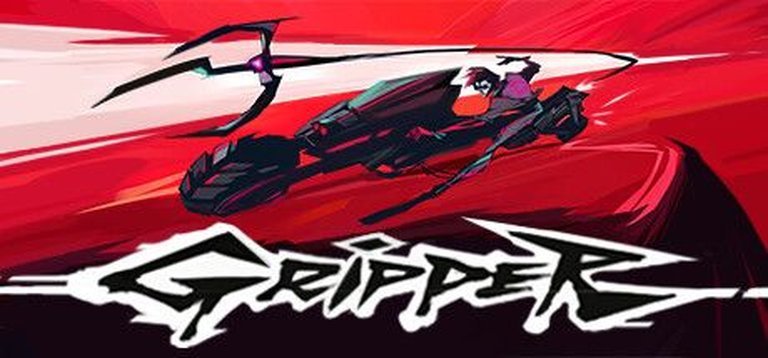
Gripper is an action-racing game where players control a motorcyclist named None as he navigates a world devastated by an AI apocalypse, aiming to reunite with his family. With a blend of cyberpunk and dark sci-fi aesthetics, the game features intense boss rush encounters, a grappling hook mechanic, and incorporates roguelike and RPG elements for a challenging, replayable experience set in a chaotic, Akira-inspired landscape.
Gameplay Videos
Where to Buy Gripper
Gripper Mods
Gripper Guides & Walkthroughs
Gripper Reviews & Reception
metacritic.com (58/100): Gripper combines adrenaline-pumping race sections with top-down boss fights. The high difficulty provides a challenge, though the gameplay sometimes works against itself to make it a little too difficult.
the-gamers-lounge.com : the game is a lot more serviceable than the backstory.
fingerguns.net : Gripper is a futuristic bike-brawler very akin to Furi.
techraptor.net : Gripper is an exercise in frustration.
Gripper: A Cyberpunk Boss Rush Drowning in Its Own Grief
Introduction: The Promise of a Synthwave Symphony
In the crowded landscape of indie boss-rush games, Gripper arrived in March 2023 with a provocative promise: a story-driven action title where you never leave your motorcycle, tearing apart colossal enemies with a grappling hook to the beat of a pulsing synthwave soundtrack. Marketed as an “Akira-inspired” fusion of Furi‘s intensity and Mad Max‘s vehicular chaos, it presented a compelling, if audacious, premise. Developed by Bulgarian studio Heart Core Ltd (formerly OctoBox Interactive) as a deeply personal project born from creative director Kirill Zolovkin’s experience with grief, Gripper aimed to transmute raw emotion into mechanical metaphor. Yet, as the critical consensus reveals—a Metacritic aggregate in the “mixed or average” range (58 on Switch, ~65 on PC) and a polarized reception—Gripper is a game whose ambitious reach frequently exceeds its grasp. This review will argue that while Gripper succeeds as a stylish, atmospheric proof-of-concept with a genuinely innovative core mechanic, it is ultimately undermined by frustratingly imprecise controls, uneven difficulty that rewards trial-and-error over skill, and a narratively clunky execution that fails to realize its poignant thematic potential.
Development History & Context: passion project in a constrained landscape
Heart Core Ltd, a small Bulgarian studio with credits including Zoochosis and contributions to Atomic Heart, developed Gripper over a three-year cycle. The studio’s origins are notable: its founders include Oscar and Palme d’Or nominees, lending a cinematic sensibility to the project. According to developer blogs on the official Gripper website, the game’s core conceit—defeating bosses representing the “stages of grief” to rip out their hybrid organic/robotic hearts—was directly inspired by Zolovkin’s personal loss. This emotional core was to be expressed not through traditional dialogue but through gameplay mechanics and visual metaphor.
Technologically, the game was built in Unreal Engine 4 with PhysX physics, a robust but not cutting-edge choice for a small indie team. The visual style—a blend of 3D environments with a diagonal-down perspective and hand-drawn 2D comic cutscenes—was designed to evoke 90s cartoons and graphic novels, a stylistic gamble that would receive mixed praise. The release context was crowded: 2023 saw the continued dominance of the “souls-like” and “roguelite” genres, with boss-rush titles like Furi and Outer Wilds (though not strictly a boss-rush) having carved out a passionate niche. Gripper entered this space with a unique vehicular twist but faced the challenge of standing out without the polish of a major studio. Its launch on both PC and Nintendo Switch (with a post-launch update adding difficulty modes and checkpoints) indicated an intent to reach a broad audience, but its $19.99/$3.99 (initial Steam sale) price point would become a point of contention given its short runtime.
Narrative & Thematic Deep Dive: A Story Told Through Mechanics, Marred by Execution
The narrative of Gripper is its most polarizing element. The protagonist, None (a name that subtly signals his emotional emptiness), is an “angsty, emo biker” who returns to his cyberpunk homeworld after years away, only to find his parents missing and reality itself unraveling under the control of Zero, an AI created to replace him. His sole companion is Cat-Kit, a sentient, wrench-wielding stuffed cat toy from his childhood—a whimsical, surreal element that critics either found endearing or deeply awkward.
The plot’s central metaphor is explicitly stated in developer communications: each of the 5 (or 11, depending on counting mini-bosses) major bosses represents a stage of grief—Shock, Anger, Depression, etc.—and defeating them involves “gripping and ripping” out their hearts, which contain “voices of those you lost.” The theory is that by reclaiming these emotional fragments, None can rescue his family and, ultimately, process his own trauma. In practice, critics like Dan Hillman of The Gamer’s Lounge dismissed this as a story that “feels like it was thrown together at a Bulgarian Gentlemen’s club,” calling the premise “clinically insane” yet “easy to follow.” The disconnect arises from the execution: the hand-drawn comic interludes are frequently praised as “excellent” and worthy of a graphic novel (Hillman), but the voice acting—particularly Cat-Kit’s “gruff” and repetitive lines—is widely panned as grating and poorly written (Nintendo Life, Gaming Outsider). The emotional weight of the grief metaphor is lost under clumsy dialogue and a lack of character development; as TechRaptor bluntly stated, the characters are “so unlikeable and uninvolving that I checked out very early on.”
Thematically, Gripper aspires to be a “heartcore” story about loss and acceptance, but its narrative delivery fails to leverage its unique gameplay premise. The act of ripping out a boss’s heart to gain an ability could have been a powerful mechanical representation of integrating painful memories, but the game does little to connect these upgrades to None’s emotional journey. The cumulative effect is a story that feels philosophically ambitious but narratively thin, a veneer over the boss-rush action rather than an integrated whole.
Gameplay Mechanics & Systems: Precision-Frustration in Two Acts
Gripper’s gameplay is bifurcated into two distinct, poorly integrated phases: the tunnel sequences and the boss battles. Both share the core “grip-and-rip” mechanic—using a grappling hook attached to the motorcycle—but apply it in frustratingly disparate ways.
1. Tunnel Sequences (The “Turbo Tunnels”): These are high-speed, on-rails sections where None must navigate a collapsing, abstract tube filled with obstacles. Played from a diagonal-down perspective reminiscent of Sonic the Hedgehog 2 bonus stages, they demand quick reflexes for Quick-Time Events (sliding under doors with ZL, blowing up barriers with ZR) and constant dodging of randomly spawning geometry. The criticism here is universal and severe: the obstacles appear with “unfair speed” (TechRaptor) and lack predictable patterns, making these sections feel like “trial-and-error” rather than tests of skill. With only four health points and no checkpoints (a design choice defended as “hardcore” by the developers but widely condemned as punitive), these tunnels become a source of profound frustration. As Nintendo Life noted, the difficulty “requires grudging patience rather than player skill.” The intention—to create a rhythmic, synthwave-synced “thrilling ride”—is often subverted by the feeling of being cheated by invisible hitboxes and spawn rates.
2. Boss Battles: Here, the grappling hook becomes a primary tool. Each boss (e.g., “The Shock,” a four-legged insectoid) has a unique pattern, but the core loop is similar: use the hook to grab environmental objects (rocks, explosive barrels, other enemies) and hurl them at the boss to stagger it, then rush in to rip off a limb or, ultimately, extract its heart. The variety comes from boss-specific mechanics—some require pulling specific machinery, others involve navigating complex arenas. The “rip-out-the-heart” moment is a visceral, mechanically significant event that grants a permanent new ability (e.g., a shield, a jump, a boost).
However, the grappling hook implementation is the game’s fatal flaw. Criticisms across the board highlight its imprecision:
* Perspective Problems: The top-down/ diagonal-down camera makes depth perception impossible. As TechRaptor explained, “It’s impossible to affect the kind of precision aiming Gripper wants from you with the camera setup it has. All too often, you can’t actually see what you’re trying to grapple.” This leads to grabbing unintended objects and missing intended targets.
* Physics & Control: The bike has significant momentum and inertia. The handbrake is “hilariously unreliable” (TechRaptor), making precise stops impossible. This combines with the hook’s awkward aiming (using the right stick) to create a cycle where the player fights the controls more than the boss.
* Unfairness: Environmental objects like explosive barrels cause chain reactions that can easily kill the player, turning tactical combat into a gamble. Finger Guns noted the first boss’s “steep learning curve” wasn’t from the boss itself but from “the surroundings that screw you over.”
Progression & Customization: Defeating bosses grants “upgrade points” to enhance health, energy, and unlock gadgets (landmines, drones). These upgrades are meaningful and alter gameplay, which is a strength. The game also features “quests”—optional challenges during boss fights (e.g., “defeat without using a specific weapon”)—to encourage replayability. However, as TechRaptor argued, these objectives are “incredibly mundane” and often require prolonging already frustrating fights, making them a chore rather than a reward.
Summary: The core concept—a vehicular combat game built around a single, versatile tool—is brilliant. In execution, the hook feels “wonky and awkward” (TechRaptor), the tunnel sections are “frustrating” (Nintendo Life), and the overall difficulty curve is uneven, peaking not at strategic complexity but at mechanical imprecision. The post-launch update (Version 1.1) attempted to address this by adding difficulty modes (Rider, Fighter, Gripper) and tunnel checkpoints on lower settings, a clear admission of the original design’s harshness.
World-Building, Art & Sound: A Synthwave Vision Marred by Inconsistency
Visually and aurally, Gripper is a game of sharp contrasts.
Art Direction & Setting: The world is a post-apocalyptic cyberpunk wasteland, divided into 11 biomes (per gamepressure.com), connected by the aforementioned tunnels. The 3D environments use a vibrant, cartoon-like aesthetic with neon highlights, creating a sleek, Akira-esque backdrop. The standout artistic achievement is the hand-drawn 2D comic cutscenes used for story beats. Critics universally praised these as “excellent” (Hillman), “breathtaking” (Jupiter Hadley, per press kit), and the work of an artist who “should really be doing graphic novels.” They successfully convey a melancholic, surreal tone that the 3D gameplay sometimes fails to match. The environmental art, while colorful, can feel sparse and repetitive, lacking the detailed storytelling of the comics.
Sound Design & Music: This is Gripper’s most acclaimed element. The synthwave soundtrack is described as “banging” (Finger Guns), “well done” (Hillman), and integral to the experience. Crucially, the music is dynamically tied to gameplay—in tunnel sections, it syncs with QTEs, creating a rhythmic flow that is genuinely engaging when it works. The audio design during boss fights, with its pulsing beats and mechanical sound effects, enhances the tension. This is a clear win, a cohesive audio-visual experience that elevates the action.
Inconsistency & Frustration: However, the presentation is inconsistent. The voice acting, as noted, is a significant weak point, with None’s delivery flat and Cat-Kit’s irritatingly repetitive. This undermines the story’s emotional weight. Furthermore, the visual clarity suffers in boss arenas; with numerous particles, explosions, and the hook mechanic active, the screen can become a chaotic mess, making it hard to parse critical information—a direct contributor to the “unfair” feel. The game’s aesthetic vision is strong, but technical execution (especially regarding UI clarity and hit feedback) often lets it down.
Reception & Legacy: A Cult Curiosity, Not a Classic
Gripper’s launch reception was mixed to negative. On MobyGames, it holds a Moby Score of 6.4 (out of 27,000+ games), with a Critics’ score of 62% from 18 reviews. The spread is telling:
* Positive (80-94%): GamesCreed (94%), Steam Deck HQ (92%), The Gamers Lounge (80%), Try Hard Guides (80%), Finger Guns (80%). These reviews praised the core concept, soundtrack, aesthetic, and replayability despite acknowledging flaws.
* Mixed (60-75%): PS3Blog.net (75%), GameBlast (70%), Steam Deck Life (70%), Impulse Gamer (64%). These noted solid ideas but cited balance issues, bugs, and frustration.
* Negative (30-50%): Pure Nintendo (60%), Gaming Outsider (50%), Nintendo Life (50%), GameGrin (45%), HonestGamers (45%), TechRaptor (45%), Higher Plain Games (45%), Gameluster (30%). These reviews uniformly condemned the controls, unfair difficulty, weak story, and lack of content.
The commercial performance appears modest. MobyGames shows it has been “Collected By” only 3 players, and player ratings are scarce (1 rating averaging 3/5). The price point ($19.99) was frequently criticized as too high for a game with a runtime of 1-2 hours (per IGN and Gaming Outsider), even with replayability via quests and boss rematches.
Post-Launch & Legacy: Heart Core demonstrated notable developer responsiveness. The major 1.1 update in May 2023 added difficulty options, tunnel checkpoints, QTE improvements, and boss balance tweaks, directly addressing the most common criticisms. This earned them praise for listening to feedback (Gaming Outsider noted they “seem dedicated to making this game better”). However, the update could not fix the fundamental grappling hook precision issues.
In terms of industry influence, Gripper is unlikely to be a watershed moment. Its niche as a “biker boss-rush” is too specific to spawn a genre, though it may be cited as a cautionary tale about the importance of control precision in action games. Its most lasting contribution may be as an example of a “personal game”—a work of auteur-driven indie development where a specific emotional experience (grief) is translated into mechanics, for better or worse. It shares DNA with games like Celeste (personal struggle) or Hades (narrative integration) but lacks their mechanical and narrative polish. It will likely be remembered as a fascinating misfire: a game with a killer soundtrack, a striking visual identity, and a core idea that inspires more competent clones than it inspires imitation.
Conclusion: A Flawed but Fascinating Artifact
Gripper is not a good game by conventional metrics. Its controls are often infuriating, its narrative delivery is clumsy, its difficulty is more punishing than rewarding, and its content is thin for its asking price. For these reasons, it rightfully receives many negative reviews and is hard to recommend without significant caveats.
Yet, to dismiss it entirely is to ignore its flashes of brilliance. The synthwave soundtrack is superb and integrally designed. The comic book cutscenes are a stunning artistic achievement. The core concept—a motorcycle-based boss rush using a grappling hook—is innovative and, in its best moments, delivers a unique, visceral thrill. The thematic ambition, tying combat to stages of grief, is worthy of respect even if poorly executed. The developer’s passion and responsiveness post-launch are commendable in an era of abandoned indies.
Ultimately, Gripper is a game better experienced as a curated artifact of a specific creative vision than as a finely-tuned piece of interactive entertainment. It is a game for the player who is fascinated by the “what if” of game design, who can appreciate style over substance, and who possesses the patience to endure its flaws for occasional moments of sublime, hook-swinging, heart-ripping chaos. For the rest, it serves as a stark lesson: a powerful idea, like a grappling hook in a poorly aimed shot, can just as easily miss its mark. Its legacy will be that of a bold, heartfelt, but fundamentally flawed experiment—a cyberpunk bike skidding out of control just before the finish line.