
- Release Year: 2022
- Platforms: Nintendo Switch, PlayStation 4, PlayStation 5, Windows, Xbox One, Xbox Series
- Publisher: Capi Capi, Ratalaika Games S.L.
- Developer: Capi Capi
- Genre: Action
- Perspective: Side view
- Game Mode: Single-player
- Gameplay: Platform
- Setting: Fantasy
- Average Score: 65/100
Description
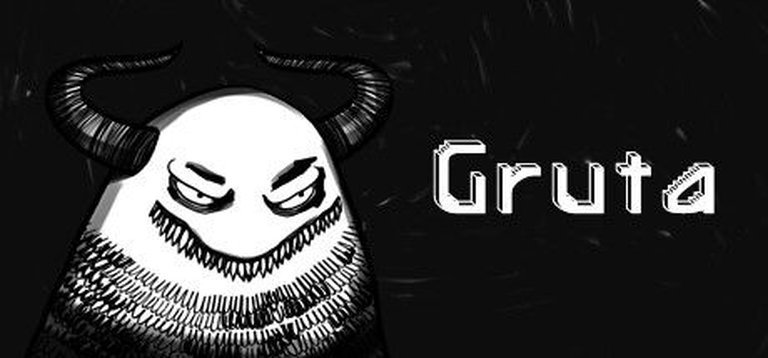
Gruta is a narrative-driven 2D platformer set in a fantastical world, where a young girl runs away to confront a monster she believes is causing her family’s troubles. Through atmospheric pixel-art and entirely textless hand-drawn cutscenes, she uncovers unexpected truths about a mysterious place, engaging in sword and shield combat against various enemies in a soulful, story-rich adventure with psychological and supernatural elements.
Gameplay Videos
Where to Buy Gruta
PC
Gruta Guides & Walkthroughs
Gruta Reviews & Reception
metacritic.com (70/100): Gruta is saved by some effective art, an impressionistic story, and controls that are so tight that they manage to make the unremarkable levels somewhat remarkable.
thexboxhub.com (70/100): But for all the confusion, it’s this story that drew us in and kept us playing.
opencritic.com (55/100): Narrative-driven 2D platformer that is a bit generic
Gruta: Review
Introduction: A Whisper in the Genre
In the vast library of indie platformers, where procedural generation and roguelike loops dominate the conversation, Gruta presents itself as a deliberate anachronism. Released by the enigmatic solo studio Capi Capi in late 2022, this compact 2D action-platformer eschews spoken or written dialogue entirely, telling its haunting story through a series of stark, hand-drawn vignettes. At first glance, Gruta appears to be a minimalist exercise—a brief, unassuming game with a running time that can be completed in a single, thirty-minute sitting. Yet, beneath its straightforward sword-and-shield mechanics lies a surprisingly potent atmospheric experience, one that prioritizes mood and ambiguity over mechanical complexity. This review argues that Gruta’s true significance lies not in its tightly polished but conventional platforming, but in its bold, almost ascetic, commitment to visual storytelling. It is a game that asks the player to piece together a fragmented, melancholic puzzle, creating a lingering unease that transcends its short runtime and simple systems. Its legacy is that of a curious, deftly crafted oddity—a game that proves profound narrative weight can be conveyed without a single word of text, even if its gameplay never fully escapes the shadow of its own simplicity.
Development History & Context: The Solo Vision of Capi Capi
Gruta is the product of Capi Capi, a name that functions as both the developer and publisher, strongly suggesting a solo or very small-team operation. The MobyGames entry, contributed in May 2023 by user Kam1Kaz3NL77 and subsequently updated, lists no other credits, underscoring the project’s intimate, personal scale. This context is crucial: Gruta is not an institutional indie title from a studio like Playdead or Supergiant Games, but a passion project borne of a specific, focused vision.
The game’s development likely navigated the classic constraints of solo or micro-studio work: limited time, budget, and manpower. These constraints, however, appear to have been inverted into creative strengths. The decision to forgo text and voice acting eliminates a major resource sink (localization, voice recording, complex writing) and instead channels effort into the game’s core artistic and design pillars: its distinctive 2.5D parallax visual style and its hand-drawn cutscenes. The technological “constraint” of the pixel-art aesthetic, combined with the clever foreground/background scrolling illusion, creates a unique visual identity on a shoestring budget. This approach harks back to the resourceful ingenuity of early indie darlings like Limbo (which Gruta is frequently compared to in spirit), but with a distinct, almost hand-drawn storybook feel.
Gruta emerged into a gaming landscape in late 2022/early 2023 that was crowded with narrative-driven indies. Titles like Norco, The Case of the Golden Idol, and Blair Witch were exploring text-light or diary-based storytelling. Against this backdrop, Gruta’s completely textless, purely visual narrative was a stark, purist statement. Its initial Windows release on December 24, 2022 (followed by console ports in May 2023 via publisher Ratalaika Games S.L., a known specialist in multi-platform indie releases) positioned it as a quiet, contemplative holiday title, more elegy than action romp. The Steam store description’s subtitle, “Prologue of the Gloomy Whispers,” further hints at a potentially larger, episodic vision that may never materialize, adding a layer of speculative melancholy to its history.
Narrative & Thematic Deep Dive: The Silence of Whispers
Gruta’s narrative is its most polarizing and defining feature. There is no dialogue, no text boxes, no lore collectibles with paragraphs of backstory. The only expository device is a series of black-and-white, hand-drawn comic-style cutscenes that play after completing each level. These vignettes are the game’s soul, presenting a sequence of surreal, often brutal imagery: soldiers bursting into a home, a child climbing a floating staircase amidst chaos, floors littered with bones, a monstrous figure looming over arguing adults.
The thesis presented in the official description—”a child runs away to fight the monster she thought was causing trouble in her family”—serves as a fragile interpretive scaffold. As critic Dave Ozzy from TheXboxHub astutely observed after multiple playthroughs, “I still couldn’t tell you what the story is about. A child defeats a demon who has possessed their arguing parents? A child is coerced into fighting a demon by their manipulative parents? A wartorn country causes demons to grow on every doorstep? It could be any or all of these.” This intentional ambiguity is the point. The narrative operates on a psychological and symbolic level, not a literal one.
The core themes emerge from the interplay of gameplay and these cutscenes:
* Childhood Trauma and Agency: The protagonist is a small child armed with a weapon too large for her, venturing into a hostile, strange world. This immediately frames the journey as a metaphor for a child’s attempt to comprehend and resolve adult problems (marital strife, societal violence) that are beyond her control. Her agency is both her driving force and her tragic limitation.
* The Ambiguity of Evil: The “monster” is never clearly defined. Is it a literal demon? A manifestation of familial discord? The societal ills represented by the soldier imagery? The game suggests the “monster” may be systemic, or even a projection of the child’s desperate need to identify a single source of pain.
* The Failure of Communication: The complete absence of text replicates a child’s experience of overhearing adult arguments—they hear tone, see violence, but lack the context for words. The cutscenes, like fragmented memories or nightmares, show the result of conflict (bones, invasions, monstrous forms) but not the conversation. The truth is in the grim tableaus, not in explanations.
* Doom and Inevitability: The cutscenes are dripping with a “soup-thick sense of doom,” as Ozzy put it. The art style—rough, inked, and monochrome—evokes woodcut prints or war illustrations, grounding the fantasy in a grim, almost historical reality. This creates a pervasive atmosphere of learned helplessness and pervasive dread.
The narrative’s “abstract” quality is both its greatest strength and a potential flaw. It invites deep, personal interpretation and lingers in the mind. However, for players seeking a clear plot or character arc, it can be frustrating, a puzzle box with no guaranteed solution. Gruta trusts the player to feel the story’s emotional weight rather than understand its literal events.
Gameplay Mechanics & Systems: Competent, Conventional, Concise
If the narrative is abstract, the gameplay is brutally concrete. Gruta is a 2D side-scrolling action-platformer with a control scheme reminiscent of classic 16-bit era titles, stripped to its absolute essentials.
Core Loop & Movement: The player controls the child protagonist through a series of hand-crafted, discrete levels. The move-set is famously sparse:
* Sprint: A basic horizontal movement.
* Jump: The primary traversal tool. Described by TheXboxHub as “a decent jump” with “precise and tight” control, it is responsive and feels grounded. There are no aerials—no double-jump, wall-jump, or dash.
* Sword Attack: A short-range swipe. Its limited reach makes it feel almost perilous to use, forcing the player to get dangerously close to enemies.
* Shield: This is the mechanical star. It can be held up indefinitely, blocking all physical enemy attacks and deflecting projectiles. The deflection mechanic is uniquely potent: reflected bolts or spells plough through every enemy in their path, creating a powerful, screen-clearing tool that rewards careful timing and positioning.
This simplicity is not a bug but a feature. With a total playtime of roughly 30 minutes, there is no room for Metroidvania upgrades or skill trees. The challenge is derived from mastering this small toolset within escalating environmental hazards.
Combat & Enemy Design: Enemies are archetypal: slow-moving blobs that chase, bouncing enemies, and ranged crossbowmen that can camouflage into the background (a noted source of surprise hits). The combat loop is a risk/reward exercise: use the safe but slow shield push or the risky but efficient sword swipe? The genius lies in the shield’s offensive utility, turning a defensive tool into the primary means of clearing groups. Boss encounters typically follow the “reflect projectiles back at the boss” pattern, a classic trope executed competently.
Level Design & Progression: Levels are linear paths to an exit, populated with standard platforming obstacles: static and moving platforms, spikes, and pits. TheXboxHub critiques this as “common-as-muck” and “unremarkable, with challenges that feel familiar from dozens of other games.” There is little environmental storytelling through gameplay; the world is a literal obstacle course. The increasing complexity comes from more intricate enemy placements and platforming sequences, not from new mechanics. This is where the gameplay arguably fails to match the narrative’s ambition—the levels feel like functional containers rather than expressive spaces.
Flaws & Omissions: The review highlights two significant pain points:
1. Broken Achievements: At least two achievements were reported as not unlocking, a frustrating oversight for completionists.
2. No Level Select: After finishing the game, there is no way to revisit individual levels to hunt for collectibles or achievements, forcing a full replay. This is a baffling omission for such a short game and shows a lack of polish in the user experience.
In summary, the gameplay is tight, responsive, and fundamentally sound, but also derivative and brief. Its “unassuming competence” is its hallmark—it never feels bad, but rarely feels inspired or innovative beyond the shield’s reflection property.
World-Building, Art & Sound: The Illusion of Depth
Where Gruta transcends its conventional mechanics is in its aesthetic presentation, which creates a powerful, cohesive atmosphere.
Visual Direction & 2.5D Effect: The game employs a stylized pixel-art aesthetic with a masterful parallax scrolling technique. As TheXboxHub describes it, “the foreground moves much slower than the background,” creating an “optical illusion-like effect” and a “faux-3D” feel. This is not true 3D but a clever 2.5D trick that gives the simple line art “a literal extra dimension.” This technique does heavy thematic lifting; the exaggerated depth makes the world feel simultaneously tangible and unreal, like a memory or a dreamscape. The environments are sparse but evocative—dark caverns, ruins, and ambiguous structures that suggest a place outside of normal reality.
Hand-Drawn Cutscenes: The narrative beats are delivered through gorgeously rendered black-and-white, hand-drawn comic panels. These are not just simple illustrations; they are dynamic, with panning and zooming effects that give them a cinematic quality. Their stark, ink-wash style is profoundly effective, communicating weighty themes of violence, despair, and mystery without a single syllable. They are the game’s emotional core.
Sound Design & Music: The game features an original soundtrack (OST), though specific details are sparse in the sources. It is consistently described as “ambient” and “atmospheric” in user tags, implying a score that prioritizes mood over melody—likely droning, eerie, or minimalist to complement the visuals. The sound design in gameplay is functional: footsteps, enemy noises, and the satisfying clang of shield and sword. The lack of voice acting or textual narration is a conscious audio design choice, forcing the player to “listen” to the images instead.
Together, the parallax world and the cutscenes build a setting that is Fantasy in genre (MobyGames classification) but feels more akin to psychological horror or gothic fairy tale. It is a place of deep shadows and lingering unease, where the “monster” is as much a concept as a creature.
Reception & Legacy: A Curious Cult Gem
Gruta’s reception has been modest and mixed, fitting its nature as a niche indie title.
Critical Reception: Metacritic lists a Metascate of “tbd” pending sufficient critic reviews, but the one notable critic review from TheXboxHub (3.5/5) provides a balanced summation. The review praises the “moody and effective comic book scenes,” the “lovely parallax, 2.5D art style,” and the “tight as a drum platforming.” Its criticisms are equally clear: gameplay that “couldn’t be more middle-of-the-road,” a story “slightly too abstract,” and the aforementioned achievement bugs. This encapsulates the critical consensus: a game saved from mediocrity by its artistic vision and polish, but never reaching classic status due to its conventional mechanics.
Commercial Performance & User Response: Sold at a budget price ($0.99 on Steam initially, ~$4.99-$6.86 on consoles depending on region), it has sold to a small audience. Steam shows 9 user reviews (8 positive, 1 negative), with players frequently using tags like Atmospheric, Narrative, Psychological, and Story Rich. The community response on Steam is minimal, with one discussion thread simply titled “To Be Continued?” expressing hope for a sequel. This highlights its status as a cult curiosity—appreciated by a few, unknown to many.
Legacy and Influence: Gruta is unlikely to have a sweeping industry impact. Its direct influence is minimal due to its limited reach. However, it stands as a successful case study in minimalist, visual storytelling. It shares DNA with Limbo and INSIDE but with an even greater reduction in mechanical interplay between gameplay and narrative. In an era where indie games often feel bloated with content, Gruta is a reminder of the power of brevity and specificity. Its legacy may be as a proof-of-concept: that a compelling, ambiguous story can be told in under an hour without a word of dialogue, and that simple mechanics can serve a potent atmosphere when wrapped in a strong artistic vision. Its “Prologue” subtitle suggests Capi Capi may have intended to build on this foundation, but no sequel has been announced, leaving it as a singular, enigmatic artifact.
Conclusion: An Enduring Whimper
Gruta is a paradox: a mechanically simple platformer elevated by an artistically bold and emotionally resonant narrative gimmick. It is not a great platformer by any objective measure—its level design is derivative, its scope is tiny, and its systems are bare. But it is a fascinating and often affecting experience. The player’s time is spent not mastering complex combos, but absorbing a sequence of beautiful, horrifying images and trying to stitch them into a coherent, tragic story.
Its flaws are real: the brief runtime feels like a missed opportunity for deeper environmental storytelling to match the cutscenes, the achievement bugs are sloppy, and the lack of a level select is perplexing. Yet, its strengths are potent and unique. The parallax 2.5D effect remains visually striking, the hand-drawn cutscenes are masterclasses in silent storytelling, and the atmosphere of dread is thick and memorable. For the price of a cup of coffee, Gruta offers a short journey into a uniquely bleak and beautiful world.
In the grand canon of video game history, Gruta will not be listed among the genre-defining masterpieces. It will not be taught in game design courses for its mechanics. Instead, it will occupy a quiet, respected corner as an exemplar of indie pragmatism and artistic ambition in tension. It demonstrates how constraints—no text, short length, small team—can force creativity rather than limit it. Its place is not as a pillar, but as a poignant, whispered footnote: See how much feeling can be wrung from so little? For that reason, while its gameplay may be forgettable, the grim, wordless story of the child and her monster lingers long after the console is turned off. It earns its keep as a compelling, if deeply flawed, piece of interactive art.