
- Release Year: 2004
- Platforms: PlayStation 2, Windows
- Publisher: Midas Interactive Entertainment Ltd., Noviy Disk
- Developer: Kuju Entertainment Ltd.
- Genre: Driving, Racing
- Perspective: Behind view
- Game Mode: Co-op, Single-player
- Gameplay: Automatic gears, Car damage, Driving aids, Track racing
- Setting: Automobile, Vehicular
- Average Score: 54/100
Description
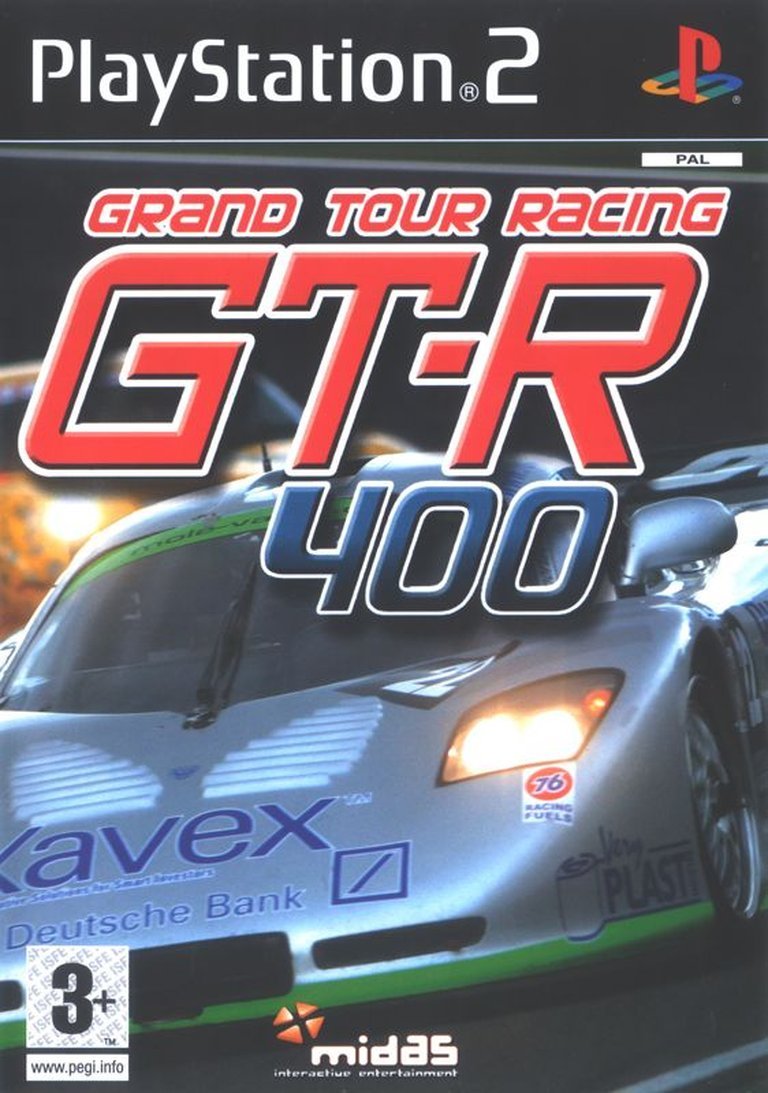
GT-R 400 is a touring car racing game offering two distinct car types: production models and GT cars. The game features closed-circuit racing from a third-person perspective, with customizable gameplay options like car damage, driving aids, and automatic gears. Licensed cars include the Ascari KZ1 and Mosler MT900, racing across 16 tracks spanning three continents. Game modes include quick race, split-screen multiplayer, three championships per car type, and time trials that unlock a secret supercar upon completion.
Gameplay Videos
GT-R 400 Free Download
GT-R 400 Cracks & Fixes
GT-R 400 Patches & Updates
GT-R 400 Mods
GT-R 400 Reviews & Reception
gamefaqs.gamespot.com (50/100): Bad handling shoots down any possibility of this being a budget gem.
GT-R 400 Cheats & Codes
GT-R 400 (PAL-Unk) Playstation 2
| Code | Effect |
|---|---|
| 90110FF0 0C0443A4 | |
| 90214C4C 0C076984 |
GT-R 400: Review
Introduction
In the crowded pantheon of racing games, few titles occupy such a peculiar niche as GT-R 400. Released in June 2004 by Kuju Entertainment and published by Midas Interactive Entertainment, this PlayStation 2-exclusive entry promised a “glorious sports car racing simulation” with licensed GT cars and global circuits. Yet, its legacy is a study in contrasts: a budget title with aspirations of greatness, hampered by technical and design limitations that rendered it more of a footnote than a landmark. This review dissects GT-R 400 as both a product of its era and a cautionary tale about ambition constrained by execution. While it boasts licensed hardware and a competent visual foundation, its handling flaws, anemic content, and sterile presentation ultimately relegate it to the realm of niche curiosities—challenging players to find merit beneath its veneer of mediocrity.
Development History & Context
GT-R 400 emerged from the British studio Kuju Entertainment, a developer with a diverse portfolio spanning Microsoft Train Simulator to the Battalion Wars series. Founded in 1998 by Ian Baverstock and Jonathan Newth (a name derived from Japanese numerology for “I” and “J”), Kuju was known for technical proficiency but rarely AAA polish. This project was explicitly commissioned by Midas Interactive, a publisher synonymous with budget-priced games, positioning GT-R 400 as a flagship for their “next generation of budget PC gaming” (IGN). The PlayStation 2 version arrived in June 2004, coinciding with the platform’s maturity but also the dominance of titles like Gran Turismo 4 and Need for Speed: Underground. Kuju’s team of 25 developers, credited across production, art, and programming, had a brief window to deliver a GT-racing experience on a shoestring budget. The result was a game that mirrored its publisher’s ethos: ambitious in scope but compromised by technological constraints, particularly on PlayStation 2’s limited hardware. The 2006 Windows port, handled by Midas and Russian publisher Noviy Disk, offered little improvement beyond accessibility, cementing GT-R 400 as a fleeting experiment rather than a cornerstone.
Narrative & Thematic Deep Dive
While GT-R 400 lacks a traditional narrative, its thematic core revolves around the allure and rigor of GT-class racing. The game’s premise is simple yet evocative: players compete as “British 2003 GT Champion Martin Short” (Computing History), embodying elite drivers in a world of precision machinery. The licensed Ascari KZ1 and Mosler MT900—real supercars with bespoke liveries and sponsor decals—serve as conduits for this fantasy, emphasizing authenticity through meticulous branding. However, the absence of characters, story arcs, or rival dialogue reduces the experience to a sterile competition. The championship mode’s structure—requiring top-three finishes to progress—implies a journey toward mastery, but without character development or narrative stakes. This thematic vacuum aligns with the game’s budget origins: it prioritizes mechanical spectacle over emotional resonance, leaving players to extract satisfaction from lap times and leaderboard positions alone. The sole thematic hook—unlocking a “secret supercar” by conquering all 15 time trials—feels like a hollow reward, lacking the narrative payoff of a true underdog story.
Gameplay Mechanics & Systems
GT-R 400’s gameplay is a study in compromise, blending accessibility with frustrating limitations.
-
Core Racing Mechanics:
Races employ a third-person perspective with a focus on touring car dynamics. The handling model is polarizing: praised for its “realistic damage” (Computing History) but criticized for “pointy” controls and unpredictable physics (GameFAQs). Steering via the PlayStation 2’s analog stick yields inconsistent results, with lift-off oversteer and fishtailing making smooth cornering impossible. The solution, as noted in one review, is to “tap the D-pad instead of using the stick,” a workaround that betrays the intended simulation feel. -
Car Customization & Progression:
Customization is minimal beyond three adjustable options: damage severity, driving aids (e.g., traction control), and automatic gears. The two base cars are functionally identical, with upgrades limited to faster variants or unlockable liveries. Progression relies on championships and time trials: three championships per car type (production/GT) require top-three finishes, with three retries allowed per race. This system is punitive yet forgiving, though the lack of setup options (e.g., gear ratios, tire pressure) robs depth. -
Game Modes:
- Quick Race: Instant action for 1-2 players in split-screen, ideal for casual play but lacking replayability.
- Championship Mode: Six championships across car types, each involving repetitive three-lap races on eight tracks (with reverse layouts). AI opponents drive pre-set lines, ignoring collisions, leading to “inexplicably slow” pacing on certain tracks (GameFAQs).
- Time Trial Mode: 15 challenges with unlockable rewards (e.g., new liveries). Completing all championships and time trials unlocks a 16th trial revealing a secret supercar—a rare high point in an otherwise sparse reward structure.
-
Damage System:
Real-time damage affects performance, with panels deforming on one car and detaching on another. While a technical achievement for a budget title, its implementation is superficial, failing to significantly alter racing strategy beyond cosmetic wear. -
UI & Controls:
The interface is functional but uninspired, with no replay system or lap history beyond fastest times. The lack of manual gears (automatic only) further simplifies the experience, alienating sim enthusiasts.
World-Building, Art & Sound
GT-R 400’s world is defined by its circuits and car models, though both suffer from repetition and lack of identity.
-
Track Design:
Sixteen tracks span three continents but suffer from a “blend into each other” uniformity (GameFAQs). Courses include generic circuits with animated crowds and pit crews, but few landmarks or unique challenges. The fantasy layouts prioritize speed over creativity, failing to evoke the cultural diversity implied by the “Grand Tour” moniker. -
Visual Direction:
Licensed cars are rendered with impressive detail, showcasing sponsor decals and reflective surfaces. Tracks feature decent textures and environmental objects (e.g., trees, barriers), but animations are stiff. The damage system, while technically noteworthy, is limited to visual deformation rather than functional complexity. Overall, the visuals outpace the gameplay but are overshadowed by contemporaries like Gran Turismo 3. -
Sound Design:
Audio is the game’s weakest element. Engine sounds loop audibly, with no dynamic range or depth. Tire squeals and collision effects are perfunctory, while a lack of in-game music or commentary drains atmosphere. The soundtrack’s absence underscores the sterile nature of the experience, reducing races to mechanical exercises.
Reception & Legacy
GT-R 400’s reception was muted, reflecting its status as a niche budget title. On MobyGames, it holds an average player score of 2.9/5 based on three ratings, with no professional reviews archived. Contemporary sources like IGN hyped it as a “revolution in budget gaming” but offered no critical analysis. The GameFAQs review (2019) encapsulates post-launch sentiment: a 5/10 score for “bad handling” and “limited content,” calling it “about as limited as a budget racing game can get.” Players noted redeeming qualities—such as the unlockable supercar and licensed cars—but dismissed it as forgettable.
Commercially, the game faded quickly. Its 2006 PC port, patched for compatibility with Windows 7/8/10, found a cult following among abandonware communities but no mainstream sales. Kuju’s legacy includes more celebrated titles (e.g., Battalion Wars), while Midas continued its budget-racing output with titles like Crescent Suzuki Racing. GT-R 400’s influence is negligible; it neither innovated nor inspired, serving instead as a cautionary example of licensed content failing to compensate for mechanical shortcomings. Its enduring presence on retro gaming forums highlights curiosity value rather than reverence.
Conclusion
GT-R 400 stands as a paradox: a game that leveraged licensed hardware and technical ambition yet collapsed under the weight of its own compromises. Kuju’s development acumen shines in its car models and damage system, but the handling flaws, repetitive content, and sterile presentation undermine any potential. For budget-racing aficionados, it offers a fleeting glimpse of GT-class thrills; for most, it’s a relic of an era when ambition frequently outpaced execution. Its legacy is one of missed opportunities—a reminder that even licensed excellence cannot salvage a core experience lacking joy and depth. In the annals of racing history, GT-R 400 is a forgotten checkpoint, not a milestone. Verdict: 5/10 – A competent but ultimately hollow experience, worth a nostalgic glance but not a lasting place in any collection.