
- Release Year: 2005
- Platforms: PlayStation 2, PlayStation 3, Windows
- Publisher: OG International Limited, Oxygen Interactive, Trend Redaktions- und Verlagsgesellschaft mbH
- Developer: Aqua Pacific Ltd.
- Genre: Driving, Racing
- Perspective: 1st-person
- Game Mode: Single-player
- Gameplay: Arcade, Street racing, Vehicle simulator
- Setting: Berlin, France, London, New York City, Paris, Tokyo
Description
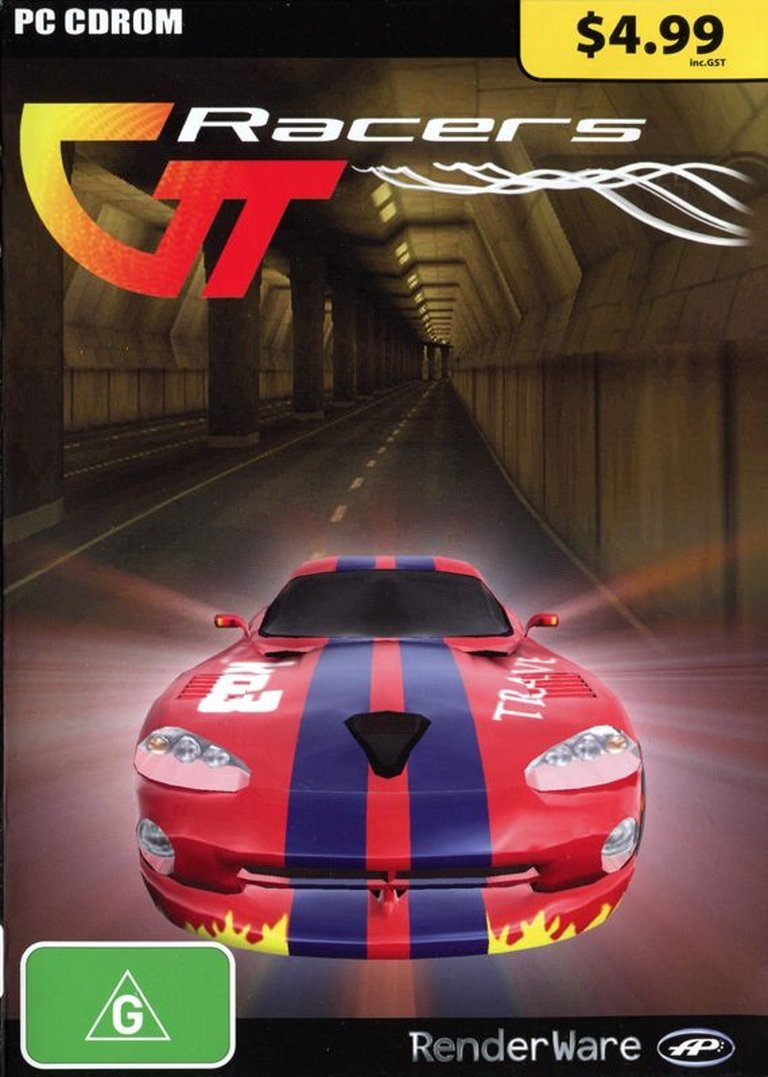
GT Racers is an arcade-style street racing game developed by Aqua Pacific, set in five major cities: Berlin, London, Paris, Tokyo, and New York City. Players compete on ten tracks, each with day and night variants, using eleven cars based on real-life models. The game features quick race and championship modes (Bronze, Silver, Gold), where completing championships unlocks new vehicles, and supports split-screen multiplayer on platforms like PlayStation 2 and Windows.
GT Racers Free Download
GT Racers: A ForgottenFootnote in a Landmark Year
Introduction: The Ghost in the Machine of 2005
To understand GT Racers, one must first understand the year it emerged into: 2005. This was a Cambrian explosion for the racing genre, a period that birthed or solidified legends. It saw the release of Gran Turismo 4, the debut of Forza Motorsport, the peak of Need for Speed: Most Wanted, the kinetic fury of Burnout Revenge, and handheld revolutionaries like Ridge Racers on PSP. Into this arena of titans stepped GT Racers, a game so obscure, so critically eviscerated, and so conceptually thin that its very existence feels like a paradox. How could a title with such minimalist design and technical poverty be released in the same window as polygonal masterpieces? This review will argue that GT Racers is not merely a bad game, but a fascinating case study in budget-constrained development, publisher desperation, and the brutal Darwinism of the marketplace. It represents the absolute nadir of the arcade-style street racer on the PlayStation 2—a game that misunderstood its audience, its hardware, and its moment in history, ultimately serving as a cautionary footnote to an otherwise unforgettable year.
Development History & Context: The Aqua Pacific Pipeline
GT Racers was developed by Aqua Pacific Ltd., a British studio with a portfolio that speaks volumes. Their history includes titles like Aqua GT (2000) for Dreamcast and PS1—a game already noted for its rough edges—and a slew of budget and handheld titles. Aqua Pacific operated in the challenging space of licensed and budget software, often acting as a work-for-hire studio. GT Racers was published in Europe by Oxygen Interactive and Trend Redaktions- und Verlagsgesellschaft mbH, companies known for value-priced and often niche releases, particularly in German-speaking markets.
The technological context is one of transition and constraint. By 2004-2005, the PlayStation 2 was a 5-year-old console, its hardware limits well-mapped. Yet, teams like Polyphony Digital, Bizarre Creations, and Criterion were still extracting groundbreaking visuals and physics from the hardware. GT Racers, in stark contrast, feels like a title built for an earlier generation. Its “potthässliche” (ugly-as-sin, per PC Action) cityscapes, simplistic car models, and single, inflexible camera perspective suggest a project hamstrung by budget, time, or both. The vision, if one existed, was to deliver a generic, city-based arcade racer with real-world locales—a concept already executed better by countless predecessors. The gaming landscape of 2005 had no patience for such an unambitious, technically barren entry when sandbox racers (Midnight Club 3) and polished arcade experiences (PGR3) were redefining expectations. GT Racers arrived not as a competitor, but as an anachronism.
Narrative & Thematic Deep Dive: The Void of Story
In a devastating oversight for any game released post-Need for Speed: Most Wanted (2005), GT Racers possesses no narrative framework, no characters, and no dialogue. There is no protagonist, no rival, no cutscene, no justification for why you are racing. The “Championship” modes (Bronze, Silver, Gold) are pure, abstract progression ladders with no story whatsoever.
This creates a profound thematic vacuum. Where other racers of the era used plot to contextualize racing—Most Wanted‘s blacklist, Burnout‘s crash-centric bravado—GT Racers offers nothing. The selection of cities (Berlin, London, Paris, Tokyo, New York) is purely cosmetic, functioning only as wallpaper for the circuits. There is no sense of place, culture, or rivalry. The “real-life car” basis (eleven vehicles) is listed mechanically, not culturally or narratively. The game fails even at the basic thematic level of “street racing”—there is no illegal race vibe, no cop chases, no tuning culture. It is racing stripped of all reason to be, a hollow simulation of speed without a soul. The only “theme” is blunt utility: unlock the next car by completing the next tier. The thematic depth is equivalent to a practice lap.
Gameplay Mechanics & Systems: A Study in Deficiencies
The core gameplay loop is as basic as the narrative. The two single-player modes are Quick Race and Championship.
- Championship is the spine of the game, divided into Bronze, Silver, and Gold tiers. Completing each unlocks new content: Bronze unlocks racing decals (replacing standard colors), Silver unlocks the “OAC Takemusu” car (maxed acceleration/handling), and Gold unlocks the “Imperiale” car (maxed speed/handling). This is a standard, if dated, progression model. The tracks are ten in total, two per city (day/night), but they are simple circuits, not open-world sprints.
- Quick Race allows customizing laps (1-10) on any unlocked track with any unlocked car.
The systems, however, are where the game collapses critically:
- The Camera Catastrophe: As ruthlessly criticized by PC Games (“Außer der Stoßstangenkamera gibt es keine andere Ansicht” / “Besides the bumper camera, there is no other view”) and PC Action, the game offers only a single, fixed “bumper” or chase cam. There is no cockpit view, no far chase, no cinematic options. This creates an immediate and crippling lack of player control over their experience. The “unübersichtliche” (unclear/confusing) perspective makes judging turns and track boundaries a constant, frustrating guessing game.
- Arcade Handling, Zero Fun: The driving physics are described as “nervt” (annoying) by GameStar. Cars lack weight, feedback, or a sense of connection to the road. The handling is neither sim-cade nor arcade—it is simply bad, offering no tactile pleasure or challenge-based reward.
- AI That Isn’t There: PC Action notes that competitors “lediglich bis zur dritten Kurve” (only remain until the third corner) before either being lapped or “kleben” (stuck) on scenery. The AI is non-existent, a mere drone procession that fails to provide competition, turning races into solitary time trials with pointless adornments.
- Car & Content Scarcity: Eleven “fictional” cars (though based on real-life designs) is a paltry roster for a genre where car collection is a key pillar. The unlockables are limited to a few performance tweaks and decals, offering little long-term motivation.
- UI & Presentation: The UI is implied to be as basic as the rest of the package, with no mention of any innovative or helpful features. The menus are likely functional and forgettable.
The core loop is “select car, select track, race, unlock next tier.” Without engaging driving, a useful camera, or intelligent opponents, this loop becomes a chore, not a game.
World-Building, Art & Sound: Soulless Postcards
The game’s setting is its only nominal ambition: ten tracks recreate “potthässliche Nachbildungen” (ugly-as-sin replicas, PC Action) of five global metropolises: Berlin, London, Paris, Tokyo, and New York. Each has a day and night variant.
Visuals: The criticism is unanimous. The cities are described as ugly, unrealistic, and technically dated. The PS2 was capable of dense, atmospheric cityscapes (Midnight Club 3, PGR3), but GT Racers presents empty, blocky,纹理less (texture-less) environments. There is no traffic, no pedestrians, no life. The tracks are closed circuits with generic buildings and landmarks tacked on poorly. The day/night cycle changes lighting but not the fundamental aesthetic bankruptcy. The car models are simple, lacking theDetail seen in contemporaries. It is a world that feels constructed from cardboard and desperation.
Sound Design: The source material is silent on the soundtrack or sound effects, which is itself telling. Likely, it features a generic, looping techno/rock soundtrack and basic engine noises with no spatial audio or impact. In an era where engine notes were being meticulously sampled (GT4, Forza), the audio here would be an afterthought.
Atmosphere: There is no atmosphere. The desolate cities, the lack of ambient sound, the sterile UI—everything creates a feeling of playing a prototype or a budget educational title. The intended vibe of “global street racing” is completely absent, replaced by a feeling of racing through a vacant, synthetic backlot.
Reception & Legacy: Critically Scrapped, Historically Erased
GT Racers was met with universal scorn from the critical press that covered it. The German magazine scores paint a picture of abject failure:
* PC Games: 33% – “Sparen Sie das Geld und gehen Sie lieber Ihr Auto waschen!” (“Save your money and go wash your car instead!”).
* PC Action: 29% – Cited the ugly cities, broken AI, and single camera as fatal flaws.
* GameStar: 22% – “Totalschaden!” (“Total loss!/Write-off!”). It was called the worst of the “Taxi Raser” clones (a genre of cheap German-market racers like Crazy Taxi imitators).
Player reception is almost non-existent. MobyGames shows only 3 player ratings averaging 1.4/5, with not a single written review. Its “Collected By” number is a mere 10 users, indicating profound obscurity. Metacritic has no scores for the GBA version, and the Moby “Moby Score” is “n/a,” reflecting its status as a non-entity.
Legacy is a kind word. GT Racers had no influence. It did not spawn sequels, inspire mechanics, or cultivate a community. It exists in the historical record solely as a data point: a game released in the greatest year for racing games that proved how low the bar could still be. It is a contrast piece. When historians discuss 2005, they cite GT4, Forza, Most Wanted. GT Racers is the silent, ugly counterexample that makes the greats look even greater. Its re-release on PlayStation 3 as a PS2 Classic in 2012 is a testament to the PS3’s vast library, not to any quality of the game itself—it was digital filler.
Conclusion: Verdict – A Historical Curiosity of Failure
GT Racers is not a “so-bad-it’s-good” cult classic. It is not an ambitious failure. It is a facile, technically bankrupt, and creatively void product that represents the worst excesses of budget game development at the end of the PS2 lifecycle. Its lack of camera options is a cardinal sin in a racing game. Its broken AI and joyless handling strip away any pretense of competition. Its ugly, lifeless world-building fails at the most basic task of creating a place to race. In a year that delivered seminal experiences that pushed the genre forward in every direction—simulation, arcade, open-world, handheld—GT Racers pushed nothing. It is a black hole of design, absorbing player time and enthusiasm without return.
Its place in video game history is secure, but not as a pioneer or a classic. It is a cautionary artifact, a benchmark for low quality in a high-water-mark era. To play GT Racers in 2005 would have been to witness the starkest possible contrast to the genre’s zenith. Today, it is a ghost—a title remembered only in database entries, in the dismissive quotes of long-dead German magazines, and in the silent, empty slots of collectors who mistakenly pressed “Add to Collection.” For the professional historian, it is a vital lesson in context: even in a golden age, the shadow of incompetence always looms. For any player, the verdict is the same as GameStar‘s: Totalschaden. Total loss.