
- Release Year: 2018
- Platforms: Windows
- Publisher: Bamboo Secrets Co., Ltd.
- Developer: Bamboo Secrets Co., Ltd.
- Genre: Action
- Perspective: 1st-person
- Game Mode: Single-player
- Gameplay: Shooter
- Setting: Fantasy
- Average Score: 86/100
- VR Support: Yes
Description
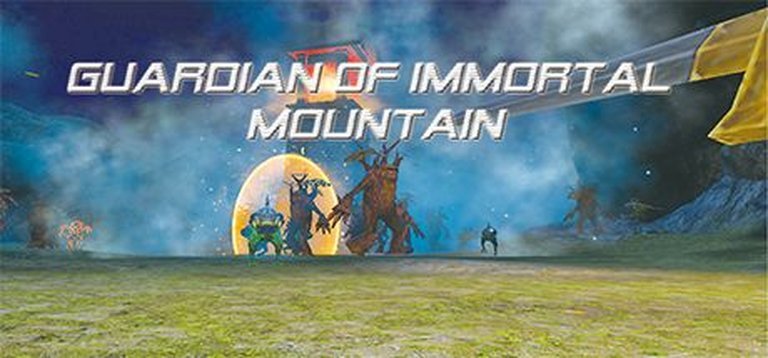
Guardian of Immortal Mountain is a fantasy VR action-shooter game developed by Bamboo Secrets Co., Ltd., released in 2018. Players assume the role of an immortal apprentice tasked with defending sacred mountain animals from soul-stealing monsters. Using motion-controlled weapons and four magical protection towers left by ancient immortals, players must battle invading forces in first-person combat while employing unique VR movement mechanics that involve swinging arms to navigate the environment.
Where to Buy Guardian of Immortal Mountain
PC
Guardian of Immortal Mountain Guides & Walkthroughs
Guardian of Immortal Mountain: A Forgotten VR Gem in the Shadows of Myth
Introduction
In the crowded landscape of VR shooters, Guardian of Immortal Mountain (2018) stands as a curious relic—an experimental free-to-play title that blends Chinese mythological storytelling with janky-but-ambitious motion-controlled combat. Developed by the obscure Bamboo Secrets Co., Ltd., this indie VR curio offers a glimpse into both the untapped potential and technical limitations of early consumer-grade virtual reality. While far from a masterpiece, its inventive marriage of tower defense mechanics and mystical East Asian folklore makes it a fascinating subject for analysis, particularly as a case study in how cultural specificity and VR novelty intersect in niche gaming spaces.
Development History & Context
The Studio and Vision
Bamboo Secrets Co., Ltd., a Chinese developer with no other known titles, positioned Guardian of Immortal Mountain as a passion project steeped in wuxia (martial arts fantasy) traditions. Built using the Unity engine, the game targeted the VR boom of the late 2010s, when headsets like the HTC Vive and Oculus Rift were gaining traction but still struggled with mainstream adoption. The studio’s vision was clear: to create an immersive, motion-controlled fantasy shooter that doubled as a love letter to tales of immortal warriors and nature’s guardianship—a stark contrast to the cyberpunk or horror themes dominating VR at the time.
Technological Constraints
Released in May 2018, the game arrived during VR’s “awkward adolescence,” where developers grappled with locomotion nausea and controller ergonomics. Guardian’s reliance on arm-swinging movement—a common albeit polarizing solution to motion sickness—reflected these growing pains. With minimum specs requiring a GTX 970 and Intel i5-4590, it catered to mid-tier PC-VR setups, though its lean 800MB file size hinted at budgetary constraints. Notably, the game launched with only its fifth chapter completed, suggesting a troubled development cycle or early access-style rollout that never fully materialized.
Narrative & Thematic Deep Dive
Plot and Characters
The premise is archetypal yet evocative: Players assume the role of an unnamed apprentice to an immortal sage, tasked with defending a sacred mountain and its animal inhabitants from a horde of soul-stealing monsters. These invaders deploy a corrupting “magic tower” to transform wildlife into monstrous thralls, framing a simple but resonant ecological allegory. The narrative intentionally channels Chinese mythological motifs—the mountain as a liminal space between mortal and divine, the apprentice’s journey toward enlightenment through protection rather than conquest—but lacks depth due to minimal dialogue and environmental storytelling.
Themes and Symbolism
Beneath its surface-level action, Guardian explores themes of balance and responsibility. The four defensive towers left by the immortals symbolize harmony between humanity and nature, while the monsters represent industrialization’s encroachment on sacred spaces. The “magic energy” system—where players funnel resources into towers to unlock abilities—mirrors Taoist concepts of Qi cultivation. However, these ideas remain underdeveloped, relying on players’ familiarity with wuxia tropes rather than explicit narrative reinforcement.
Gameplay Mechanics & Systems
Core Loop and Combat
The game hybridizes wave-based shooting and light tower defense. Players wield two weapons (likely a melee blade and ranged projectile, per Steam tags) while managing “magic energy” to empower static towers. The arm-swing locomotion—praised by some for its physicality but criticized as imprecise—forces players into a rhythmic dance of dodging, shooting, and scrambling to recharge towers. Reviews highlight clunky hit detection and repetitive enemy AI, though the VR perspective amplifies tension during ambushes.
Innovations and Flaws
Guardian’s standout feature is its tower-energy synergy: Players must physically interact with towers (via motion-controlled gestures) to harvest energy, creating moments of strategic desperation. However, the lack of “smooth locomotion” options (noted in Steam forums) and limited weapon variety stifled longevity. With an average playtime of 2.7 hours (per Niklas Notes), the experience feels more like a proof-of-concept than a fleshed-out campaign.
World-Building, Art & Sound
Visual Design
While no screenshots survive on MobyGames, Steam tags like “Fantasy” and “Violent” suggest a aesthetic blending serene natural vistas with grotesque, mutated creatures. The mountain setting likely draws from Zhangjiajie’s misty peaks—a common inspiration for Chinese fantastical landscapes—but technical limitations presumably resulted in low-poly environments and texture pop-in.
Sound and Atmosphere
No audio details exist in available sources, but one can infer a soundscape of wind-swept forests, creature snarls, and ethereal chimes to underscore the mystical tone. The absence of voice acting (given the minimalist plot) shifts emphasis to environmental ambiance, though VR’s spatial audio potential may have been underutilized.
Reception & Legacy
Launch Reception
The game garnered a 85% positive rating across 14 Steam reviews, with players praising its novel premise and cultural authenticity. Negative reviews focused on mechanical jank, particularly the “arm fatigue” from swing-based movement and incomplete story (only Chapter 5 was available at launch). Despite being free-to-play, it failed to attract a sizable audience, with only 10 players tracked by MobyGames.
Long-Term Impact
Guardian left no discernible mark on the industry, though it presaged trends like VR folklore revival (seen later in A Fisherman’s Tale and The Wandering Village). Its fusion of tower defense and motion controls remains unique, potentially influencing indie hybrids like Ironlights. Today, it lingers as a cult oddity—a reminder of VR’s untapped potential for culturally specific storytelling.
Conclusion
Guardian of Immortal Mountain is neither a triumph nor a disaster, but rather a poignant “what if” in VR history. Its ambitious blend of wuxia mythology and physical combat is hamstrung by technical limitations and scant content, yet it radiates a charm that polished contemporaries often lack. For VR completists and sinophilic gamers, it offers a fleeting but memorable hike through a realm where tradition and innovation collide—a mountain worth scaling, if only once. In the pantheon of video games, it earns a place as a footnote, but one written with enough heart to deserve excavation.