
- Release Year: 2021
- Platforms: Windows
- Publisher: Silver Cloud Games
- Developer: Silver Cloud Games
- Genre: Role-playing (RPG)
- Perspective: Behind view, Diagonal-down
- Gameplay: Turn-based
- Setting: Fantasy
Description
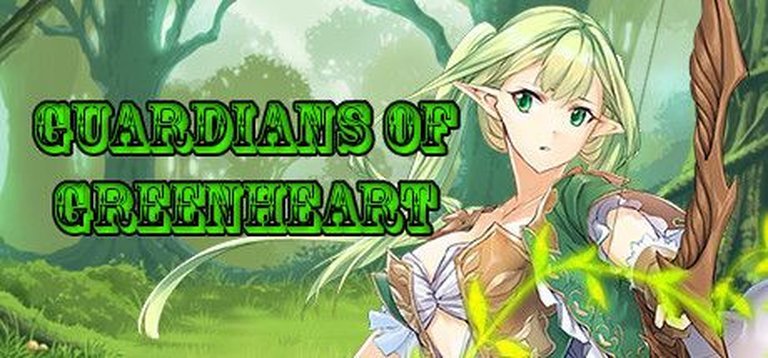
Guardians of Greenheart is a Japanese-style role-playing game set in a lush fantasy realm, developed and published by Silver Cloud Games for Windows in 2021. Players assume the role of a female protagonist navigating enchanting landscapes through turn-based combat, rich with anime-inspired visuals and classic JRPG mechanics like exploration and character development.
Where to Buy Guardians of Greenheart
PC
Guardians of Greenheart: A Niche Indie JRPG Caught in a Cosmic Shadow
Introduction: The Obscurity of a Forest Fantasy
In the bustling ecosystem of 2021’s video game releases, few titles navigated the landscape with as little fanfare as Guardians of Greenheart. Released on October 16, 2021, for Windows via Steam by the elusive Silver Cloud Games (also referenced as Blue Sky Games), this turn-based JRPG exists in a state of profound obscurity. Its very title invites immediate and inevitable confusion with the high-profile, narrative-driven Marvel’s Guardians of the Galaxy, released by Eidos-Montréal a mere ten days later. While the Marvel title captured headlines, awards, and a massive player base (surpassing 8 million), Guardians of Greenheart flickered quietly in the background, a passion project built in RPG Maker with a female-centric fantasy premise and a declared “high difficulty.” This review posits that Guardians of Greenheart is not a failed clone or a misplaced competitor, but rather a quintessential example of the indie JRPG niche: a game whose ambitions are clearly outlined in its promotional text but whose execution and reach remain largely undocumented and un-vetted by critical consensus. Its legacy is one of near-invisibility, a title whose primary historical significance may be as a cautionary data point about discoverability in a saturated market.
Development History & Context: The Challenges of the RPG Maker Ecosystem
The development context of Guardians of Greenheart is, by necessity, reconstructed from sparse metadata rather than deep behind-the-scenes reporting. The game was developed and published by Silver Cloud Games (with some storefronts listing “Blue Sky Games” as the developer, suggesting a possible rebranding, studio alias, or collaborative effort). Its most definitive technical credential is its listing under the “Game Engine: RPG Maker” group on MobyGames, placing it squarely within the long-running, accessible, and often-derided engine known for empowering solo developers and small teams to create sprite-based, top-down RPGs in the tradition of 16-bit classics.
The 2021 release window placed the game in direct chronological competition with a titan: Marvel’s Guardians of the Galaxy. While the Marvel title leveraged a billion-dollar IP, a major publisher (Square Enix), a bespoke engine (Dawn), and a multi-year development cycle by a 300+ person studio, Guardians of Greenheart represents the opposite end of the spectrum—a low-budget, likely small-team (or even solo) endeavor targeting a specific subset of players: those seeking a classic, turn-based, anime-styled fantasy RPG with a female protagonist and punishing difficulty. Its Steam tags—”JRPG,” “Turn-Based Tactics,” “Difficult,” “RPGMaker,” “Pixel Graphics”—are a precise manifesto of its intended niche. The technological constraints were not a limitation but a defining feature; the RPG Maker engine inherently dictates a certain aesthetic and systemic depth, which the developers attempted to expand with an “in-depth Battle System” and “Diverse and Attractive Skill System,” as per the official description. There is no evidence of a major marketing push, industry partnerships, or post-launch support, suggesting a straightforward digital storefront release aimed at the dedicated RPG Maker audience and browsers of Steam’s algorithm-driven discovery queues.
Narrative & Thematic Deep Dive: A Classic Fantasy Siege
The narrative of Guardians of Greenheart is presented entirely through its store description and character bios, functioning as a traditional high-fantasy premise familiar to JRPG enthusiasts. The lore establishes a ten-thousand-year cyclical conflict. The Great Forest of Greenheart, a sanctuary of elves and forest spirits, is periodically threatened by the Demon Lord Alrolloth. After a historic defeat, Alrolloth spent millennia in Hell, cultivating hatred and amassing an army of betrayed and demon-tempted Orcs. The current invasion represents an existential threat.
The thematic core is a straightforward “last stand” epic: the guardians of a mystical, life-filled forest must unite with the human knights of the kingdom of Lusnistan against a demonic legion. The description emphasizes “superior strength” of the invaders and the “only a matter of time” before Greenheart falls, creating immediate narrative tension. The female protagonist mandate is central, with the six detailed playable characters all being women (or female-presenting beings like Solara the Fairy Knight), championing archetypes: the ranger captain (Lyraesel), master assassin (Ygannea), champion warrior (Selena), grand marshal knight (Elissa), fairy knight (Solara), and nature prophet (Ruby). Their backstories, while rudimentary, touch on classic JRPG themes: overcoming prejudice (Selena’s height), political intrigue and betrayal (Elissa’s assassination and demotion), and deep symbiosis with nature (Ruby, Ygannea). The conflict is painted in stark, moralistic terms—the pure, magical forest versus the brutal, hell-spawned orcs and demons. There is no indication from the source material of complex moral ambiguity, political nuance, or subversion of fantasy tropes; the narrative appears to be a vessel for tactical combat and character collection, embodying the “Protect the sacred place” mandate common to games like Fire Emblem or Tactics Ogre but with a smaller scale.
Gameplay Mechanics & Systems: The Rigors of Turn-Based Tactics
The gameplay is explicitly framed as a challenging, skill-intensive turn-based tactical RPG. Key pillars derived from the description are:
- High-Difficulty Boss Encounters: The text repeatedly stresses that “each boss is a real challenge” and that victory requires mastering character skills and using “the right skills at the right time.” This suggests a system where enemy encounters are designed to be punishing, requiring strategic resource management (health, skill charges, consumables) and precise understanding of character roles rather than simple level-grinding.
- In-Depth Battle System & Diverse Skill System: The “in-depth” claim likely refers to a class-based or job-system approach. The six characters represent distinct archetypes (Archer, Assassin, Warrior, Knight, Fairy Knight, Nature Prophet), implying a class/skill tree or ability grid for each. The “Diverse and Attractive Skill System” points to a wide array of active and passive abilities, possibly with elemental affinities or status effect mechanics (poisons from Ygannea are mentioned).
- Character Progression: While not detailed, standard JRPG/RPG Maker progression mechanics are implied: leveling up, equipment/gear acquisition (“best equipment”), and skill point allocation to unlock or upgrade abilities.
- Perspective & UI: Listed as “Behind view, Diagonal-down” and “2D” with “Pixel Graphics” and “Anime” art style. This confirms a classic top-down, sprite-based presentation common to RPG Maker games and 90s SNES-era JRPGs. The UI would be functional, menu-driven, typical of its engine and genre.
- Lack of Innovation in Presentation: There is nomention of unique mechanics like the “Team Huddle” or momentum systems from Marvel’s Guardians of the Galaxy. The systems appear conventional for the subgenre, focusing on grid-based or tactical positioning, turn order (likely ATB or pure turn-based), and ability synergy.
Potential Flaws (Inferred): The extreme scarcity of user reviews (only 3 on Steam, all negative or mixed according to aggregated scores) and the complete lack of critic reviews on Metacritic suggest significant execution issues. Criticisms likely align with common RPG Maker pitfalls: repetitive combat encounters, unbalanced difficulty (either unfair or grindy), shallow story delivery between battles, technical bugs, or unpolished UI/UX. The “High Difficulty” tag could easily translate to “unforgiving” or “unbalanced” if not meticulously tuned.
World-Building, Art & Sound: A Pixelated Fantasy Realm
Guardians of Greenheart’s world is a high-fantasy setting centered on the eponymous Great Forest, a classic “elven sanctuary” archetype threatened by a “demon lord and orc legion.” The kingdom of Lusnistan provides a human militaristic counterpoint. The art direction is explicitly “Anime / Manga” with “Pixel Graphics,” placing it in the aesthetic lineage of games like Chrono Trigger or Final Fantasy VI as interpreted through an indie RPG Maker lens. Character designs for the six heroines follow anime tropes: the elegant archer, the stealthy assassin in tight gear, the powerfully built small-statured warrior, the noble knight in armor, the ethereal fairy, and the nature-connected druid type.
The atmosphere is one of siege and desperation against a “bloodthirsty” foe. The “Beautiful Graphics” claim in the store blurb is subjective and typical marketing language; for an RPG Maker game, it likely means competent sprite work, detailed enemy designs (orcs, demons), and lush forest environments. Sound design is the most significant unknown. There is no mention of a composer, licensed music, or original score in the provided data. It almost certainly relies on the default or commonly used RPG Maker sound libraries (MIDI-style tracks for battle, fanfare, dungeon themes), which can range from charming to grating. The lack of any audio credits or discussion in the minimal metadata suggests sound was not a highlighted feature.
Reception & Legacy: The Sound of Silence
The reception of Guardians of Greenheart is defined by its near-total absence from the critical conversation. MobyGames lists no critic reviews and explicitly states, “We need a MobyGames approved description!” indicating low community engagement. Metacritic has no critic reviews listed for the PC version. Steam shows only 3 user reviews, resulting in a dismal Player Score of 33/100 on Steambase (as of the last data scrape), with 1 positive and 2 negative reviews. The two negative reviews cited on aggregate sites likely focus on the very elements the game advertises: perhaps the difficulty being perceived as unfair, the gameplay as repetitive, or the production values as cheap.
Commercially, it is a ghost. It did not chart in the UK or US top 10s like its Marvel namesake. There is no evidence of it being featured on major storefront sales, given as a subscription service title (like PS Plus or Game Pass), or receiving any press coverage. Its “legacy” is purely as a data point in the vast library of RPG Maker titles—a game that exemplifies the engine’s use for a specific, traditionalist JRPG fantasy experience but failed to break through the noise. Its placement among “Related Games” on MobyGames linking it to other Guardians-titled games (from arcade classics to mobile RPGs) creates a misleading web of association that ultimately highlights its obscurity. The year 2021 was dominated by the critical and commercial conversation around Marvel’s Guardians of the Galaxy, and Guardians of Greenheart was utterly consumed by that gravitational pull, a victim of both its generic title and its modest confines.
Conclusion: A Curated Artifact for a Specific Audience
Guardians of Greenheart is not a game that can be judged by mainstream standards of narrative depth, production value, or innovative gameplay. It is, by all observable evidence, a faithful but flawed execution of a narrow design document: a difficult, turn-based, female-led fantasy JRPG built in RPG Maker. Its claim to an “intriguing storyline” and “in-depth battle system” remains unsubstantiated by available critique, and the abysmal user score suggests significant gaps between ambition and realization.
Its place in video game history is microscopic but specific. It serves as a contemporary artifact of the enduring RPG Maker scene, demonstrating that the engine is still used to pursue classic JRPG fantasies long after its 2000s heyday. It represents the extreme long-tail of game development, where a title can exist with virtually no audience, no press, and no discernible impact. For the scholar of indie game development or the curator of RPG Maker histories, it is a footnote—a game whose Steam page and sparse MobyGames entry constitute its entire documented existence. For the general player, it is a name that likely caused confusion in a 2021 search and was promptly ignored. In the canon of “Guardians”-titled games, it is the most obscure, a quiet forest spirit overshadowed by a cosmic, rock-and-roll superhero team. Its ultimate verdict is one of irrelevance achieved through anonymity, a game that did not fail spectacularly but rather evaporated before it could truly be seen.