
- Release Year: 2023
- Platforms: Linux, Macintosh, Windows
- Publisher: Indienova LLC
- Developer: MossTech Studio
- Genre: Strategy, Tactics
- Perspective: Diagonal-down
- Game Mode: Single-player
- Gameplay: Card game mechanics, Random number generation, Roguelite, Tower defense
- Setting: Fantasy
- Average Score: 72/100
Description
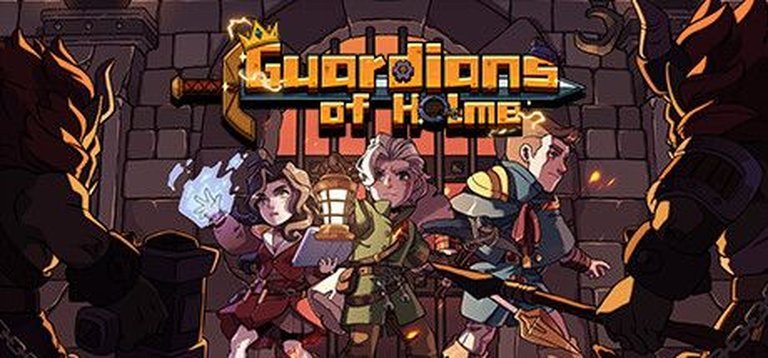
Guardians of Holme is a fantasy-themed tower defense game where players strategically defend the city of Holme against waves of enemies using traps, deployable units, and card-based upgrades. Developed by MossTech Studio, the game incorporates roguelite elements with procedurally generated maps and deck-building mechanics, allowing players to unlock new characters and customize their strategies across dynamic runs. While praised for its satisfying blend of Orcs Must Die!-style tactical depth and collectible card game adaptability, critics note occasional repetitiveness and rough edges amid its high-risk, high-reward gameplay loop.
Gameplay Videos
Where to Buy Guardians of Holme
PC
Guardians of Holme Patches & Updates
Guardians of Holme Guides & Walkthroughs
Guardians of Holme Reviews & Reception
opencritic.com (73/100): Guardians of Holme’s moment-to-moment action is initially fun, as players create complex trap setups and decide the best way to use their own special powers.
tech-gaming.com : It’s been nearly ten years since Defense Grid 2 became the pinnacle of tower defense… Guardians of Holme is probably one of DG2’s most capable challengers.
Guardians of Holme: A Razor-Sharp Blend of Tower Defense and Roguelite Ambition
Introduction
In a genre often criticized for stagnation, Guardians of Holme (2023) emerges as a daring hybrid—a tower defense game infused with roguelite deckbuilding and the sadistic charm of Orcs Must Die!. Developed by MossTech Studio and published by Indienova, Guardians of Holme reimagines the tower defense formula by empowering players to craft labyrinthine death traps while juggling randomized card draws and tactical hero choices. Though its narrative lacks depth and repetition occasionally dulls its edge, the game’s inventive fusion of systems cements it as one of the most compelling entries in the genre since Defense Grid 2. This review dissects Guardians of Holme’s triumphs and flaws, situating it within the broader tapestry of strategy gaming.
Development History & Context
MossTech Studio, a relatively new developer with credits tied to Heaven Dust and Rhythm Doctor, embraced an ambitious vision: merging tower defense’s strategic rigidity with the unpredictability of roguelite deckbuilding. Built on Unity, the game entered Steam Early Access in June 2023, refining its systems over six months before its December 2023 launch.
Released into a post-Slay the Spire landscape, where deckbuilding mechanics had permeated genres from RPGs to city builders, Guardians of Holme faced stiff competition. Yet MossTech leaned into specificity, drawing inspiration from Orcs Must Die!’s trap-centric mayhem and Kingdom Rush’s polish. The team’s Chinese roots are evident in its mythological framing—a tale of demonic resurgence rooted in East Asian fantasy tropes—while its global publisher, Indienova, ensured localization for English, Chinese, and Japanese audiences.
Technologically, the game’s 2D, cel-shaded art style prioritized readability over graphical fidelity, a pragmatic choice given its small team and focus on procedural level design. Despite ambitions, budget constraints limited voice acting and cinematic storytelling, placing gameplay at the forefront.
Narrative & Thematic Deep Dive
Guardians of Holme’s lore is functional but forgettable. A millennia ago, the Demon King was sealed away by a hero, but his disciples now resurge to besiege the Royal City. Players assume the role of artisans—Seth (trap specialist), Nicole (mage), or Horus (alchemist)—tasked with defending Holme’s last bastion. While the premise channels classic high-fantasy tropes, the storytelling is minimalist, relegated to brief text prompts and environmental cues.
Thematic resonance lies not in its plot but in its mechanics. The game juxtaposes order (tower defense planning) with chaos (roguelite randomness), mirroring the fragility of civilization against demonic chaos. Each run symbolizes a desperate stand, where incremental progress—unlocked traps, upgraded heroes—echoes the incremental hope of a beleaguered kingdom. However, critics like Softpedia rightly noted that the narrative fails to elevate gameplay, serving merely as a scaffold for its systems.
Gameplay Mechanics & Systems
At its core, Guardians of Holme is a masterclass in strategic hybridization:
Tower Defense Reimagined
- Path Manipulation: Unlike static TD games, players reshape enemy routes by deploying barriers, funneling foes into kill zones lined with spike traps, flamethrowers, and bottomless pits.
- Trap Synergies: Combos like tar pits (slow) + machine guns (DPS) or launchers (knockback) + chasms (instakill) reward creativity.
- Resource Generosity: Early funds and discounts (via relics) enable aggressive strategies, countering the genre’s typical early-game tedium.
Deckbuilding & Roguelite Layers
- Card-Based Progression: Traps and abilities are drawn from a deck, refreshed after each use. Between waves, players add/remove cards or upgrade existing ones, à la Slay the Spire.
- Branching Paths: Choose between harder routes (better rewards) or safer ones, balancing risk and deck optimization.
- Hero Diversity: Each hero boasts unique starting decks and playstyles—Seth’s physical traps vs. Nicole’s elemental spells—bolstering replayability.
Flaws & friction
- Repetition: Limited enemy types and reused assets dull later runs (GameGrin).
- Balance Issues: Health-regenerating foes and sudden flying-unit spawns can feel unfair (Tech-Gaming).
- UI Clunk: Upgrade menus are buried, and controller mapping prioritizes mouse/keyboard (Mid-Life Gamer Geek).
World-Building, Art & Sound
Visual Design
The game’s hand-drawn, cel-shaded aesthetic channels a storybook charm, with vibrant spell effects and grotesque demon designs. However, the art’s simplicity borders on rudimentary—a critique echoed by Mid-Life Gamer Geek, who called it “rushed” rather than stylized. Environments, while randomized, reuse assets heavily, diminishing the thrill of discovery.
Soundscape
Composed by Guangzhou Xingge Keke, the score blends orchestral urgency with folk-inspired melodies, heightening siege tension. Trap sound effects—crunching spikes, roaring flames—are viscerally satisfying, though lackluster voice acting leaves heroes feeling underdeveloped.
Reception & Legacy
At launch, Guardians of Holme earned a 74% critics’ average (per MobyGames) and “Mostly Positive” Steam reviews (72% of 120). Praise centered on its addictive loop and strategic depth, while criticism targeted repetition and uneven difficulty.
Its legacy lies in proving the viability of niche genre fusions. By marrying tower defense with deckbuilding, MossTech inspired peers like Rogue Tower and Deck Defenders. Though it hasn’t dethroned titans like Defense Grid 2, its Steam Deck compatibility and mod-friendly design suggest enduring community engagement.
Conclusion
Guardians of Holme is a flawed gem—a game that sacrifices narrative depth and visual polish to deliver razor-sharp gameplay innovation. Its card-driven tower defense loop is among the genre’s most inventive, offering dozens of hours of strategic experimentation. While it stumbles in pacing and presentation, its bold fusion of mechanics secures its place as a cult classic, a testament to the creativity thriving in indie development. For tower defense veterans and deckbuilding enthusiasts, Guardians of Holme is a worthy siege to endure.