
- Release Year: 2024
- Platforms: Nintendo Switch, Windows
- Publisher: Plug In Digital SAS
- Developer: Team Delusion
- Genre: Action, Puzzle
- Perspective: Diagonal-down
- Game Mode: Single-player
- Gameplay: Platform, Puzzle elements
- Setting: Fantasy
- Average Score: 75/100
Description
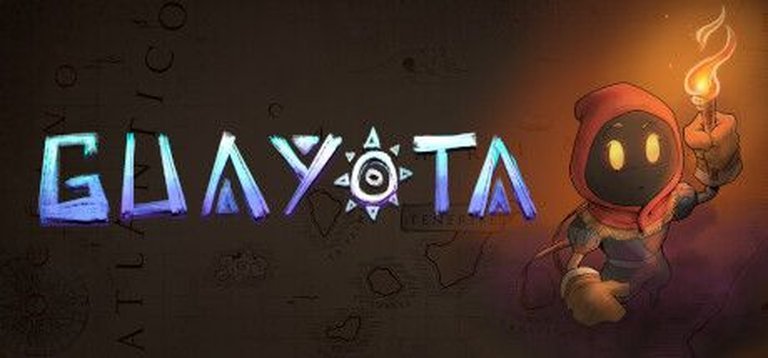
Guayota is a puzzle-platformer set in a fantasy world, blending action and puzzle elements with a unique diagonal-down perspective. Developed by Team Delusion and powered by Unreal Engine 4, the game challenges players with intricate temple-based puzzles that evolve as they progress, offering variety to keep the experience fresh. With a narrative inspired by Lovecraftian themes and a visually appealing aesthetic, Guayota tests logic and reasoning skills while delivering a compact yet engaging adventure.
Gameplay Videos
Where to Buy Guayota
PC
Guayota Free Download
Guayota Guides & Walkthroughs
Guayota Reviews & Reception
metacritic.com (80/100): Guayota is a good puzzle game, as long as players are willing to overlook some issues.
moviesgamesandtech.com (70/100): Guayota blends together some excellent puzzle mechanics, a nice setting and a lovely Lovecraftian story.
churapereviews.com : Guayota is a solid puzzle adventure with a decent story, creative puzzles, and cute characters.
waytoomany.games : Guayota started to slowly wear me out. It was puzzle after puzzle after puzzle after exposition section.
Guayota: A Flawed but Fascinating Dive into Forgotten Mythology
Introduction
Guayota is a puzzle-adventure game that dares to explore the lesser-known mythology of the Canary Islands, offering a refreshing departure from the overused Greek, Norse, and Egyptian tropes. Developed by Team Delusion and published by Dear Villagers, the game presents a unique blend of environmental puzzles, dual-realm mechanics, and a narrative steeped in Guanche folklore. However, despite its ambitious premise and striking visuals, Guayota stumbles in execution, leaving players with a mixed experience that oscillates between brilliance and frustration.
Development History & Context
Guayota emerged from the creative minds at Team Delusion, a studio that clearly has a passion for cultural storytelling. The game’s development was driven by a desire to shine a light on the Guanche mythology, a rich but often overlooked lore from the Canary Islands. The team’s vision was to craft a puzzle-adventure game that not only challenged players intellectually but also immersed them in a world steeped in history and mysticism.
Technologically, Guayota leverages Unreal Engine 4, which allows for its visually striking environments and smooth gameplay mechanics. The game’s art direction is heavily influenced by the natural beauty and cultural heritage of the Canary Islands, blending realistic textures with a touch of fantasy. The sound design, powered by FMOD, complements the visuals with an eerie, atmospheric soundtrack that enhances the game’s mysterious tone.
Guayota was released on August 13, 2024, for Windows and Nintendo Switch, entering a gaming landscape dominated by high-profile AAA titles and indie darlings alike. Its release was met with moderate fanfare, as it offered something different—a puzzle game rooted in a mythology that few players were familiar with. However, its reception was lukewarm, with critics and players alike praising its ambition but critiquing its execution.
Narrative & Thematic Deep Dive
Guayota’s narrative is its strongest selling point, offering a deep dive into the mythology of the Guanche people. The game is set in 1506, following a group of Spanish explorers who crash-land on Saint Brendan’s Island, a place rumored to be a paradise on Earth. The protagonist, a young record-keeper, soon discovers that the island is far from paradise. Instead, it is a place of ancient temples, dark secrets, and a malevolent deity known as Guayota, the destroyer.
The story unfolds through a combination of environmental storytelling, murals, and narration. The murals, in particular, are a standout feature, depicting the history and warnings of the Guanche people. These murals are often distorted, reflecting the island’s dark history and the attempts by outsiders to erase its cultural significance. The narrative is rich with themes of colonialism, cultural erasure, and the struggle between light and darkness.
However, the game’s storytelling is not without its flaws. The exposition can be heavy-handed, with walls of text that disrupt the pacing and immersion. The characters, while intriguing, are not as fleshed out as they could be, leaving players with a sense of detachment from their struggles. The lack of voice acting for the protagonist and other key characters further diminishes the emotional impact of the story.
Gameplay Mechanics & Systems
Guayota’s gameplay revolves around solving environmental puzzles using light-based mechanics. Players must navigate through ancient temples, using a torch to activate crystals, reflect light beams, and unlock doors. The puzzles start simple but gradually increase in complexity, introducing new mechanics such as explosive stones and reflective surfaces.
The game’s most innovative feature is its dual-realm system. Players can switch between the “Real World” and the “Plane of Madness,” each offering a different set of challenges. The Real World is filled with traps and hazards, requiring precise timing and quick reflexes. In contrast, the Plane of Madness is a more cerebral experience, focusing on puzzle-solving without the threat of instant death. This system adds depth to the gameplay, allowing players to approach challenges from different angles.
However, the dual-realm system is not without its issues. The Real World can be frustratingly punishing, with traps that feel unfair and hitboxes that are inconsistent. The Plane of Madness, while more forgiving, can feel like a punishment for failing in the Real World, disrupting the flow of the game. Additionally, the game’s camera can be problematic, often obscuring important elements of the environment and leading to unnecessary deaths.
World-Building, Art & Sound
Guayota’s world is a visual feast, blending the natural beauty of the Canary Islands with the eerie atmosphere of ancient temples. The game’s art direction is striking, with detailed environments that evoke a sense of mystery and wonder. The contrast between the lush, tropical exterior of the island and the dark, oppressive interiors of the temples is particularly effective, reinforcing the game’s themes of light and darkness.
The sound design is equally impressive, with an atmospheric soundtrack that enhances the game’s mysterious tone. The ambient sounds, such as the echo of caves and the distant rumble of lava, create a sense of immersion that draws players into the world. The voice acting, particularly the narration, is a standout feature, with a soothing voice that guides players through the game’s story.
However, the game’s visuals are not without their flaws. The excessive darkness in some areas can make navigation difficult, obscuring important elements of the environment. The lack of voice acting for the protagonist and other key characters further diminishes the emotional impact of the story.
Reception & Legacy
Guayota’s reception has been mixed, with critics praising its ambition and unique setting but critiquing its execution. The game’s Metacritic score of 66 reflects this divide, with some reviewers highlighting its innovative puzzle design and rich mythology, while others criticize its frustrating mechanics and heavy-handed exposition.
The game’s legacy is likely to be one of a flawed but fascinating experiment. It offers a unique blend of puzzle-solving and cultural storytelling, but its execution leaves much to be desired. Despite its flaws, Guayota is a game that deserves recognition for its ambition and its willingness to explore lesser-known mythology.
Conclusion
Guayota is a game that dares to be different, offering a unique blend of puzzle-solving and cultural storytelling. Its narrative is rich with themes of colonialism, cultural erasure, and the struggle between light and darkness. The game’s dual-realm system adds depth to the gameplay, allowing players to approach challenges from different angles. However, the game’s execution is flawed, with frustrating mechanics, heavy-handed exposition, and inconsistent hitboxes.
Despite its flaws, Guayota is a game that deserves recognition for its ambition and its willingness to explore lesser-known mythology. It is a game that will appeal to puzzle enthusiasts and those interested in cultural storytelling, but it may frustrate players looking for a more polished experience. In the end, Guayota is a flawed but fascinating dive into forgotten mythology, offering a unique experience that is worth exploring for those willing to overlook its shortcomings.