
- Release Year: 2008
- Platforms: Windows
- Publisher: NCsoft Corporation
- Developer: ArenaNet
- Genre: MMO, RPG
- Perspective: Third-person
- Game Mode: MMO, Online PVP
- Gameplay: Character progression, Instanced combat, Quests, Skill-based
- Setting: Fantasy
- Average Score: 91/100
Description
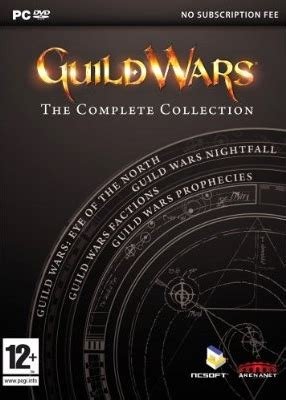
Guild Wars: The Complete Collection bundles the entire Guild Wars saga up to 2007, including Guild Wars, Guild Wars: Factions, Guild Wars: Nightfall, and Guild Wars: Eye of the North. Set across the fantasy realms of Tyria, Cantha, and Elona, the game offers a unique online role-playing experience combining cooperative PvE missions and competitive PvP battles without requiring a monthly subscription, making it accessible and enduring for players.
Where to Buy Guild Wars: The Complete Collection
PC
Guild Wars: The Complete Collection Patches & Updates
Guild Wars: The Complete Collection Mods
Guild Wars: The Complete Collection Guides & Walkthroughs
Guild Wars: The Complete Collection Reviews & Reception
retro-replay.com : This bundle offers the ultimate value in online role-playing adventures.
Guild Wars: The Complete Collection Cheats & Codes
PC
Enter commands in the chat window.
| Code | Effect |
|---|---|
| /bonus | You should get some of the best items in the game. |
| /flex | Your character will flex. |
Guild Wars: The Complete Collection: Review
Introduction
In the mid-2000s, when the subscription-based Massively Multiplayer Online Role-Playing Game (MMORPG) model reigned supreme, Guild Wars emerged as a revolutionary anomaly. Developed by ArenaNet and published by NCsoft, this series shattered industry conventions by offering a deep, competitive online experience without a recurring fee. Guild Wars: The Complete Collection, released in 2008, bundles the original campaign and its three expansions—Factions, Nightfall, and Eye of the North—into a definitive package. This review argues that the collection represents a landmark achievement in game design, blending accessibility, strategic depth, and narrative richness. It pioneered the CORPG (Competitive/Cooperative Online Role-Playing Game) genre, prioritizing player skill over grind, and left an indelible mark on online gaming history.
Development History & Context
ArenaNet, founded in 2000 by key figures from Blizzard Entertainment (including Jeff Strain and Patrick Wyatt), envisioned a game that would redefine online RPGs. Their core philosophy challenged the subscription-centric MMO landscape, aiming to eliminate financial barriers while maintaining competitive integrity. Guild Wars was developed on modest hardware—a Pentium III 866MHz with a GeForce3 card—yet optimized for performance, allowing it to run on systems that struggled with contemporary MMOs like World of Warcraft. This technological restraint fostered innovation: instanced zones and 8-player parties created controlled, tactical environments, contrasting sharply with the chaotic, open-world norms of the era.
The original Guild Wars launched in April 2005, capitalizing on growing discontent with subscription fatigue. Its “buy-to-play” model was radical, while the focus on PvP (Player vs. Player) arenas—where players reached max level instantly—prioritized skill-based competition. Subsequent expansions expanded the world: Factions (2006) introduced Cantha, Nightfall (2006) unveiled Elona, and Eye of the North (2007) bridged the story to Guild Wars 2. The cancellation of the fourth campaign, Utopia, led to Eye of the North, which deepened lore and introduced new races. By 2008, the Complete Collection offered unparalleled value, consolidating ArenaNet’s vision into a cohesive, accessible whole. This development approach ensured iterative refinement, turning limitations into strengths that defined the series’ identity.
Narrative & Thematic Deep Dive
The collection’s narrative is an epic tapestry spanning millennia, weaving together tragedy, prophecy, and cosmic struggle. Each campaign explores distinct cultures and conflicts rooted in the game’s rich lore.
- Prophecies (Tyria): Players witness the fall of Ascalon to the Charr horde in The Searing, a cataclysmic event symbolizing humanity’s fragility. Themes of redemption and sacrifice permeate the story, embodied by characters like Prince Rurik, whose tragic arc mirrors the kingdom’s demise. The quest to defeat the Undead Lich and uncover the Flameseeker Prophecies explores cyclical vengeance and the burden of legacy.
- Factions (Cantha): Set in an Asian-inspired empire, the narrative delves into political intrigue and cultural schism. The resurrection of Shiro Tagachi—a murderer who unleashed the petrifying Jade Wind—examines the corrosive nature of power. The Kurzick-Luxon conflict reflects ideological clashes, while characters like Master Togo embody duty and betrayal. Themes of honor and redemption resonate against a backdrop of jade forests and neon cities.
- Nightfall (Elona): This North African-themed campaign introduces the Order of the Sunspears battling the demon god Abaddon. Themes of faith versus corruption dominate, as Warmarshal Varesh’s descent into madness mirrors Elona’s desolation. Characters like Tahlkora and Koss symbolize hope and resilience, while the struggle against the Nightfall itself serves as a metaphor for existential darkness.
- Eye of the North (Tyria): Uniting races against the Destroyers, ancient subterranean threats, this expansion emphasizes collective action. It introduces the Asura, Norn, and Dwarves, each grappling with extinction. The narrative bridges to Guild Wars 2, rewarding longtime players with closure and legacy. Dialogue is sharp, with cinematic cutscenes elevating pivotal moments like Abaddon’s imprisonment or Palawa Joko’s reawakening.
The overarching lore—detailed in sources like the Guild Wars Wiki—explores themes of cyclical history, divine abandonment, and the resilience of civilizations. The Exodus of the Gods, the Scarab Plague, and the Giganticus Lupicus extinction event create a world where the past is ever-present, enriching every quest with gravitas.
Gameplay Mechanics & Systems
Guild Wars’ gameplay revolutionized online RPGs through its emphasis on strategic depth over grind.
- Core Combat: The “8-skill slot” system forces meticulous build-crafting. Players combine skills from two professions (e.g., a Warrior/Monk), creating synergies that define playstyles. Energy management is critical, with skills like Inspiration Magic enabling dynamic casting—unlike contemporary MMOs, where casters passively waited for regeneration. PvP arenas (e.g., the Hall of Heroes) prioritize skill and team synergy, offering balanced competition with no gear disparity.
- PvE Progression: Level caps at 20 ensure focus on skill acquisition over time investment. Missions are tightly designed, requiring tactical use of terrain and party roles. Later expansions introduced heroes—AI allies like M.O.X. in Eye of the North—which, while streamlining solo play, were criticized for fragmenting human party dynamics.
- Innovations: Instanced zones eliminated overcrowding, while PvP-centric modes (Guild vs. Guild, Hero Battles) fostered esports culture. The Hall of Monuments in Eye of the North rewarded long-term play with legacy bonuses for Guild Wars 2. However, post-Nightfall PvE-only skills and grind-heavy content (e.g., the Domain of Anguish) drew criticism for diluting the original vision.
The UI remains clean and minimalist, with a radial menu for skills and a minimap optimized for clarity. The absence of a subscription fee remains its most enduring strength, democratizing access without compromising depth.
World-Building, Art & Sound
Guild Wars’ visual and auditory design established a benchmark for immersive fantasy worlds.
- Art Direction: Each continent boasts a distinct aesthetic. Tyria in Prophecies blends European-inspired landscapes—pre-Searing Ascalon’s rolling fields contrast with the Searing’s charred ruins. Cantha in Factions features ornate pagodas and bamboo forests, while Elona in Nightfall offers sun-savannahs and the eerie, petrified Desolation. Eye of the North introduces the crystalline Charr Homelands and Asura’s underground citadels. The hand-painted art style, though technically modest, aged gracefully, with vibrant colors and environmental storytelling (e.g., the Jade Wind’s petrified trees).
- Sound Design: Jeremy Soule’s epic score elevates key moments, from the haunting melodies of the Crystal Desert to the battle hymns of Cantha. Voice acting is universally strong, with characters like Shiro Tagachi exuding menace and Togo conveying solemn wisdom. Sound effects—sword clashes, spell hums, and ambient wildlife—enhance immersion without overwhelming.
The world-building is meticulously detailed, with lore documents (e.g., the History of Tyria) enriching exploration. Cities like Kaineng and Kamadan feel lived-in, while dungeons like Sorrow’s Furnace showcase environmental storytelling. This cohesive design makes Tyria, Cantha, and Elona feel like authentic, breathing continents.
Reception & Legacy
Guild Wars was a critical and commercial triumph upon release, lauded for its innovation and accessibility. It sold over 6 million units by 2008, winning accolades like IGN’s “Best PC RPG” and Gamespy’s “MMORPG of the Year.” The Complete Collection received a 91% score from GameStar, which praised its “tactical diversity” and subscription-free model.
Its legacy is multifaceted:
– Industry Influence: It proved a viable alternative to subscription-based MMOs, inspiring titles like Path of Exile. Its instanced PvP design influenced competitive gaming, while the CORPG model emphasized skill over gear.
– Narrative Impact: The deep lore laid groundwork for Guild Wars 2, with characters and events (e.g., the Elder Dragon awakening) directly referenced.
– Community & Longevity: Despite no new content post-2012, the community thrives, with PvP tournaments and fan missions keeping the game alive. The Hall of Monuments rewards incentivized replayability.
However, criticisms included the shift toward grind in later expansions and the homogenization of PvP through build metas. Yet these flaws are overshadowed by the series’ pioneering spirit.
Conclusion
Guild Wars: The Complete Collection remains a masterpiece of game design—a testament to the power of player-centric innovation. It shattered the subscription model, blended strategic PvP with rich PvE storytelling, and created a world that feels both vast and intimate. While its graphics may show their age, the art direction and lore remain timeless. For newcomers, it offers an accessible entry into a legendary saga; for veterans, it’s a nostalgic journey that honors its legacy. In an era of monetization excess, Guild Wars stands as a beacon of integrity, proving that exceptional gameplay and storytelling need not come at a recurring cost. It is not merely a game but a landmark—an enduring artifact that reshaped online RPGs and secured its place in history.