
- Release Year: 2010
- Platforms: Windows
- Publisher: Beijing Wangyuan Shengtang Entertainment Technology Co., Ltd.
- Developer: Aurogon Info&Tech (Shanghai) Co., Ltd.
- Genre: RPG
- Perspective: Behind view
- Game Mode: Single-player
- Gameplay: Items, Magic Spells, Quick Time Events, Turn-based combat
- Setting: Ancient, China, Fantasy, Imperial
- Average Score: 80/100
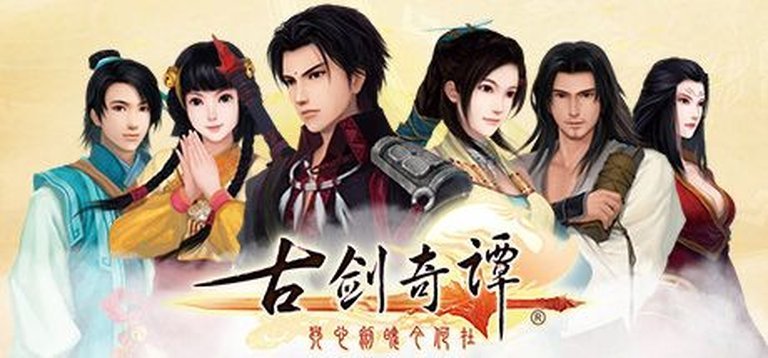
Description
GuJian (Gujian Qitan) is a fully voiced Chinese 3D role-playing game set in a fictionalized ancient China, blending traditional mythology, Taoist elements, and cultural references. Players control Baili Tusu, a young swordsman and shaman’s son who, after his village is destroyed and he acquires a magical sword, becomes a disciple of the Tianyong sect. He joins a group seeking fragments of a mythical treasure to revive the dead, hoping to resurrect his mother and uncover the truth behind the massacre, all within a turn-based combat system that incorporates Quick Time Events.
Gameplay Videos
Where to Buy GuJian
GuJian Mods
GuJian Reviews & Reception
steamcommunity.com : Cutscenes are long, battle style is super boring, character turn rate is absolutely AWFUL.
GuJian: The Ancient Sword That Forged a Genre
Introduction: A Phoenix from the Ashes of Piracy
In the landscape of global video games, certain titles emerge not merely as entertainment products but as cultural touchstones, embodying the aspirations and artistic identity of a region. GuJian (古剑奇谭, literally “Ancient Sword Strange Tales”), released in 2010 by mainland China’s Aurogon Info & Tech (Shanghai), is precisely such a landmark. It arrived at a critical juncture for the Chinese single-player RPG (SPRPG) market, which had been decimated by pervasive piracy and a creative exodus following the dissolution of the revered Softstar Shanghai studio. Against this bleak backdrop, GuJian did not just release; it announced a renaissance. It was a declaration that high-fidelity, culturally authentic, narrative-driven SPRPGs were not only viable but could achieve both critical acclaim and commercial success within China. Its thesis was a potent fusion: a deep, melancholic story rooted in xianxia fantasy and Chinese mythology, delivered with unprecedented production values for a domestic title—fully voiced protagonists, a cinematic 3D world, and a combat system that married tactical turn-based planning with dynamic quick-time events. This review will dissect GuJian as a foundational text, analyzing its development under duress, its thematic richness, its mechanical innovations and flaws, and its indelible legacy as the series that arguably became the true spiritual successor to the revered Chinese Paladin franchise.
Development History & Context: Birth from Creative Bankruptcy
The story of GuJian is inextricably linked to the tumultuous corporate drama of the Chinese RPG industry, perfectly chronicled in the Steam community guide by “早乙女まりあ’s Husband.” The foundational myth of the genre is The Legend of Sword and Fairy (Chinese Paladin 1), created by a heartbroken Yao Zhuangxian at Softstar Taipei in 1995. Its success spawned a sequel crisis. Yao wanted a thematic departure, while colleague Xie Chonghui wanted a direct continuation. This schism led to two competing “Chinese Paladin 2” projects.
The pivotal moment came when Softstar established a mainland branch, Softstar Beijing, led by Yao, and a Shanghai branch, Softstar Shanghai, led by the ambitious Zhang Yijun (工长君, “Work Long Man”). Zhang’s Shanghai team, given the reins to the core IP, produced the acclaimed 3D titles Chinese Paladin 3 (2003), 3 Extra (2004), and Chinese Paladin 4 (2007). Their signature style was a pronounced shift from Yao’s wuxia (martial arts heroes) toward xianxia (immortal heroes, Taoist fantasy), with deeply integrated Chinese mythology, philosophical themes, and a unique naming convention: main character names derived from specific categories of traditional Chinese cultural items (medicines, star constellations, mine stones). They also pioneered high-quality voice acting and richer narratives with hidden conspiracies.
However, this creative zenith was strangled by financial neglect. The Taipei HQ, prioritizing the faltering Chinese Paladin 2 and facing market challenges, allocated a paltry 6 million RMB for Chinese Paladin 3‘s development. The profits were split geographically, leaving the Shanghai branch impoverished despite their success. After Chinese Paladin 4, Zhang Yijun and the entire Softstar Shanghai team resigned in September 2007, effectively dissolving the studio.
This created a vacuum. Zhang, with new investor Meng Xianming, co-founded Shanghai Aurogon Information Technology (上海烛龙). This new studio inherited not only the talent but the vision: the commitment to xianxia, cultural depth, and high production values. Aurogon’s first project was GuJian, a new IP. The name itself, “Gu Jian,” signifies “Ancient Sword,” immediately establishing its thematic core. Developed in the shadow of Softstar’s collapse and with the knowledge that their former employer’s Beijing branch would soon release a low-quality Chinese Paladin 5 (2011), GuJian was a statement of intent. It was built using the Gamebryo engine, a choice reflecting both technical familiarity and the need to deliver 3D grandeur on a constrained budget. The game launched on July 10, 2010, for Windows in China, a full year before the critical failure of Chinese Paladin 5 would ironically cement Aurogon’s position as the rightful heir to the genre’s throne.
Narrative & Thematic Deep Dive: The Weight of a Cursed Blade
The narrative of GuJian is a masterclass in embedded mythology and personal tragedy, structured around the concept of reincarnation and the inescapable burden of the past.
Plot Architecture: The story employs a dual-timeline structure that begins in medias res. We meet Han Yunxi, an eight-year-old shaman’s son, who completes a ritual in the Cave of Ice and Fire, releasing the Sword of Fenji from its seal. He immediately witnesses his village’s annihilation and wakes beside his mother’s corpse. This traumatic prologue establishes the core mysteries: who massacred the village, and what is the nature of the cursed sword he now bears? A time jump reveals the protagonist as 17-year-old Baili Tusu (“Tusu” is a New Year’s wine for warding off evil, symbolizing his wish to protect), a disciple of the Tianyong Sect, still tormented by the sword’s vicious spirits. His quest is twofold: find fragments of the Qingyutan jade (a treasure that can resurrect the dead) to revive his mother, and use it to identify the village murderers. This personal vengeance plot quickly expands into a epic journey across the Nine Provinces of a mythic ancient China, involving alchemy, demonic cults, and ancient divine wars.
Character as Mythology: The brilliance of the writing lies in how each companion embodies a facet of the world’s lore and the game’s central themes:
* Feng Qingxue: A girl born with poison, from a family serving the goddess Nüwa in the underground world. Her gloves are both literal and metaphorical barriers, her curiosity a rebellion against her predetermined role. She represents the intersection of divine duty and human emotion.
* Ouyang Shaogong: The alchemy master, wielder of a guqin. His gentle demeanor masks profound knowledge of the world’s occult mechanics. His weapon—a stringed instrument—evokes the scholarly, artistic side of the xianxia hero.
* Fang Lansheng: The scholar from an affluent family with five sisters, his name referencing a flower-petal wine. He uses Buddhist prayer beads, representing the syncretism of Taoist, Buddhist, and secular life in the setting. His arc of escaping an arranged marriage and finding love with Xiang Ling provides a grounded, human counterpoint to the supernatural stakes.
* Xiang Ling: The half-fox spirit, raised by a banyan spirit. Her name is a sweet baijiu; her weapon is a decorative hand fan. She is pure, innocent, and represents the “beast” or spirit realm’s capacity for emotion and loyalty—a direct challenge to the human-centric view of monstrosity.
* Yin Qianshang & Hong Yu: The enigmatic, broadsword-wielding vagabond and the mysterious dual-swords master add layers of intrigue, their pasts slowly tied to the larger cosmic conflict.
The antagonists are not mere evil but products of ancient cosmic forces. The game’s lore draws explicitly from classics like the Classic of Mountains and Seas (Shan Hai Jing), detailing the Nine Provinces, the Demon Realm, the Heavenly Realm, and the Underworld. The Seven Ancient Cursed Swords, sealed by Nüwa after the Demon War led by Chi You, are MacGuffins that tie personal tragedy to millennial-scale myth. The revelation that the villain is a fragment of a greater evil, and that the sword’s torment is part of a larger celestial design, elevates the narrative from revenge fantasy to a meditation on fate, sacrifice, and cyclical time.
Thematic Resonance: The theme of reincarnation is literal (souls, cursed swords, divine fragments) and metaphorical (Tusu’s rebirth from Han Yunxi, the rebirth of a genre via Aurogon). It explores whether one can escape a cursed destiny or if true peace comes from accepting one’s role in a grander cycle. The ending, where Tusu must make a profound sacrifice to seal the sword’s evil, reinforces the xianxia axiom that ultimate power demands ultimate price, a stark contrast to the often more romantic, individualistic resolutions of wuxia.
Gameplay Mechanics & Systems: A Hybrid Heart
GuJian’s gameplay is a fascinating time capsule, reflecting both the state of Chinese SPRPG design in 2010 and Aurogon’s willingness to experiment within a traditional framework.
Core Loop: The game follows a classic JRPG structure: traverse a semi-open world map, explore towns and dungeons, engage in turn-based combat, complete main and side quests, and manage character progression. The world is beautifully realized but segmented into zone loads.
Combat System (Turn-Based with QTEs): This is the game’s most distinctive and debated feature. Battles are turn-based, with an initiative gauge displaying the upcoming order of turns, a nod to tactical awareness. Each action (attack, skill, item, defense) consumes Action Points (AP), ranging from 1 to 5, creating a resource management layer. The innovation is the integration of Quick-Time Events (QTEs). Certain powerful skills or combo finishers require timed button presses. Succeeding amplifies the effect dramatically; failing can result in a wasted turn or reduced damage. This hybrid attempts to marry the strategic pacing of turn-based combat with the visceral engagement of action games. However, it is a double-edged sword. The QTEs can feel abrupt and disrupt the tactical flow, and the turn-based foundation sometimes leads to a slower, more methodical pace than modern action RPGs. The system is earnest but clunky by today’s standards, a bridge between paradigms that doesn’t fully satisfy either.
Progression & Systems: Characters gain experience and level up, improving base stats. The primary progression comes from Skill Trees, where players spend skill points to unlock and enhance abilities tied to each character’s archetype (sword techniques, alchemy spells, fan buffs, etc.). Equipment is purchased or found, with standard RPG stat upgrades. A notable GuJian-specific feature is the Cooking System, inherited from Chinese Paladin. Players collect ingredients from monsters and the environment, buy recipes, and prepare dishes. Leftovers from meals provide “Leftover” items that can be used as reusable healing or attack items in combat, encouraging economic management and culinary exploration.
UI & Quality of Life: The interface is functional but dated, with inventory and menu navigation feeling sluggish. The map system is rudimentary. The game’s pacing, as noted by POPSOFT, can be slow to immerse, partly due to the combat’s deliberation and the game’s deliberate, story-forward rhythm.
Innovation vs. Flaw: The hybrid combat is the key innovation—an attempt to create a “director’s cut” turn-based experience. Its flaw is in execution; the QTEs are not seamlessly woven in, often feeling like a separate mini-game. The system respects player strategy but doesn’t reward fast-paced execution. It’s a relic of its specific design philosophy, prioritizing narrative spectacle over mechanical fluidity.
World-Building, Art & Sound: A Mythological Tapestry
Where GuJian achieves undeniable, timeless greatness is in its presentation. It is a love letter to Chinese aesthetics, meticulously crafted to feel like a living, breathing ancient world.
Visual Direction & Art Design: Using the Gamebryo engine, Aurogon achieved a visual fidelity that stunned domestic audiences. The art style employs soft color palettes, realistic textures, and atmospheric effects like fog and volumetric lighting to create a serene yet mysterious atmosphere. Environments are directly inspired by real historic sites—photographs and descriptions of temples, mountains, and rivers populate the world. The character designs are exquisite, blending historical Hanfu-inspired fashion with fantastical elements (e.g., Qingxue’s gloves, Shaogong’s flowing guqin-player robes). Monster designs are pulled directly from the Shan Hai Jing—bizarre, beautiful, and terrifying creatures that feel indigenous to the mythology, not generic fantasy beasts.
The cinematic camera is not just for cutscenes; it’s used dynamically in exploration, framing vistas and interiors with an almost painterly eye. This was not just a game; it was an interactive illustration of xianxia lore.
Sound Design & Music: The soundtrack, composed by Lo Chi-Yi and Zhou Zhihua of Musit Music Studio, is a 101-track masterpiece. It masterfully blends traditional Chinese instruments (erhu, guzheng, guqin, dizi) with sweeping orchestral arrangements. Themes are melodic, emotive, and deeply tied to locations and characters. The main theme, “Jian Po Qin Xin” (Sword Soul, Qin Heart), is a leitmotif that recurs in variations, symbolizing the union of martial power (sword) and scholarly spirit (qin). The music doesn’t just accompany the game; it narrates it, shifting from serene exploration pieces to tense, percussion-driven battle themes.
Voice Acting Revolution: The single most cited technical milestone for GuJian is being the first Chinese 3D RPG with fully voiced main characters. The dubbing group Jingcheng Zhi Sheng (Beijing Sincerity Voice) delivered performances of remarkable quality. The voice acting elevates the script, adding gravitas to philosophical dialogues and warmth to character interactions. The voices are not anime-toned caricatures but grounded, adult performances that sell the emotional weight of the story. For Chinese players, this was a paradigm shift—from reading text to experiencing a performance. This set an irrevocable new standard for the domestic RPG genre.
Reception & Legacy: The Crown Jewel of a Genre
Contemporary Reception (2010): In China, GuJian was a phenomenon. Critics praised it lavishly. PCGames called it “basically the best that local single-player games have to offer,” while POPSOFT awarded it 8.5/10, lauding its story and graphics, though noting its slow immersion. Its reception must be understood in context: it was the first high-budget, polished, culturally rich SPRPG from a new studio following the collapse of the genre’s standard-bearer. It validated the xianxia RPG as a mature, serious form.
Evolution of Reputation: GuJian’s reputation has only grown, fossilized as a classic. Its legacy is best understood through the subsequent trajectory of the series and its primary competition:
* The GuJian Series: GuJian 2 (2013) attempted a risky shift to real-time combat, which was poorly received due to a lack of polish and an overstuffed narrative serving an MMO. GuJian 3 (2018), developed after founder Zhang Yijun’s departure for health reasons, was a triumphant return to form. Using the Havok Vision Engine, it delivered a near-AAA experience with fluid action combat, a thematically mature story about inheritance (mirroring Aurogon’s own post-Zhang survival), and breathtaking art directions like the Undersea Palace, which used Pi Ying Xi (shadow puppetry) and Beijing Opera for 2D/3D hybrid gameplay. It sold over 2 million copies, proving the series’ sustainable appeal.
* The Chinese Paladin Contrast: The failure of Chinese Paladin 5 (2011)—criticized for ugly art, poor design, and a botched engine switch—and the scandal of Chinese Paladin 6 (2015)—plagued by optimization issues, a copied FFXIII combat system, and suspected plot plagiarism from anime—severely damaged the once-untouchable brand. Players and critics began to declare that the “true successor” to the Chinese Paladin 3/4 legacy was the GuJian series. The irony is palpable: Zhang Yijun’s ambition to make Chinese Paladin “the Chinese Final Fantasy” was arguably realized not in that series, but in his new creation, GuJian.
* Cultural Impact: The game’s 2014 TV adaptation, Swords of Legends (古剑奇谭), starring Li Yifeng and Yang Mi, became a massive ratings hit, expanding the IP’s reach far beyond gamers. It spawned sequels, a film, and an MMORPG (Swords of Legends Online). This multimedia expansion cemented GuJian as a mainstream cultural property.
* Industry Influence: GuJian demonstrated that a culturally specific, high-production SPRPG could find a massive audience. It directly inspired a wave of xianxia titles and raised the bar for voice acting, art, and mythological integration. Its success on Steam with GuJian 3 (featuring English localization) paved the way for global interest in Chinese SPRPGs, influencing the reception of later hits like Black Myth: Wukong. The upcoming Swords of Legends (formerly GuJian 4, 2026), built in Unreal Engine 5 and planned for simultaneous global release, represents the culmination of this legacy—a full-blown, internationally targeted AAA action RPG from the studio that began with GuJian.
Commercial Performance: While exact figures for the 2010 original are scarce, the franchise cumulative sales surpassed 6 million units by 2025, with GuJian 3 alone moving over 2 million. The original GuJian remains a beloved classic, with a “Very Positive” rating (80/100) on Steam from nearly 5,600 reviews as of 2026, a testament to its enduring appeal.
Conclusion: An Indispensable Artifact
GuJian (2010) is more than a game; it is a historical document. It captures a moment of desperate creativity and profound cultural pride. Born from the ashes of a fractured industry and a broken studio, it stands as a testament to the vision of Zhang Yijun and the Aurogon team. It successfully transplanted the depth and feeling of classical Chinese literature—with its themes of fate, reincarnation, and cosmic balance—into an interactive medium, using cutting-edge (for its time) 3D graphics and revolutionary voice acting.
Its gameplay, specifically the hybrid turn-based/QTE combat, is a product of its era and may feel dated. Yet, this very system reflects its core design philosophy: a game that prioritizes narrative spectacle, character, and atmosphere over mechanical fluidity. It is a game to be experienced, not just played.
In the canon of video game history, GuJian is the cornerstone of modern Chinese xianxia RPGs. It rescued a genre from extinction, set new standards for audio-visual presentation, and created a multimedia franchise that resonates with millions. While its sequels refined and sometimes faltered, the original GuJian remains a pristine artifact of ambition—a beautiful, melancholic, and profoundly Chinese epic that proved the world was ready to listen to stories told in the language of its own ancient myths. Its sword, the Fenji, is a metaphor for the game itself: a seemingly cursed, burdensome relic that, when wielded with purpose, becomes a key to a new world. It is not merely a great Chinese RPG; it is the game that reminded China—and eventually the world—what a Chinese RPG could be.
This review is synthesized from official descriptions, historical analyses, and reception data from MobyGames, Wikipedia, Steam, and fan community archives, with particular debt to the detailed industry history provided by the Steam community guide “The history of Gujian and its relationship with Chinese Paladin.”