
- Release Year: 2013
- Platforms: Windows
- Publisher: Reverb Triple XP
- Developer: Exato Game Studios, LLC
- Genre: Action
- Perspective: 1st-person
- Game Mode: Online PVP, Single-player
- Gameplay: Shooter
Description
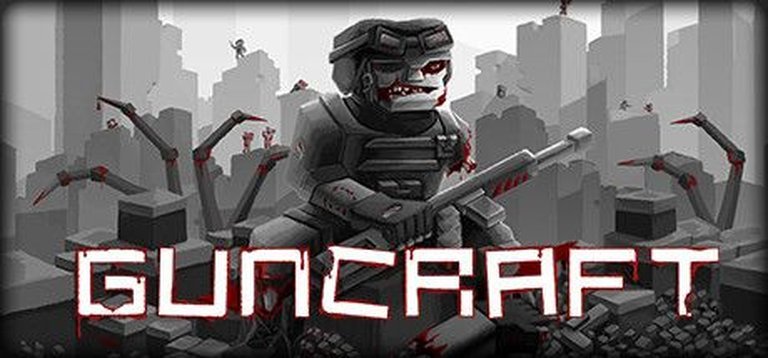
Guncraft is a first-person shooter that creatively blends block-building mechanics with intense combat, allowing players to construct customizable structures, weapons, and environments in a voxel-based world. Set in a dynamic sandbox, the game encourages both competitive multiplayer battles across diverse modes and creative freedom to design maps and loadouts.
Where to Buy Guncraft
PC
Guncraft Patches & Updates
Guncraft Mods
Guncraft Guides & Walkthroughs
Guncraft: Review
In the pantheon of first-person shooters, few games have managed to blend the creative freedom of sandbox building with the adrenaline-fueled action of competitive multiplayer as effectively as Guncraft. Released in 2013 by Exato Game Studios, Guncraft offered a unique twist on the traditional FPS formula, allowing players to construct their own levels and weapons using a variety of blocks and tools. This review delves into the legacy, development, narrative, gameplay mechanics, world-building, reception, and enduring impact of Guncraft, providing an exhaustive analysis of its place in video game history.
Introduction
Guncraft stands as a testament to the innovative spirit of early 2010s indie game development. At a time when the FPS genre was dominated by blockbuster titles like Call of Duty and Battlefield, Guncraft carved out a niche for itself by combining the creative potential of sandbox games with the thrill of competitive shooting. This review argues that Guncraft‘s legacy lies not just in its gameplay mechanics, but in its ability to foster a community of creators and innovators, setting a precedent for future games that blend construction and combat.
Development History & Context
Studio and Creators’ Vision
Guncraft was developed by Exato Game Studios, a small indie studio founded by John Getty, who served as the executive producer and lead game designer. The studio’s vision was to create a game that allowed players to express their creativity while engaging in intense multiplayer action. Getty and his team aimed to blend the best elements of sandbox construction games like Minecraft with the fast-paced excitement of FPS titles, resulting in a unique hybrid that stood out in the crowded gaming landscape.
Technological Constraints and Gaming Landscape
The early 2010s were a time of rapid technological advancement in gaming. The rise of digital distribution platforms like Steam made it easier for indie developers to reach a global audience. However, the hardware limitations of the era meant that developers had to be creative with their resource management. Guncraft leveraged these constraints by focusing on modular, block-based construction, which allowed for a high degree of customization without requiring extensive computational power.
The gaming landscape at the time was dominated by big-budget titles, but there was also a growing appreciation for indie games that offered something different. Guncraft capitalized on this trend by providing a fresh take on the FPS genre, appealing to both casual and hardcore gamers.
Narrative & Thematic Deep Dive
Plot and Characters
Guncraft does not have a traditional narrative or a deep lore. Instead, it focuses on the player’s ability to create and share their own experiences. The game’s lack of a structured plot allows players to immerse themselves in the creative process, designing levels and weapons that reflect their personal style and preferences. This absence of a linear story is a deliberate choice, emphasizing the game’s sandbox nature and the freedom it offers.
Dialogue and Themes
Since Guncraft is primarily a multiplayer experience, dialogue is minimal and often limited to in-game chat. The game’s themes revolve around creativity, competition, and community. Players are encouraged to experiment with different building techniques, test their creations in combat, and share their designs with others. This collaborative aspect fosters a sense of community, where players can learn from each other and push the boundaries of what is possible within the game’s constraints.
Gameplay Mechanics & Systems
Core Gameplay Loops
Guncraft features a core gameplay loop that revolves around building, testing, and refining. Players start by selecting a block type and placing it in the game world. They can then use these blocks to construct levels, weapons, and even vehicles. Once a creation is complete, players can test it in various game modes, such as deathmatch or capture the flag, to see how it performs in combat. This iterative process of creation and testing is the heart of Guncraft‘s gameplay.
Combat and Character Progression
Combat in Guncraft is fast-paced and tactical. Players can use a variety of weapons, from pistols and rifles to grenades and rocket launchers, each constructed from blocks. The game’s physics engine adds a layer of realism, making each shot and explosion feel impactful. Character progression is handled through experience points and levels, which unlock new blocks and tools, allowing players to create more complex and sophisticated designs.
User Interface
The user interface in Guncraft is intuitive and user-friendly. The building tools are easily accessible, and the game provides clear feedback on the player’s actions. The UI also includes a robust sharing system, allowing players to upload their creations to a community gallery, where others can download and use them. This feature is crucial to the game’s social aspect, enabling players to collaborate and inspire each other.
Innovative and Flawed Systems
One of Guncraft‘s most innovative systems is its block-based construction, which allows for an unprecedented level of customization. However, this system can also be frustrating, as players must often experiment with different block types and placements to achieve the desired result. Additionally, the game’s physics engine, while adding realism, can sometimes lead to unpredictable behavior, such as blocks falling or structures collapsing unexpectedly.
World-Building, Art & Sound
Setting and Atmosphere
Guncraft takes place in a procedurally generated world, where players can build and destroy at will. The game’s setting is minimalist, with a focus on functionality over aesthetics. This approach allows players to focus on their creations, rather than being distracted by elaborate environments. The atmosphere is one of creativity and experimentation, with a sense of freedom and possibility.
Visual Direction
The visual style of Guncraft is blocky and pixelated, reminiscent of early 3D games. This aesthetic choice was likely influenced by the game’s technological constraints, but it also adds to the game’s charm and nostalgia. The use of blocks as the primary building material gives the game a unique look, setting it apart from other FPS titles.
Sound Design
The sound design in Guncraft is effective, with clear and distinct audio cues for different actions. Weapon sounds are satisfying and impactful, while environmental sounds add depth to the game world. The soundtrack is minimalist, with a focus on ambient music that complements the game’s creative and competitive aspects.
Reception & Legacy
Critical and Commercial Reception
At launch, Guncraft received mixed reviews. Critics praised the game’s innovative concept and the freedom it offered to players, but some found the gameplay mechanics to be flawed and the graphics to be outdated. Despite these criticisms, the game found a dedicated following among fans of sandbox and FPS games. Its unique blend of construction and combat resonated with players, leading to a modest commercial success.
Evolution of Reputation
Over time, Guncraft‘s reputation has evolved. While it may not be as well-known as some of its contemporaries, it is remembered fondly by those who played it. The game’s influence can be seen in subsequent titles that blend construction and combat, such as Fortnite and Minecraft with its various battle royale modes. Guncraft‘s legacy lies in its ability to inspire creativity and innovation, setting a precedent for future games in the genre.
Conclusion
Guncraft is a pioneering title that merged the creative potential of sandbox games with the thrill of competitive multiplayer. Its legacy lies in its innovative gameplay mechanics, which allowed players to express their creativity while engaging in intense combat. Despite its flaws, Guncraft stands as a testament to the power of indie game development and the potential for unique and innovative ideas to capture the imagination of players. In the annals of video game history, Guncraft deserves a place of honor as a trailblazer in the FPS genre, paving the way for future titles that blend construction and combat.