
- Release Year: 2014
- Platforms: Linux, Macintosh, Windows
- Developer: Andrii Vintsevych
- Genre: Action
- Perspective: 1st-person
- Game Mode: Single-player
- Gameplay: Shooter
- Average Score: 50/100
Description
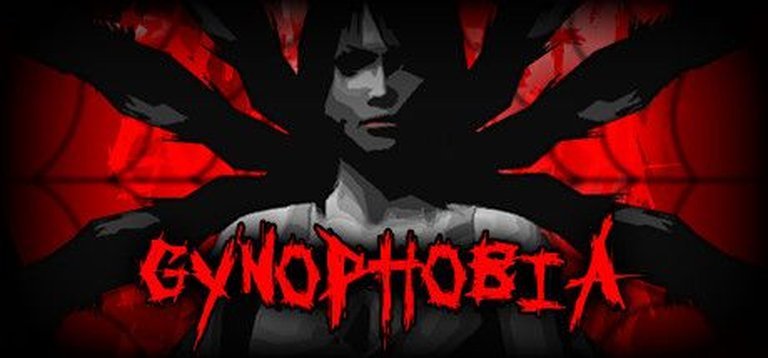
Gynophobia is a first-person survival horror game developed by Andrii Vintsevych. Players embody a protagonist suffering from both arachnophobia and gynophobia, where encountering spiders or women induces panic attacks. The narrative begins when a woman unexpectedly arrives at his doorstep, triggering a terrifying ordeal that blends shooter mechanics with psychological horror in an indie setting.
Gameplay Videos
Where to Buy Gynophobia
PC
Gynophobia Guides & Walkthroughs
Gynophobia Reviews & Reception
howlongtobeat.com (50/100): Silly little game that did not need to exist.
Gynophobia: A Clinical Case Study in Missed Potential and Historical Curiosity
Introduction: A Title That Precedes the Game
Long before its release, Gynophobia carved a controversial niche for itself in the pre-launch discourse of the mid-2010s indie scene. Its title, referring to the irrational fear of women, immediately positioned it as a lightning rod in the ongoing cultural conversation about gender representation in video games. Was it a provocative, taboo-shattering exploration of phobia, or a cynical, misogynistic bait-and-switch? This review posits that Gynophobia is, in fact, neither. It is something far more peculiar: a deeply flawed, technically rudimentary, and narratively thin first-person shooter that squanders a genuinely unique psychological premise. Its legacy is not one of influential design, but as a fascinating historical artifact—a开发商’s first, faltering step into a career that would later yield more coherent horror experiences, and a stark example of how a compelling high-concept can be undermined by fundamental execution flaws.
Development History & Context: The Humble Beginnings of “Gua”
Gynophobia is the debut title of Andrii Vintsevych, operating under the pseudonym “Gua.” Developed in the Unity engine, its creation was situated within the democratizing, yet overcrowded, landscape of Steam Greenlight circa 2014-2015. This was an era where low-barrier tools allowed anyone to publish, leading to a deluge of titles with wildly varying quality. Vintsevych’s vision, as stated in the official Steam description and press materials, was to create a “classic first-person shooter” that straddled the line between horror and action, using its phobia-based theme as a narrative vehicle. The project was characterized by low hardware requirements, a deliberate design choice to ensure accessibility, and a focus on “high quality music” as a standout feature.
The context is crucial: Gynophobia emerged just years after the explosive discourse catalyzed by Anita Sarkeesian’s “Tropes vs. Women in Video Games” series and the Gamergate controversy. Any game with a title referencing a fear of women was inevitably viewed through this polarized lens. Vintsevych has consistently maintained, both in the Steam forums and in post-release interviews, that the game was not conceived as a commentary on misogyny or gender politics. Instead, he treated “gynophobia” and “arachnophobia” as literal, gameplay-defining mechanics for the protagonist, Mark. Thisdeveloper’s naiveté or indifference to the external cultural conversationis a core part of the game’s identity—a potent concept explored without any apparent awareness of its potential real-world resonance.
Narrative & Thematic Deep Dive: A Phobia in Theory, Not in Practice
The narrative framework of Gynophobia is delivered in a fragmented, meta-textual style. Players begin in the apartment of Mark, the protagonist. The environment is cluttered with mundane items and, tellingly, his mother’s discarded undergarments and employee ID card, a detail that sparked intense player speculation about patricide. The developer definitively closed this thread on the Steam forums: “She’s just not home. You start in her room with broom cause she asked you to clean a house.” This mundane explanation highlights a wider narrative problem: the game provides clues that suggest dark psychological depths but never commits to exploring them. Instead, these elements function as superficial environmental storytelling.
Mark’s dual phobias are established immediately: a large spider on the floor triggers a screen-shaking “panic” effect, and the sight of a woman through his peephole does the same. Unable to cope, he retreats to his computer to play a generic zombie shooter—the “game within a game.” This section, while thematically disconnected from his phobias, serves as a gameplay preamble. After completing it, Mark consumes a mysterious beverage left by his mother (again, just a chore-related item, not a sinister potion), which induces a nightmare sequence. This transitions the player into the game’s core levels, which occur in a dream world where his fears are literalized: enemies are primarily female monsters and giant spiders.
Thematically, the game gestures toward a psychological horror of confronting repressed trauma. The final boss, the “Spider Queen,” is a clear amalgamation of his two phobias. However, the narrative execution is almost nonexistent. There is no dialogue beyond the odd environmental text hint, no character development for Mark, and no exploration of the origin or psychology of his phobias. The story is a bare scaffold: a man with fears enters a dream to fight manifestations of those fears. The ending, described by multiple critics as “surprising and inconclusive” (Hardcore Gamer) or “pretty funny” (Rely on Horror), likely refers to the abrupt cessation after the boss fight, offering no resolution or insight. The profound ambiguity of the premise is squandered on a plot that could, as Rely on Horror astutely noted, be about coulrophobia (fear of clowns) with no meaningful changes. The phobia is a skin-deep aesthetic, not a narrative engine.
Gameplay Mechanics & Systems: Barebones and Broken
Gynophobia adopts the conventions of a mid-90s “classic FPS” like Doom or Duke Nukem 3D, but without the polish, variety, or design sophistication of those classics. The core loop is achingly simple: traverse linear corridors, use two primary weapons (a pistol and an assault rifle; the knife is virtually unusable due to input issues), and eliminate slow-moving melee enemies. The AI is notoriously poor; enemies often path poorly, can be kited indefinitely by backpedaling, and exhibit the “sound-hunting” behavior noted in the Hardcore Gamer review—reacting to gunshots from anywhere, which encourages exploitative “cheating” in safe spots rather than dynamic combat.
The game’s claim to “classic FPS” status is immediately invalidated by the absence of core elements from the genre’s golden age:
* No Secrets: There are no hidden areas, power-ups, or alternate routes. Levels are straightforward paths.
* No Environmental Hazards: Bottomless pits and spikes exist but are always circumvented by obvious bridges, negating any sense of peril.
* Lack of Enemy Variety & Tactics: While enemy models (zombie women, floating spine-heads, giant spiders) are thematically appropriate and occasionally unsettling, their behavior is monolithic. All use melee attacks and move slowly, requiring no tactical adaptation.
* Fragile Player Character: Mark dies in only a few hits, creating tension but often feeling unfair due to the sometimes-clunky controls and poor hit detection.
* Checkpoint System: Auto-saves occur between areas, meaning failure in a late-stage combat arena forces a restart of the entire segment, a frustrating holdover from less forgiving era design that feels punitive here.
The one standout mechanical element is the final boss fight against the Spider Queen. Critics universally noted it as the only encounter demanding genuine movement—circle-strafing, jumping, and using pillars for cover—suggesting the developer was capable of designing engaging combat but did not apply this effort consistently. The “game within a game” sewer level and the city street sequence (where you must scavenge parts while pursued by an invincible giant foe) show glimmers of interesting, if derivative, set-piece design (the giant enemy recalls Golden Axe‘s “Bad Brothers,” as noted in Disposable Media). However, these are isolated bright spots in a sea of bland, texture-simple cave systems and repetitive arenas.
World-Building, Art & Sound: Functional Atmosphere, Technical Limitations
The game’s world is split between three primary settings: Mark’s grimy, clutter-filled apartment; the generic, ruined urban and sewer environments of the “game within a game”; and the more stylized, medieval-cavern dreamscapes of the nightmare levels. The apartment is the most successful area, effectively conveying a sense of isolated unease through scattered personal items (the mother’s clothes) and oppressive lighting. The other environments, built with Unity’s basic asset library, are often criticized as “plainly-textured caves” (Rely on Horror) or “average” (Hardcore Gamer). There is a notable lack of cohesive artistic direction; the sewer feels like a placeholder asset, the city streets are nondescript, and the dream levels, while thematically darker, lack visual distinction or memorable landmarks.
Sound design is another area of minimal execution. The “heartbeat soundtrack” mentioned on TV Tropes is indeed a key audio cue—a throbbing pulse that kicks in upon seeing a spider or a female enemy. This is an effective, if simplistic, immersion tool for conveying the protagonist’s panic. However, the sound effects for weapons and monsters are described as “middling at best” (Hardcore Gamer), and the ambient soundscapes are largely absent, contributing to a dead, unreal atmosphere. The music, touted as a strength by the developer, is present but unmemorable atmospheric drones that do little to elevate the experience.
The technical performance is generally stable on low-end hardware (fulfilling the “low system requirements” promise), but this comes at the cost of visual fidelity. Character models are blocky, animations are stiff, and collision detection is frequently reported as “dodgy” (Disposable Media), allowing players to sometimes stand on zombie heads without taking damage. The motion blur effect during the “dream transition” is cited as particularly “horrible” (HowLongToBeat review), causing disorientation rather than intended psychological effect.
Reception & Legacy: The Sound of One Hand Clapping
Upon its release in July 2015 after a Steam Greenlight campaign, Gynophobia was met with near-universal derision from the professional critic press and widespread player ambivalence. Metacritic lists it with a “tbd” metascore from only two critic reviews, reflecting its obscurity. Those reviews were brutally negative:
* Rely on Horror (3/10): Called it “barebones,” “unremarkable,” and a “soulless gun game” with “clear baiting.” It concluded the phobia theme was a hollow veneer: “You could take out all the females, replace them with clowns and call it Coulrophobia, and the story wouldn’t have to change at all.”
* Hardcore Gamer: Dismissed it as a poorly executed FPS whose title was its only notable feature. “There’s little to make Gynophobia stand out against a litany of far-better shooters.”
* Disposable Media: Delivered a scathing takedown, comparing it unfavorably to 1996 standards and calling it a “limp collection of poorly realised levels.” It provocatively suggested the developer might be “a 13 year-old boy.”
* HonestGamers (GeoLuz, 2020): Noted its short 2-hour length and lack of substance, finding the plot vague and the gameplay repetitive, useful only for Steam trading cards.
Player reception on Steam is the most revealing metric. As of early 2026, it holds a “Mixed” rating with 66% positive reviews from over 770 user reviews. This is a critical split. The positive reviews often cite:
1. Supporting a small indie developer.
2. The intriguing, if mishandled, premise.
3. The low price point ($1.99).
4. The achievement of being a “functional” game.
The negative reviews overwhelmingly echo the critic consensus: boring gameplay, poor AI, lack of content, and a wasted concept.
Its legacy is minimal in terms of industry influence. It did not spawn clones or inspire a genre. Its primary historical significance is biographical: it is the inaugural, stumbling work of Andrii Vintsevych (“Gua”). His subsequent games—Witch Hunt (2018) and Skinwalker Hunt—appear to have garnered more favorable attention within specific horror niches, suggesting a developer who learned from the foundational mistakes of Gynophobia: the importance of cohesive atmosphere, deliberate pacing, and letting a central theme breathe through mechanics and environment rather than just enemy designs.
Conclusion: A Clinical Curiosity, Not a Classic
Gynophobia cannot be judged by the standards of great horror games or classic FPS titles. To do so would be to acknowledge a comparison it cannot meet. Instead, it must be assessed as what it is: a raw, undergraduate game design project with a provocative title. Its analysis reveals a catastrophic mismatch between aspiration and execution. The premise of experiencing a horror shooter through the lens of a protagonist with crippling phobias is a masterstroke of psychological horror potential. The execution is that of a generic, low-budget Unity asset flip.
The game fails as horror because its mechanics are not engineered to induce the specific anxiety of its protagonist. You are not feeling gynophobia; you are shooting female-modeled monsters with the same tactical detachment as any zombie. It fails as an “old-school FPS” because it lacks the intricate level design, weapon variety, and secret discovery that define the genre. It fails as a narrative experience because its plot threads are abandoned and its themes are skin-deep.
Yet, its very failure is instructive. It stands as a testament to the gap between a compelling logline and the monumental effort required to build a compelling world around it. In the vast museum of video game history, Gynophobia occupies a small, dimly lit room labeled “Interesting Ideas, Poorly Realized.” It is not a game to be recommended on any merit of play, but it is a game worth studying for students of game design and cultural history—a stark reminder that a title can provoke a mountain of discourse while the game itself is little more than a molehill of missed opportunities. Its final verdict is not one of outright condemnation, but of profound, melancholic irrelevance. It is a ghost in the machine of indie development: a vision that never fully materialized.
Final Score: 3/10 – A failed experiment that offers a case study in concept versus execution, but provides no meaningful engagement as a player. Its historical value as a developer’s first step slightly outweighs its negligible entertainment value.