
- Release Year: 2014
- Platforms: Linux, Macintosh, Windows
- Publisher: Double Fine Productions, Inc.
- Developer: Double Fine Productions, Inc.
- Genre: Action
- Perspective: Diagonal-down
- Game Mode: Single-player
- Gameplay: Debugging, Hacking, Puzzle elements
- Average Score: 71/100
Description
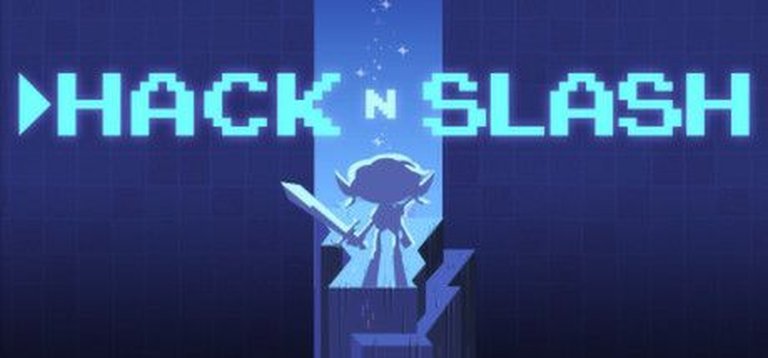
Hack ‘n’ Slash is a puzzle-driven action game inspired by The Legend of Zelda, where players control an elf protagonist armed with a USB sword that allows her to hack into the game’s objects, enemies, and obstacles via USB slots. As the game progresses, she gains a debug interface through a ‘third eye hat’ to analyze object code for clues, with puzzle complexity deepening alongside her ability to manipulate the game’s inner mechanics.
Gameplay Videos
Where to Buy Hack ‘n’ Slash
Hack ‘n’ Slash Cracks & Fixes
Hack ‘n’ Slash Mods
Hack ‘n’ Slash Guides & Walkthroughs
Hack ‘n’ Slash Reviews & Reception
metacritic.com (73/100): Hack ‘n’ Slash teaches everybody with the marvelous art of coding, with funny mechanics and a cute setting.
pcgamer.com : Hack ‘n’ Slash starts as a clever game about game design, but ends up feeling like homework.
ign.com : Somewhat frustrating, though, is that for all the very smart, ambitious, and never-before-tried stuff that Hack N’Slash does so well, it has a tendency to drop the ball on the easy stuff.
opencritic.com (69/100): Hack ‘n’ Slash mostly nails the new things it tries, but stumbles on the simple stuff, making it fun, but flawed.
Hack ‘n’ Slash: Review
Introduction
In the ever-evolving landscape of video games, few titles stand out as uniquely as Hack ‘n’ Slash. Developed by the renowned Double Fine Productions, this game is not just an action-adventure title; it is an experience that blurs the lines between gameplay and programming. Released in September 2014, Hack ‘n’ Slash invites players to delve into the mechanics of game development, offering a glimpse into the inner workings of digital worlds. This review will explore the game’s development history, narrative depth, gameplay mechanics, world-building, reception, and its enduring legacy.
Development History & Context
Double Fine Productions, founded by Tim Schafer, is known for its innovative and quirky games. Hack ‘n’ Slash was born out of the studio’s Amnesia Fortnight 2012 event, an internal game jam where employees pitch and develop game concepts over a two-week period. The game’s prototype, created by senior programmer Brandon Dillon, was inspired by his experience with ROM hacking and his love for The Legend of Zelda. The concept of a game where players could hack the game’s attributes resonated with both the developers and the audience, leading to its full development.
The technological constraints of the era played a significant role in shaping Hack ‘n’ Slash. The game was built using Lua, a lightweight scripting language, which allowed for dynamic and flexible gameplay mechanics. The decision to use Lua was strategic, as it enabled players to interact with the game’s code in a way that was both accessible and educational. The gaming landscape in 2014 was dominated by traditional action-adventure titles, making Hack ‘n’ Slash a refreshing and innovative outlier.
Narrative & Thematic Deep Dive
Hack ‘n’ Slash tells the story of Alice, an elf who finds herself in a mysterious forest filled with puzzles and challenges. The narrative is lighthearted and humorous, with a focus on the absurdity of the situation. Alice’s journey is not just about solving puzzles but also about understanding the mechanics of the game world itself. The dialogue is witty and often references programming and hacking, adding a layer of geeky humor that appeals to both programmers and gamers.
The game’s themes revolve around exploration, problem-solving, and the power of knowledge. Alice’s ability to hack the game’s code represents the player’s own journey into understanding the underlying mechanics of video games. The narrative is not just a vehicle for the gameplay but an integral part of the experience, enhancing the player’s connection to the game world.
Gameplay Mechanics & Systems
At its core, Hack ‘n’ Slash is a puzzle-action game that combines elements of exploration, combat, and programming. The player controls Alice, who is equipped with a USB sword that allows her to interact with objects in the game world. By hacking these objects, players can alter their behavior, solve puzzles, and progress through the game.
The gameplay mechanics are innovative and challenging. Players must learn to use various tools, such as the Third Eye Hat, which allows them to see the code behind objects, and the Magic Loupe, which enables them to enter and modify the game’s algorithms. The difficulty level increases as the game progresses, requiring players to delve deeper into the game’s code and understand more complex programming concepts.
The user interface (UI) is designed to be intuitive and accessible, even for players with no programming experience. The game provides tutorials and hints to help players understand the mechanics, but it also encourages experimentation and exploration. The combat system is minimal, focusing more on puzzle-solving and hacking than on traditional action-adventure gameplay.
World-Building, Art & Sound
The world of Hack ‘n’ Slash is a whimsical and surreal forest filled with puzzles and challenges. The art style is reminiscent of classic 2D platformers, with a focus on clean lines and vibrant colors. The environment is designed to be both visually appealing and functionally relevant, with every object serving a purpose in the gameplay.
The sound design is equally impressive, with a soundtrack that complements the game’s humorous and lighthearted tone. The sound effects are precise and satisfying, enhancing the player’s immersion in the game world. The voice acting is top-notch, with characters like Bob, the red spirit, adding depth and personality to the narrative.
Reception & Legacy
Upon its release, Hack ‘n’ Slash received mixed reviews from critics and players alike. While many praised the game’s innovative mechanics and educational value, others found it too challenging and inaccessible. The game’s average critic score was 76%, with reviews highlighting its unique concept and humorous dialogue. However, some critics noted that the game’s difficulty level and lack of tutorials could be off-putting to casual players.
Despite its mixed reception, Hack ‘n’ Slash has left a lasting impact on the gaming industry. Its innovative approach to gameplay and education has inspired other developers to explore similar concepts. The game’s legacy can be seen in titles like Human Resource Machine and 7 Billion Humans, which also focus on teaching programming concepts through gameplay.
Conclusion
Hack ‘n’ Slash is a groundbreaking title that pushes the boundaries of what a video game can be. Its unique blend of action, adventure, and programming makes it a standout title in the gaming landscape. While it may not be for everyone, its educational value and innovative mechanics make it a worthy addition to any gamer’s library. In the annals of video game history, Hack ‘n’ Slash will be remembered as a pioneering title that dared to teach players about the inner workings of digital worlds.