
- Release Year: 2021
- Platforms: iPhone, Nintendo Switch, PlayStation 3, PlayStation 4, PlayStation 5, PS Vita, Windows Apps, Windows, Xbox One, Xbox Series
- Publisher: 8floor Ltd.
- Developer: Creobit
- Genre: Nonograms, Number puzzle, Picross, Puzzle, Word
- Perspective: Fixed
- Game Mode: Single-player
- Gameplay: Grid-based, logic, Point and select
- Setting: Halloween
- Average Score: 70/100
Description
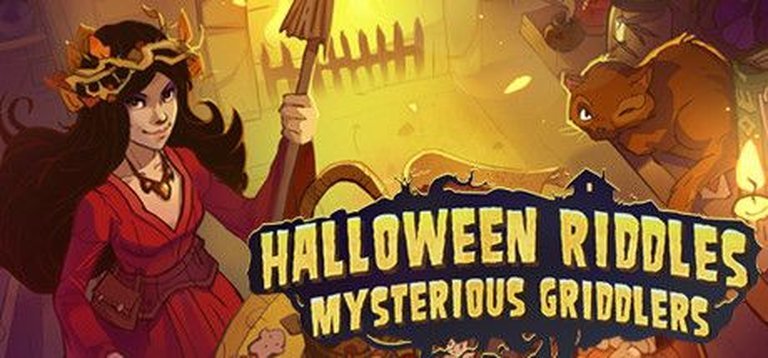
Halloween Riddles: Mysterious Griddlers is a festive logic puzzle game set in a whimsical Halloween world. Players solve 120 grid-based nonograms (picross puzzles) across 6 spooky locations filled with classic holiday icons like witches, monsters, and jack-o’-lanterns. The game emphasizes pure logic gameplay without guessing, featuring an adaptive tutorial system for all skill levels, over 12 hours of puzzling accompanied by relaxing music, and colorful high-quality visuals that immerse players in the seasonal atmosphere. As part of the Griddlers series, it offers special challenges and collectible trophies while delivering brain-teasing fun through traditional Japanese crossword-inspired mechanics.
Where to Buy Halloween Riddles: Mysterious Griddlers
PC
Halloween Riddles: Mysterious Griddlers – A Seasonal Picross Pilgrimage
Introduction
A decade into the indie puzzle renaissance, Creobit’s Halloween Riddles: Mysterious Griddlers (2021) emerges as a niche but earnest love letter to nonogram purists and seasonal enthusiasts alike. Nestled within the studio’s expanding portfolio of themed logic games—from Christmas Griddlers to Olympus Griddlers—this title leverages Halloween’s macabre whimsy to dress up a tried-and-true formula. Does it transcend its lineage as a holiday-skinned picross experience, or does it merely trade innovation for festive garnish? This review dissects its spectral layers, contextualizes its design ethos, and ultimately reveals a game that succeeds precisely because it embraces its modest ambitions.
Development History & Context
Studio Profile & Design Philosophy
Developed by Creobit and published by 8floor Ltd.—a tandem known for flooding the casual puzzle market with iterative titles—Mysterious Griddlers reflects a calculated, assembly-line approach to genre specialization. Creobit’s catalog, including Magic Griddlers (2020) and Griddlers: Victorian Picnic (2019), suggests a studio obsessed with refining rather than redefining the Japanese crossword (nonogram) template. Released on September 8, 2021, the game arrived amidst a surge of low-stakes, mindfulness-focused puzzlers like Dorfromantik and Unpacking, yet chose to double down on traditionalism rather than chase trends.
Technological Constraints & Market Landscape
Built for minimal system requirements (Windows XP SP3 x64, 512 MB RAM), the game prioritizes accessibility over technical ambition. Its lightweight 33 MB footprint and point-and-click interface align with its target demographic: casual players seeking frictionless engagement on aging hardware or low-spec devices like the Steam Deck (where it’s listed as “Playable”). At a time when AAA studios chased photorealistic horror (e.g., Resident Evil Village), Mysterious Griddlers carved a niche as a cozy counterprogrammer—a “happy nightmare” for puzzle devotees.
Narrative & Thematic Deep Dive
Mysterious Griddlers eschews elaborate storytelling, framing its 120 puzzles across six abstract locations as vignettes within a “country of happy nightmares.” The Halloween theme permeates through iconography—witches, glowing Jack-o’-lanterns, cartoonish ghosts—but lacks narrative cohesion. Instead, the atmosphere functions as thematic scaffolding, evoking nostalgia for autumnal traditions without demanding emotional investment.
Characters & Tone
Absent are protagonists or dialogue; the “characters” are the puzzles themselves. Each completed grid reveals Halloween-centric imagery, transforming logic exercises into celebratory rewards. The tone is unapologetically cheerful, blending spooky aesthetics with upbeat music to create a paradoxical “relaxing thriller” vibe—akin to solving crosswords by candlelight in a decorated haunted house.
Thematic Underpinnings
Beneath its festive veneer, the game subtly critiques modern puzzle design’s drift toward guesswork-heavy mechanics. By emphasizing “logic alone” (a recurring mantra in its Steam description), it positions itself as a purist’s refuge in an era of hand-holding and RNG-infused challenges. The Halloween setting isn’t just decorative; it’s a metaphor for confronting the “unknown” through deduction, not luck.
Gameplay Mechanics & Systems
Core Loop & Puzzle Design
The gameplay adheres to classic nonogram rules: players fill grids using numeric row/column clues to unveil pixel-art images. Mysterious Griddlers distinguishes itself through:
– Zero-Guess Enforcement: Algorithms ensure every puzzle is solvable through deduction, eliminating frustration from trial-and-error dead ends.
– Adaptive Tutorials: Two-tiered training modules (beginner/expert) let players skip basics if proficient—a nod to respect for player time.
– Trophy System: 15+ rewards incentivize mastery, though they’re cosmetic rather than gameplay-altering.
UI/UX Innovations & Flaws
The interface is clean but utilitarian, with drag-and-click controls that prioritize function over flourish. A minor critique: the “colorful high-quality graphics” touted in promotional materials often resolve as static, minimally detailed images post-solution, lacking the tactile charm of peers like Picross S.
Replayability & Challenge Curve
With 120 puzzles averaging 6 minutes each (totaling ~12 hours), the difficulty escalates organically from 5×5 to 25×20 grids. However, veterans may crave more complexity; the absence of irregular grids or multi-color picross (à la Paint it Back) limits long-term engagement.
World-Building, Art & Sound
Visual Identity
Creobit adopts a “spooky cute” aesthetic: think Animal Crossing’s Halloween event filtered through a budget puzzler lens. Locations like haunted forests and pumpkin patches burst with saturated hues, though environmental diversity feels superficial—backgrounds are static, non-interactive canvases.
Sound Design
The soundtrack leans into looping, ambient melodies featuring harpsichords and playful chimes. While serviceably atmospheric, tracks lack dynamic variation, risking monotony during extended play sessions. Sound effects (pencil scratches, celebratory chimes upon completion) are satisfyingly crisp but unremarkable.
Atmosphere as Gameplay Enhancer
Crucially, the Halloween theme isn’t mere window dressing. The festive ambiance alleviates the inherent sterility of grid-solving, transforming what could feel like spreadsheet work into a ritualistic celebration. It’s a masterclass in thematic reskinning elevating baseline mechanics.
Reception & Legacy
Launch Reception
The game garnered a “Mostly Positive” Steam rating (70% of 10 reviews at launch), praised for its relaxed vibe but critiqued for lacking innovation. Player reviews highlighted:
“Nothing groundbreaking, but perfect for Halloween.”
“If you love picross, this is a solid seasonal treat.”
Commercial Impact & Evolution
Sales data remains opaque, but its bundling alongside Creobit’s Egypt Picross and Detective Riddles in Steam packs suggests a long-tail, value-driven strategy. While it didn’t disrupt the genre, it cemented the studio’s reputation as a reliable purveyor of themed logic games.
Industry Influence
Mysterious Griddlers exemplifies the viability of seasonal modularity in niche genres. Its success—however modest—paved the way for аналогичные titles like Valentine’s Day Griddlers (2021), proving that thematic reskins can sustain franchises without mechanical overhauls.
Conclusion
Halloween Riddles: Mysterious Griddlers is neither revolutionary nor flawed—it’s a meticulously focused execution of a well-worn formula. For picross enthusiasts, it delivers 12 hours of polished, logic-first puzzles wrapped in a festive skin. For casual players, it’s an accessible gateway into nonograms. Yet its reluctance to innovate beyond aesthetics prevents it from transcending its genre confines.
In the pantheon of puzzle games, it occupies a curious space: a seasonal artifact, content to be a reliable annual ritual rather than a timeless masterpiece. For those seeking a thematic distraction with zero stakes, it’s a cozy bonfire in a genre often obsessed with fireworks. Final verdict: A satisfying, if ephemeral, treat for puzzle purists—best enjoyed with pumpkin spice in hand.