
- Release Year: 2021
- Platforms: Windows Apps, Windows, Xbox One, Xbox Series
- Publisher: Microsoft Corporation
- Developer: 343 Industries, Inc.
- Genre: Action
- Perspective: 1st-person
- Game Mode: LAN, Online PVP
- Gameplay: Shooter
- Setting: Futuristic, Sci-fi
- Average Score: 91/100
Description
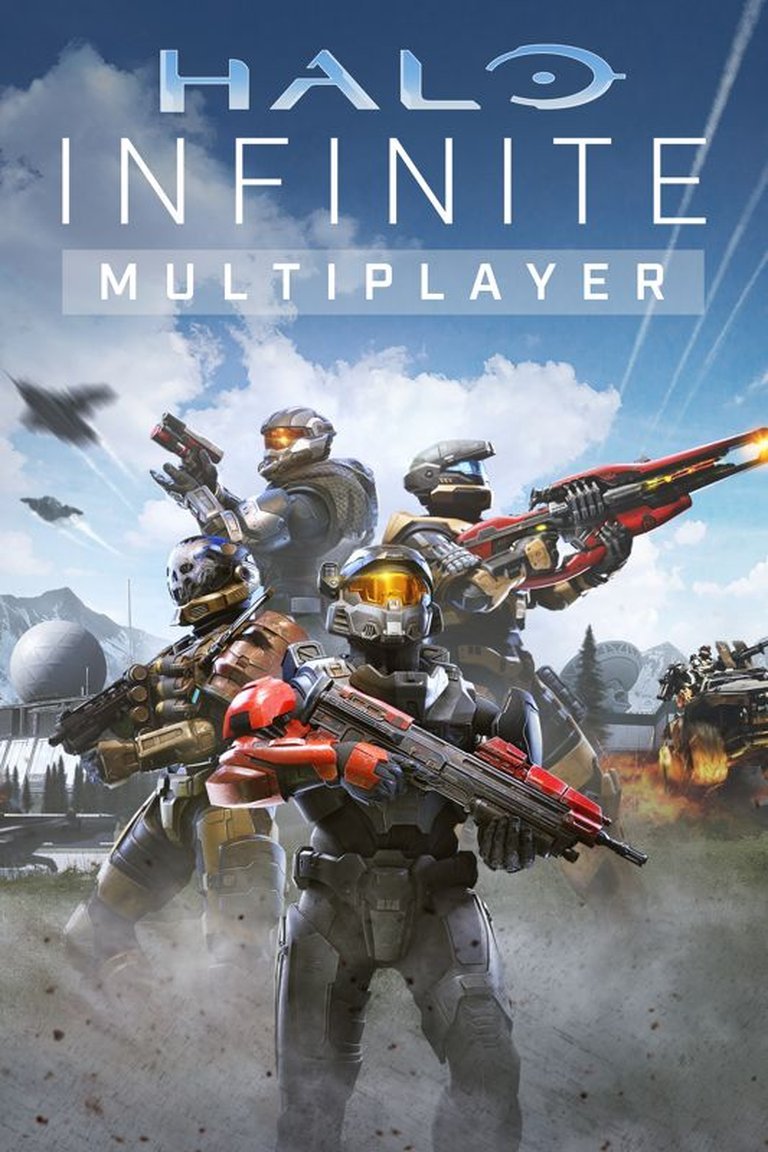
Halo: Infinite – Multiplayer is the free-to-play, standalone multiplayer component of Halo: Infinite, set in a vast sci-fi futuristic universe where players engage in fast-paced first-person shooter combat. It features a variety of multiplayer modes across diverse, weapon-filled maps, continuing the franchise’s legacy with updated gameplay and online or LAN connectivity as part of 343 Industries’ iteration of the iconic series.
Gameplay Videos
Halo: Infinite – Multiplayer Mods
Halo: Infinite – Multiplayer Reviews & Reception
metacritic.com (87/100): In the end, it’s hard not to love Halo Infinite, which is easily the most complete game in a franchise that’s long set the bar for gaming.
ign.com : Halo Infinite revives and reinvigorates the glorious sci-fi action that once made Halo king among multiplayer FPS games.
imdb.com (90/100): After completion of this game on legendary, my entire journey felt so nostalgic, yet it remained so incredibly new.
inverse.com (100/100): ‘Halo Infinite’ is the masterpiece you’ve dreamt of for 20 years.
opencritic.com (87/100): Halo Infinite’s single-player campaign is exactly what this series needed.
Halo: Infinite – Multiplayer: A Definitive Review of a Franchise at a Crossroads
Introduction: The Weight of a Legacy, The Promise of a New Generation
To understand Halo: Infinite – Multiplayer is to understand the immense gravitational pull of its own history. For two decades, the Halo series had been the flagship of console first-person shooters, a benchmark for narrative ambition, sandbox gameplay, and community-driven culture. Following the divisive campaign of Halo 5: Guardians and a prolonged, troubled development, Infinite’s multiplayer emerged not just as a game mode, but as a statement of intent—a free-to-play, live-service vessel tasked with carrying the entire franchise into an uncertain future. Launched in beta on the 20th anniversary of the original Halo: Combat Evolved, it was both a nostalgic homecoming and a radical departure. This review argues that Halo: Infinite – Multiplayer is a profound paradox: a technically superb and mechanically refined return to classic Halo form, simultaneously undermined by a contentious live-service structure and a development saga that left its narrative ambitions fractured. It is the strongest pure Halo multiplayer experience since the Bungie era, yet it arrived as a blueprint for a “platform” that would struggle to fully realize its potential.
Development History & Context: From “Disaster” to “Triumph”
The story of Halo: Infinite’s multiplayer is inseparable from the tumultuous development of the entire project. Following Halo 5, 343 Industries aimed to create a “spiritual reboot” and a “platform” for the next decade. The new Slipspace Engine was built from the ground up to enable this vision, but it quickly became a source of “technical debt,” hampered by outdated tools and a reliance on a rotating cast of contract workers. By summer 2019, two-thirds of the initial game vision was cut, and the studio was described as split into “fiefdoms” with “four or five games being developed simultaneously.”
The July 2020 gameplay reveal was a catastrophic public moment. Widely criticized for its flat lighting, pop-in, and famously meme-ified Brute (“Craig”), it forced a delay from its planned Xbox Series X/S launch title slot. Studio Head Chris Lee departed, and Bungie veteran Joseph Staten was brought in as Head of Creative, ultimately convincing Microsoft to push the release to late 2021. This extra year was critical; the team used it for a significant “glow-up,” improving visuals, polish, and core gameplay feel. The decision to split the multiplayer out as a free-to-play beta in November 2021 was both a savvy marketing move—celebrating the franchise’s 20th anniversary—and a strategic hedge, allowing the team to focus the final push on the campaign. This bifurcated launch, with multiplayer available months ahead of the campaign, fundamentally shaped its perception as a distinct, evolving product.
Narrative & Thematic Deep Dive: The Ghost in the Machine
Unlike any prior Halo game, Infinite’s multiplayer launched with its own serialized narrative, a separate story from the campaign, told through seasonal cinematics and supplementary “Waypoint Chronicles.” This narrative centers on Spartan Commander Laurette Agryna and the Avery J. Johnson Academy of Military Science. It explores the immediate aftermath of Cortana’s “Created” uprising, focusing on the training of a new generation of Spartan-IVs.
- Season 01: Heroes of Reach established the Academy’s origin via a flashback to Agryna’s rescue during the Battle of Earth (2552). It framed the multiplayer as a training simulator for new recruits, with Agryna as a mentor figure.
- Season 02: Lone Wolves introduced Spartan Hieu Dinh and Sigrid Eklund, and the Banished AI Iratus. Dinh, in a moment of desperation, formed a neural link with Iratus, trapping the AI but leaving him in a comatose state. Iratus’s presence became a looming threat, his data archives a source of both intelligence and corruption.
- Season 03: Echoes Within delved into the psychological horror of Iratus’s influence. The AI used Dinh’s own memories to torment him, culminating in Iratus hijacking a Mjolnir suit and threatening to detonate a fusion reactor. This season’s “Unbound” cinematic was the last fully produced season-ending cutscene.
- The Unfinished & The Conclusion: Plans for Season 04 were scrapped as 343 Industries reallocated resources to core multiplayer improvements. The intended narrative would have involved Agryna confronting the growing Iratus Infection, leading to ONI seizing control of the Academy. Instead, the story was concluded not with a bang, but with a whimper and text. The two-part Waypoint Chronicle “Halo: Battle for the Academy” (May-June 2024) provided the definitive, non-interactive ending. It revealed Dinh and the player’s Spartan (“Rook”) attempting to extract Iratus’s core, leading to Iratus initiating a Cole Protocol lockdown, destroying the Academy’s only slipspace vessel, and forcing Agryna to send a distress call to Anvil Station. The final state: the Academy compromised, its secrets exposed, and its survivors scattered, setting a grim, unresolved tone for the future.
Thematic Analysis: This narrative is a poignant microcosm of Infinite‘s entire lifecycle. It tackles themes of legacy, trauma, and institutional corruption. The Academy, built on the ashes of war, is infiltrated by the very enemy it trains to fight, reflecting the franchise’s struggle to move past the Halo 5 era. The abandonment of the planned cinematic arc for a purely digital “Chronicle” ending mirrors the game’s own shift from a promised cinematicAAA campaign to a live-service model where story becomes supplement, not centerpiece. It’s a story about systems failing, about promises broken (Dinh’s to control Iratus), and about a next generation being forged in a compromised environment—much like the multiplayer itself.
Gameplay Mechanics & Systems: A Return to Form, Forged with New Tools
Halo: Infinite’s multiplayer is a masterclass in “easy to learn, difficult to master” design, deliberately hearkening back to the golden age of Halo 3 while integrating select, impactful modernizations.
Core Combat Loop: The bedrock is pristine. The “Silver Timer”—a 0.6-second shield recharge delay after taking damage—is the single most important mechanical change, rewarding burst-fire accuracy and tactical retreats over spray-and-pray. The weapon sandbox is exceptional. Every gun has a clear role, distinct audio-visual feedback, and satisfying “game feel.” The reintroduction of the Battle Rifle (BR75) as a precision power weapon, alongside classics like the Energy Sword and Gravity Hammer, created an instantly recognizable and deep meta. New additions were generally successful: the Disruptor (a short-range, shield-bursting pistol variant) and Skewer (a high-damage, slow projectile) added new tactical layers without breaking the sandbox.
The Grappleshot: A Game-Changer: The single most significant new piece of equipment is the Grappleshot. More than a mobility tool, it is a core combat mechanic. It enables verticality on every map, allows for clutch plays (pulling a flag carrier off a vehicle, yanking a power weapon from an enemy’s hands), and creates a dynamic “rocket-jump” style of movement. Its inclusion felt inspired, adding a skill ceiling without sacrificing the grounded, momentum-based movement that defines Halo.
Equipment & Movement: The equipment system (single-use, map-spawned power-ups like Drop Wall, Threat Sensor, Shock Coil) is a cleaner evolution of Halo 5‘s armor abilities. The return of sprinting and sliding is welcome, but their implementation is subtle—sprint is not unlimited, and sliding is a momentum-based maneuver, not a primary tactic. This maintains the “combat dance” pace of classic Halo.
UI & Progression (The Flawed System): This is where the live-service model introduced its greatest friction. The Battle Pass was lambasted at launch for its glacial progression, requiring hundreds of matches to complete a single tier. 343 Industries quickly adjusted XP gains, but the fundamental structure remained: a convoluted system of Challenges (weekly, daily, season-long) that dictated progression, often forcing players into specific game modes or weapon use. The lack of a simple, match-based XP track was a constant point of frustration. Customization, while deep with numerous armor cores, coatings, and effects, was gated entirely behind this pass and the in-game shop, with no earnable cosmetic rewards for simply playing well—a stark departure from the Reach and Master Chief Collection models.
Forge & Academy: Forge, the legendary map and mode editor, arrived a full year after launch with the Winter Update. Its delayed release was a significant blow to the community’s long-term engagement, though its final implementation was powerful, with scripting and “Undo/Redo” functions. The Academy mode was a superb addition, offering bot matches with adjustable difficulty and weapon drills, serving as an essential training ground and warm-up tool for a game with a high skill ceiling.
World-Building, Art & Sound: A Fractured Beauty
Art Direction: Under Art Director Nicolas “Sparth” Bouvier, Infinite adopted a “return to form” aesthetic that successfully synthesized the clean, iconic designs of the original trilogy with the narrative grit of Reach. The Mjolnir armor (GEN3) was particularly celebrated, feeling bulky, functional, and iconic. The environments of Installation 07 (Zeta Halo) were stunningly diverse—from lush, Pacific Northwest-inspired forests and valleys to the eerie, geometric “Deadlands” of shattered Forerunner structures. The art style sold the fantasy of exploring a massive, ancient ringworld better than any prior Halo.
Sound Design: The audio was a technical triumph. The new sound mapping system made audio propagation realistic—sounds were muffled by walls, echoed in large chambers. The genius “audio threat prioritization” system made incoming fire and enemy sounds louder than player/ally sounds, providing critical spatial awareness without a cluttered HUD. The weapons sounded heavy, punchy, and distinct. The soundtrack, led by Gareth Coker, Joel Corelitz, and Curtis Schweitzer, was a highlight—a blend of ambient exploration themes and pulse-pounding combat cues that felt both new and deeply Halo.
The Crack in the Facade: Despite these strengths, a lingering sense of “unfinished” atmosphere sometimes pervaded. Certain map textures and environmental details could feel sparse, and the open-world campaign’s “copy-paste” outposts (FOBs, Banished outposts) reinforced a feeling of scale without always achieving density. This artistic “good enough” feeling was a direct legacy of the development crunch and the decision to launch the multiplayer separately to buy time.
Reception & Legacy: A Solid Foundation on Shaky Ground
Critical Reception: Upon the multiplayer’s full release (following its beta), critics were overwhelmingly positive. The aggregate MobyGames score is 82% based on critic reviews. Reviews consistently praised the core gunplay, movement, and map design as the best in the series since Halo 3. IGN’s 90% review stated it “delivers a spectacular modern version of one of gaming’s most esteemed first-person shooters.” The return to classic sandbox balance and the addition of the Grappleshot were universal highlights.
Player Reception & Controversy: Player sentiment was, and remains, profoundly divided. The Aggressive Monetization Model was the primary lightning rod. The Battle Pass grind, the perception of “pay-to-win” cosmetic advantages (like the Mongoose vehicle skin that made it harder to see), and the sheer volume of store-only items created a deep resentment. As PC Invasion’s 60% review noted, the “poor PC optimization, and aggressive monetization strategy all bring down the experience and make the game launch feel premature.” The free-to-play model, while necessary to compete with Apex Legends and COD: Warzone, left many feeling the $60 (or included-with-Game-Pass) campaign was subsidizing a multiplayer with a nickel-and-dime shop.
Legacy & Industry Impact: Halo Infinite’s multiplayer legacy is twofold:
1. Mechanical Legacy: It proved that the classic Halo formula—slow kill times, emphasis on positioning, equipment pickups, and symmetrical map starts—could be modernized and remain commercially viable. The Grappleshot has become a permanent, defining fixture of the series.
2. Live-Service Legacy: It serves as a cautionary tale about the perils of the “games as a platform” model for an established, premium franchise. The scrapped Season 04 narrative, the delayed Forge, the player-churn from Battle Pass frustration, and the ultimate cessation of new content (announced in late 2025) demonstrate the immense difficulty of sustaining such a model without a steady stream of meaningful, free content. It did not dethrone the battle royale giants and its player count, while initially strong (20 million by Jan 2022), waned.
Conclusion: The Best Halo Multiplayer in a Generation, Wrapped in a Compromised Vision
Halo: Infinite – Multiplayer stands as one of the most functionally excellent Halo experiences ever crafted. The moment-to-moment gunplay is sublime, the map design (from the tight 4v4 arenas like Aquarius to the epic 24-player chaos of Fragmentation) is exceptional, and the tactical depth provided by the Grappleshot and equipment is transformative. It successfully married the beloved mechanics of the Bungie trilogy with smart, contemporary innovations.
However, it is impossible to divorce this gameplay excellence from the shadow of its live-service execution. The Battle Pass was a misstep that soured the community relationship. The fractured, ultimately truncated narrative told through seasons and digital Chronicles feels like a missed opportunity, a storyline abandoned as resources shifted. The delayed Forge, while eventually powerful, arrived to a diminished audience.
Its place in history is secure yet complicated. It is the game that saved the Halo multiplayer formula from stagnation but also betrayed the premium, complete-game ethos that defined the franchise for 15 years. It is a triumphant return to form that played not for keeps, but for a subscription. For purists, it represents the pinnacle of classic Halo combat updated for a new generation. For those invested in its promised “platform,” it is a monument to ambition curtailed by reality. Halo: Infinite – Multiplayer is, therefore, the ultimate Halo paradox: a masterpiece of mechanics burdened by the machinations of its own business model. It proved the core could still sing, but the song was ultimately incomplete.