
- Release Year: 2020
- Platforms: Windows
- Publisher: Gexagon VR
- Developer: Gexagon VR
- Genre: Action
- Perspective: 1st-person
- Game Mode: Single-player
- Gameplay: Shooter
- Average Score: 85/100
- VR Support: Yes
Description
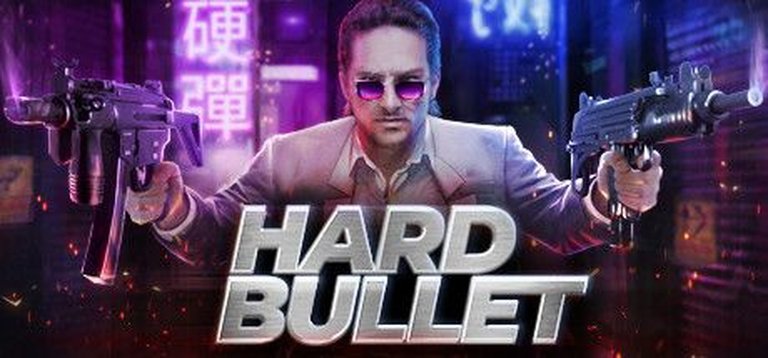
Hard Bullet is a first-person shooter game developed by Gexagon VR, released in 2020. Set in a dynamic, action-packed environment, the game initially focuses on arena-based combat and sandbox modes, allowing players to test their skills against waves of enemies. While it launched without a full single-player campaign due to budget constraints, the developers planned to introduce a rogue-like narrative story mode in future updates, alongside new weapons, enemies, and physics enhancements. The game emphasizes fast-paced gameplay and regular content updates to expand its replayability.
Gameplay Videos
Where to Buy Hard Bullet
PC
Hard Bullet Mods
Hard Bullet Guides & Walkthroughs
Hard Bullet Reviews & Reception
steamcommunity.com : I’ll be honest. $20 USD is steep for the current content provided, although I know this is alpha.
steambase.io (84/100): Hard Bullet has earned a Player Score of 84 / 100.
metacritic.com (86/100): User Score: Generally Favorable Based on 5 User Ratings 8.6
xrsource.net : Hard Bullet on Meta Quest is clearly outclassed by its PCVR predecessor.
Hard Bullet: A Flawed but Fascinating VR Power Fantasy
Introduction
Hard Bullet is a game that embodies the duality of modern VR development: a title brimming with potential, yet hamstrung by its own ambitions and the realities of indie game creation. Released in October 2020 by GexagonVR, this physics-based action sandbox promises a visceral, slow-motion ballet of violence inspired by the cinematic gunplay of John Woo. However, its journey from Early Access to its current state—now expanded to Meta Quest—reveals a game caught between its aspirations and its limitations. This review dissects Hard Bullet’s evolution, its mechanical brilliance, its narrative stumbles, and its place in the VR landscape.
Development History & Context
GexagonVR, a studio with a modest but respectable portfolio (QBike: Cyberpunk Motorcycles, Nevrosa), entered the VR arena with Hard Bullet as an Early Access title. The game’s development has been a study in iterative design, with the studio frequently engaging with its community to shape updates. Initially, Hard Bullet was a barebones sandbox—arenas, guns, and physics-driven gore—with little structural direction. The studio’s early roadmaps promised a narrative mode and roguelike elements, but these were later scaled back due to budget constraints, a decision that sparked backlash from players who had purchased the game under those expectations.
The game’s technical foundation is built on Unity, a choice that reflects both its accessibility for indie developers and its limitations in delivering high-fidelity VR experiences. The transition to Meta Quest in 2025 marked a significant milestone, though the standalone version’s performance and visual fidelity lag behind its PCVR counterpart. This disparity underscores the challenges of optimizing a physics-heavy game for mobile VR hardware.
Narrative & Thematic Deep Dive
Hard Bullet’s narrative—or lack thereof—is its most glaring weakness. The game’s premise is thin: players are thrust into a neon-drenched city overrun by faceless enemies, with no context for the conflict. Early promises of a “narrative story mode” were abandoned, leaving the game’s world feeling hollow. The 2024 announcement of a story/roguelike mode for 2025 suggests an attempt to rectify this, but the damage to player trust had already been done.
Thematically, Hard Bullet draws heavily from Hong Kong action cinema, emphasizing style over substance. The game’s “Ride” mode—where players survive waves of enemies to earn currency—is a mechanical stand-in for narrative progression. The absence of characters, dialogue, or even environmental storytelling reduces the experience to a series of violent vignettes. This isn’t inherently bad—games like Hotline Miami thrive on minimalism—but Hard Bullet’s lack of direction leaves it feeling incomplete.
Gameplay Mechanics & Systems
Core Loop
Hard Bullet’s gameplay revolves around its physics-driven combat and slow-motion mechanics. Players can:
– Dual-wield weapons (pistols, SMGs, katanas) with VR precision.
– Engage in melee combat, dismembering enemies with brutal efficiency.
– Activate “bullet time” to dodge attacks or line up cinematic shots.
– Interact with the environment, using objects as improvised weapons or cover.
The game’s two modes—Tactical (realistic recoil, limited ammo) and Arcade (over-the-top action)—cater to different playstyles. The sandbox mode allows for creative experimentation, while the arena-based “Ride” mode offers structured challenges.
Combat & Physics
The game’s physics are its standout feature. Enemies react dynamically to gunfire, melee strikes, and environmental hazards. Dismemberment is visceral, with limbs flying realistically and blood splattering across surfaces. The slow-motion system, while not as polished as Superhot VR’s, allows for dramatic, Matrix-like sequences.
However, the combat is undermined by flawed enemy AI. Opponents often rush the player in predictable waves, with little tactical variation. The lack of cover mechanics or enemy coordination makes encounters feel repetitive.
Progression & Customization
Progression is tied to unlocking new weapons via in-game currency, but the system lacks depth. There’s no skill tree, no persistent upgrades, and no meaningful meta-progression. The promised roguelike mode could address this, but as of 2026, it remains unreleased.
World-Building, Art & Sound
Visual Design
Hard Bullet’s aesthetic is a cyberpunk pastiche, with neon-lit streets and gritty interiors. The art direction is serviceable but unremarkable, leaning heavily on Unity’s standard assets. The game’s gore effects are its most impressive visual element, with blood physics and dismemberment that rival Gorn’s brutality.
Sound Design
The audio design is functional but forgettable. Gunfire lacks punch, and the soundtrack is a generic synthwave loop. The absence of voice acting or ambient dialogue further emphasizes the game’s narrative void.
Reception & Legacy
Hard Bullet’s reception has been mixed but generally favorable, with a Steambase Player Score of 84/100 based on over 6,000 reviews. Players praise its physics and sandbox freedom but criticize its lack of content and direction. The Meta Quest version, while accessible, suffers from performance issues and stripped-down visuals.
The game’s legacy is one of unfulfilled potential. It stands as a cautionary tale about overpromising in Early Access, but also as a testament to the appeal of pure, unadulterated VR violence. Its influence is limited, though it shares DNA with titles like Boneworks and Gorn.
Conclusion
Hard Bullet is a game of contradictions: a technical showcase with shallow design, a power fantasy with no narrative weight, and a community-driven project that struggled to meet its own ambitions. For players who crave visceral VR combat, it delivers in spades. For those seeking depth or coherence, it falls short.
Final Verdict: 7/10 – A flawed but fun VR sandbox that prioritizes spectacle over substance.
Hard Bullet is worth experiencing for its physics and slow-motion gunplay, but its lack of direction and broken promises prevent it from being a classic. If the promised story/roguelike mode materializes, it could yet evolve into something greater. Until then, it remains a curiosity—a game that could have been so much more.