
- Release Year: 2016
- Platforms: Windows
- Publisher: Pb Studios
- Developer: Pb Studios
- Genre: Simulation
- Perspective: Fixed / flip-screen
- Average Score: 42/100
Description
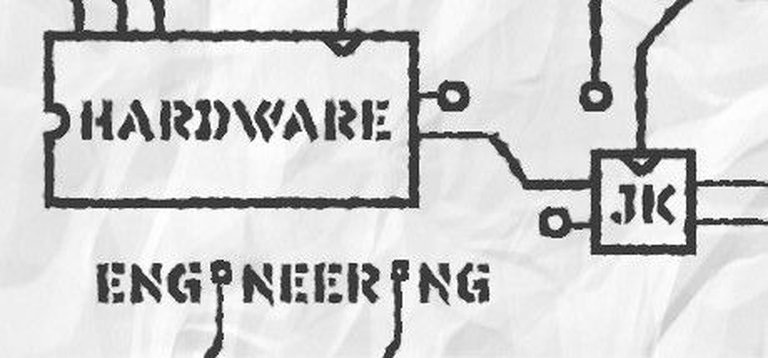
Hardware Engineering is a 2016 Windows simulation game developed and published by Pb Studios, featuring fixed/flip-screen visuals and a point-and-select interface. As part of Steam Early Access, it immerses players in the world of computer hardware design and engineering, simulating the challenges of managing a tech company in the competitive semiconductor industry, though specific details on gameplay mechanics remain sparse in available documentation.
Hardware Engineering Cracks & Fixes
Hardware Engineering Reviews & Reception
steambase.io (42/100): Mixed
Hardware Engineering: Review
Introduction
In the annals of indie game development, few titles embody the intoxicating blend of ambition and hubris quite like Hardware Engineering. Released into Steam Early Access on September 28, 2016, by the obscure Pb Studios, this simulation promised to bridge the gap between casual gaming and real-world digital circuit design, transforming players into virtual hardware engineers capable of tackling college-level concepts without prerequisite knowledge. Amid the 2010s Early Access boom—where dreams of player-funded innovation often clashed with harsh technical realities—Hardware Engineering stood out as an educational outlier, a “design-and-simulate” gem aiming for infinite creativity in logic gates and complex circuits. Yet, its legacy is one of unfulfilled potential, marred by online-only dependency, rampant bugs, and eventual abandonment. This review argues that while Hardware Engineering innovated boldly in gamifying STEM education, its mechanical fragility and developer disappearance render it a cautionary tale rather than a triumph, deserving rediscovery only by die-hard simulation historians.
Development History & Context
Pb Studios, a minuscule indie outfit with scant online footprint beyond this project, entered the fray during a golden era for accessible simulations. The mid-2010s saw a surge in “tycoon” and engineering sims—titles like Software Inc., Hardware Tycoon (a 2016 browser-based cousin), and Democracy 3: Social Engineering—capitalizing on players’ fascination with building empires from code and circuits. Hardware Engineering‘s vision was purer: not mere management, but hands-on digital logic simulation “as close to reality as possible,” with simplifications for broad appeal. Developers touted tutorials easing novices from AND/OR gates to intricate processors, all while preserving playability.
Technological constraints shaped its DNA profoundly. Born with cross-platform dreams (tablets, smartphones), it adopted an online-only architecture early on—servers handling simulation complexity to offload client hardware. This “design choice,” as Pb Studios noted in Steam descriptions, enabled scalability but proved fatal. Released in alpha, the game leaned on Steam for distribution, aligning with Valve’s Early Access ethos of iterative community feedback. Initial updates promised rewrites for full release, modding tools (editable components/levels in readable formats), and multiplayer alpha competitions.
The 2016 gaming landscape amplified its novelty: VR hype, battle royales, and AAA blockbusters dominated, leaving niche edutainment underserved. Pb Studios’ single-dev vibe (inferred from sparse credits and forums) mirrored indie successes like Kerbal Space Program, but lacked polish. By 2017, updates ceased; servers faltered, leading to black screens and launch failures. Steam discussions (196 active threads as of recent crawls) devolve into pleas—”Doesn’t Work,” “Game is dead because online only?”—culminating in delisting. VideoGameGeek marks it “UNRELEASED GAME – CANCELLED,” a relic of Early Access pitfalls where 70% of projects stalled per industry stats.
Narrative & Thematic Deep Dive
Hardware Engineering defies traditional narrative structures, embodying the “holy trinity” of game writing—plot, characters, lore—in abstracted, mechanical form. Absent overt storytelling (no protagonists, dialogue, or cinematics), its “plot” unfolds as a player-driven progression loop: tutorials introduce theorems, design workspaces demand implementation, and task lists validate ingenuity. This mirrors narrative design principles from sources like Pixune’s guide—flexible, modular arcs where “every gameplay loop ties back to foundational anchors” of learning and optimization. Levels escalate from basic logic (e.g., NAND universality) to college-equivalent feats (multiplexers, state machines), with infinite solutions fostering replayability akin to branching plots in Mass Effect.
Characters? None anthropomorphic, but components personify agency—gates as stubborn allies, wires as narrative threads weaving causality. Themes probe metaphysical engineering philosophy: efficiency vs. elegance, where “ingenuous designs” evoke lore-like myths of optimization (e.g., competing online for leaderboard supremacy). Drawing from Reddit’s lore/history debate, Hardware Engineering‘s “history” is tutorial-proven facts (Karnaugh maps, flip-flops), while “lore” emerges in sandbox experimentation—player-forged circuits as folklore, metaphysical queries like “Can this simulate a CPU?” echoing Ellie’s infected musings in TLOU.
Underlying motifs champion democratized STEM: no prior knowledge required, yet steep curve demands “reading and thinking effort,” per manual. It thematizes perseverance (daily one-level plan) and creativity’s bounds (budget/complexity limits mimicking real R&D). Environmentally, UI elements “tell” stories—error logs as journals, test benches as climactic trials. Flawed? Pacing ignores emotional anchors; frustration supplants wonder, lacking Celeste-style harmony.
Gameplay Mechanics & Systems
At its core, Hardware Engineering deconstructs digital design into addictive loops: learn-design-test-iterate. Tutorials dispense theory (e.g., Boolean algebra), transitioning to workspaces where point-and-select interface assembles components—logic gates, registers, ALUs—via fixed/flip-screen views for zoomed precision. Outputs face task gauntlets: pass all? Advance. Infinite paths reward optimization (fewer gates = elegance), enforcing ingenuity at higher tiers.
Modes dissect progression:
– Tutorial/Design: Slow-paced building blocks, designing components from primitives. Achievements (25+ hidden) gamify mastery.
– Sandbox: Infinite canvas for creation/debugging/saving/sharing; scripting editors for custom levels/components.
– Challenge/Online: Budget limits, multiplayer alpha (leaderboards)—Alpha-tested competition.
Progression scales steeply: novices grasp basics in hours; experts simulate real hardware. UI shines functionally—readable formats enable modding—but falters in intuitiveness (black screens plague launches). Combat? Absent; “battles” are debug wars against timing glitches. Flaws abound: online-only mandates servers (now dead), yielding unplayability on Win11/modern OS. Steam bugs (89 threads) highlight crashes, absent offline mode. Innovative? Moddability prefigures Kerbal‘s extensibility; flaws echo Early Access woes, subverting loops into dead-ends.
| Mechanic | Strengths | Weaknesses |
|---|---|---|
| Circuit Simulation | Realistic, infinite solutions | Server-dependent, steep curve |
| UI/Interface | Point-select precision, editable formats | Clunky, bug-prone (black screens) |
| Progression | Tutorial-to-college arc, achievements | No offline, abandoned updates |
| Modding | Built-in editors for levels/components | Undocumented, community extinct |
World-Building, Art & Sound
The “world” is a sterile lab of abstraction: fixed/flip-screen canvases evoking oscilloscopes, not immersive realms. Atmosphere prioritizes functional minimalism—grids, wires, probes in monochromatic schematics, fostering focus over flair. Visual direction serves education: color-coded signals (high/low), zoomable hierarchies build hierarchical comprehension, akin to Dark Souls‘ item lore but for ICs.
No sprawling setting; instead, procedural workspaces expand infinitely in sandbox, “building” via player agency. Contributions? Immense—circuits pulse with simulated life, tests yield emergent “events” (race conditions as horror). Art direction: utilitarian 2D, no concept galleries (MobyGames lacks screenshots), prioritizing simulation fidelity over spectacle.
Sound design? Inferred sparse—beeps for passes/fails, no OST per sources. Silence amplifies contemplation, but absence grates in long sessions. Collectively, elements craft cerebral immersion: visuals/atmosphere evoke lab sterility, reinforcing themes of precision amid chaos. Flaw: unpolished alpha aesthetics (per forums) undermine wonder, unlike Portal‘s witty polish.
Reception & Legacy
Launch reception? Muted catastrophe. MobyGames/Reviews pages: zero critic/player reviews. Steam: Mixed (42/100) from 220 reviews (93 positive, 127 negative), praising concept (“great idea for learning logic”) but damning execution (“doesn’t launch,” “dead game”). Forums scream abandonment: 196 threads on black screens, refunds, Win11 woes; pinned fixes obsolete post-delisting.
Commercially: Early Access sales unknown, but delisting (post-2017) erased viability. Reputation evolved from hopeful ed-sim to cautionary relic—VideoGameGeek/ModDB label “cancelled,” Steam discussions query “is it still happening?” (2024 posts). Influence? Nil directly; inspired no successors, though parallels Hardware Engineers (2016 IT tycoon) or Joy of Programming (2024). Broader impact: epitomizes Early Access failures (servers down = unplayable), echoing debates on edutainment sustainability. Academic nods (MobyGames’ 1,000+ citations) may preserve it as STEM history artifact.
Conclusion
Hardware Engineering aspired to alchemy—transmuting logic gates into playable pedagogy—delivering a mechanically rich sim whose tutorials, sandbox, and modding glimpsed college-level mastery. Yet, online-only shackles, bugs, and Pb Studios’ vanishing act doomed it to obscurity, a ghost in Steam’s graveyard. As video game history, it claims a niche: bold edutainment experiment amid 2016’s sim renaissance, warning indies of overambition sans infrastructure. Verdict: 6/10—commendable vision for circuit savants willing to emulate locally (if preserved), but ultimately a fragmented prototype. Seek alternatives like Turing Complete for living legacy; mourn what Pb Studios might’ve engineered next.