
- Release Year: 2009
- Platforms: Windows
- Developer: Thomas van der Velden
- Genre: Action
- Perspective: First-person
- Game Mode: Single-player
- Gameplay: Key hunting, Shooter
- Setting: Cyberpunk, dark sci-fi
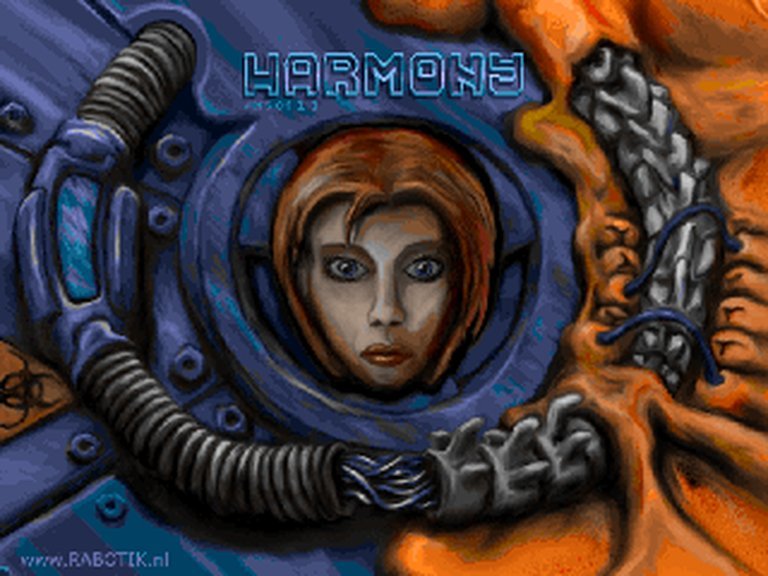
Description
Harmony is a freeware first-person shooter built on the ZDoom engine, set in a cyberpunk and dark sci-fi world. Players control the female protagonist Harmony as she fights through eleven large levels filled with enemies, key-hunting puzzles, and fast-paced action reminiscent of 1990s classics like Doom and Duke Nukem 3D, featuring high-resolution claymation sprites, standard FPS weapons, and an original MP3 soundtrack.
Where to Buy Harmony
PC
Harmony: A Cyberpunk Requiem in the Doom Engine
1. Introduction: The Last Byte of a Dying World
In the landscape of 2009 game development, dominated by increasingly photorealistic AAA productions and the burgeoning indie scene on platforms like Steam, Harmony stands as a deliberate anachronism—a passionate, solitary love letter to the golden age of 1990s first-person shooters, crafted not with a commercial eye, but with the obsessive devotion of a classicist. Built not on a proprietary engine but on the liberated, open-source heart of Doom itself via the ZDoom source port, Harmony is a testament to the enduring vitality of the modding community. Its thesis is twofold: first, that the tight, frantic, maze-exploration gameplay of Doom and Duke Nukem 3D remains a potent and satisfying design paradigm; and second, that this timeless gameplay chassis can carry a surprisingly mature, dark, and thematically cohesive narrative often absent from its 1990s predecessors. It is a game that asks whether a 16-year-old engine can still feel fresh, and whether a freeware mod can possess the artistic weight of a full commercial release. The answer, resolutely, is yes—flaws and all.
2. Development History & Context: One Man, Five Years, One Engine
Harmony is the magnum opus of a single creator: Thomas van der Velden (credited as T.V. or Rabotik), a well-established figure in the Doom modding community. Development spanned an arduous five years, from circa 2004 to its final release in December 2009. This places it in a unique transitional era: post-Doom 3’s scripted horror, pre-indie boom’s digital renaissance, and squarely in the golden age of the Doom engine’s second life through advanced source ports like ZDoom, GZDoom, and their derivatives.
Van der Velden’s vision was explicitly retro-referential. In the game’s credits, he states: “DOOM2 [the best game ever made without which Harmony would not exist]”. This is no hyperbole; Harmony is a “total conversion” (TC), a mod that replaces virtually every asset of Doom II—textures, sprites, sounds, maps, and gameplay logic—while retaining the core engine’s architecture. The technological constraints were self-imposed: the id Tech 1 engine (the Doom engine) has hard limits on sprite size, map complexity, and visual effects. Van der Velden’s ingenuity is in pushing these limits through ZDoom’s extended features (like high-resolution sprites and DECORATE/DEHACKED for custom actor behavior) while still operating within the engine’s original design philosophy of fast, 2.5D gameplay.
The gaming landscape of 2009 was shifting towards 3D-centric design and narrative-driven experiences. Harmony’s choice to look backward was thus a conscious, niche statement. It existed not to conquer the market but to prove a point within the dedicated Doom modding community, a world sustained by forums like Doomworld and tools like Doom Builder, DCK, and the myriad utilities listed in the credits. Its ultimate validation came not from mainstream sales (it was freeware) but from peer recognition: winning The 16th Annual Cacowards (2009), the most prestigious award in the Doom modding scene.
3. Narrative & Thematic Deep Dive: The Tragedy of the Last Woman
Where many classic Doom clones offered thin,嘗 excuses for carnage (“aliens,” “demons,” “Nazis”), Harmony constructs a surprisingly dense and bleak sci-fi dystopia.
Plot: The game is set in a post-apocalyptic Earth shattered by the “Pax Pox,” a supervirus that didn’t kill men but mutated them into violent, Berserker-like creatures—a brutal twist on gendercide. The surviving women have formed a resistant faction known as the “Amazons.” The protagonist, Harmony, is an Amazon soldier on a desperate mission to rescue her leader and friend, Amira, who was abducted during a raid on an Amazon base by the mutant “Pax Pox” forces (led by the monstrous Echidna). Over 11 levels, Harmony battles through industrial complexes, underwater labs, and alien hives, driven by this singular objective.
The narrative is delivered environmentally and through scattered computer terminal messages (a classic Doom engine trope repurposed elegantly). The climax arrives in the final level, “The Hive.” After defeating the colossal final boss Echidna, a post-battle analysis reveals a devastating truth: Echidna was Amira. The virus, thought to be male-specific, had finally claimed a female victim—its first and most significant. Harmony’s mission was not a rescue but a tragicomic execution of her own leader. The surviving women are now also subject to mutation, rendering their victory hollow. The original release ended on this “Sudden Downer Ending,” a profound subversion of the classic video game “save the princess” trope.
The 2022 Updated Re-release (bundled with the Doom and Doom II enhanced editions) adds a crucial Playable Epilogue (two new levels). Here, Harmony discovers the “Omega”—the last “harvest” or source of the virus. She destroys the cocoons containing the mutagens, ending the crisis. However, this offers no redemption for Amira and leaves the existential question of repopulation unanswered. The ending remains bittersweet, a pyrrhic victory that underscores the game’s grim, uncompromising tone.
Characters & Themes:
* Harmony: An atypically verbose and determined female protagonist for the genre. Her journey is one of grim duty, culminating in horrific revelation.
* Amira/Echidna: The game’s emotional core is the tragedy of Amira. Her transformation into the Big Bad is not a possession but a literal, physical mutation. She becomes the monster she was trying to stop, making her both the villain and the ultimate victim.
* Core Themes: The narrative explores inescapable fate, the corrosion of identity by a biological plague, and the futility of resistance in a fundamentally broken world. The Crapsack World is literal: Earth is a toxic, war-torn hellscape. Thematically, it’s a cyberpunk/gothic horror fusion, interrogating bodily autonomy and extinction through the lens of a viral pandemic—a theme that gained renewed, terrifying relevance in the 2020s.
4. Gameplay Mechanics & Systems: The Classic脉搏, With Claymation Teeth
Harmony’s gameplay is a masterclass in authentic retro-FPS design, built on the foundational principles of Doom but refined with modern modding sensibilities.
Core Loop: The experience is quintessential 1990s shooter: run, gun, swap weapons, explore maze-like levels, find colored keys, and slaughter hordes of enemies. There is no regenerating health, no cover system, no QTEs. Health and ammo are pickups scattered strategically. The pace is fast, demanding spatial awareness and resource management.
Weapon Progression: The arsenal is a direct homage to Doom and Duke Nukem 3D, but with distinct twists:
* Basic Fist/Chainsaw: Melee options.
* Pistol/Shotgun: Starter weapons.
* Gatling Gun: The iconic rapid-fire weapon. The TV Tropes notes its precision when fired in controlled bursts, mirroring Doom‘s chaingun but with a higher fire rate and spread—a risk/reward tool.
* Rocket Launcher / Grenade Launcher: Area-denial weapons. The grenades are explicitly noted as “dangerously explosive,” capable of harming the player—a classic Doom mechanic embraced here.
* Entropy Thrower: A unique energy-based weapon, described as a “more effective version of the basic weapon” that consumes ammo, offering a specialized combat style.
* Neutron Gun: The pinnacle ranged weapon, with infinite ammo but a slow projectile speed. This makes it a tactical “ranged emergency weapon” for precise shots rather than spam.
* Plasma Rifle: A late-game energy weapon for rapid fire.
Combat & Enemies: Enemies are a mix of humanoid mutants and bizarre creations. The Pax Pox mutants provide cannon fodder. The true challenge comes from Centaurs—large, tanky enemies armed with dual rocket/landmine launchers. They are explicitly called “Damage-Sponge Boss” types, often dominating entire maps (like Map 06: The Weapons Factory) and forcing players to manage space and firepower. Enemy sprite design, using claymation, is a defining feature, giving them a grainy, tactile, unsettling realism compared to pixel art.
Level Design: The 11 levels are “large” and explicitly “maze-like,” requiring backtracking and key hunting. The design philosophy prioritizes environmental storytelling and non-linear progression paths (the “Broken Bridge” trope) over guided corridor experiences. Hints are found in dead soldier messages (“Dead Man Writing”). The Eternal Engine aesthetic (industrial complexes, foundries, laser hallways) creates a cohesive, oppressive atmosphere. Notably, despite ZDoom supporting jumping, Harmony is designed without jumping in mind, blocking progress with “Insurmountable Waist-Height Fences” to maintain the precise, grounded movement of classic Doom.
UI & Systems: The interface is a direct clone of the Doom HUD—minimalist, functional. The “DEHACKED” file (created with WhackEd2) allows for custom behavior for weapons and monsters within the engine’s limits. The game is a standalone IWAD, meaning it can be launched directly through ZDoom without needing the original Doom II data files in its initial releases. The later “Compatible Edition” reverted to requiring the Doom II IWAD for broader source port compatibility.
Innovation vs. Flaw: The core innovation is the complete aesthetic and narrative overhaul on a classic engine. The claymation sprites are a standout technical and artistic achievement for the engine, providing HD, realistic monsters. However, the adherence to classic Doom design also locks in its flaws: the maze-like levels can be confusing, key-hunting can feel archaic, and the lack of a manual save (relying on auto-saves at level starts) can be punishing. The game doesn’t reinvent the wheel; it polishes a specific, beloved wheel to a mirror shine.
5. World-Building, Art & Sound: A Gritty, Melancholy Masterpiece
Visual & World Design: Harmony’s world is a masterclass in cohesive, low-poly cyberpunk horror. The setting is a cyberpunk / dark sci-fi vision of a dead Earth. Levels are a progression through the conflict:
* MAP01-MAP03: Urban ruins and Amazon bases, introducing the conflict.
* MAP04-MAP05: Industrial facilities (The Water Treatment Plant, The Mining Facility).
* MAP06: The Weapons Factory: The quintessential Eternal Engine—a sprawling, hazardous complex of lava foundries and laser grids, teeming with Centaurs.
* MAP07-MAP09: More varied facilities, including a communication tower.
* MAP10: The Underwater Lab: A claustrophobic, aquatic research station featuring the “Meat Moss” of the Pax Pox.
* MAP11: The Hive: The Womb Level, a cavernous, flesh-colored organic nightmare culminating in the fight against Echidna/Amira.
The art direction uses a muted, grimy palette. Textures are high-resolution but intentionally industrial, biological, and decayed. The use of claymation for all high-resolution enemy sprites is the game’s most iconic visual trait. This technique gives the mutants and creatures a grotesque, tangible weight and a eerie, uncanny valley presence that pure pixel art or pre-rendered 3D sprites of the era often lacked. It’s a bold, low-tech solution that achieves a uniquely disturbing aesthetic.
Sound Design & Music: The audio is a layered, atmospheric experience.
* Sound Effects: Drawn from a diverse pool—Freedoom project samples, sounds from Hacx (with permission), stock animal sounds, and heavily modified originals. The gunfire is punchy, the mutant shrieks are visceral, and environmental sounds (dripping water, industrial hums) build dread. The 2022 re-release, handled by id Software sound designer Chad Mossholder, “redid” these effects, modernizing them for contemporary ears while preserving the original’s spirit.
* Music: The original soundtrack consists of three ambient/industrial tracks from Kyū’s 2009 album “The Edge”. These are sparse, brooding, and atmospheric, used across multiple maps to create a constant, melancholic undertone. The 2022 re-release’s inclusion of James “Jimmy” Paddock’s “Harmony MIDI Pack” was a significant addition, providing a full, original soundtrack composed specifically for the game’s levels and mood, offering a more melodic and varied listening experience for new players.
Together, the art and sound craft a world that feels both retro-futuristic and terminally ill—a perfect match for its narrative of extinction and failed hope.
6. Reception & Legacy: A Cult Classic’s Journey to Canon
Contemporary Reception (2009): Harmony was reviewed primarily within the niche PC gaming and Doom modding press. The Metacritic/aggregate score of 78% from three critics reflects a positive but not universally rapturous reception.
* Abandonia Reloaded (90%): Praised the “excellent” gameplay, “interesting level design,” and “fast-paced exciting atmosphere,” while noting the soundtrack was “good, but too short.”
* Freegame.cz (75%): Recognized the classic Doom feel and fun weapon variety but noted the inevitable “key-hunting” cliché and found the gameplay solid but not revolutionary against its inspiration.
* PlnéHry.cz (70%): The most critical, stating it didn’t strive for enough originality against Doom and Duke Nukem 3D but conceded it was “as tasty as saffron” (highly enjoyable) for fans of the genre.
The player reception (average 3.3/5 on Moby from 3 ratings) is sparse, typical for a freeware mod not on major storefronts at the time.
The Cacoward: Its true validation was winning the 2009 Cacoward. This award from Doomworld is the highest honor in the Doom modding community, placing Harmony in the pantheon of exceptional fan creations alongside other legendary TCs like Aliens: The Ultimate Doom Mod or Hacx.
Legacy & Evolving Reputation: For over a decade, Harmony lived in the memory of the hardcore Doom modding scene. Its legacy was secured by its quality and distinct identity. The turning point was its official curatorial inclusion in the 2022 “Classic Add-Ons” for the enhanced, modern re-releases of Doom and Doom II by id Software/Bethesda. This was a monumental act of preservation and validation:
* It meant Harmony was now packaged and distributed alongside the official, modern versions of the game that birthed it.
* It received a technical update (the “Compatible Edition” in 2023) for compatibility with modern source ports like Crispy Doom and GZDoom.
* It included new content: two epilogue levels, a new monster, a new music track, and completely redone sound effects.
* It introduced the game to a whole new generation of players who may never have touched a Doom engine game otherwise.
This act transformed Harmony from a beloved mod to a canonical piece of the Doom franchise’s extended universe. It is now formally recognized as one of the “greatest hits” of Doom modding. Its influence is subtler than some commercial titles; it doesn’t spawn clones but serves as a gold standard for total conversions—proof that a single developer can craft a full, narratively rich, aesthetically distinct experience using a 30-year-old engine with passion and ingenuity.
7. Conclusion: A Defiant, Beautiful Anachronism
Harmony is not a perfect game. Its level design can be bewildering, its weapon feedback sometimes indistinct, and its adherence to 1990s mechanics will feel archaic to those weaned on modern FPS conventions. Yet, to dismiss it on these grounds is to miss its profound achievement. It is a defiant, beautiful anachronism.
Its genius lies in the total synthesis of form and content. The claustrophobic, key-laden, hazard-strewn levels aren’t just old-school design; they embody the desperation and maze-like struggle of a dying world. The claymation monsters, born from a low-tech process, feel more repulsive and real than any high-poly model of its time, perfectly visualizing the grotesque mutation at the story’s core. The bleak synth soundtrack and industrial soundscape don’t just accompany the action; they define the atmosphere of a planet in its death throes.
In video game history, Harmony represents the enduring power of the modding ethos. It is a monument to what a dedicated, skilled individual can achieve with a classic toolset and an uncompromising vision. It proves that the Doom engine, decades after its release, could still be a vessel for sophisticated storytelling and cohesive artistic direction. Its journey from a five-year solo project to a Cacoward winner to an officially curated piece of Doom‘s legacy is a narrative arc worthy of its own game.
Final Verdict: Harmony is an essential, if niche, artifact. For historians, it’s a case study in passionate, engine-limited development. For players, it’s a gripping, 11-hour journey through a brilliantly realized hellscape with one of the medium’s more haunting narrative revelations. It is not merely a throwback; it is a work that uses the past to say something deeply felt about fate, sacrifice, and the cost of survival. In the canon of Doom engine masterpieces, it stands shoulder-to-shoulder with the best, a cyberpunk tragedy etched in sprites and sound.