
- Release Year: 2024
- Platforms: PlayStation 5, Windows, Xbox Series
- Publisher: Slow Bros.
- Developer: Slow Bros.
- Genre: Adventure
- Perspective: Third-person
- Game Mode: Single-player
- Gameplay: Graphic adventure, Puzzle elements
- Setting: Futuristic, Sci-fi, Space station, Spaceship
- Average Score: 84/100
Description
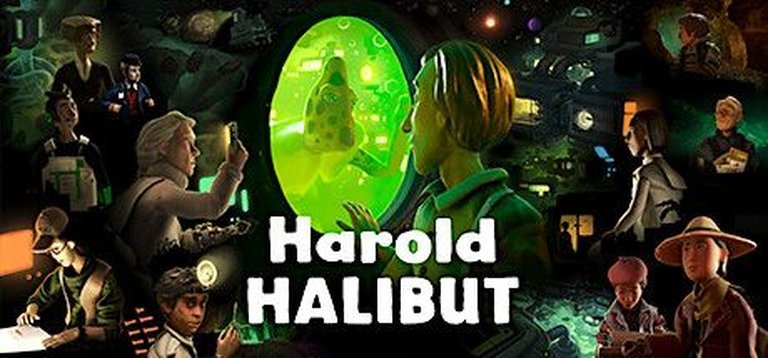
Harold Halibut is a handmade narrative adventure game with stunning stop-motion clay animation visuals, set on a city-sized spaceship submerged in an alien ocean. Players join Harold, a gentle repairman, as he explores a vibrant retro-futuristic world, interacts with quirky inhabitants, solves puzzles, and embarks on a heartfelt quest to find the true meaning of ‘home’ amid themes of friendship and connection.
Gameplay Videos
Where to Buy Harold Halibut
Harold Halibut Free Download
Harold Halibut Cracks & Fixes
Harold Halibut Guides & Walkthroughs
Harold Halibut Reviews & Reception
metacritic.com (69/100): Mixed or Average
ign.com : I came for the unconventional art style, but I stayed for the cast of quirky characters and a playful mystery to unravel that features plenty of warmth and humour.
videogamesgood.com : Harold Halibut is a grand artistic achievement and a humbly quiet adventure.
imdb.com (100/100): Great Game! … rating this game 10/10 as it’s definitely one of a kind.
Harold Halibut: Review
Introduction
Imagine peering into a dollhouse submerged in an alien ocean, where every clay figurine breathes, chats, and dreams of escape—crafted not by digital wizards, but by human hands wielding sculpting tools and scanners. Harold Halibut, the debut from German indie studio Slow Bros., isn’t just a game; it’s a tactile miracle, a stop-motion fever dream rendered in real-time that feels like Wes Anderson directing a BioShock underwater diorama. Born from a 2012 dinner conversation and forged over 12 grueling years of handmade artistry, this narrative adventure has already etched its legacy as one of gaming’s boldest visual experiments. My thesis: Harold Halibut transcends its modest gameplay to deliver a profound meditation on home, purpose, and human connection, proving that in an era of hyper-polished blockbusters, raw craftsmanship can birth an unforgettable interactive poem—flaws and all.
Development History & Context
Slow Bros., a Cologne-based collective led by filmmaker Onat Hekimoğlu, began Harold Halibut as an unfunded passion project in 2012. Lacking 3D modeling expertise, founders Hekimoğlu, Fabian Preuschoff, Daniel Beckmann, and later art director Ole Tillmann turned to their strengths: physical craftsmanship. Inspired by Ray Harryhausen’s stop-motion epics like Jason and the Argonauts, Wes Anderson’s quirky symmetry, and narrative walkers like Night in the Woods and Firewatch, they built miniature sets in bedrooms and kitchens using clay (200kg worth), wood, textiles, welded metal, and recycled materials.
Technological Constraints and Innovations
The era’s limitations shaped genius: early prototypes used true stop-motion, but its rigidity clashed with gaming demands. Pivoting to photogrammetry—photographing objects from 200-500 angles via DSLR and turntable—they scanned puppets and sets into Unity, creating hyper-detailed 3D models. Motion capture (often Hekimoğlu in Xsens suits) added “bunraku-like” humanity, with digital rigging for facial animations via FaceFX (audio-driven lip-sync tweaked with emojis for expressions). FMOD handled sound, blending organic creaks with alien burble. A failed 2017 Kickstarter ($170k goal unmet) yielded awareness; grants like Kultur- und Kreativpiloten (2019) and festival nods (Tribeca 2021, Slamdance 2022) fueled growth from 4 to 16 members.
Gaming Landscape at Release
Dropping April 16, 2024 (PC, PS5, Xbox Series X/S; day-one Game Pass), Harold Halibut entered a post-Baldur’s Gate 3 boom of narrative indies amid AAA layoffs. Its $35 price and 12-18 hour runtime positioned it against walking sims (What Remains of Edith Finch) and claymation curios (The Neverhood), but its handmade ethos stood alone— a defiant analog rebellion in a procedural-generation world.
Narrative & Thematic Deep Dive
Harold Halibut‘s story unfolds across six chapters in a retro-futuristic sci-fi soap opera, blending heartfelt drama, dry humor, and existential whimsy. You embody Harold, a shy, milquetoast janitor/lab assistant on FEDORA I—a Cold War-era ark that fled Earth 250 years ago, drifted 200 years, then crash-landed in an alien ocean via solar flare. Trapped 50 years under All Water Corp.’s bureaucratic thumb, inhabitants debate escape vs. acceptance.
Plot Breakdown
Harold aids scientist Jeanna Mareaux in propulsion research amid fetch quests revealing societal fractures: Tommy’s marital woes, Buddy the mailman’s undelivered letters (poignant relics of lost Earth), Slippie’s absurd ski-shop infomercials. A pivotal “Fishy” (Weeoo, a Flumylym alien) discovery shifts tones—Harold ventures outside, befriending bipedal fish-philosophers whose “float through life” ethos contrasts human grind. Conspiracies emerge: All Water’s ulterior motives, secret societies, industrialization critiques. Climax unites factions for relaunch, but Harold chooses authenticity over escape.
Characters and Dialogue
Full VO elevates an ensemble of 20+ eccentrics: Mareaux’s curt ambition, Brigitte’s energy oversight, quadruplet shopkeeps’ banter. Dialogue—penned by Danny Wadeson—drips Wes Anderson quirk (telenovelas, puns) yet grounds in raw humanity: Harold’s solo theatrics (operatic filter-cleaning songs) expose his inner “Agent Haroldson.” Choices feel organic, fostering bonds sans meters.
Themes: Home, Purpose, and Isolation
Core query: What’s “home” in confinement? FEDORA mirrors generational trauma—purpose via chores vs. Flumylym’s serene observation. Existentialism peaks in Harold’s arc: from doormat to self-actualized dreamer, touching pollution, corporate greed, animal ethics. It’s “slow-gaming” poetry: mundane chats birth profound insights, like Buddy’s “each person is a world,” echoing The Good Place‘s philosophy in clay.
Gameplay Mechanics & Systems
A graphic adventure lite, Harold Halibut prioritizes immersion over challenge—point-and-select navigation in 3rd-person cinematic views, no inventory, sparse puzzles.
Core Loops
Daily PDA to-do lists drive fetch quests (fix printers, graffiti removal) across districts (mall, labs, arcade). Travel via sluggish water tubes or runs (unresponsive sprint). Progression: overhear chats, trigger dialogues. Minigames shine—Tetris cleaning, RC-car vents, screwdriver panels—but arcade ops (optional) feel tacked-on, “surprisingly poor.”
Progression, UI, Flaws
No levels/XP; linear story with optional side-tasks. UI: intuitive PDA (tasks, messages, auto-sketchbook). Strengths: eavesdropping builds world organically. Flaws: repetition (backtracking), no waypoints (immersive but frustrating), bugs (clipping, crashes). Lacks agency—no branches/endings—making it “interactive film” per critics.
| Mechanic | Innovation | Critique |
|---|---|---|
| Fetch Quests | Character-driven depth | Repetitive trudging |
| Dialogues | Natural, branching feels | Linear payoff |
| Minigames | Tactile joy | Infrequent, basic |
| Exploration | Dollhouse poking | Low interactivity |
World-Building, Art & Sound
FEDORA I pulses with lived-in detail: collapsible scanned sets (foldable walls), DayGlo alien caves. Atmosphere: claustrophobic rust vs. bioluminescent wonder.
Visual Direction
Stop-motion triumph: walnut-sized clay faces (glass eyes, articulated digitally), textile costumes, fingerprints/eyelashes visible. Photogrammetry yields “tangible imperfections”—creaky wood, fog-machine haze. Unity renders fluidly, evoking Aardman/Wallace & Gromit.
Sound Design
FMOD crafts immersion: muffled Flumylym “bluglglgl” (team impressions), VO wit (Andrew Nolen’s operatic Harold), ambient drips/hums. OST (Hekimoğlu/Schnausen) blends retro-futurist whimsy—uplifting strings underscore hope.
These elevate: visuals charm flaws into features; sound humanizes puppets, forging emotional bonds.
Reception & Legacy
MobyGames 7.2/10 (72% critics); Metacritic 69-74 “mixed/average.” 50+ reviews praise art (“technical wizardry”—Edge), narrative (“poignant”—GamesRadar+), characters (“loveable”—Gamereactor). Critiques: pacing (“ponderous”—PC Gamer), repetition (“fetch slog”—Eurogamer), puzzles absent (“movie, not game”—Push Square).
| Outlet | Score | Key Quote |
|---|---|---|
| Siliconera | 100 | “Handmade narrative about friendship” |
| Shacknews | 90 | “Breath of fresh air… human feelings” |
| IGN | 80 | “Wholesome, full of surprises” |
| GameSpot | 70 | “Struggles under ambitions” |
| PC Gamer | 60 | “Meandering plot” |
Commercial: Game Pass boost; 16 collectors (Moby). Legacy: Festival darling (BAFTA noms 2025, Deutscher Computerspielpreis wins). Influences indies toward analog-digital hybrids (Armadillo Run vibes); redefines “art game,” inspiring post-AAA risks.
Conclusion
Harold Halibut is imperfect—slow, repetitive, light on “game”—yet its handmade soul captivates, weaving mundane chores into a tapestry of empathy and wonder. Slow Bros.’ decade-plus odyssey yields gaming’s most audacious aesthetic, a heartfelt fable where clay trumps polygons. Not for adrenaline junkies, but for patient explorers: a definitive indie landmark, proving narrative craft endures. Verdict: 8.5/10 – Essential for art lovers; a quiet revolution in video game history.