
- Release Year: 2004
- Platforms: Windows
- Publisher: CNEC Inc., Electronic Arts, Inc.
- Developer: KnowWonder, Inc.
- Genre: Action
- Perspective: Third-person
- Game Mode: Co-op, Single-player
- Gameplay: Mini-games, Puzzle elements
- Setting: Fantasy
- Average Score: 71/100
Description
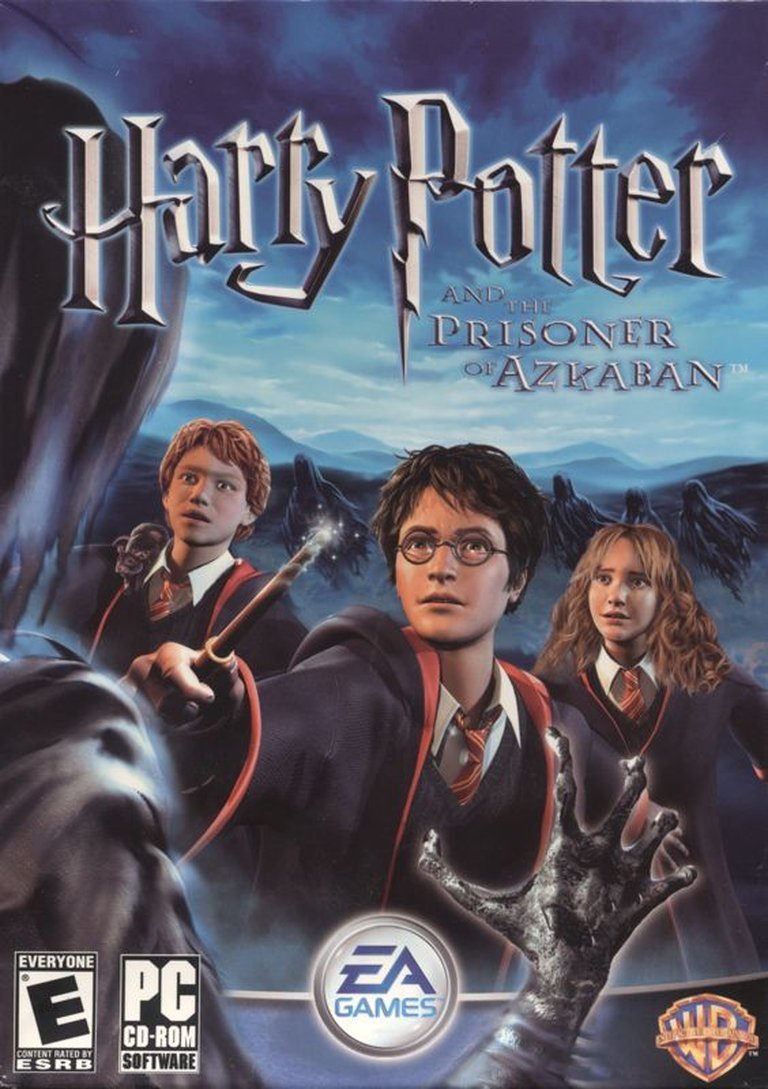
Harry Potter and the Prisoner of Azkaban is a 3D action adventure game set in the magical castle of Hogwarts, where players control Harry Potter, Ron Weasley, and Hermione Granger—each with unique spells like freezing, statue-transformation, and grappling—to solve puzzles, fight enemies, and explore freely. The game features collectible currency (Every Flavour Beans), side quests, mini-games, and objectives including finding all 80 Collector Cards and portrait passwords to unlock secrets.
Gameplay Videos
Harry Potter and the Prisoner of Azkaban Free Download
Harry Potter and the Prisoner of Azkaban Patches & Updates
Harry Potter and the Prisoner of Azkaban Guides & Walkthroughs
Harry Potter and the Prisoner of Azkaban Reviews & Reception
metacritic.com (69/100): Though the inventory and menu systems need polishing, this RPG is a dream come true for Harry Potter fans.
imdb.com (74/100): Book and movie good. Game HORRIBLE!
Harry Potter and the Prisoner of Azkaban Cheats & Codes
GBA (USA, Europe)
Input codes using a CodeBreaker device or emulator.
| Code | Effect |
|---|---|
| 0000ACBE 000A | Master Code |
| 1003EEA4 0007 | Master Code |
| 830026F0 03E7 | Quick Level Up |
| 83003180 270F | Unlimited Cash |
| 83002510 03E7 | Harry Unlimited SP |
| 83002512 03E7 | Harry Unlimited MP |
| 830024F4 03E7 | Harry Max SP |
| 830024F6 03E7 | Harry Max MP |
| 8300253C 03E7 | Hermoine Unlimited SP |
| 8300253E 03E7 | Hermoine Unlimited MP |
| 83002558 03E7 | Hermoine Max SP |
| 8300255A 03E7 | Hermoine Max MP |
| 83002584 03E7 | Ron Unlimited SP |
| 83002586 03E7 | Ron Unlimited MP |
| 830025A0 03E7 | Ron Max SP |
| 830025A2 03E7 | Ron Max MP |
| 430031D8 0909 00000019 0002 | Max Cards |
| 4300320A FFFF 00000003 0002 83003210 0BFF | Almost All Cards |
| 330024FB 0007 430024FC 0303 00000005 0002 | Harry All Spells Max |
| 33002543 0007 43002544 0303 00000005 0002 | Hermoine All Spells Max |
| 3300258B 0007 4300258C 0303 00000005 0002 | Ron All Spells Max |
PC
Edit the defuser.ini file in the game directory and set ‘delete=Ghost’. Then press the Delete key during gameplay for Ghost Mode. Alternatively, edit game.ini and set bDebugMode=True to enable debug mode, then press F4 to select a level or Delete for Ghost mode.
| Code | Effect |
|---|---|
| Edit defuser.ini: delete=Ghost, then press Delete in-game | Ghost Mode |
| Edit game.ini: bDebugMode=True, then press F4 or Delete in-game | Debug Mode (F4: Select Level, Delete: Ghost) |
PS2 (NTSC-U)
Input codes using a CodeBreaker device or emulator.
| Code | Effect |
|---|---|
| B4336FA9 4DFEFB79 | Enable Code (Must Be On) |
| 5355748C 7A12A684 | Enable Code (Must Be On) |
| 4BFAEC60 393C19B0 | Enable Code (Must Be On) |
| ACDB471D FC4AF63A | Enable Code (Must Be On) |
| 4DD14255 D5DF100C | Press L1 At Main Menu For Debug Menu |
| D4D301AE BCD06CA3 | Game Map Always Visible |
| 1FD588EB A678FD95 | Access Owl Racing |
| 804EBFC9 0D508CD4 | Access Hippogrip Flight Challenge |
| 9F1D615C 8D466E25 | Infinite Stamina |
| 93053168 9B926DC1 | Infinite Stamina |
| BD7B8869 5A99E32F | Infinite Stamina |
| 9EC5C1F1 CBAC05FF | Infinite Stamina |
| 67B320C9 3213A0F9 | Infinite Stamina |
| 3288F494 96B83E14 | Infinite Stamina |
| 38525D29 D7A79F6E | Infinite Stamina |
| AB8982A5 3F8C9B63 | Max Wiggenwelds |
| 1EBF028D 5FFD20B8 | Max Wiggenwelds |
| E0B579C5 91293E6D | Max Wiggenwelds |
| C50F2C25 CE61AD9A | Max Wiggenwelds |
| A1F865B2 7E46DE09 | Max Antidotes |
| 0322EEB4 0A51DCCF | Max Antidotes |
| DCEBB500 298BEA4A | Max Antidotes |
| F39A9B86 6E77C0D6 | Max Antidotes |
| F037181A C835A6EA | Max Girdings |
| 6A8925C5 A4478D4C | Max Girdings |
| 5D4670FB 2429E7CC | Max Girdings |
| 92689F2C 55328172 | Max Girdings |
| B5C5DF06 8F758B74 | Have All Spells |
| 6D683E69 801317B5 | Have All Spells |
Harry Potter and the Prisoner of Azkaban: Review
Introduction
Released in June 2004 alongside the blockbuster film of the same name, Harry Potter and the Prisoner of Azkaban arrived as a pivotal entry in the burgeoning Harry Potter gaming franchise. Developed by a trio of studios—KnowWonder for PC, Griptonite Games for Game Boy Advance, and EA UK for consoles—this ambitious project sought to translate the darker, more complex narrative of J.K. Rowling’s third book into an interactive experience. While the film was lauded for its mature themes and Alfonso Cuarón’s visionary direction, the game grappled with the perennial challenges of licensed adaptations: balancing fidelity to the source material with engaging gameplay. This review argues that Prisoner of Azkaban stands as a fascinating artifact of its era, a flawed yet innovative effort that pushed boundaries for licensed games through its companion-play mechanics and immersive world-building, even as it was ultimately hampered by technical constraints and a rushed development cycle.
Development History & Context
The game’s creation unfolded against the backdrop of a rapidly evolving industry. By 2004, the PlayStation 2, Xbox, and GameCube dominated consoles, while PC gaming remained robust. The Harry Potter license, helmed by Electronic Arts (EA), was a golden goose, with annual releases timed to the films. The decision to create three distinct versions for different platforms was a strategic move to maximize market reach, but it also fractured the vision:
- PC Version (KnowWonder): Built on the Unreal Engine 2, this iteration focused on puzzle-solving and exploration, refining the formula from earlier Harry Potter PC games. Led by producer Michael Waite and lead designer Christopher Vuchetich, the team prioritized faithfulness to the book’s tone but faced pressure to streamline the narrative for a shorter runtime.
- Console Versions (EA UK): Using RenderWare, the console team, led by designer Simon Phipps, emphasized action and set-pieces. They introduced the groundbreaking ability to switch between Harry, Ron, and Hermione in real-time—a feature developed after consulting with Warner Bros. and Rowling’s team to ensure it aligned with character traits. Phipps noted this was a “logical continuation” of the series, aiming for “different adventures with a feel of their own.”
- Game Boy Advance (Griptonite Games): This handheld adaptation adopted a top-down RPG style, akin to Dragon Quest, sacrificing 3D for portable depth and connectivity features with the GameCube version.
Development was fraught with challenges. The release window coincided with the film’s June 2004 premiere, forcing a compressed timeline. Key omissions—like Quidditch and Time Turner mechanics—were deliberate to avoid “out-of-character” meddling, as Hermione’s time-traveling device was restricted to the game’s climax. Despite hurdles, the team delivered a cohesive product that, while technically uneven, showcased ambition.
Narrative & Thematic Deep Dive
The game’s narrative condenses Rowling’s novel into a streamlined adventure, beginning on the Hogwarts Express and culminating in the Shrieking Shack confrontation with Sirius Black. While broadly faithful, it sacrifices nuance for pacing. The central mystery of Black’s innocence is preserved, but subplots—like the Marauders’ backstory or Snape’s vendetta—are glossed over. Dialogue, penned by Michael Humes and Simon Phipps (who contributed 36,000 words of script), captures the trio’s dynamics: Harry’s resolve, Ron’s loyalty, and Hermione’s intellect. Stephen Fry’s narration adds gravitas, though repetitive lines grate over time.
Thematic elements from the book—fear, identity, and prejudice—are present but superficial. The Dementors’ soul-sucking menace translates into combat sequences rather than psychological dread. The exploration of Black’s redemption is truncated, reducing him to a misunderstood figure rather than a fully realized anti-hero. Yet the game excels in its portrayal of friendship: the companion-play system reinforces the trio’s interdependence, with Ron’s “comedic” discoveries (e.g., triggering a jack-in-the-box that launches him) and Hermione’s problem-solving mirroring their canon roles. This thematic core—unity in adversity—anchors the experience, even as the narrative feels episodic and rushed.
Gameplay Mechanics & Systems
The game’s most significant innovation is the companion-play system, which revolutionized character-switching dynamics:
– Unique Abilities: Harry’s athleticism (jumping/climbing), Ron’s “hidden-object” affinity (spotting secret panels), and Hermione’s agility (squeezing through tight spaces) create synergistic puzzles. Context-sensitive spellcasting auto-selects the right tool for the task, though this often leads to frustration when the wrong spell is triggered.
– Combat & Spells: New spells like Carpe Retractum (grappling hook), Steleus (sneeze-inducing), and Expecto Patronum (Dementor defense) are learned through lessons. Combat is simplistic—button-mashing against foes like pixies or animated books—with boss battles (e.g., the Whomping Willow) offering little depth.
– Exploration & Collection: Hogwarts serves as a vibrant hub, rewarding thoroughness with Wizard Cards, Every Flavour Beans (currency), and portrait passwords. The Marauder’s Map aids navigation, but linear progression restricts freedom. Side quests, like the Hippogriff Courses mini-game, are divisive: praised for Buckbeak’s flight sequences but criticized for finicky controls, with some players deeming it “impossible” to complete.
Platform Differences:
– PC: Puzzle-focused, with shorter playtime (5–6 hours per GameSpot) and lower difficulty.
– Consoles: Action-oriented, with EyeToy mini-games and smoother animations but frame-rate issues.
– GBA: RPG-style, emphasizing turn-based battles and overworld exploration.
Despite these innovations, the game suffers from AI quirks (companions getting stuck) and repetitive gameplay. As one MobyGames reviewer lamented, the Hippogriff mini-game’s “impossible” scoring requirement created a “frustrating” barrier to completion.
World-Building, Art & Sound
World-Building: Hogwarts is recreated with remarkable fidelity for 2004. The moving staircases, Gryffindor common room, and Forbidden Forest capture the castle’s grandeur, while new areas like Hogsmeade expand the world. The Marauder’s Map and Buckbeak’s flight sequences highlight environmental storytelling, though locations like the Shrieking Shack feel underutilized.
Art & Visuals:
– Consoles: RenderWare enables detailed character models (e.g., Jamie Glover’s Lupin) and dynamic lighting, though inconsistent facial animations and clipping issues mar immersion. The darker palette mirrors the film’s tone, with blues and greys evoking Azkaban’s dread.
– PC: Unreal Engine 2 delivers stylized environments but less polish, with blocky textures and dated animations.
– GBA: Top-down sprites offer charm but lack the 3D magic of other versions.
Sound Design: Jeremy Soule’s orchestral score elevates key moments, while Ian Stocker’s GBA soundtrack complements the handheld’s retro vibe. Sound effects—spell-casting, Dementor wails—are crisp, though voice acting varies. Fry’s narration is stellar, but secondary characters (e.g., Ron’s “comedic” lines) feel one-note.
Atmosphere: The game excels in creating tension (e.g., Dementor chases on the Hogwarts Express) but struggles with consistency. The Whomping Willow confrontation lacks the book’s visceral impact, while Hogsmeade’s potential for side quests remains unrealized.
Reception & Legacy
Critical Reception:
– Aggregate Scores: Metacritic ratings ranged from 67 (PC/Xbox) to 70 (PS2), with the GBA version faring best at 69. GamePro praised its “faithfulness to the book,” while IGN criticized “sloppy implementation” and “unpredictable framerate.”
– Praise: Companion-play, Hogwarts’ scale, and Fry’s narration were highlights. GameSpot called it “genuinely entertaining” for fans, and Worth Playing noted it “delivers in every way it should.”
– Criticism: Short length, simplistic combat, and the Hippogriff mini-game’s difficulty drew ire. Joystick deemed it “clearly for a young audience,” and ActionTrip dismissed it as a “shallow collecting game.”
Commercial Performance: By 2004, the game sold 2.5 million units worldwide, with 1.03 million in the U.S. by 2006. Its success was buoyed by the film’s hype, though it paled in comparison to EA’s Spider-Man 2 (released the same year).
Legacy:
– Within the Series: Prisoner of Azkaban was the last game to follow the books’ original canon; subsequent titles prioritized film canon. Its companion system influenced later entries like Goblet of Fire, though Quidditch’s absence remained a fan grievance.
– Industry Impact: It demonstrated licensed games’ potential for innovation, with character-switching mechanics predating trends in LEGO Harry Potter and Lego Dimensions. However, technical flaws and rushed development cemented its reputation as a “flawed gem” rather than a classic.
– Cultural Footprint: Player reviews on MobyGames and IMDb highlight its nostalgic appeal, with some praising its “addictive” exploration while others lament its “half-assed” execution.
Conclusion
Harry Potter and the Prisoner of Azkaban is a product of its time—a valiant attempt to capture magic in pixels that was both ahead of its time and limited by its constraints. Its companion-play system was a visionary leap for licensed games, offering a blueprint for character-driven teamwork that still resonates today. The game’s faithfulness to Hogwarts’ atmosphere, bolstered by Jeremy Soule’s score and Stephen Fry’s narration, creates an immersive experience that delights fans. Yet, its flaws—repetitive gameplay, frustrating mini-games, and a truncated narrative—prevent it from reaching greatness. For younger audiences, it remains an accessible adventure; for veterans, a nostalgic curiosity.
Ultimately, Prisoner of Azkaban occupies a unique space in gaming history: a flawed but earnest artifact that pushed boundaries without fully transcending them. It exemplifies the challenges of adapting beloved stories, yet its ambition and heart ensure it remains a memorable chapter in the Harry Potter saga—not a masterpiece, but a testament to the magic of possibility. As Simon Phipps reflected, the team’s goal was to create a “different adventure” that felt both familiar and fresh. In this, they succeeded, even if the magic was fleeting.