
- Release Year: 2018
- Platforms: Windows
- Publisher: Big Fish Games, Inc
- Developer: ERS G-Studio
- Genre: Adventure, Puzzle, Special edition
- Perspective: 1st-person
- Game Mode: Single-player
- Gameplay: Hidden object
- Setting: Horror
- Average Score: 60/100
Description
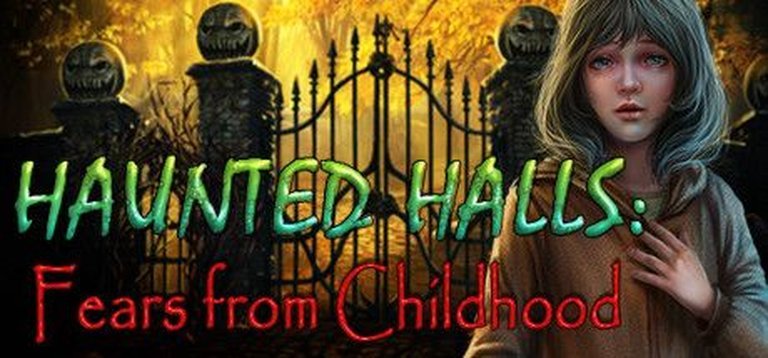
Haunted Halls: Fears from Childhood (Collector’s Edition) is a first-person horror adventure and puzzle game where players delve into Dr. Blackmore’s unsettling experiment. Combining hidden object gameplay with challenging puzzles, players explore eerie environments, confront childhood fears, and uncover dark secrets in this atmospheric Collector’s Edition that includes bonus content and digital extras.
Gameplay Videos
Where to Buy Haunted Halls: Fears from Childhood (Collector’s Edition)
Haunted Halls: Fears from Childhood (Collector’s Edition) Patches & Updates
Haunted Halls: Fears from Childhood (Collector’s Edition) Mods
Haunted Halls: Fears from Childhood (Collector’s Edition) Guides & Walkthroughs
Haunted Halls: Fears from Childhood (Collector’s Edition): Review
Introduction
In the shadowed corridors of digital horror, where childhood terrors manifest as tangible nightmares, Haunted Halls: Fears from Childhood (Collector’s Edition) (2018) emerges as a chilling testament to the enduring power of primal fears. As the third installment in ERS G-Studio’s “Haunted Halls” series, this title thrusts players into a macabre experiment orchestrated by the recurring villain Dr. Blackmore, who has crafted a dimension where youthful anxieties become grotesque realities. Released during the golden age of casual hidden-object puzzle adventures (HOPAs), the game leverages its premise to elevate a formulaic genre, transforming mundane object-finding into a visceral exploration of phobias. Yet, while its atmospheric dread and thematic ambition promise innovation, Haunted Halls ultimately remains a product of its era—polished, predictable, and profoundly niche. This review dissects its legacy, arguing that despite its technical constraints and genre limitations, the game’s masterful fusion of psychological horror with HOPA mechanics solidifies it as a cult classic within the casual gaming pantheon.
Development History & Context
ERS G-Studio: Architects of Ambient Terror
Developed by ERS G-Studio (ERS Game Studio) and published by Big Fish Games for its initial release—with a Steam port handled by BFG Entertainment in 2018—Haunted Halls: Fears from Childhood represents the studio’s expertise in crafting narrative-driven HOPAs. ERS G-Studio, established in the early 2010s, built a reputation for atmospheric horror titles (Haunted Manor, Haunted Legends), often featuring gothic settings and morally ambiguous antagonists. This iteration, however, marked a deliberate shift toward psychological horror, inspired by the universal relatability of childhood fears. The studio’s vision, as articulated in marketing materials, was to “transform intangible phobias into tangible horrors,” a concept requiring meticulous scene design and storytelling to avoid cliché.
Technological Constraints & Genre Conventions
Released in 2018, the game operated within the technological parameters of the casual market: its minimum specs (Windows XP/Vista/8, 1.4 GHz CPU, 1 GB RAM, DirectX 9.0) reflected accessibility over graphical ambition. Engine-wise, it utilized static, pre-rendered environments typical of HOPAs of the era, trading real-time rendering for richly detailed dioramas. This choice constrained interactivity but allowed for intricate, painterly visuals. The gameplay framework adhered rigidly to genre conventions: linear progression, point-and-click mechanics, and a reliance on hidden-object scenes and logic puzzles. ERS G-Studio mitigated monotony by integrating the “fear” theme into puzzles—e.g., mending a “broken toy” to soothe a child’s anxiety—yet innovations remained incremental rather than revolutionary.
The 2018 Gaming Landscape
Haunted Halls arrived amid a saturated HOPA market dominated by studios like Artifex Mundi and Boomzap. While narrative-driven horror games (Outlast, Silent Hill) dominated mainstream discussions, the casual genre faced criticism for repetitive gameplay. ERS G-Studio countered this by emphasizing its unique hook: a story-driven experience where confronting fears became both a narrative and gameplay imperative. The Collector’s Edition release—including bonus chapters, wallpapers, and concept art—catered to dedicated fans willing to pay a premium ($9.99 on Steam), a common strategy for HOPA publishers to bolster revenue in a crowded digital marketplace.
Narrative & Thematic Deep Dive
A Masterclass in Psychological Horror
The plot unfolds as a cat-and-mouse game between Dr. Blackmore and the unnamed protagonist. After abducting Tim—a child victim—Blackmore transports him to a nightmarish dimension where fears materialize. The player must guide Tim and other trapped children to overcome their phobias (e.g., a fear of clowns manifests as a grotesque circus). The narrative progresses through linear vignettes: infiltrating a distorted schoolhouse, braving a “monster-filled” closet, and dismantling Blackmore’s experimental machinery. The overarching goal is twofold: liberate the children and unmask Blackmore’s endgame—revealed as a sadistic study in fear amplification.
Characterization & Symbolism
Dr. Blackmore stands as a compelling antagonist, his motives blending mad-science tropes with Freudian undertones. He is not merely evil but a researcher obsessed with weaponizing innocence, mirroring real-world anxieties about child exploitation. The children, though non-playable, are rendered as archetypes: the “fearful one,” the “claustrophobic,” their phobias serving as metaphors for universal human vulnerabilities. Dialogue is sparse and utilitarian, prioritizing atmosphere over character development—a trade-off typical of HOPAs. Yet, moments of vulnerability (e.g., a child’s tearful plea) inject emotional weight, grounding the horror in empathy.
Thematic Resonance
The game’s central thesis—that childhood fears are formative and inescapable—resonates through its design. Environments are literalized manifestations of anxiety: a bedroom where shadows elongate into predatory figures, a playground where swings morph into gallows. This transforms hidden-object scenes from chores into symbolic acts of catharsis—locating a “teddy bear” isn’t just about checklist completion; it’s about restoring security. Thematically, Haunted Halls explores the duality of fear: as both a protective instinct and a tool for oppression. Blackmore’s laboratory, a sterile ruin of wires and glass, symbolizes the clinical corruption of innocence, while the children’s liberation arc champions resilience.
Gameplay Mechanics & Systems
Hidden Object Scenes: Beyond the Checklist
Core gameplay revolves around “hidden object” (HO) scenes, where players locate items from a list within cluttered environments. Standard for the genre, ERS G-Studio innovates through contextual design: items are integrated into thematic dioramas (e.g., finding “scissors” in a “barber’s chair” scene where a child’s fear of haircuts is central). Morphing objects—items that change appearance upon interaction—add replayability, while “anagram” or “silhouette” variants prevent monotony. However, the linearity of scene progression limits exploration, and hints (replenishable via a timer) occasionally undermine challenge.
Puzzle Design: Fear as Mechanic
Puzzles, while not groundbreaking, align with the narrative’s themes. A standout involves reassembling a shattered dollhouse to “repair” a child’s fractured psyche, linking spatial reasoning to emotional healing. Logic puzzles (e.g., aligning constellations to “calm a nightmare”) are serviceable but suffer from vague instructions, a recurring flaw in HOPAs. The “fear confrontation” mechanic—where players use collected items to dispel manifestations—offers a unique hook, though it devolves into repetitive item-application in later chapters.
UI & Accessibility
The user interface exemplifies genre conventions: a map for fast travel, an inventory for item storage, and a journal for narrative logs. Accessibility features (adjustable hint frequency, puzzle skips) cater to casual players, but the lack of a difficulty option alienates veterans. The Collector’s Edition extras—a bonus chapter extending Blackmore’s backstory, concept art revealing early design sketches, and screensavers—reward fans but feel like tacked-on content rather than integrated enhancements.
World-Building, Art & Sound
Atmosphere Through Architecture
The game’s world is a triumph of environmental storytelling. Settings blend familiar spaces with grotesque distortions: a classroom chalkboards scrawl “YOU ARE NEXT,” a garden’s flowers bloom with teeth. ERS G-Studio employs mise-en-scène to evoke dread—creaking floorboards, flickering lights, and oppressive shadows—creating an oppressive atmosphere reminiscent of Silent Hill‘s foggy streets. Each environment is a character in itself, reflecting the specific fear it embodies (e.g., a “basement” level drowning in floodwater symbolizes drowning fears).
Visual Direction: Dark and Deliberate
Art direction prioritizes mood over realism. Textures are painterly and hyper-detailed, with a muted color palette dominated by sepia, deep blues, and sickly greens. Character designs, though rudimentary, use exaggerated features (e.g., elongated shadows for “monsters”) to amplify unease. The first-person perspective, a rarity in HOPAs, enhances immersion, making players feel perpetually exposed within the confined spaces.
Sound Design: The Unseen Terror
Soundscaping is the game’s unsung hero. Ambient audio—distant whispers, creaking doors, distorted laughter—builds tension without relying on jump scares. A minimalist piano score underscores moments of vulnerability, while dissonant strings escalate during chase sequences. Voice acting, though limited, delivers nuanced performances: Blackmore’s chilling calm contrasts with the children’s raw terror. Together, these elements transform routine gameplay into a sensory ordeal.
Reception & Legacy
Launch Reception: A Cult Following
Upon release, Haunted Halls garnered muted mainstream attention but found an audience within the HOPA community. Steam’s 9 user reviews (as of 2024) are overwhelmingly positive, praising its atmosphere and “chilling premise” while criticizing derivative gameplay. Big Fish Games marketed it as a “terrifying” entry in their catalog, positioning it alongside titles like Haunted Hotel: Charles Dexter Ward. Commercially, it performed modestly, bolstered by Collector’s Edition sales and bundle deals (e.g., the Haunted Halls Collection on Steam).
Evolution of Reputation
Over time, the game’s reputation has solidified as a “hidden gem” of casual horror. It is lauded for its thematic depth and artistry, often compared favorably to contemporaries like Mortimer Beckett for narrative cohesion. Yet, it remains overshadowed by more innovative HOPAs, such as Dark Parables, which integrate adventure elements more fluidly. Its legacy lies in demonstrating that HOPAs could handle mature themes without sacrificing accessibility.
Influence on the Genre
Haunted Halls subtly influenced later titles by normalizing psychological horror in casual games. Studios began incorporating “fear” mechanics—e.g., Enigmatis 3‘s “nightmare sequences”—though few matched its thematic cohesion. It also cemented Dr. Blackmore as a recurring antagonist, proving that HOPA narratives could support serialized storytelling. However, its impact is limited by genre constraints; it did not redefine HOPAs so much as perfect a niche formula.
Conclusion
Haunted Halls: Fears from Childhood (Collector’s Edition) is a masterclass in atmospheric horror within the confines of the hidden-object genre. ERS G-Studio crafts a world where childhood fears are not just plot devices but interactive experiences, elevating routine gameplay into something emotionally resonant. Its art direction, sound design, and thematic depth stand as high-water marks for casual horror, proving that psychological terror can thrive in accessible formats. Yet, the game is ultimately a prisoner of its genre—linear puzzles, repetitive HO scenes, and a lack of innovation prevent it from transcending its niche. For HOPA enthusiasts and fans of the series, it is an essential, chilling journey into the abyss of human anxiety. For broader audiences, it remains a testament to the genre’s potential when ambition meets atmospheric craft. In the annals of video game history, Haunted Halls may not be a revolutionary, but it is an enduring—terrifying—reminder that some fears never truly fade.