
- Release Year: 2012
- Platforms: Windows
- Publisher: Big Fish Games, Inc
- Developer: Specialbit Studio
- Genre: Detective, Horror, Mystery, Puzzle
- Game Mode: Single-player
- Gameplay: Hidden object, Puzzle
- Setting: Hotel
- Average Score: 83/100
Description
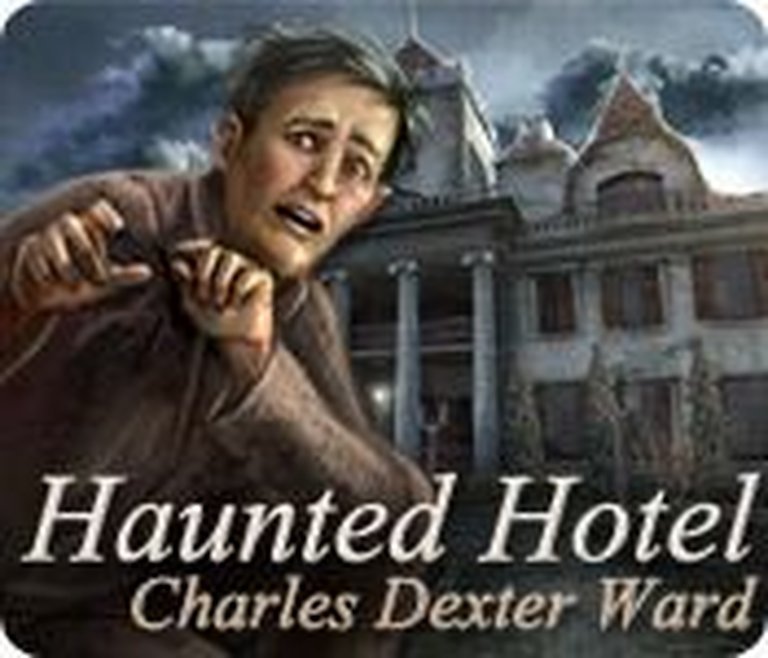
In ‘Haunted Hotel: Charles Dexter Ward,’ a point-and-click adventure inspired by H.P. Lovecraft’s ‘The Case of Charles Dexter Ward,’ you investigate the sudden disappearance of your fraternal twin brother. After receiving a mysterious package containing his unremovable chain, you travel to a desolate swamp address to explore an eerie, abandoned hotel, where you must search for hidden objects and solve intricate puzzles to uncover the supernatural secrets behind his vanishing.
Gameplay Videos
Where to Buy Haunted Hotel: Charles Dexter Ward
PC
Haunted Hotel: Charles Dexter Ward Guides & Walkthroughs
Haunted Hotel: Charles Dexter Ward Reviews & Reception
gamezebo.com : Unfortunately, while the game is definitely an improvement over its predecessors, it seems not even H.P. Lovecraft can save it from those games’ lackluster legacy.
jayisgames.com : Don’t fret though because despite the repetition, Haunted Hotels delivers a well-developed game with intricate puzzles and dazzling graphics to make you forget, quite easily I might add, that you’ve probably done heard this story before.
Haunted Hotel: Charles Dexter Ward: Review
Introduction: A Lovecraftian Lodger in the Casual Adventure Genre
In the bustling ecosystem of early 2010s casual gaming, the hidden object puzzle adventure (HOPA) had become a dominant, if oft-maligned, force. Markets were saturated with titles featuring glamorous detectives, whimsical fantasy realms, and generic haunted mansions. Into this milieu stepped Specialbit Studio with Haunted Hotel: Charles Dexter Ward, the fourth entry in its own long-running Haunted Hotel series. This title distinguished itself not through genre-defying innovation, but through a bold, almost heretical choice for the medium: it dared to adapt H.P. Lovecraft. The game’s thesis is a fascinating compromise—can the complex themes of cosmic horror, necromancy, and genealogical madness spawned by Lovecraft’s 1927 novella The Case of Charles Dexter Ward be successfully funneled through the constraints of a point-and-click HOPA designed for a broad, “Teen”-rated audience? The result is a game that stands as the creative pinnacle of the Specialbit era—a title that improves dramatically on its predecessors’ narrative and technical shortcomings while remaining fundamentally shackled to the repetitive, often tedious, mechanics of its genre. It is a game of palpable ambition, where the shadow of the Great Old Ones looms larger than the pile of obscure household objects players must scour.
Development History & Context: The Final Chapter for Specialbit
Haunted Hotel: Charles Dexter Ward was developed by Specialbit Studio, a Russian studio that had been churning out the Haunted Hotel series since 2008. By 2012, the series was a established, if unspectacular, fixture on platforms like Big Fish Games, known more for reliable, if formulaic, entertainment than critical acclaim. The development team, led by Project Manager/Artist Maxim Ryadchik and Story/Game Design lead Konstantin Malakhov, was small—credited with 17 developers—and operated within the technological and budgetary constraints typical of the casual market. The game was built for Windows, utilizing a capable but not state-of-the-art 2D engine that rendered the swamp-laden Louisiana estate in a serviceable, realist style.
The technological constraints were significant. The game employs live-action full-motion video (FMV) cutscenes, a choice that immediately set it apart from the hand-drawn or 3D-rendered cinematics of competitors like Elephant Games or Artifex Mundi. This was a double-edged sword: it lent an unsettling, documentary-like realism (which we’ll explore later), but it also meant limited animation, a fixed cast, and potential issues with acting and green-screening that could easily break immersion. The Haunted Hotel engine for hidden object scenes and inventory puzzles was well-worn; the source material—the intricate, unexplained machinations of Lovecraft’s plot—provided the real challenge. The team’s vision, as stated in the credits, was to create a “modified version” of Lovecraft’s story. This meant condensing a dense, literary narrative into a series of environmental clues (“Missing Pages”), diary entries, and interactive set-pieces, all while softening the story’s most extreme occult elements to fit a “Teen” ESRB rating.
Crucially, this game represents a transitional point. As noted in the MobyGames trivia, it and its Collector’s Edition were the last games in the Haunted Hotel series made by Specialbit Studio. The series would continue, but under the purview of Elephant Games starting with Haunted Hotel: Eclipse in 2013. Thus, Charles Dexter Ward serves as the culmination of Specialbit’s design philosophy—a final, arguably most competent, effort before the series changed hands.
Narrative & Thematic Deep Dive: From Providence to the Bayou
Lovecraft’s The Case of Charles Dexter Ward is a chilling tale of a young man in 1920s Providence, Rhode Island, who, through the study of his ancestor’s occult writings, learns to summon and reanimate the deceased—and utterly evil—18th-century alchemist and sorcerer Joseph Curwen. The story is a slow-burn descent into madness, exploring themes of hereditary evil, the danger of forbidden knowledge, and the fragility of identity as Charles gradually becomes possessed by Curwen’s will.
Specialbit’s adaptation is both faithful and heavily streamlined. The core premise—a sibling searching for a missing twin who has fallen under the influence of a historical occultist—remains intact. The protagonist is reimagined as Charles’s fraternal twin sister, a gender swap that provides a clear player avatar and shifts the thematic focus slightly toward familial loyalty and rescue rather than masculine obsession and self-destruction. The setting is transplanted from Providence to a remote, swamp-infested Louisiana estate (the “Haunted Hotel” of the title, though it functions more as a sprawling mansion and grounds), troping the American South’s Gothic atmosphere for a more immediately visual and claustrophobic feel.
The narrative is delivered through a layered documentary approach:
1. Live-Action Cutscenes: Featuring the protagonist and a few other characters (notably the detective James Spillet), these provide the primary plot beats and emotional anchor. Their grainy, realistic quality effectively creates a “Blair Witch”-esque sense of found-footage dread, a stark contrast to the cartoonish or overly polished FMV of many contemporaries.
2. “Missing Pages”/Diary Entries: Scattered throughout the environment, these text documents flesh out the backstory. They reveal Joseph Curwen’s original journals, Charles’s descent into necromancy, and Spillet’s own investigation. This is where most of the Lovecraftian lore is explicitly stated—the summoning of “extradimensional entities,” the use of the Necronomicon, the grisly resurrection rituals.
3. Environmental Storytelling: The game’s greatest narrative success lies in how the setting and puzzles reinforce the plot. Restoring power to the hotel isn’t just a gameplay step; it’s reactivating Curwen’s laboratory. Crafting candles to light a fireplace isn’t just a item-combination puzzle; it’s performing a specific ritual from the Necronomicon to create a “candelabra” needed for a summoning. The final sequence—assembling a radio transmitter, preparing a “Dead Water” and “Elixir,” and using them on the desiccated corpse of Charles—is a direct, interactive translation of the novella’s climax where Ward/Cwren is destroyed.
Where the adaptation falters is in tonal depth and character. Lovecraft’s horror is philosophical, rooted in the insignificance of humanity. The game’s horror is more procedural and jump-scare adjacent (sudden tree crashes, ghostly apparitions). Charles’s internal conflict and gradual identity loss are barely hinted at, reduced to him being a passive victim found in a crypt basement. Joseph Curwen is an unseen, named evil. The protagonist’s emotional journey is minimal, her dialogue limited to cutscenes. The themes are present in the machinery of the plot (resurrection, legacy, occult science) but largely absent in character or philosophical weight. The game understands what happens in Lovecraft’s story but captures little of why it’s terrifying.
Gameplay Mechanics & Systems: The Relentless Grind of Investigation
Haunted Hotel: Charles Dexter Ward operates on a rigid, three-day structure that dictates progress. The core gameplay loop is the classic HOPA cycle: traverse a static scene → find hidden objects in a dedicated “HOS” (Hidden Object Scene) or scattered in the main environment → collect and combine items → solve a puzzle to unlock a new area or advance the ritual.
1. Hidden Object Scenes (HOS): These are the game’s bread and butter. Players are presented with a cluttered tableau and a list of 10-16 items to find. The lists are random per playthrough, a common feature to encourage replayability. Upon completion, one item is “kept” for inventory. The quality of these scenes is mixed. Some are creatively integrated (e.g., finding items inside a hollow log or a birdhouse), but many are generic piles of junk—tools, trinkets, food items—with little thematic cohesion to the eerie setting. The hint system is functional but slow to recharge on higher difficulties. The real hidden object challenge comes from the “active scenes”—the main game environments where the cursor changes to indicate interactive hotspots. Finding these often requires meticulous pixel-hunting, a tedious process exacerbated by the complete absence of a map. As the Jayisgames review correctly notes, this lack of spatial navigation aids makes the inevitable backtracking across the expansive estate grounds a significant source of frustration.
2. Item Combination & Logic Puzzles: The inventory is constantly growing, and a substantial portion of the game involves combining items (e.g., Pliers + Insulating Tape = Insulated Pliers; Fishing Line + Poker + Hook = Fishing Rod). The logic is largely environmental and practical—using a seltzer bottle to scare a snake, a crowbar to pry boards, moss to patch a boat. This is sound adventure game design, though the solutions are often obscure without a walkthrough (e.g., using a “Statuette” in a garden recess, grinding flowers into juice for a ritual stone). The puzzle mini-games are a notable highlight and lowlight:
* The Good: Some puzzles are clever and thematically integrated. The wire-connection puzzle on the electrical pole is a satisfying logic exercise. The Tower of Hanoi variant with crosses is a classic brain teaser. The ritual stone tracing puzzle (recreating symbols with your mouse) is unique and atmospheric.
* The Bad: Many puzzles are standard, repetitive fare: sliding tile puzzles (number grid to 34, image reconstruction), coin-swapping puzzles, and circle-rotation puzzles. They are often randomized, meaning no single solution exists, which can be infuriating if you’re stuck on a poorly designed instance. The safe-cracking puzzle (mimicking a combination lock with left/right arrows) is particularly arbitrary.
3. Structure & Pacing: The three-day structure provides a natural narrative arc, but the pacing is uneven. Day 1 is a focused exploration of the exterior and first-floor lobby. Day 2 opens up the hotel’s upper floors and introduces the alchemy/back-room mechanics. Day 3 descends into the morbid Underground Bestiary, Mortuary, and River locales, a significant tonal and graphical shift that feels effectively chilling. However, the game suffers from “adventure game logic” at its worst—a relentless chain of “use item A on object B to get item C, which is needed to combine with item D…” that can make the experience feel like a glorified item checklist rather than an investigation. The walkthroughs from Big Fish and Gamezebo are not just helpful; for many players, they are essential to navigate the sheer volume of combinations and obscure puzzle solutions.
World-Building, Art & Sound: A Tangible, If Flawed, Dread
The game’s setting is its strongest atmospheric asset. The Swamp-Locked Estate—a decaying hotel surrounded by murky waters, overgrown gardens, a crumbling crypt, and a labyrinth—is a potent Lovecraftian locale. The visual design leans into a muted, earthy palette of grays, browns, and sickly greens, effectively conveying decay and isolation. The art direction, while competent, is undeniably bland by modern standards (even for 2012). Textures are flat, animations are minimal, and the UI is generic Big Fish Games fare. It lacks the gothic opulence of an Artifex Mundi title or the painterly style of Grim Tales.
The live-action FMV cutscenes are the game’s most divisive and memorable artistic choice. As the Jayisgames review praises, the acting is surprisingly competent and naturalistic, avoiding the melodrama that plagues many casual FMV games. This grounded performance sells the premise—this could be a real detective show—and makes the supernatural elements feel more jarring when they appear. However, the integration is rough. Characters are often poorly green-screened into static backgrounds, and the limited number of shots can make conversations feel static. Still, it’s a brave and largely successful attempt to bring cinematic realism to a low-budget genre.
The sound design is a major weakness. The ambient soundtrack is utterly forgettable, as the Gamezebo critic notes—it fails to build tension or establish a memorable mood. The sound effects are another story; they are frequently looped and irritating, particularly the repetitive “clink” of finding an object or the high-pitched buzz of certain puzzles. The narrator’s voice-over (likely the same actor playing James Spillet) is clear and somber, providing decent exposition, but it cannot compensate for the lack of a haunting score. The audio experience is one of functional serviceability, not immersion.
Reception & Legacy: A Well-Intentioned Step That Stumbled
At launch, Haunted Hotel: Charles Dexter Ward received mixed-to-positive reviews within the niche HOPA press. The Gamezebo review (70/100) is representative: it praises the “seamless delivery” of FMV, the cohesive Lovecraft adaptation, and the improved writing over previous series entries, but crucially criticizes the “dull hidden object scenes,” “over-familiar puzzles,” and “bland” visuals and music. The Jayisgames review (4/5 stars) echoes this, highlighting the excellent cutscenes and intricate puzzles while bemoaning the lack of a map and the occasional frustrating obscure logic. The player reception is almost non-existent on aggregators like MobyGames (1 rating, 3.0/5) and BoardGameGeek (1 rating, 5.0/10), indicating it flew under the radar of even most casual gamers.
Its commercial performance was likely modest but sufficient for Big Fish Games’ model. As the final Specialbit title, its legacy is bittersweet. It proved the Haunted Hotel series could tackle a serious literary source with respect and produce a narratively coherent game. However, it also exposed the fundamental limitations of the HOPA format for complex horror. The need for extended item hunts and abstract puzzles inevitably breaks the tension and atmospheric dread Lovecraft’s work requires. A player spending ten minutes searching a kitchen for a sixth “candle stump” is not pondering cosmic insignificance; they are annoyed at the game’s padding.
Its influence is indirect but notable. It stands as a high-water mark for literary adaptation in casual adventures, a path later explored more ambitiously (if unevenly) by other studios with works by Austen, Dickens, and Conan Doyle. Within the Haunted Hotel series itself, it represents the last gasp of Specialbit’s particular style—more grounded, less fantastical—before Elephant Games injected higher production values, more fantastical plots, and different mechanics. For series fans, it’s a curated endpoint to a specific chapter.
Conclusion: A Flawed Relic of Ambitious Casuality
Haunted Hotel: Charles Dexter Ward is a paradoxical title. It is simultaneously the best game in the original Haunted Hotel series and a prime example of why the HOPA genre is frequently criticized. Its greatest strength is its source material and its commitment to it. By anchoring every puzzle and item combination in the ritualistic logic of Lovecraft’s necromancy, it elevates the gameplay from arbitrary busywork to, at least in concept, a participatory grimoire. The live-action cutscenes provide a surprising anchor of realism.
Yet, it cannot escape the tyranny of its own format. The endless, thematically disconnected hidden object scenes, the arbitrary puzzle randomization, and the punishing lack of navigational aids transform what could be a tense, investigative descent into madness into a grinding audit of a haunted storage facility. The audio is forgettable, the art is competent but lacks flair, and the protagonist is a silent cipher.
In the grand canon of video games, it is not a landmark. But in the specific sub-history of casual adventure games and Lovecraft adaptations, it occupies a fascinating niche. It is a serious, respectful, and ultimately flawed attempt to wed cosmic horror to casual gaming’s comfort food. It demonstrates that with a strong narrative spine, even the most repetitive mechanics can feel purpose-driven—but not enough to overcome their inherent tedium. For the curious Lovecraftian or the completionist HOPA historian, it is worth a playthrough, walkthrough in hand, to appreciate a studio’s valiant, if quixotic, effort to make the unspeakable terror of Innsmouth feel like a Tuesday afternoon puzzle. For everyone else, it remains a testament to the fact that some mysteries, like the true horror of the Cthulhu Mythos, are perhaps better left to the imagination than the inventory screen.