
- Release Year: 2013
- Platforms: Macintosh, Windows
- Publisher: Big Fish Games, Inc
- Developer: Elephant Games AR LLC
- Genre: Action, Puzzle
- Perspective: 1st-person
- Game Mode: Single-player
- Gameplay: Hidden object, Point-and-click, Puzzles
- Setting: Hotel
- Average Score: 52/100
Description
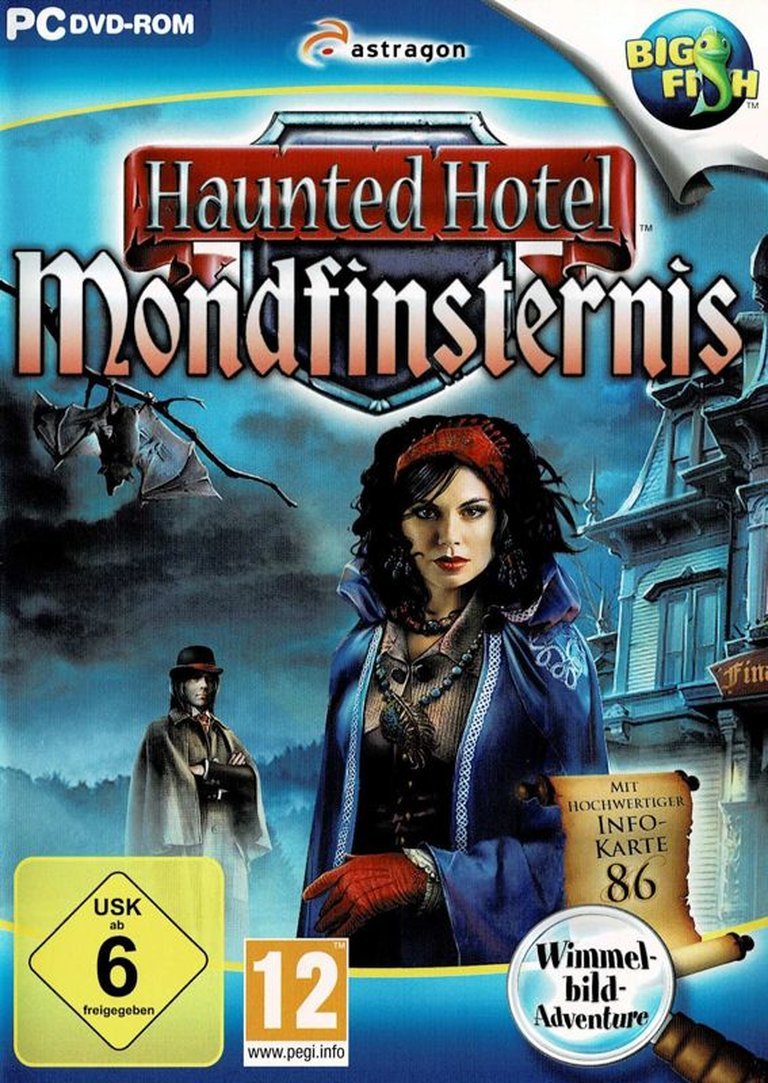
In ‘Haunted Hotel: Eclipse’, players take on the role of investigators exploring the eerie Final Journey Hotel, where a maid reports that the guests are monsters engaged in a mysterious battle. This point-and-click adventure game combines hidden object puzzles with a detective narrative, as players search for clues and solve mysteries to uncover the truth behind the supernatural occurrences.
Gameplay Videos
Where to Buy Haunted Hotel: Eclipse
PC
Haunted Hotel: Eclipse Free Download
Haunted Hotel: Eclipse Guides & Walkthroughs
Haunted Hotel: Eclipse Reviews & Reception
steambase.io (82/100): A triumphant return to form for the series.
gadgetspeak.com : A hotel is like a world in miniature. It can hold many secrets but perhaps not ones as dangerous as the Final Journal.
mobygames.com (74/100): A maid working at the Final Journey hotel is most distraught. She says the guests in the hotel were all monsters and they were having some kind of battle!
mygametrics.com (0/100): Should anyone ever check in to a place called the Final Journey Hotel?
Haunted Hotel: Eclipse – A Divine Clash in the Shadows of the Final Journey
Introduction
In the shadow-draped corridors of Haunted Hotel: Eclipse (2013), players encounter a battle not just between monsters but between light and darkness itself. Developed by Elephant Games and published by Big Fish Games, this hidden-object puzzle adventure (HOPA) revitalized the Haunted Hotel series with a gripping narrative and refined mechanics. As the first installment crafted by Elephant Games, Eclipse blends Gothic mystery with arcane warfare, inviting players to unravel a celestial conflict beneath the veneer of a crumbling hotel. This review argues that while Eclipse adheres to genre conventions, its atmospheric storytelling and inventive puzzles cement its place as a foundational title in the HOPA canon.
Development History & Context
Haunted Hotel: Eclipse emerged during the golden age of casual hidden-object games, a genre dominated by studios like Big Fish Games and Playrix. Elephant Games, founded in 2007, sought to carve a niche with narrative-driven HOPAs, and Eclipse marked their debut takeover of the Haunted Hotel series from Specialbit Studios. Released on November 9, 2013, for Windows and Mac, the game leveraged the era’s technological constraints—modest system requirements (1.0 GHz CPU, 1 GB RAM) and static 2D art—to deliver an accessible yet immersive experience.
The game’s creation involved a 45-person team, including Executive Producer Isaias Vallejo and Narrative Designer Lisa Brunette. Notably, Eclipse introduced detective James Blackthorne, who would become a recurring figure in later entries. Set against the backdrop of a crowded HOPA market, Eclipse stood out by weaving cosmic stakes into its hotel hauntings, a departure from more grounded mysteries.
Narrative & Thematic Deep Dive
The plot follows an unnamed female protagonist (a series staple) and James Blackthorne as they investigate the Final Journey Hotel, where a distraught maid claims guests are monstrous factions locked in battle. The story escalates into a Divine Conflict: every few centuries, forces of light and darkness convene to determine humanity’s fate. The 2013 eclipse serves as the catalyst for this showdown, with players uncovering a conspiracy orchestrated by an unlikely antagonist—the maid herself, a twist subverting expectations (TV Tropes’ The Dog Was the Mastermind).
Themes of duality permeate the narrative. The Gray Order (representing light) and Twilight Brothers (embodying darkness) clash through symbolic puzzles and artifacts like the Eclipse Amulet. Characters, though minimally voiced, reflect archetypal struggles—James embodies the Occult Detective trope, while the maid’s betrayal critiques appearances versus reality. Dialogue is functional but lacks depth, prioritizing plot propulsion over character development.
Gameplay Mechanics & Systems
Eclipse adheres to classic HOPA design:
– Core Loop: Explore static scenes, solve inventory-based puzzles, and complete hidden-object sequences (HOS).
– Puzzles: Varied and inventive, from reassembling mirror shards to aligning gemstones. The walkthrough highlights a standout maze-navigation segment using a Flutterfire (a magical firefly) to illuminate paths.
– Difficulty Settings: Casual (sparkles, fast hints), Advanced (no sparkles), and Hardcore (no hints).
– UI/UX: A clean bottom toolbar includes a map (fast travel), journal (clues), and inventory. The Flutterfire mechanic adds interactivity, though its usage feels underdeveloped.
Critically, the game’s reliance on Locked Doors and Fetch Quests risks tedium, but clever integrations—e.g., using acid to melt padlocks—keep engagement high. The Collector’s Edition adds a bonus chapter, achievements, and a strategy guide, enhancing replayability.
World-Building, Art & Sound
The Final Journey Hotel is a labyrinth of Gothic decay: dusty parlors, icy crypts, and overgrown gardens evoke a Hell Hotel (TV Tropes). Visuals excel in detail—cobwebbed chandeliers, blood-spattered altars—though character models suffer stiff animations (noted by GadgetSpeak).
Sound design amplifies tension with ambient whispers and creaking floorboards, though the absence of voice acting dulls emotional impact. The score leans on orchestral swells during climactic reveals, contrasting with eerie silence in exploration.
Reception & Legacy
Eclipse earned a mixed-but-positive reception:
– Player Reviews: 3.7/5 on MobyGames; 82/100 (“Positive”) on Steam, praised for atmosphere but criticized for pacing.
– Legacy: Its success solidified Elephant Games’ stewardship of the franchise, inspiring sequels like Ancient Bane (2014). James Blackthorne became a fan favorite, appearing in 10+ subsequent titles.
– Industry Impact: Eclipse showcased HOPA’s potential for cosmic storytelling, influencing contemporaries like Grim Tales and Mystery Trackers.
Conclusion
Haunted Hotel: Eclipse is a quintessential HOPA—flawed yet fiercely imaginative. While its static characters and dated visuals show their age, the game’s celestial narrative and clever puzzles remain compelling. For genre enthusiasts, it’s a worthy pilgrimage to the Final Journey Hotel; for others, a curious relic of casual gaming’s heyday. As the dawn of Elephant Games’ legacy, Eclipse proves that even in shadows, light persists.
Final Verdict: A hauntingly solid entry—best enjoyed with a guide and patience for its antiquities.