
- Release Year: 2017
- Platforms: Windows
- Publisher: Warfare Studios
- Developer: Warfare Studios
- Genre: Japanese-style RPG (JRPG), Role-playing (RPG)
- Perspective: Diagonal-down
- Game Mode: Single-player
- Gameplay: Turn-based combat
- Setting: Fantasy
- Average Score: 57/100
Description
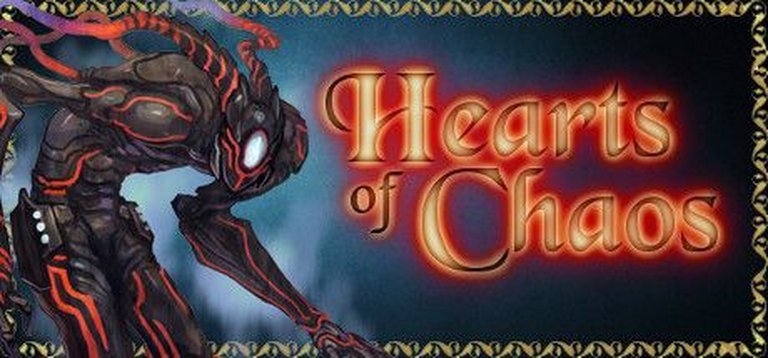
Hearts of Chaos is a story-driven Japanese-style RPG developed by Warfare Studios, set in a fantasy world where a birthday celebration takes a dramatic turn. The protagonist and their friends embark on an epic journey to prevent a legendary evil from destroying everything they hold dear. The game features exploration of lost ruins, aerial adventures on ancient ships, and battles against formidable monsters, all while navigating the complexities of destiny and potential futures.
Where to Buy Hearts of Chaos
PC
Hearts of Chaos Reviews & Reception
steambase.io (57/100): Hearts of Chaos has earned a Player Score of 57 / 100.
rpggamers.com : Hearts of Chaos is an action-adventure game from Warfare Studios.
Hearts of Chaos Cheats & Codes
PC (Steam)
Open the console by pressing the ` key (usually under ESC), SHIFT+2, or SHIFT+3. Enter the commands below.
| Code | Effect |
|---|---|
| gain_xp [amount] | Adds the specified amount of experience to a selected Leader/General. |
| cp [amount] | Adds command power (max. 100%). |
| st [amount] | Adds stability (max. 100%). Use negative numbers to remove stability. |
| ws [amount] | Adds war support (max. 100%). Use negative numbers to remove war support. |
| allowtraits | Removes restrictions on general trait assignment. |
| add_equipment [amount] [equipment name] | Adds the specified amount of any equipment (except naval). Use negative amounts to remove equipment. |
| add_latest_equipment [amount] | Adds the specified amount of all unlocked/researched equipment. |
| whitepeace [country tag] [country tag] | Instantly makes white peace between the specified countries. |
| teleport [province id] | Teleports selected ships or armies to the specified province ID. |
| allowdiplo | Allows any diplomatic action without justification. |
| debug_nuking | Permits nuking in any province regardless of conditions. |
| instantconstruction | Toggles instant construction for all buildings. |
| event [event id] [country tag] | Starts the specified event in the specified country. |
| research [slot id / ‘all’] | Researches all equipment or equipment in a specific technology slot. |
| research_on_icon_click | Instantly researches any technology when clicked in the tech tree. |
| annex [country tag / ‘all’] | Starts an annex of the specified country or all countries. |
| winwars | Gives your country maximum war score. |
| manpower | Adds 10 million manpower. |
| ic | Enables instant construction (affects AI nations). |
| fow | Removes the fog of war, revealing all units. |
| focus.autocomplete | Completes the currently selected focus immediately. |
| pp | Adds 1000 political power. |
| xp | Adds 1000 experience points. |
| ai_accept | Makes AI nations accept all diplomatic actions. |
Hearts of Chaos: A Deep Dive into Warfare Studios’ Overlooked Gem
Introduction: The Birth of a Birthday Adventure
Hearts of Chaos (2017) is a game that defies easy categorization—a JRPG-inspired adventure that begins with a birthday party and spirals into a world-ending quest. Developed by Warfare Studios, a name synonymous with niche but passionate RPG projects like Vagrant Hearts and Ashes of Immortality, this title is a curious blend of nostalgia, ambition, and flawed execution. At its core, Hearts of Chaos is a love letter to classic turn-based RPGs, wrapped in a modern indie aesthetic. Yet, its reception has been as divided as its protagonist’s fate—praised by some for its bold storytelling and depth, criticized by others for its clunky mechanics and lack of polish.
This review aims to dissect Hearts of Chaos in its entirety, exploring its development history, narrative ambitions, gameplay systems, and lasting legacy. Is it a hidden masterpiece buried under the weight of its own ambition, or a well-intentioned misfire that never quite finds its footing? Let’s embark on this journey through lost ruins, forgotten ships, and the very literal end of the world.
Development History & Context: The Indie RPG Renaissance
The Studio Behind the Chaos
Warfare Studios, the brainchild behind Hearts of Chaos, is a small but prolific developer specializing in JRPG-style experiences. Their portfolio includes titles like Shining Plume and Ashes of Immortality, games that cater to a niche audience hungry for traditional RPG mechanics in an era dominated by open-world spectacles. Hearts of Chaos was released on January 6, 2017, a time when indie RPGs were experiencing a renaissance thanks to tools like RPG Maker and platforms like Steam.
The game was built using RPG Maker, a engine that has both democratized game development and, in some cases, limited the creative potential of its users. Hearts of Chaos is no exception—it bears the hallmarks of an RPG Maker title, from its diagonal-down perspective to its 2D scrolling environments. Yet, Warfare Studios pushed the engine to its limits, crafting a game that feels more ambitious than its technical constraints might suggest.
The Gaming Landscape in 2017
2017 was a pivotal year for RPGs. Major releases like Persona 5, Nier: Automata, and Divinity: Original Sin 2 dominated headlines, while indie titles like Pyre and Cosmic Star Heroine proved that smaller studios could still deliver compelling narratives and innovative mechanics. Hearts of Chaos entered this crowded field with little fanfare, overshadowed by bigger budgets and more polished presentations.
Yet, its release was not without controversy. Some players noted that the game felt eerily similar to an earlier title, Hearts of Chaos (2012), leading to speculation about whether this was a re-release, a remake, or an entirely new project. The lack of clarity from Warfare Studios only fueled confusion, leaving players to wonder if they were experiencing something fresh or a recycled adventure.
Technological Constraints and Creative Workarounds
RPG Maker is a double-edged sword. On one hand, it allows small teams to create complex RPGs without needing a massive budget or years of programming experience. On the other, it imposes limitations—rigid combat systems, repetitive asset use, and a visual style that can feel dated even upon release. Hearts of Chaos grapples with these constraints, often finding clever workarounds but occasionally stumbling under their weight.
The game’s 2D scrolling environments and diagonal-down perspective are classic RPG Maker staples, but Warfare Studios infused them with a sense of scale and atmosphere that elevates the experience. The use of evolving enemies—foes that grow stronger as the player progresses—is a standout feature, adding a layer of strategic depth rarely seen in indie RPGs. However, the engine’s limitations are evident in the UI design, which can feel cluttered, and the combat animations, which lack the fluidity of more polished titles.
Narrative & Thematic Deep Dive: A Birthday to Remember
The Premise: From Cake to Cataclysm
Hearts of Chaos begins with a deceptively simple premise: a protagonist celebrating their birthday with friends. What starts as a joyous occasion quickly spirals into a quest to prevent the end of the world. The game’s opening hours are a masterclass in narrative whiplash, transitioning from lighthearted banter to existential dread in the span of a few cutscenes.
The protagonist, whose name and gender can be customized, is thrust into a role they never asked for—the savior of the world. This is not a new trope in RPGs, but Hearts of Chaos approaches it with a refreshing sense of self-awareness. The protagonist’s internal monologue frequently acknowledges the absurdity of their situation, lending the story a meta-narrative quality that keeps it engaging.
Themes: Destiny, Potential, and the Weight of Choice
At its heart, Hearts of Chaos is a meditation on destiny and potential. The protagonist is not just fighting to save the world; they are grappling with the idea that their life—once ordinary—has been irrevocably altered by forces beyond their control. The game’s central question is: What does it mean to embrace one’s destiny when that destiny was never chosen?
This theme is reinforced by the game’s multiclass system, which allows players to experiment with over 30 different classes and 70 unique spells and attacks. The protagonist’s ability to shape their own fate is mirrored in the player’s freedom to customize their playstyle. However, this freedom comes with a caveat—the game’s difficulty spikes can make certain builds feel underpowered or unviable, forcing players to adapt or face repeated failure.
Characters: Friends, Foes, and Forgotten Legends
The protagonist’s journey is shared with a cast of friends, each with their own motivations and backstories. While the game’s dialogue can sometimes feel stiff or overly expositional, the relationships between characters are one of its strongest suits. The bonds formed during the birthday celebration become the emotional core of the story, driving the protagonist forward even when the odds seem insurmountable.
The game’s villains, however, are less compelling. The legendary evil threatening the world is often referred to but rarely explored in depth. This lack of development makes the final confrontation feel anticlimactic, as if the game’s narrative energy was spent on the journey rather than the destination.
Dialogue and Writing: A Mixed Bag
The writing in Hearts of Chaos is a study in contrasts. At its best, it is witty, self-aware, and emotionally resonant, particularly in the early hours when the protagonist’s disbelief at their situation feels genuine. At its worst, it can be clunky, overly verbose, and prone to repetition. The game’s reliance on text-heavy cutscenes can make the pacing feel uneven, with long stretches of dialogue interrupting the flow of exploration and combat.
One standout feature is the game’s narrative framing device, which presents the story as a retrospective told by the protagonist. This allows for unreliable narration, where the protagonist’s memories of events may not always align with reality. It’s a clever touch that adds depth to the storytelling, even if it isn’t fully exploited.
Gameplay Mechanics & Systems: The Heart of the Chaos
Core Gameplay Loop: Exploration and Evolution
Hearts of Chaos follows a classic JRPG structure: explore dungeons, fight enemies, level up, repeat. The game’s world is divided into distinct zones, each with its own aesthetic and challenges. From lost ruins to forgotten sky ships, the environments are varied and often visually striking, though the RPG Maker engine’s limitations are evident in the repetitive asset use.
The game’s most innovative mechanic is its evolving enemies. Unlike traditional RPGs where enemies remain static, the foes in Hearts of Chaos adapt to the player’s level, becoming more powerful as the protagonist grows stronger. This creates a dynamic difficulty curve that keeps combat engaging but can also feel unfair or punishing if the player isn’t prepared.
Combat: Turn-Based with a Twist
Combat in Hearts of Chaos is turn-based, with a focus on strategic positioning and elemental weaknesses. The system is reminiscent of classic Final Fantasy games, with a few modern twists. Players can customize their party’s formation, exploiting enemy weaknesses and buffing allies to turn the tide of battle.
However, the combat system is not without its flaws. The animations are stiff, and the UI can be confusing, particularly when managing multiple party members. The game’s difficulty spikes are also a point of contention—some dungeons, like the Namoda Ruins, are notoriously punishing, requiring precise party composition and strategy to survive.
Character Progression: A Multiclass Masterpiece
One of the game’s standout features is its multiclass system, which allows players to mix and match abilities from over 30 different classes. This level of customization is rare in indie RPGs and gives Hearts of Chaos a replayability that many of its peers lack.
However, the system is not without its issues. Some class combinations feel overpowered, while others are underwhelming or impractical. The lack of in-game guidance on optimal builds can leave players feeling overwhelmed or frustrated, particularly when facing the game’s tougher challenges.
UI and Quality of Life: A Work in Progress
The game’s UI is functional but far from polished. Menus can feel cluttered, and navigating through inventory and skill trees can be cumbersome. The lack of quality-of-life features, such as auto-save or quick-travel, is a noticeable omission, particularly in a game that encourages experimentation and replayability.
World-Building, Art & Sound: Crafting a Fantasy Worth Saving
Setting: A World on the Brink
Hearts of Chaos takes place in a fantasy world teetering on the edge of annihilation. The game’s environments are a mix of ancient ruins, floating islands, and forgotten cities, each with its own history and secrets. The world feels lived-in, with lore scattered throughout dungeons and dialogue.
However, the game’s world-building is not always consistent. Some areas feel underdeveloped, with little explanation for their existence or significance. The lack of a world map or fast-travel system can also make navigation feel tedious, particularly in the game’s later hours.
Visual Direction: A Love Letter to Retro RPGs
The game’s art style is a deliberate throwback to 16-bit and 32-bit RPGs, with pixel-art environments and sprites that evoke nostalgia for classic titles like Chrono Trigger and Final Fantasy VI. The character designs are expressive, and the enemy sprites are detailed, though the RPG Maker engine’s limitations are evident in the repetitive animations and tile sets.
The game’s color palette is vibrant, with each zone having its own distinct aesthetic. The lost ruins are bathed in eerie blues and purples, while the floating ships gleam with golden hues. This attention to detail helps to immersify the player in the world, even if the technical execution isn’t always flawless.
Sound Design: A Symphony of Chaos
The game’s soundtrack is a standout feature, blending orchestral themes with electronic beats to create a sound that feels both epic and intimate. The battle themes are particularly memorable, with dynamic shifts that reflect the ebb and flow of combat.
The sound effects, however, are more hit-or-miss. Some spell effects and enemy attacks lack the impact they deserve, making combat feel less visceral than it could be. The voice acting, while limited, is competent, though some lines are delivered with a lack of emotional range.
Reception & Legacy: A Game Divided
Critical Reception: Mixed but Passionate
Hearts of Chaos received a mixed reception upon release, with a Steambase Player Score of 57/100 based on 44 reviews. Critics and players alike praised the game’s ambition, narrative depth, and customization options, but many were frustrated by its technical limitations and difficulty spikes.
The game’s Steam reviews reflect this divide, with 59% of reviews being positive. Players who enjoyed the game often cited its story, character customization, and soundtrack as highlights, while detractors pointed to its clunky UI, repetitive combat, and lack of polish.
Commercial Performance: A Niche Success
Hearts of Chaos was not a commercial blockbuster, but it found a dedicated niche audience among fans of retro RPGs and indie adventures. Its $9.99 price point made it accessible, and its Steam Trading Cards and Cloud saves added value for collectors.
The game’s legacy is one of cult appreciation. While it may not have set the world on fire, it remains a beloved title among those who appreciate its ambition and heart. Its influence can be seen in later indie RPGs that prioritize narrative depth and player customization over graphical fidelity.
Influence on the Industry: A Blueprint for Indie RPGs
Hearts of Chaos is a testament to what small studios can achieve with limited resources. Its multiclass system, evolving enemies, and narrative ambition have inspired other indie developers to push the boundaries of what’s possible with tools like RPG Maker.
The game’s flaws—its technical limitations and uneven difficulty—also serve as a cautionary tale. They highlight the importance of playtesting, UI design, and quality-of-life features in creating a polished and enjoyable experience.
Conclusion: A Flawed but Unforgettable Journey
Hearts of Chaos is a game of contradictions. It is ambitious yet flawed, nostalgic yet innovative, deeply personal yet universally relatable. It may not be a masterpiece, but it is a passionate and earnest attempt to tell a story about destiny, friendship, and the weight of the world.
For fans of classic JRPGs, indie adventures, and narrative-driven experiences, Hearts of Chaos is well worth the journey. Its multiclass system, evolving enemies, and emotional storytelling make it a standout title in a crowded genre. However, players seeking polished mechanics, seamless UI, or a more balanced difficulty curve may find themselves frustrated by its rough edges.
In the end, Hearts of Chaos is a testament to the power of indie game development. It proves that heart and ambition can overcome technical limitations, and that even the most chaotic of journeys can lead to something beautiful and unforgettable.
Final Verdict: 7.5/10 – A flawed gem that shines despite its rough edges.