
- Release Year: 2018
- Platforms: Arcade, Macintosh, Nintendo Switch, PlayStation 4, Windows
- Publisher: 612 Entertainment LLC., Flying Tiger Entertainment, Inc.
- Developer: International Headquarters, Lub Blub, LLC
- Genre: Action, Simulation, Sports
- Perspective: Top-down
- Game Mode: Single-player
- Gameplay: Arcade, Beat ’em up, brawler, Fighting, Platform, Pool, Shooter, Snooker
- Setting: Arcade
- Average Score: 75/100
Description
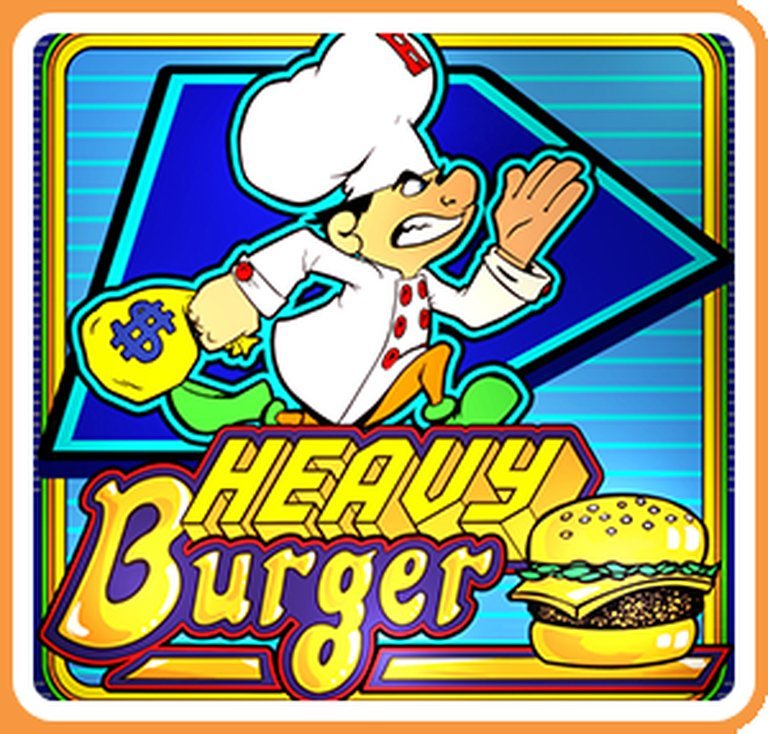
Heavy Burger is a chaotic multiplayer twin-stick arena shooter that mashes up elements from classic 1980s Data East arcade games like Heavy Barrel and Burger Time, featuring up to four players battling in fast-paced, American football-style matches across mixed stages with shooters, platformers, beat ’em ups, and more, all set in nostalgic arcade cabinet environments with quick respawns and simple weapons for hilarious, energetic fun.
Gameplay Videos
Heavy Burger Reviews & Reception
emeraldrangers.com (55/100): A Mash-Up We Always Wanted, Undercooked To Mediocrity
fanboydestroy.com (95/100): this game is too freakin’ incredible. BUY IT.
seafoamgaming.com : lovingly crafted in a way that’s pretty surprising considering how we went from a version of Nitro Ball with a blurry filter that was forced on, to a game paying tribute to other DE classics that look and sound very crisp
Heavy Burger: Review
Introduction
Imagine Peter Pepper, the pepper-shaker-wielding chef from BurgerTime, ditching his apron for a shotgun in a frenzied heist across iconic Data East arcade cabinets—dodging grenade-toting soldiers from Heavy Barrel, roundhouse kicks from Bad Dudes, and exploding pool balls from Side Pocket. Heavy Burger (aka Johnny Turbo’s Arcade: Heavy Burger) burst onto the scene in 2018 as a pixel-perfect love letter to 1980s arcade obscurity, transforming forgotten gems into chaotic multiplayer battlegrounds. Released amid a retro revival wave on Nintendo Switch, this micro-team indie title crafts a tug-of-war shooter that’s equal parts nostalgic fever dream and couch-party pandemonium. My thesis: Heavy Burger is a triumphant, if fleeting, experiment in arcade crossover mayhem—brilliantly capturing the manic energy of local multiplayer while stumbling under its own limited ambitions, cementing its place as a cult curiosity in gaming’s homage era.
Development History & Context
Heavy Burger emerged from the passion project of two Los Angeles-based “Bad Dudes”: Eric Urban of Lub Blub, LLC (lead designer, programmer, and artist) and Scott Barrett of International Headquarters (lead artist and co-designer). As detailed in Urban’s Steam dev diary, the game began as a prototype for a local-multiplayer tug-of-war top-down shooter, inspired by Nidhogg‘s fencing duels, Enter the Gungeon‘s roguelike shootouts, and TowerFall‘s arrow-slinging precision. Initially envisioned with stop-motion clay animation—drawing from Urban’s decade in projects like ParaNorman and Robot Chicken—it pivoted after Barrett shared an opportunity to license Data East IPs via G-Mode Corporation (sub-licensed through Marvelous USA to publishers Flying Tiger Entertainment and 612 Entertainment LLC).
A frantic six-week prototype sprint secured funding, leading to a year-long crunch on Unity. The team modeled authentic 1980s arcade cabinets, ripped and faithfully recreated original sprites, and infused new animations for Peter Pepper. Credits highlight a lean operation: 28 developers (many multitaskers like Urban) and 12 “thanks,” including business vets like John C. Brandstetter (Johnny Turbo) and Sirus Ahmadi. Technological constraints were minimal in the 2018 indie landscape—Unity enabled smooth cross-platform ports (Switch, PC/Mac via Steam, PS4 in 2021, even arcade)—but licensing Data East’s defunct library (post-2003 bankruptcy, acquired by G-Mode) was key. This slotted into Flying Tiger’s “Johnny Turbo’s Arcade” re-release wave of 16 Data East ports, capitalizing on Nintendo Switch’s portable party-game boom amid Overcooked and Gang Beasts.
The 2018 gaming scene favored bite-sized retro revivals: Switch’s Joy-Con motion and local multiplayer thrived post-Super Smash Bros. Ultimate, while Steam’s indie surge embraced pixel art (Celeste, Dead Cells). Yet Heavy Burger‘s $19.99 Switch price (vs. $7.99 PC) drew ire amid delisting fears—expired licenses axed it from stores by 2023-2024, mirroring other FTE titles. This context underscores its prescience: a micro-team’s bold IP mashup in an era craving authentic nostalgia over modern bloat.
Narrative & Thematic Deep Dive
Heavy Burger forgoes traditional plotting for arcade absurdity, framing its chaos as a heist: Peter Pepper—BurgerTime‘s diminutive hero—grabs a money bag from a prison-like “Heavy Burger” arena, battling to “THE BANK” through interdimensional arcade cabinets. Opponents (friends or bots) tug-of-war the sack, forcing backtracks if stolen. Levels homage Data East classics: evade living burgers and toppings in BurgerTime; navigate destructible mazes chased by cops in Lock ‘n’ Chase; dodge bulls and karate chops in Karate Champ; survive turret fire and grenades in Heavy Barrel; ricochet pool balls in Side Pocket; and street-fight ninjas en route to a Bad Dudes-themed bank guarded by… President Ronald Reagan in a chopper on the White House lawn?
Thematically, it’s pure postmodern pastiche: a critique-celebration of arcade ephemerality. Peter Pepper’s transformation from burger-builder to armed robber satirizes genre evolution—BurgerTime‘s whimsy weaponized into Heavy Barrel-style run-and-gun. Dialogueless save for iconic samples (“Hut! Hiyah!” from Karate Champ, Karnov’s fire-breathing roars), it evokes 80s excess: greed (money bag heist), chaos (procedural mazes, hazards), and absurdity (Reagan burger party nods Bad Dudes‘s presidential rescue). No deep lore—it’s emergent storytelling via multiplayer rivalries—but unlockables (cabinet models, flyers) reward history buffs, contextualizing Data East’s B-tier legacy (Heavy Barrel‘s 1987 innovation, Side Pocket‘s 1986 billiards sim).
Flaws abound: narrative is superficial, a thin excuse for violence amid family-friendly ESRB E10+. Yet this restraint amplifies themes—nostalgia as commodified chaos, where 80s pixels collide in a “desperate tug-of-war,” mirroring dev struggles to resurrect IPs. It’s less Smash Bros. epic, more WarioWare fever: thematic depth in joyful irreverence.
Gameplay Mechanics & Systems
At core, Heavy Burger is a top-down twin-stick tug-of-war shooter for 1-4 players (local only, bots fill gaps). Matches span 3-13 customizable arcade cabinets (always bookended by original Heavy Burger prison and Bad Dudes bank). Grab the central-spawning money bag, dash to your exit—progress sticks per team, but theft resets foes. Guns litter arenas: default pistol (steady, medium range), machine gun (rapid fire), shotgun/super shotgun (spread/knockback), sniper (long-range precision), laser rifle (charged beam). All instakill on hit, revert on death (fast respawn ~2s), with knockback aiding dodges—though critics like Emerald Rangers noted it frustrates aiming.
Dodge-roll evades slow projectiles/hazards; speed boosts drop from kills/enemies. Hazards shine: BurgerTime drops buns on foes; Heavy Barrel unleashes Green Men grenades/tanks; Side Pocket billiard bombs; Lock ‘n’ Chase procedural walls/cop cars; Karate Champ charging bulls/judges; Bad Dudes ninjas/Karnov flames. Options tweak enemy density, Sudden Death (longer respawns, auto-advance), cabinet order/repeats. UI is minimalist: stats tracker, lineup editor, controller support (Pro Controllers ideal; mouse PC quirks fixable).
Single-player: 24 challenges vary AI difficulty, lineups, enemies—unlock bonuses but feel rote. Multiplayer soars: Nidhogg-like progression asymmetry breeds “great moments” (Retro Gamer), manic gunfights amid hazards (Video Chums). Flaws: repetition (7 arenas), no online, PC controls finicky (free-aim vs. 8-way toggle). Innovative systems—per-team progress, cabinet shifts—elevate it beyond Capture the Flag, but content scarcity caps longevity.
World-Building, Art & Sound
The “world” is a meta-arcade: 2D sprites from originals (crisp, faithful—Lock ‘n’ Chase‘s Deco maze to Bad Dudes‘ 16-bit streets) framed by 3D-modeled cabinets that “flip” during transitions. Atmosphere thrives on disruption: you’re intruding on active games, prisoners (Heavy Burger) or food (BurgerTime) spilling into firefights. Visual direction blends eras seamlessly—Peter’s enhanced sprite (smoother runs, gun toting) bridges gaps; destructible elements (walls, pool tables) add dynamism.
Sound design reveres sources: Karate Champ grunts, Heavy Barrel explosions, classic VO (“Are you a bad enough dude…?”). Two looping tracks (one remixed original, frantic Sudden Death variant) pump energy but grate (Emerald Rangers muted post-matches). Effects pop—bullet whizzes, death squeals (Peter’s goofy yelps hilarious)—immersing in retro cacophony. Collectively, they forge “nostalgia-fueled funfest” (Video Chums), chaotic immersion elevating simple shootouts to arcade poetry.
Reception & Legacy
Launch reception praised multiplayer highs: MobyGames aggregates 78% critics (Retro Gamer 84%: “great fun for up to four”; Video Chums 80%: “fresh and exciting”; Game Hoard 71%: “hilarious… winning flavor”). NintendoWorldReport (70%) lauded the “goofy” gag but noted scattershot execution; Seafoam Gaming (7/10) hailed tug-of-war frenzy but docked for content. Players averaged 4/5; Steam forums buzzed (“top 5 this year,” “profound impact”). Priced $20 Switch/$8 PC, value split opinions—party staple or shallow?
Commercially niche (collected by 6 MobyGames users), delistings (PS4 2023, Switch/Steam 2023-2024) due to expired G-Mode licenses rendered it “extinct” (Delisted Games)—no physicals, digital ghosts via preserved APKs. Influence: epitomizes “Johnny Turbo” retro wave, inspiring arcade homages (River City Girls Data East nods). As historian, it’s pivotal: proves micro-teams can revive IPs creatively, prefiguring Lego-style crossovers (Teenage Mutant Ninja Turtles: Shredder’s Revenge). Cult status grows via emulation; a multiplayer gem lost to licensing purgatory.
Conclusion
Heavy Burger distills 80s arcade essence into pixelated pandemonium: faithful sprites, emergent chaos, and friend-fueled hilarity make it a local multiplayer triumph, flaws—meager solo, repetition, delistings—notwithstanding. Eric Urban and Scott Barrett’s vision endures as innovative homage, blending Nidhogg tension with Data East obscurity. In video game history, it claims a quirky niche: not revolutionary like Smash, but a flavorful reminder of arcades’ wild spirit. Verdict: Essential party buy (pre-delist) or emulation hunt—8/10 for multiplayer mavens; 5/10 solo. A heavy hitter in lightweight glory.