
- Release Year: 2017
- Platforms: PlayStation 4, Windows, Xbox One, Xbox Series
- Publisher: Hoplon Infotaiment S.A.
- Developer: Hoplon Infotaiment S.A.
- Genre: Action, Driving, Racing
- Perspective: Diagonal-down
- Game Mode: Online PVP
- Gameplay: Vehicular combat
- Average Score: 81/100
Description
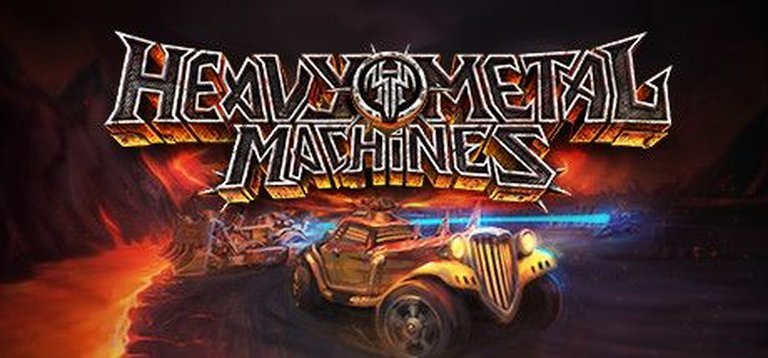
Heavy Metal Machines is a free-to-play, post-apocalyptic vehicular combat MOBA where teams of four battle in high-speed, weaponized machines to deliver a bomb to the enemy base while navigating hazardous arenas. Inspired by games like Twisted Metal and Rocket League, it blends heavy metal aesthetics with fast-paced, top-down action, eliminating traditional MOBA elements like towers and minions for relentless, skill-based combat.
Gameplay Videos
Heavy Metal Machines Guides & Walkthroughs
Heavy Metal Machines Reviews & Reception
opencritic.com (84/100): Monster Jam Steel Series 2 is back with this new game that improves on its predecessor in every way.
opencritic.com (90/100): Heavy Metal Machines is a MOBA unlike any other. It is a fast-paced, action-packed tribute to heavy metal in the best way.
opencritic.com (75/100): In one of the most unusual mixtures in the gaming world, Heavy Metal Machines stands out thanks to several qualities.
steambase.io (75/100): Heavy Metal Machines has earned a Player Score of 75 / 100.
metacritic.com (84/100): Monster Jam Steel Series 2 is back with this new game that improves on its predecessor in every way.
metacritic.com (80/100): I have been delightfully surprised at how accessible and addictive Heavy Metal Machines on Xbox is.
Heavy Metal Machines Cheats & Codes
PC
Select the ‘Video/Audio’ option, then select ‘Advanced’, and check ‘Console’ to enable the console window. While playing a game, press ~ to display the console window, then enter one of the following codes to activate the corresponding cheat function.
| Code | Effect |
|---|---|
| kill | Julie Kills Herself |
| god | God mode |
| give all | All weapons and items |
| health 100 | Restore health |
| noclip | No clipping mode |
| notarget | Disable enemy AI |
| eventlist | Display console commands |
| map [level name] | Level select |
Heavy Metal Machines: A Post-Apocalyptic Symphony of Chaos and Competition
Introduction: The Rise and Fall of a Heavy Metal MOBA
In the pantheon of vehicular combat games, Heavy Metal Machines (HMM) stands as a bold, if flawed, experiment—a fusion of Twisted Metal’s anarchic destruction, Rocket League’s high-speed teamwork, and MOBA strategy, all drenched in the aesthetic of heavy metal culture. Developed by Brazilian studio Hoplon Infotainment, HMM emerged in 2017 as a free-to-play, 4v4 bomb-delivery battler where players piloted heavily armed machines across post-apocalyptic arenas. Its premise was simple: grab the bomb, survive the gauntlet of hazards and enemies, and detonate it in the opponent’s base. Yet beneath this straightforward objective lay a game of surprising depth, marred by an untimely demise in 2022 when its servers were shuttered.
This review dissects Heavy Metal Machines in its entirety—its development, mechanics, narrative flair, and cultural impact—while examining why it resonated with a niche audience and why it ultimately failed to sustain itself. Was it a misunderstood gem, or a victim of its own ambitions? Let’s rev the engines and find out.
Development History & Context: A Brazilian Studio’s Heavy Metal Dream
The Birth of Hoplon and the Vision for HMM
Hoplon Infotainment, founded in 2000, was no stranger to ambitious projects. Before Heavy Metal Machines, the studio had dabbled in space MMOs (Taikodom) and post-apocalyptic shooters (Apocalypse: The Party’s Over), but HMM represented their most polished and marketable title. The game’s development began in 2013, with a clear mission: to blend the chaotic fun of Rock n’ Roll Racing (1993) with the strategic depth of modern MOBAs, all while paying homage to heavy metal’s rebellious spirit.
The team drew inspiration from:
– Classic vehicular combat (Twisted Metal, Carmageddon)
– Sports-adjacent MOBAs (Rocket League, Awesomenauts)
– Heavy metal aesthetics (album covers, Mad Max, Brütal Legend)
By 2015, HMM entered closed beta in Brazil, expanding to English-speaking territories in 2016. The full launch arrived in September 2018, but the game had already been playable in Early Access since January 2017. This prolonged development cycle allowed Hoplon to refine mechanics but also highlighted the game’s struggle to carve out a stable player base.
Technological Constraints and Market Challenges
Heavy Metal Machines was built in Unity, a versatile but sometimes limiting engine for high-octane multiplayer experiences. While the game ran smoothly on mid-range PCs, its reliance on FMOD for audio and a server-dependent architecture proved fatal. When Hoplon announced the shutdown in May 2022, citing financial unsustainability, the writing had been on the wall: without a thriving community, even the most passionate projects wither.
The gaming landscape in 2018 was crowded with free-to-play competitors:
– Rocket League (established esports scene)
– League of Legends / Dota 2 (dominant MOBAs)
– Fortnite (battle royale juggernaut)
HMM’s hybrid identity—neither a pure MOBA nor a traditional racing game—made marketing difficult. It was a niche within a niche, appealing to fans of both heavy metal and tactical vehicular combat. Yet for those who found it, HMM offered something rare: a game that didn’t just reference heavy metal but embodied it.
Narrative & Thematic Deep Dive: Mad Max Meets Metal Gods
The World of Metal City: A Post-Apocalyptic Wasteland
Heavy Metal Machines takes place in a dystopian future where civilization has collapsed, leaving behind only Metal City, a lawless hub where warriors battle for dominance in gladiatorial vehicle combat. The game’s lore is delivered through character bios, arena descriptions, and environmental storytelling, painting a world where:
– Factions vie for control of the last remaining resources.
– Pilots are larger-than-life personalities, each with their own grudges, ambitions, and musical tastes.
– The arenas are relics of a fallen world, from the Metal God coliseum to the Temple of Sacrifice, where heretics were once executed.
Unlike traditional MOBAs with sprawling narratives, HMM’s storytelling is minimalist but effective. The focus isn’t on a grand plot but on the culture of competition—a world where the only law is survival, and the only currency is fame.
Characters: The Pilots and Their Machines
The game’s roster of 17 pilots (at shutdown) were its greatest narrative strength. Each had:
– A unique vehicle (e.g., Windrider’s spiritual jeep, Clunker’s junkyard monstrosity).
– A distinct musical theme (e.g., Black Lotus’s “Dharma Metal,” Killer J’s “Psyclowntic Metal”).
– A backstory tying them to Metal City’s lore.
Notable Pilots:
| Pilot | Role | Vehicle | Musical Style | Lore Hook |
|---|---|---|---|---|
| Windrider | Transporter | Spiritual Jeep | Native Folk Rock | Last of a fallen tribe, seeks vengeance. |
| Clunker | Interceptor | Junkyard Truck | Redneck Rock | A mad mechanic who builds weapons from scrap. |
| Metal Herald | Support | Armored Rig | Ozzyrian Chant | A prophet of the apocalypse, preaching through destruction. |
| Killer J | Interceptor | Clown Car | Psyclowntic Metal | A deranged jester who laughs as he crushes foes. |
The role system (Interceptor, Support, Transporter) ensured team composition mattered, but the real charm was in the personality. Each pilot felt like a metal album come to life, with voice lines, taunts, and abilities that reinforced their identity.
Themes: Anarchy, Survival, and the Spirit of Heavy Metal
HMM’s themes were unapologetically metal:
1. Chaos as Order – The arenas are designed for destruction, where lava pits, treadmills, and bomb reflectors force constant adaptation.
2. Individualism in Teamwork – While teamplay is essential, each pilot’s unique abilities encourage personal expression (e.g., Artificer’s techno-classical gadgets vs. Rampage’s brute-force rock).
3. The Glorification of the Underdog – Many pilots are outcasts or misfits, reflecting heavy metal’s roots as the music of the oppressed.
The game’s soundtrack (composed in-house) was a love letter to metal subgenres, with each pilot’s theme reinforcing their identity. Little Monster’s “Ultra Heavy Metal” was all crushing riffs, while Stargazer’s “D’rude’n’storm” blended electronic and metal elements. This audio identity made HMM feel like playing inside a metal festival.
Gameplay Mechanics & Systems: Bomb Delivery as a Blood Sport
Core Gameplay Loop: The Bomb Run
At its heart, Heavy Metal Machines was a 4v4 bomb-delivery game with MOBA-like roles. Matches played out in three distinct phases:
1. The Scramble – Teams fight for control of the bomb at the center of the map.
2. The Gauntlet – The bomb carrier must navigate a hazard-filled track while teammates defend or flank.
3. The Detonation – If the bomb reaches the enemy base, the team scores; if the carrier is destroyed, the bomb resets.
Key Mechanics:
– No Lanes, No Minions – Unlike traditional MOBAs, HMM had no AI-controlled units or fixed paths, making every match a dynamic chase.
– Role Specialization – Teams needed balance:
– Transporters (e.g., Windrider) – Fast, durable bomb carriers.
– Interceptors (e.g., Killer J) – High-damage disruptors.
– Supports (e.g., Metal Herald) – Healers and crowd controllers.
– Hazard-Based Arenas – Each of the three maps (Metal God, Temple of Sacrifice, Cursed Necropolis) had unique environmental threats:
– Lava pools (instant death)
– Droppers (forced bomb drops)
– Treadmills (speed/steering alterations)
Combat and Controls: Mouse-Driven Mayhem
HMM’s control scheme was unconventional but intuitive:
– Mouse steering – The vehicle moved in the direction of the cursor, allowing precise aiming while driving.
– Keyboard abilities – Each pilot had four skills (e.g., Wildfire’s flamethrower, Photon’s laser barrage).
– No Gas Pedal – Acceleration was automatic, emphasizing positioning over raw speed.
This system made HMM accessible to newcomers but deep for masters. The lack of a traditional “gas/brake” mechanic removed a layer of complexity, but the mouse-aiming demanded quick reflexes in chaotic team fights.
Progression and Monetization: The Metal Pass
HMM followed the free-to-play battle pass model with its Metal Pass system:
– Free Track – Earned Fame (in-game currency) and basic cosmetics.
– Premium Track (Cash) – Unlocked exclusive skins, pilots, and faster progression.
– Seasonal Updates – New pilots, arenas, and balance changes every two months.
The monetization was fair by F2P standards—players could earn Fame through matches to unlock pilots, and Cash was only needed for premium cosmetics. However, the small player base made grinding Fame a slow process, and the lack of a trading system meant duplicates were common.
Flaws in the Machine
Despite its innovations, HMM suffered from critical design oversights:
1. Map and Mode Stagnation – Only three arenas and one game mode (bomb delivery) led to repetition.
2. Matchmaking Issues – Low player counts meant long queue times and unbalanced matches.
3. Lack of Single-Player Content – No bots, no PvE, no story mode—multiplayer-only was a death sentence for longevity.
4. Server Dependency – The shutdown in 2022 rendered the game completely unplayable, a tragic fate for a title with such a devoted cult following.
World-Building, Art & Sound: A Heavy Metal Fever Dream
Visual Design: Post-Apocalyptic Glamour
HMM’s art style was a glorious mess of spikes, flames, and neon, evoking:
– Mad Max’s junkyard warriors.
– Heavy metal album covers (Iron Maiden, Megadeth).
– Cyberpunk grit with a rock ‘n’ roll soul.
Key Aesthetic Choices:
– Over-the-top vehicle designs – Stargazer’s UFO-like car, Dirt Devil’s pirate-themed rig.
– Arena hazards as spectacle – The Temple of Sacrifice’s shredder was a literal meat grinder for vehicles.
– Character animations – Killer J’s maniacal laughter, Icebringer’s frost-covered ram.
The top-down diagonal perspective (reminiscent of Gauntlet or Diablo) gave players a tactical overview while keeping the action visually intense.
Sound Design: The Soundtrack as a Character
Music wasn’t just background noise in HMM—it was part of the gameplay experience. The dynamic soundtrack adapted to match intensity:
– Menu themes – Epic, anthemic metal.
– Combat tracks – Fast, aggressive riffs.
– Pilot-specific music – Each character had their own lethal theme song.
The FMOD sound engine ensured that explosions, engine roars, and ability cues were crisp and impactful, making every match feel like a live metal concert.
Atmosphere: The Feeling of a Last Stand
HMM’s world was bleak but beautiful, a place where:
– The arenas were monuments to destruction.
– The pilots were legends in their own minds.
– Every match was a battle for survival.
The game’s lack of a traditional narrative was offset by its strong thematic cohesion. Players weren’t just driving cars—they were embodying the spirit of heavy metal itself.
Reception & Legacy: A Cult Classic’s Untimely End
Critical Reception: Praised but Overlooked
HMM received mixed-to-positive reviews from critics:
– DVS Gaming (9/10) – “A fast-paced, action-packed tribute to heavy metal.”
– GameBlast (7.5/10) – “Beautiful visuals, captivating characters, and original mechanics.”
– Steam User Score (75/100, “Mostly Positive”) – Players loved the unique blend of genres but criticized the lack of content.
The game’s biggest strength—its niche appeal—was also its greatest weakness. It was too MOBA for racing fans, too racing for MOBA fans, leaving it stranded between audiences.
The Shutdown and Community Backlash
On May 3, 2022, Hoplon announced HMM’s shutdown, citing financial unsustainability. The servers closed on August 30, 2022, rendering the game unplayable.
The Steam community’s response was one of grief and nostalgia:
“I still hope it comes back… This game gave me a lot of cool emotions.” – 空虚 丶Noragami
“Я уже несколько лет жду возвращения вашей игры. Для меня это был уникальный проект.” (“I’ve been waiting years for this game to return. It was a unique project for me.”) – gravity_g6
Legacy: Influence and What Could Have Been
HMM’s influence is subtle but present in later games:
– Vehicular MOBAs (Spellbreak’s movement, Rocket Arena’s teamplay).
– Heavy metal aesthetics in indie games (Metal: Hellsinger, Brütal Legend’s spiritual successors).
– Brazilian game development – Hoplon’s work proved that Latin American studios could compete globally.
What Went Wrong?
1. Identity Crisis – Was it a MOBA? A racing game? A shooter? The hybrid nature confused marketers.
2. Content Drought – Only three maps and one mode couldn’t retain players.
3. Server Dependency – A fatal flaw in the live-service era.
What It Got Right:
✅ Unique gameplay – No other game blended bomb delivery, MOBA roles, and vehicular combat so well.
✅ Strong art direction – A love letter to heavy metal culture.
✅ Fair monetization – No pay-to-win, just cosmetic grinds.
Conclusion: A Heavy Metal Requiem
Heavy Metal Machines was a flawed masterpiece—a game that dared to be different in an industry obsessed with safe bets. It combined high-speed chaos, strategic depth, and heavy metal swagger into a package that, while niche, resonated deeply with those who discovered it.
Final Verdict: 7.5/10 – A Cult Classic Cut Short
Pros:
✔ Innovative hybrid gameplay (MOBA + vehicular combat).
✔ Stunning heavy metal aesthetic (music, art, lore).
✔ Fair free-to-play model (no pay-to-win).
✔ Deep role specialization (Interceptor/Support/Transporter).
Cons:
✖ Only three maps and one mode (severe lack of content).
✖ Small player base (long queues, unbalanced matches).
✖ Server shutdown killed it permanently (no offline mode).
✖ Repetitive over time (no PvE or single-player options).
Where It Stands in Gaming History
Heavy Metal Machines will be remembered as:
– A bold experiment in genre-blending.
– A testament to passion from a Brazilian studio.
– A cautionary tale about the risks of live-service dependency.
For the fans who loved it, HMM wasn’t just a game—it was a metal concert on wheels, a last stand in a world of chaos. Its shutdown was a tragedy, but its legacy endures in the memories of those who rocked, rolled, and detonated their way through Metal City.
Final Thought:
If Heavy Metal Machines had launched today with cross-play, more maps, and a single-player mode, it might have thrived. Instead, it remains a what-if—a game that burned bright, loud, and fast, just like the music it worshipped.
🔥 Rest in chaos, Heavy Metal Machines. You were too metal for this world. 🔥